

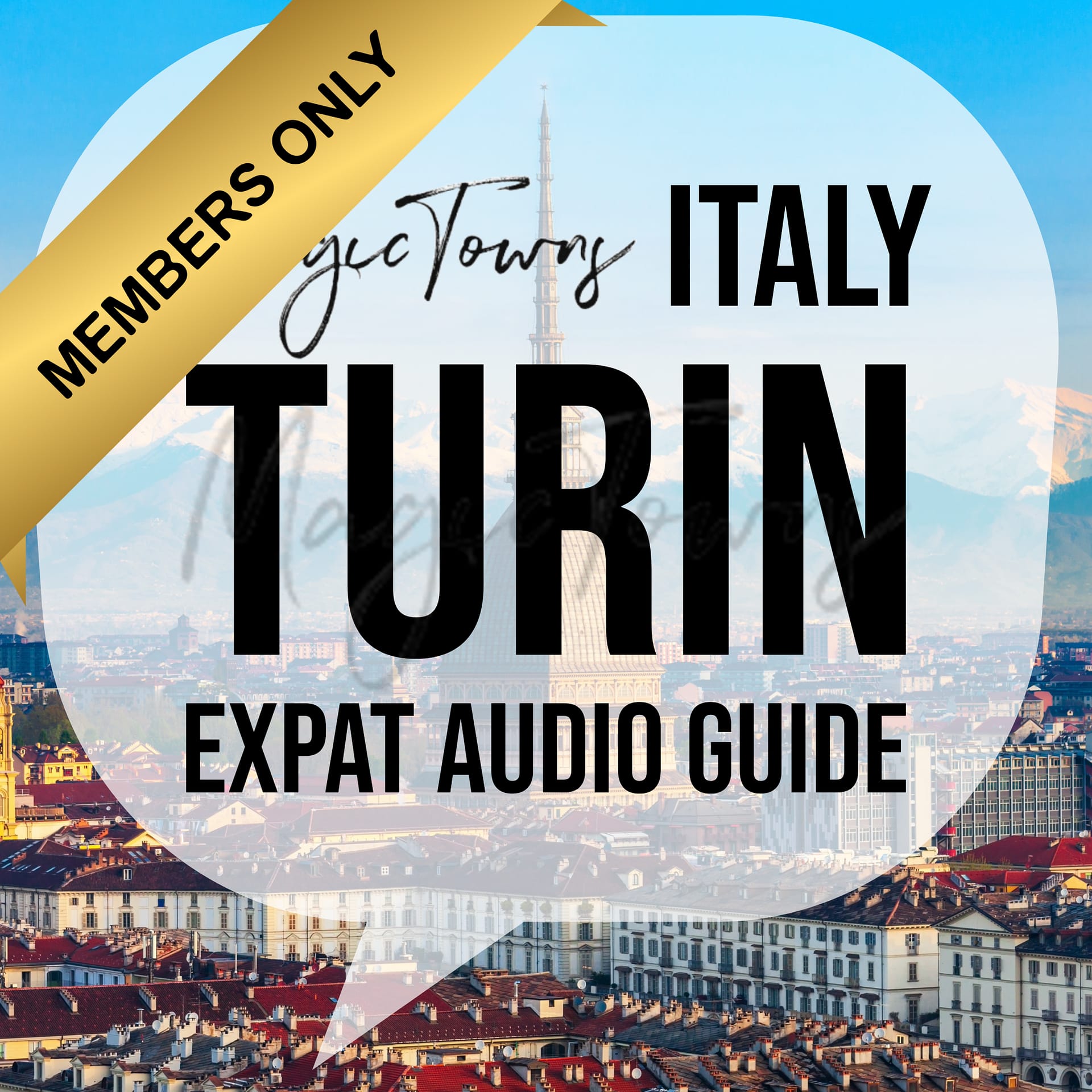

[00:00:14] Miles: Today we’re setting our sights on Turin. It’s a really fascinating city in Italy’s Piedmont region. And it seems to be popping up more and more on the radar for expats and retirees. You’re right at the foot of the Alps, but you’re in this city with grand historical buildings rubbing shoulders with a pretty appealing modern vibe. That’s Turin in a nutshell, really.
[00:00:35] Alessia: And for this deep dive, we’re sticking strictly to the info from Magic Towns, Italy. The goal here is to really dig into what makes Turin attractive specifically for you, if you’re considering a move there. We wanna get past the tourist brochures.
[00:00:55] Miles: Let’s unpack this then. Turin clearly has this stunning setting with the Alps right there, but it’s definitely more than just scenery, isn’t it? It’s got layers of history.
[00:01:08] Alessia: Oh, absolutely. Turin’s story starts way, way back. First it was a settlement of the Taurini people. Then the Romans showed up. They established it as a colony Julia Augusta Taurinorum back in the first century before Christ. And what’s really interesting is you can still see that Roman grid layout in the city center today. It shaped how the city grew.
[00:01:38] Miles: That’s fascinating. And then much later, it played a huge role in Italy itself. Correct.
[00:01:43] Alessia: Pivotal role. Fast forward to the 19th century, Turin becomes the first capital city of a unified Italy.
[00:01:51] Miles: Wow. The first capital, that’s a pretty big deal historically
[00:01:55] Alessia: Huge. It was only four years. But still,
[00:01:58] Miles: Do you think that short period as capital still echoes in the city today? Does it feel different because of that?
[00:02:07] Alessia: I think it does. Being the first capital, even briefly, seems to have given Turin a sense of civic pride and definitely influenced its architecture while you see it in the really wide, elegant boulevards, the grand squares and the formal style of the palaces in public buildings. It gives Turin a slightly more stately feel than some other big Italian cities.
[00:02:34] Miles: Okay, so it’s got this deep historical weight, but it’s not just stuck in the past, right. There’s more recent stuff too. Something involving snow and skis.
[00:02:45] Alessia: Yes. Definitely. Turin hosted the 2006 Winter Olympics. That brought a whole wave of modernization and put it back on the international map in a big way, but even before the Olympics, Turin was already a powerhouse of Italian innovation.
[00:03:07] Miles: Like what?
[00:03:08] Alessia: Well, think about your aperitivo. Vermouth started in Turin.
[00:03:12] Miles: No way.
[00:03:13] Alessia: Oh, amazing little gianduiotti chocolate, which you’re an invention. Crispy grissini bread sticks.
[00:03:19] Miles: Love those.
[00:03:20] Alessia: And even the humble espresso machine has its roots connected to the city.
[00:03:24] Miles: Okay. So Turin is basically responsible for half my daily pleasures. Good to know.
[00:03:31] Alessia: Pretty much. And it wasn’t just food and drink industry was massive there.
[00:03:36] Miles: Ah yes. The cars FIAT. Exactly. It absolutely cemented Turin as a major industrial hub in Italy. For a long time, Turin, Milan and Genoa formed the Industrial Triangle.
[00:03:50] This was the engine driving Italy’s industrialization, both in the late 19th century and again during the economic boom after the second World War . That industrial heritage is still part of the city’s DNA.
[00:04:05] Alessia: From Roman outpost to industrial engine. Quite the transformation over the centuries. I also saw it listed as a Gamma Global City. I. What does that actually mean for someone living there?
[00:04:20] Miles: Good question. That Gamma classification basically means it’s recognized as an important city in the global economic network. It signals a decent level of international business connectivity, maybe not quite on the scale of an alpha city like Milan or London, but still significant for you as an expat, that could mean more international job opportunities in certain fields. Generally a city that looks outward.
[00:04:47] Alessia: Makes sense. And for culture vultures, there are UNESCO sites too.
[00:04:53] Miles: Yes. Two actually. You’ve got the residences of the Royal House of Savoy and the Po hills.
[00:05:02] Alessia: Tell me about the royal residences. Sounds grand.
[00:05:05] Miles: They really are. It’s not just one palace. It’s a whole network of amazing buildings, palaces, castles, hunting lodges and gardens scattered in and around Turin and the Piedmont region. They belong to the Savoy dynasty, the family that eventually ruled Italy. Each one gives you an incredible window into centuries of royal history and frankly, opulence. Think amazing day trips right from your doorstep.
[00:05:36] Alessia: And the Po hills. That sounds more natural.
[00:05:38] Miles: It is, that UNESCO designation recognizes the area for its natural beauty, but also its cultural landscape. It’s like Turin’s green lung offering fantastic views back over the city. Space to get outdoors.
[00:05:56] Alessia: Sounds like a city with real character and strength too. I read something about its role during the Second World War.
[00:06:02] Miles: Yes, that’s a crucial part of Turin’s more recent history. It was a major center for the anti-fascist resistance movement during the war. The people there made huge sacrifices and showed incredible bravery, so much so that the city was awarded the gold medal of military valor after the war.
[00:06:22] Alessia: Okay, so the history is undeniable, really rich, but let’s shift gears. What’s it actually like to live there now, day-to-day life, the culture, the vibe for an expat or retiree?
[00:06:36] Miles: Well, the consistent picture is of a city that’s maybe a bit more relaxed, gentler than somewhere like Milan. And so I feel like seemingly on one side of it, you have this very
[00:06:48] Alessia: Gentler. I like that
[00:06:49] Miles: They describe it as having understated elegance, a quiet charm , even a hint of a Northern European feel maybe in its organization or atmosphere.
[00:07:01] Alessia: Interesting. So less chaotic than Rome maybe?
[00:07:06] Miles: Yes. That slower pace often comes up as a major plus for expats who’ve moved there.
[00:07:13] Alessia: What about finding your tribe? Is there much of an international community?
[00:07:18] Miles: Yes, definitely. Over 134,000 foreign residents.
[00:07:24] Alessia: Wow, that’s a lot. It
[00:07:25] Miles: suggests you’ll find a diverse mix of people and likely established networks for expats from different countries.
[00:07:30] Hopefully, a welcoming atmosphere for newcomers.
[00:07:33] Alessia: Okay, good to know. Now, onto a very important topic. The food. What’s Turin cooking up for residents?
[00:07:43] Miles: Oh, prepare yourself. Turin and the whole Piedmont region are famous, world famous for amazing food. It’s rich, sophisticated stuff.
[00:07:52] Alessia: Okay, hit me with some examples.
[00:07:54] Miles: You’ve got agnolotti, tiny hand pinched pasta, usually filled with meat, so delicate. Then there’s tajarin thin, bright yellow egg pasta. Perfect.
[00:08:06] Alessia: And the classic vitello tonnato, cold sliced veal with a creamy tuna and caper sauce. Sounds weird. Tastes amazing.
[00:08:15] Miles: I know. It’s, it’s, it’s surprisingly good. Or
[00:08:17] Alessia: Something hardier. Beef slow cooked in incredible Barolo wine, and you absolutely must try a bicerin.
[00:08:26] Miles: Um, what’s that?
[00:08:27] Alessia: It’s unique to Turin, a layered drink served in a glass. Hot espresso on the bottom. Then rich, thick, hot chocolate topped with lightly whipped cream. Heaven in a glass, basically.
[00:08:43] Miles: Okay. Sold. That sounds incredible. Especially on a cold day.
[00:08:47] Alessia: Exactly. And speaking of chocolate Turin’s reputation there is legendary.
[00:08:54] Miles: That’s what I hear. The chocolate capital.
[00:08:56] Alessia: Unequivocally, the chocolate capital of Italy. This isn’t a new fad. Turin is where solid bite-sized chocolate was invented back in the 19th century and it
[00:09:07] Miles: Really, I had no idea.
[00:09:09] Alessia: Yeah, the city’s still full of historic chocolate shops and artisan chocolatiers, um, you’ll find. Incredible chocolate almost everywhere. If you have a sweet tooth, Turin is dangerous in the best possible.
[00:09:25] Miles: Uhhuh I can imagine. But beyond cafes and fancy chocolate shops, what about everyday stuff like markets for fresh food,
[00:09:32] Alessia: Porta Palazzo. You have to know about Porta Palazzo. Europe’s largest open air market. It’s huge, vibrant, bustling. You can find pretty much anything there. Fresh produce, meat, cheese, clothes, household stuff, a real sensory overload and great for people watching.
[00:09:54] Miles: Sounds like an experience.
[00:09:56] Alessia: Totally. And then there’s the Balon flea market every Saturday, even batter on the second Sunday of the month, it expands into the Gran Balon, a massive antiques market. Great for finding unique things and soaking up local atmosphere.
[00:10:14] Miles: Nice. And if you wanted to push the boat out for a special meal. Any high end places?
[00:10:19] Alessia: Oh, yes, Turin has seriously good fine dining. Michelin star spots like the historic Ristorante Del Cambio, which looks incredible, and also Vintage 1997, known for being more innovative. So you’ve got options for those celebratory meals.
[00:10:38] Miles: Good to have the range. Culture is obviously a big draw for expats. What’s on offer in Turin beyond the food, art, museums, festivals?
[00:10:49] Alessia: It’s a rich cultural scene, loads of museums and art galleries, and there always seems to be something happening festival- wise. The Magic Towns guide specifically calls out cinema. Turin has a strong film history and hosts related events, and no surprise, a chocolate festival.
[00:11:12] Miles: Of course, a chocolate festival.
[00:11:14] Alessia: What’s really cool is that Turin is known as Italy’s first Open Air Museum of Urban Art. Amazing murals and installations, transforming public spaces all over the city. Um, it’s a dynamic way to explore different neighborhoods and stumble upon art.
[00:11:36] Miles: That does sound cool. Very different. And I always see pictures of Turin with those covered walkways with arcades.
[00:11:43] Alessia: The porticos, yes. They’re such a defining feature of the city. There are over 18 kilometers of them.
[00:11:51] Miles: 18 kilometers. Wow. They’re not just beautiful adding elegance, but super practical shelter from rain and winter, shade from sun and summer. It makes strolling around the city center, pleasant, whatever the weather and all the shops and cafes underneath have a unique feel.
[00:12:09] Alessia: I can picture that. What about escaping the city. Easy to find green space parks.
[00:12:16] Miles: Absolutely. Turin does very well for green space. There’s the big Parco del Valentino along the Po River, Parco della Pellerina, and Parco Dora built on a former industrial site, so it has a post-industrial chic look. Statistics suggest Turin has a high amount of public green space per person in lots of trees that really boosts quality of life and the Colline di Torino, those hills we mentioned are right there, perfect for hiking and cycling with amazing views.
[00:12:50] Alessia: This is all painting a very attractive picture, but moving abroad involves practical stuff. Big practical stuff. Let’s get into housing and the cost of living. How does Turin stack up?
[00:13:04] Miles: Right then? Nitty gritty. According to Magic Towns, this is one of Turin’s big selling points. It offers really good value, especially for a major city in northern Italy, significantly more affordable than places like Bologna or Milan. So you get the Northern Italy lifestyle without quite the same hit to your wallet.
[00:13:22] Alessia: That’s appealing. Can you give us some actual numbers? What my rent or buying costs
[00:13:27] Miles: For rentals? A two bedroom apartment can run anywhere from roughly 360 to 1,500 euro per month, depending on location and condition.
[00:13:42] Alessia: That top end is still not crazy for a major city.
[00:13:47] Miles: Exactly. The average rent in the city center is quoted around 16 euro per square meter per month. If you were thinking of buying the average purchase price is about 2,112 euro per square meter.
[00:14:02] Alessia: Useful benchmarks and overall cost of living per month.
[00:14:07] Miles: Magic Towns gives an estimate of around 1,309 euro per month, including rent. About 7 36 euro per month, excluding rent. Individual spending varies, but those give you a ballpark.
[00:14:23] Alessia: Those figures sound more manageable than many other desirable European cities. What about healthcare? That’s always high on the list, especially for retirees.
[00:14:36] Miles: Healthcare in Turin is generally high quality. Uh, facilities are good.
[00:14:40] Alessia: Is there a but?
[00:14:41] Miles: Like anywhere, there can be longer waiting times for some things or variations in accessing highly specialized care. But the overall standard is, is strong. The local public provider is the ASL Città di Torino, the Piedmont region also performs well compared to the national average for certain medical services, particularly treating heart conditions, and minimally invasive breast cancer surgeries.
[00:15:12] Alessia: That’s reassuring. Getting around. The how easy is Turin to navigate?
[00:15:16] Miles: One guide calls it a walker’s paradise, which tells you a lot. The center is very pedestrian friendly, and lots is reachable on foot.
[00:15:24] Alessia: Good, and for longer distances.
[00:15:28] Miles: There’s an efficient public transport system, though it can get crowded at rush hour. Standard city stuff includes trams. The oldest network in Italy, a modern automatic metro. And a comprehensive bus system.
[00:15:43] Alessia: And digital life? Internet, crucial these days.
[00:15:46] Miles: Crucial and Turin delivers. Magic Towns reports strong connectivity. Average speeds around 295 megabits per second download, and 171 megabits per second upload. Plenty for working from home. Or streaming.
[00:16:04] Alessia: That’s fast. What about finding everyday essentials? Pharmacy, supermarket, gym, coffee shop,
[00:16:10] Miles: Everything’s readily available. Within about 10 kilometers of the center, you’ll find auto repair, banks, bars, cafes, cinemas, dentists, gyms, health clinics, libraries, museums, parks, pharmacies, restaurants, shopping centers, supermarkets, even spas.
[00:16:30] Alessia: So they’re not gonna be stuck for amenities.
[00:16:32] Miles: Weekend escape. How close are the beach or the mountains?
[00:16:35] Alessia: Pretty close. For lakeside relaxation, Chalet del Lago is about a 35 minute drive. Okay. Not the Med, but still, water.
[00:16:49] Miles: And mountains given the Alps are right there.
[00:16:51] Alessia: And, um, a mountain resort called Valli di Lanzo is only about 43 minutes by car. Easy access to hiking, skiing, and proper alpine scenery. Best of both worlds. City living with nature on tap.
[00:17:08] Miles: Who is Turin really for? Who thrives there?
[00:17:12] Alessia: Turin is great for expats, wanting a blend of history and modern life at a slightly slower pace than Milan or Rome. Retirees benefit from affordability, rich culture, and good healthcare. Outdoor enthusiasts love having the Alps nearby. And foodies, especially chocolate lovers will be in heaven. The strong international community makes it welcoming too.
[00:17:38] Miles: We should be balanced! Any downsides or challenges newcomers should expect.
[00:17:43] Alessia: Navigating the healthcare system or other bureaucracy can take patience. Public transport gets crowded at peak times. The job market can be competitive, especially if your Italian isn’t fluent. And yes, Italian paperwork can move slowly.
[00:18:05] Miles: What about education options?
[00:18:07] Alessia: Uh, Turin is well served. Within about a 45 to 60 minute commute, there are several international or bilingual schools, the International School of Turin, well International School of Torino, the Victoria International School, the French lycée Jean Giono, the bilingual European School of Turin, the International English School of Turin and Little England bilingual school.
[00:18:33] Miles: Wow. Lots of choice.
[00:18:35] Alessia: Plus, Turin is a major university city with a historic University of Turin and the highly regarded Polytechnic University of Turin.
[00:18:46] Miles: Let’s circle back to connectivity for travel. Airports, trains.
[00:18:53] Alessia: The closest airport is Torino Airport about 20 minutes from the city center for more long haul options. Milan Malpensa, and Genova Airport are reachable. Train wise, Turin has two main stations, Porta Nuova and Porta Susa, both with high speed links to other Italian and international cities. And as we said, those internet speeds are strong.
[00:19:15] Miles: Finally, weather and air quality. What’s the climate like and how breathable is the air?
[00:19:19] Alessia: Turin has varied seasons. Winters are generally mild, summers warm and often sunny. Rainfall is fairly evenly spread and there’s occasional light snow in winter, which looks pretty against the Alps.
[00:19:31] Miles: Nice.
[00:19:32] Alessia: Average January lows are about minus 1.6 degrees Celsius with highs around 6.4. July lows average 17.6 and highs around 20, so proper seasons
[00:19:49] Miles: And air quality.
[00:19:50] Alessia: Overall, it’s balance and supports wellbeing. Fair for PM 10 and Ozone. Moderate for pm 2.5. Good for nitrogen and sulfur dioxide. Giving an overall rating of 82 out of 100. Decent for a city this size.
[00:20:06] Miles: So bringing it all home. Turin offers a compelling mix for potential expats and retirees.
[00:20:14] Alessia: Absolutely. Deep history, vibrant culture, amazing food, relative affordability, good healthcare, plenty of green space, all with the Alps as a backdrop.
[00:20:27] Miles: And just to reiterate, for everyone listening, this entire deep dive came directly from the Torino Expat Guide on the Magic Towns Italy website.
[00:20:38] Alessia: So we encourage you to check out those resources yourself and see if Turin might just click for you.
[00:20:44] Miles: And maybe a final thought. What specific part of Turin’s rhythm, history, elegance, industry, food, or nature, resonates most strongly with your idea of the perfect expat or retirement life in Italy? Something to mull over.
 English
 French
 German
 Italian
 Danish