

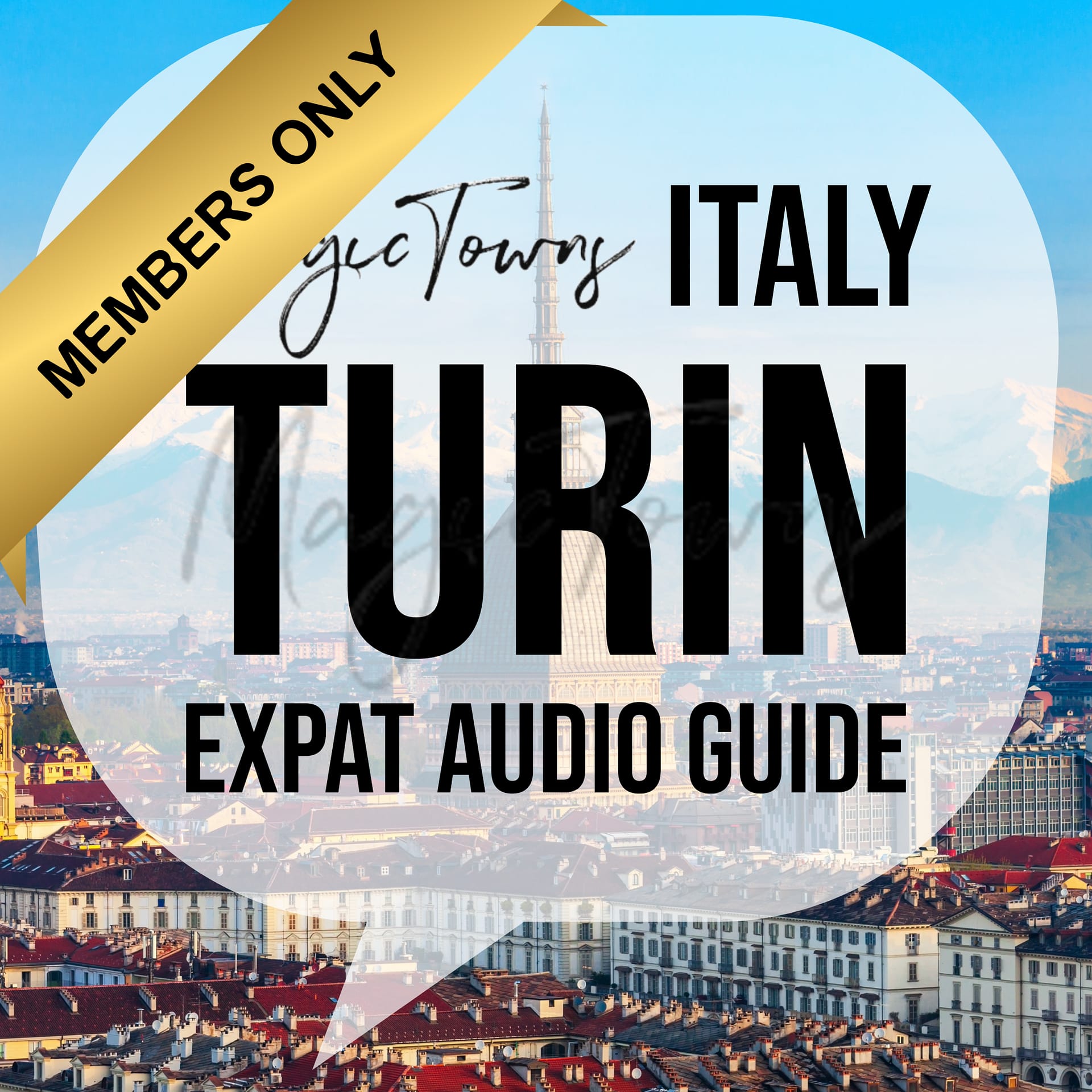

[00:00:14] Meilen: Today we’re setting our sights on Turin. It’s a really fascinating city in Italy’s Piedmont region. And it seems to be popping up more and more on the radar for expats and retirees. You’re right at the foot of the Alps, but you’re in this city with grand historical buildings rubbing shoulders with a pretty appealing modern vibe. That’s Turin in a nutshell, really.
[00:00:35] Alessia: And for this deep dive, we’re sticking strictly to the info from Magic Towns, Italy. The goal here is to really dig into what makes Turin attractive specifically for you, if you’re considering a move there. We wanna get past the tourist brochures.
[00:00:55] Meilen: Let’s unpack this then. Turin clearly has this stunning setting with the Alps right there, but it’s definitely more than just scenery, isn’t it? It’s got layers of history.
[00:01:08] Alessia: Oh, absolutely. Turin’s story starts way, way back. First it was a settlement of the Taurini people. Then the Romans showed up. They established it as a colony Julia Augusta Taurinorum back in the first century before Christ. And what’s really interesting is you can still see that Roman grid layout in the city center today. It shaped how the city grew.
[00:01:38] Meilen: That’s fascinating. And then much later, it played a huge role in Italy itself. Correct.
[00:01:43] Alessia: Dreh- und Angelpunkt. Im 19. Jahrhundert wird Turin die erste Hauptstadt des vereinigten Italiens.
[00:01:51] Meilen: Wow. The first capital, that’s a pretty big deal historically
[00:01:55] Alessia: Riesig. Es waren nur vier Jahre. Aber trotzdem,
[00:01:58] Meilen: Glauben Sie, dass diese kurze Zeit als Hauptstadt noch heute in der Stadt nachhallt? Fühlt sie sich deshalb anders an?
[00:02:07] Alessia: Ich denke schon. Die Tatsache, dass Turin, wenn auch nur für kurze Zeit, die erste Hauptstadt war, scheint ein Gefühl des Bürgerstolzes vermittelt zu haben und hat definitiv die Architektur beeinflusst, wie man an den wirklich breiten, eleganten Boulevards, den großen Plätzen und dem formalen Stil der Paläste in öffentlichen Gebäuden sieht. Das verleiht Turin ein etwas herrschaftlicheres Gefühl als anderen italienischen Großstädten.
[00:02:34] Meilen: Okay, so it’s got this deep historical weight, but it’s not just stuck in the past, right. There’s more recent stuff too. Something involving snow and skis.
[00:02:45] Alessia: Ja. Auf jeden Fall. Turin war Gastgeber der Olympischen Winterspiele 2006. Das brachte eine ganze Welle der Modernisierung mit sich und setzte die Stadt wieder auf die internationale Landkarte, aber auch schon vor den Olympischen Spielen war Turin ein Kraftzentrum der italienischen Innovation.
[00:03:07] Meilen: Was zum Beispiel?
[00:03:08] Alessia: Nun, denken Sie an Ihren Aperitivo. Der Wermut hat seinen Ursprung in Turin.
[00:03:12] Meilen: Niemals.
[00:03:13] Alessia: Oh, amazing little gianduiotti chocolate, which you’re an invention. Crispy grissini bread sticks.
[00:03:19] Meilen: Ich liebe sie.
[00:03:20] Alessia: Und selbst die bescheidene Espressomaschine hat ihre Wurzeln in der Stadt.
[00:03:24] Meilen: Okay. Also ist Turin im Grunde für die Hälfte meiner täglichen Vergnügungen verantwortlich. Gut zu wissen.
[00:03:31] Alessia: Pretty much. And it wasn’t just food and drink industry was massive there.
[00:03:36] Meilen: Ah ja. Die Autos FIAT. Ganz genau. Es hat Turin als wichtiges industrielles Zentrum in Italien zementiert. Lange Zeit bildeten Turin, Mailand und Genua das industrielle Dreieck.
[00:03:50] This was the engine driving Italy’s industrialization, both in the late 19th century and again during the economic boom after the second World War . That industrial heritage is still part of the city’s DNA.
[00:04:05] Alessia: Vom römischen Vorposten zum Industriemotor. Was für ein Wandel im Laufe der Jahrhunderte. Ich habe auch gesehen, dass sie als Gamma Global City aufgeführt ist. I. Was bedeutet das eigentlich für jemanden, der dort lebt?
[00:04:20] Meilen: Good question. That Gamma classification basically means it’s recognized as an important city in the global economic network. It signals a decent level of international business connectivity, maybe not quite on the scale of an alpha city like Milan or London, but still significant for you as an expat, that could mean more international job opportunities in certain fields. Generally a city that looks outward.
[00:04:47] Alessia: Das macht Sinn. Und für Kulturinteressierte gibt es auch UNESCO-Stätten.
[00:04:53] Meilen: Yes. Two actually. You’ve got the residences of the Royal House of Savoy and the Po hills.
[00:05:02] Alessia: Erzählen Sie mir von den königlichen Residenzen. Klingt großartig.
[00:05:05] Meilen: They really are. It’s not just one palace. It’s a whole network of amazing buildings, palaces, castles, hunting lodges and gardens scattered in and around Turin and the Piedmont region. They belong to the Savoy dynasty, the family that eventually ruled Italy. Each one gives you an incredible window into centuries of royal history and frankly, opulence. Think amazing day trips right from your doorstep.
[00:05:36] Alessia: Und die Po-Hügel. Das klingt viel natürlicher.
[00:05:38] Meilen: It is, that UNESCO designation recognizes the area for its natural beauty, but also its cultural landscape. It’s like Turin’s green lung offering fantastic views back over the city. Space to get outdoors.
[00:05:56] Alessia: Das klingt nach einer Stadt mit Charakter und Stärke. Ich habe etwas über ihre Rolle während des Zweiten Weltkriegs gelesen.
[00:06:02] Meilen: Yes, that’s a crucial part of Turin’s more recent history. It was a major center for the anti-fascist resistance movement during the war. The people there made huge sacrifices and showed incredible bravery, so much so that the city was awarded the gold medal of military valor after the war.
[00:06:22] Alessia: Okay, so the history is undeniable, really rich, but let’s shift gears. What’s it actually like to live there now, day-to-day life, the culture, the vibe for an expat or retiree?
[00:06:36] Meilen: Well, the consistent picture is of a city that’s maybe a bit more relaxed, gentler than somewhere like Milan. And so I feel like seemingly on one side of it, you have this very
[00:06:48] Alessia: Sanftmütiger. Das gefällt mir
[00:06:49] Meilen: Sie beschreiben es als unaufdringliche Eleganz, einen ruhigen Charme, sogar einen Hauch von nordeuropäischem Flair, vielleicht in seiner Organisation oder Atmosphäre.
[00:07:01] Alessia: Interessant. Also weniger chaotisch als Rom vielleicht?
[00:07:06] Meilen: Yes. That slower pace often comes up as a major plus for expats who’ve moved there.
[00:07:13] Alessia: Wie findet man seinen Stamm? Gibt es so etwas wie eine internationale Gemeinschaft?
[00:07:18] Meilen: Ja, definitiv. Über 134.000 ausländische Einwohner.
[00:07:24] Alessia: Wow, that’s a lot. It
[00:07:25] Meilen: suggests you’ll find a diverse mix of people and likely established networks for expats from different countries.
[00:07:30] Hoffentlich eine einladende Atmosphäre für Neuankömmlinge.
[00:07:33] Alessia: Okay, good to know. Now, onto a very important topic. The food. What’s Turin cooking up for residents?
[00:07:43] Meilen: Oh, prepare yourself. Turin and the whole Piedmont region are famous, world famous for amazing food. It’s rich, sophisticated stuff.
[00:07:52] Alessia: Okay, nennen Sie mir ein paar Beispiele.
[00:07:54] Meilen: You’ve got agnolotti, tiny hand pinched pasta, usually filled with meat, so delicate. Then there’s tajarin thin, bright yellow egg pasta. Perfect.
[00:08:06] Alessia: Und das klassische vitello tonnato, kaltes Kalbfleisch in Scheiben mit einer cremigen Thunfisch- und Kapernsauce. Klingt komisch. Schmeckt aber fantastisch.
[00:08:15] Meilen: I know. It’s, it’s, it’s surprisingly good. Or
[00:08:17] Alessia: Etwas Härteres. Langsam gegartes Rindfleisch in einem unglaublichen Barolo-Wein, und Sie müssen unbedingt ein Bicerin probieren.
[00:08:26] Meilen: Um, what’s that?
[00:08:27] Alessia: It’s unique to Turin, a layered drink served in a glass. Hot espresso on the bottom. Then rich, thick, hot chocolate topped with lightly whipped cream. Heaven in a glass, basically.
[00:08:43] Meilen: Okay. Verkauft. Das klingt unglaublich. Besonders an einem kalten Tag.
[00:08:47] Alessia: Exactly. And speaking of chocolate Turin’s reputation there is legendary.
[00:08:54] Meilen: That’s what I hear. The chocolate capital.
[00:08:56] Alessia: Unequivocally, the chocolate capital of Italy. This isn’t a new fad. Turin is where solid bite-sized chocolate was invented back in the 19th century and it
[00:09:07] Meilen: Wirklich, ich hatte keine Ahnung.
[00:09:09] Alessia: Yeah, the city’s still full of historic chocolate shops and artisan chocolatiers, um, you’ll find. Incredible chocolate almost everywhere. If you have a sweet tooth, Turin is dangerous in the best possible.
[00:09:25] Meilen: Ja, das kann ich mir vorstellen. Aber abgesehen von Cafés und ausgefallenen Schokoladenläden, was ist mit alltäglichen Dingen wie Märkten für frische Lebensmittel,
[00:09:32] Alessia: Porta Palazzo. You have to know about Porta Palazzo. Europe’s largest open air market. It’s huge, vibrant, bustling. You can find pretty much anything there. Fresh produce, meat, cheese, clothes, household stuff, a real sensory overload and great for people watching.
[00:09:54] Meilen: Das klingt nach einem Erlebnis.
[00:09:56] Alessia: Totally. And then there’s the Balon flea market every Saturday, even batter on the second Sunday of the month, it expands into the Gran Balon, a massive antiques market. Great for finding unique things and soaking up local atmosphere.
[00:10:14] Meilen: Schön. Und wenn Sie für eine besondere Mahlzeit das Boot ausreizen wollen. Irgendwelche gehobenen Restaurants?
[00:10:19] Alessia: Oh, yes, Turin has seriously good fine dining. Michelin star spots like the historic Ristorante Del Cambio, which looks incredible, and also Vintage 1997, known for being more innovative. So you’ve got options for those celebratory meals.
[00:10:38] Meilen: Good to have the range. Culture is obviously a big draw for expats. What’s on offer in Turin beyond the food, art, museums, festivals?
[00:10:49] Alessia: It’s a rich cultural scene, loads of museums and art galleries, and there always seems to be something happening festival- wise. The Magic Towns guide specifically calls out cinema. Turin has a strong film history and hosts related events, and no surprise, a chocolate festival.
[00:11:12] Meilen: Natürlich, ein Schokoladenfestival.
[00:11:14] Alessia: What’s really cool is that Turin is known as Italy’s first Open Air Museum of Urban Art. Amazing murals and installations, transforming public spaces all over the city. Um, it’s a dynamic way to explore different neighborhoods and stumble upon art.
[00:11:36] Meilen: Das klingt wirklich cool. Ganz anders. Und ich sehe immer Bilder von Turin mit diesen überdachten Gängen mit Arkaden.
[00:11:43] Alessia: The porticos, yes. They’re such a defining feature of the city. There are over 18 kilometers of them.
[00:11:51] Meilen: 18 kilometers. Wow. They’re not just beautiful adding elegance, but super practical shelter from rain and winter, shade from sun and summer. It makes strolling around the city center, pleasant, whatever the weather and all the shops and cafes underneath have a unique feel.
[00:12:09] Alessia: Das kann ich mir vorstellen. Wie wäre es, der Stadt zu entfliehen? Grünflächen in Parks sind leicht zu finden.
[00:12:16] Meilen: Absolutely. Turin does very well for green space. There’s the big Parco del Valentino along the Po River, Parco della Pellerina, and Parco Dora built on a former industrial site, so it has a post-industrial chic look. Statistics suggest Turin has a high amount of public green space per person in lots of trees that really boosts quality of life and the Colline di TorinoDie erwähnten Hügel sind genau dort, ideal zum Wandern und Radfahren mit herrlicher Aussicht.
[00:12:50] Alessia: This is all painting a very attractive picture, but moving abroad involves practical stuff. Big practical stuff. Let’s get into housing and the cost of living. How does Turin stack up?
[00:13:04] Meilen: Right then? Nitty gritty. According to Magic Towns, this is one of Turin’s big selling points. It offers really good value, especially for a major city in northern Italy, significantly more affordable than places like Bologna oder Mailand. Sie können also den norditalienischen Lebensstil genießen, ohne dass Ihr Geldbeutel darunter leidet.
[00:13:22] Alessia: That’s appealing. Can you give us some actual numbers? What my rent or buying costs
[00:13:27] Meilen: Für Mieten? Eine Wohnung mit zwei Schlafzimmern kann je nach Lage und Zustand zwischen 360 und 1.500 Euro pro Monat kosten.
[00:13:42] Alessia: Diese Spitzenwerte sind für eine Großstadt immer noch nicht verrückt.
[00:13:47] Meilen: Ganz genau. Die durchschnittliche Miete im Stadtzentrum liegt bei 16 Euro pro Quadratmeter und Monat. Wenn Sie an einen Kauf denken, liegt der durchschnittliche Kaufpreis bei 2.112 Euro pro Quadratmeter.
[00:14:02] Alessia: Nützliche Richtwerte und allgemeine Lebenshaltungskosten pro Monat.
[00:14:07] Meilen: Magic Towns gibt eine Schätzung von rund 1.309 Euro pro Monat, einschließlich Miete. Etwa 7 36 Euro pro Monat, ohne Miete. Die individuellen Ausgaben variieren, aber diese Angaben geben Ihnen einen Anhaltspunkt.
[00:14:23] Alessia: Those figures sound more manageable than many other desirable European cities. What about healthcare? That’s always high on the list, especially for retirees.
[00:14:36] Meilen: Das Gesundheitswesen in Turin ist im Allgemeinen von hoher Qualität. Äh, die Einrichtungen sind gut.
[00:14:40] Alessia: Gibt es ein Aber?
[00:14:41] Meilen: Wie überall kann es längere Wartezeiten für bestimmte Dinge oder Unterschiede beim Zugang zu hochspezialisierter Versorgung geben. Aber der allgemeine Standard ist gut. Der örtliche öffentliche Anbieter ist die ASL Città di Torino. Die Region Piemont schneidet im Vergleich zum nationalen Durchschnitt auch bei bestimmten medizinischen Leistungen gut ab, insbesondere bei der Behandlung von Herzerkrankungen und minimalinvasiven Brustkrebsoperationen.
[00:15:12] Alessia: That’s reassuring. Getting around. The how easy is Turin to navigate?
[00:15:16] Meilen: One guide calls it a walker’s paradise, which tells you a lot. The center is very pedestrian friendly, and lots is reachable on foot.
[00:15:24] Alessia: Gut, und für längere Strecken.
[00:15:28] Meilen: There’s an efficient public transport system, though it can get crowded at rush hour. Standard city stuff includes trams. The oldest network in Italy, a modern automatic metro. And a comprehensive bus system.
[00:15:43] Alessia: Und das digitale Leben? Internet, das ist heutzutage entscheidend.
[00:15:46] Meilen: Crucial und Turin liefern. Magic Towns meldet eine starke Konnektivität. Durchschnittliche Geschwindigkeiten von 295 Megabit pro Sekunde im Download und 171 Megabit pro Sekunde im Upload. Das reicht aus, um von zu Hause aus zu arbeiten. Oder für Streaming.
[00:16:04] Alessia: That’s fast. What about finding everyday essentials? Pharmacy, supermarket, gym, coffee shop,
[00:16:10] Meilen: Everything’s readily available. Within about 10 kilometers of the center, you’ll find auto repair, banks, bars, cafes, cinemas, dentists, gyms, health clinics, libraries, museums, parks, pharmacies, restaurants, shopping centers, supermarkets, even spas.
[00:16:30] Alessia: So they’re not gonna be stuck for amenities.
[00:16:32] Meilen: Wochenendausflug. Wie nah sind der Strand oder die Berge?
[00:16:35] Alessia: Ziemlich nah. Wenn Sie sich am See entspannen möchten, ist das Chalet del Lago etwa 35 Autominuten entfernt. Na gut. Nicht das Mittelmeer, aber immerhin, Wasser.
[00:16:49] Meilen: Und Berge, denn die Alpen sind genau dort.
[00:16:51] Alessia: Und der Bergort Valli di Lanzo ist nur etwa 43 Minuten mit dem Auto entfernt. Einfacher Zugang zum Wandern, Skifahren und zur richtigen Alpenlandschaft. Das Beste aus beiden Welten. Stadtleben mit Natur vom Fass.
[00:17:08] Meilen: Für wen ist Turin wirklich da? Wer gedeiht dort?
[00:17:12] Alessia: Turin ist ideal für Expats, die eine Mischung aus Geschichte und modernem Leben in einem etwas langsameren Tempo als Mailand oder Rom suchen. Rentner profitieren von der Erschwinglichkeit, der reichen Kultur und der guten Gesundheitsversorgung. Outdoor-Fans lieben die Nähe zu den Alpen. Und Feinschmecker, insbesondere Schokoladenliebhaber, kommen hier voll auf ihre Kosten. Auch die starke internationale Gemeinschaft macht die Stadt zu einem einladenden Ort.
[00:17:38] Meilen: Wir sollten ausgewogen sein! Mit welchen Nachteilen oder Herausforderungen müssen Neueinsteiger rechnen?
[00:17:43] Alessia: Navigating the healthcare system or other bureaucracy can take patience. Public transport gets crowded at peak times. The job market can be competitive, especially if your Italian isn’t fluent. And yes, Italian paperwork can move slowly.
[00:18:05] Meilen: Wie sieht es mit Bildungsmöglichkeiten aus?
[00:18:07] Alessia: Turin ist gut angebunden. Im Umkreis von 45 bis 60 Minuten gibt es mehrere internationale oder zweisprachige Schulen: die International School of Turin, die International School of Torino, die Victoria International School, das französische Lycée Jean Giono, die zweisprachige European School of Turin, die International English School of Turin und die zweisprachige Little England School.
[00:18:33] Meilen: Wow! Die Auswahl ist groß.
[00:18:35] Alessia: Außerdem ist Turin eine bedeutende Universitätsstadt mit der historischen Universität Turin und der hoch angesehenen Polytechnischen Universität Turin.
[00:18:46] Meilen: Let’s circle back to connectivity for travel. Airports, trains.
[00:18:53] Alessia: Der nächstgelegene Flughafen ist der Flughafen Turin, der etwa 20 Minuten vom Stadtzentrum entfernt liegt und für Langstreckenflüge geeignet ist. Mailand Malpensa, und Genua Der Flughafen ist erreichbar. Turin verfügt über zwei Hauptbahnhöfe, Porta Nuova und Porta Susa, beide mit Hochgeschwindigkeitsverbindungen zu anderen italienischen und internationalen Städten. Und wie wir schon sagten, die Internetgeschwindigkeiten sind stark.
[00:19:15] Meilen: Finally, weather and air quality. What’s the climate like and how breathable is the air?
[00:19:19] Alessia: Turin has varied seasons. Winters are generally mild, summers warm and often sunny. Rainfall is fairly evenly spread and there’s occasional light snow in winter, which looks pretty against the Alps.
[00:19:31] Meilen: Sehr schön.
[00:19:32] Alessia: Die durchschnittlichen Tiefstwerte im Januar liegen bei minus 1,6 Grad Celsius, die Höchstwerte bei 6,4 Grad. Im Juli liegen die Tiefstwerte bei durchschnittlich 17,6 und die Höchstwerte bei 20.
[00:19:49] Meilen: Und die Luftqualität.
[00:19:50] Alessia: Overall, it’s balance and supports wellbeing. Fair for PM 10 and Ozone. Moderate for pm 2.5. Good for nitrogen and sulfur dioxide. Giving an overall rating of 82 out of 100. Decent for a city this size.
[00:20:06] Meilen: Also alles auf den Punkt gebracht. Turin bietet eine überzeugende Mischung für potenzielle Auswanderer und Ruheständler.
[00:20:14] Alessia: Auf jeden Fall. Tiefe Geschichte, lebendige Kultur, erstaunliches Essen, relativ erschwinglich, gute Gesundheitsversorgung, viel Grün, und das alles mit den Alpen im Hintergrund.
[00:20:27] Meilen: Und um es für alle Zuhörer noch einmal zu betonen: Dieser ausführliche Bericht stammt direkt aus dem Torino Expat Guide auf der Magic Towns Italy Website.
[00:20:38] Alessia: Wir möchten Sie ermutigen, diese Ressourcen selbst zu prüfen und herauszufinden, ob Turin etwas für Sie sein könnte.
[00:20:44] Meilen: And maybe a final thought. What specific part of Turin’s rhythm, history, elegance, industry, food, or nature, resonates most strongly with your idea of the perfect expat or retirement life in Italy? Something to mull over.
 English
 French
 German
 Italian
 Danish