

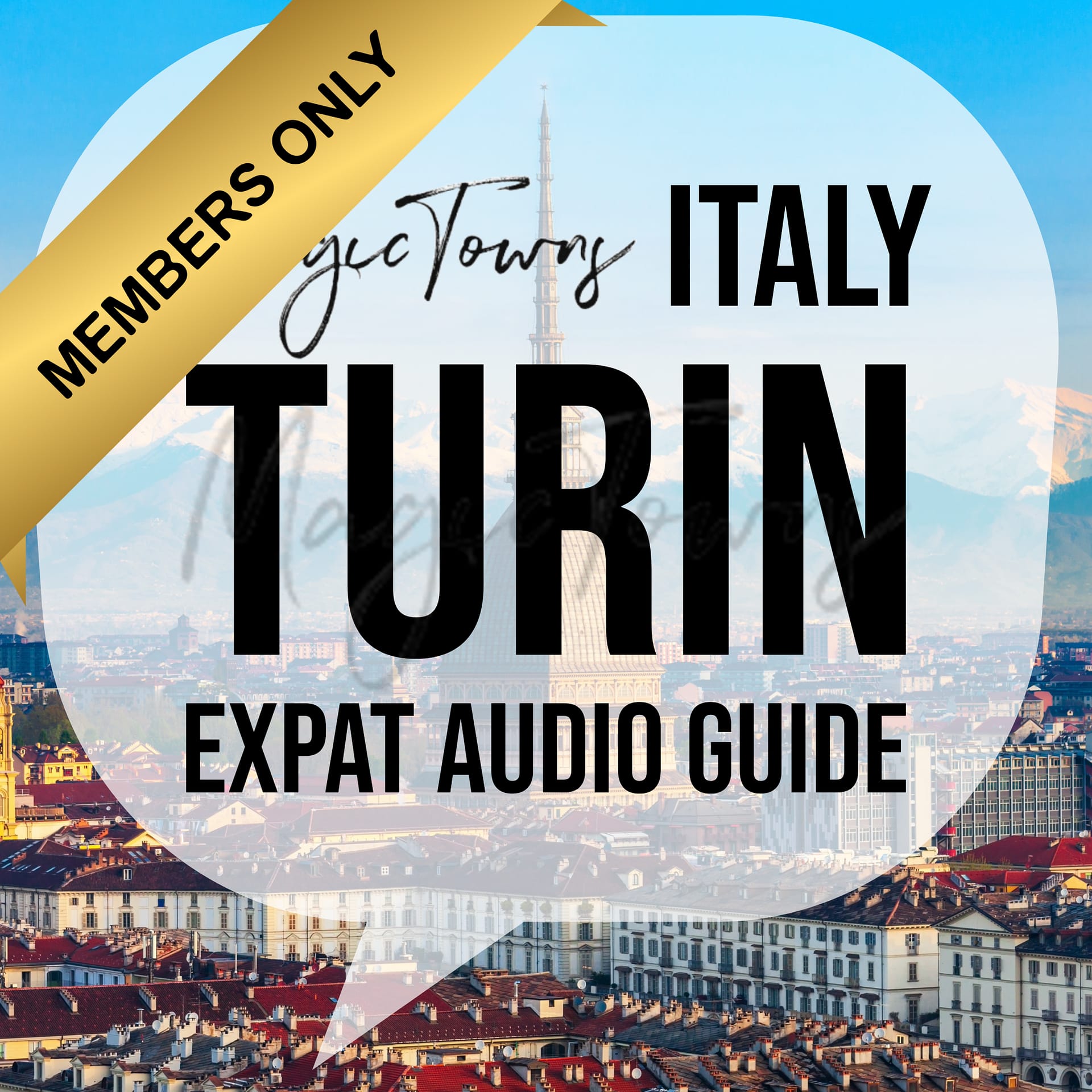

[00:00:14] Miglia: Today we’re setting our sights on Turin. It’s a really fascinating city in Italy’s Piedmont region. And it seems to be popping up more and more on the radar for expats and retirees. You’re right at the foot of the Alps, but you’re in this city with grand historical buildings rubbing shoulders with a pretty appealing modern vibe. That’s Turin in a nutshell, really.
[00:00:35] Alessia: And for this deep dive, we’re sticking strictly to the info from Magic Towns, Italy. The goal here is to really dig into what makes Turin attractive specifically for you, if you’re considering a move there. We wanna get past the tourist brochures.
[00:00:55] Miglia: Let’s unpack this then. Turin clearly has this stunning setting with the Alps right there, but it’s definitely more than just scenery, isn’t it? It’s got layers of history.
[00:01:08] Alessia: Oh, absolutely. Turin’s story starts way, way back. First it was a settlement of the Taurini people. Then the Romans showed up. They established it as a colony Julia Augusta Taurinorum back in the first century before Christ. And what’s really interesting is you can still see that Roman grid layout in the city center today. It shaped how the city grew.
[00:01:38] Miglia: That’s fascinating. And then much later, it played a huge role in Italy itself. Correct.
[00:01:43] Alessia: Un ruolo centrale. Nel XIX secolo Torino diventa la prima capitale dell'Italia unita.
[00:01:51] Miglia: Wow. The first capital, that’s a pretty big deal historically
[00:01:55] Alessia: Enorme. Sono stati solo quattro anni. Ma comunque,
[00:01:58] Miglia: Pensa che quel breve periodo come capitale riecheggi ancora oggi nella città? Si sente diversa per questo motivo?
[00:02:07] Alessia: Io credo di sì. L'essere stata la prima capitale, anche se per poco tempo, sembra aver dato a Torino un senso di orgoglio civico e ha sicuramente influenzato la sua architettura, come si può vedere nei larghi ed eleganti viali, nelle grandi piazze e nello stile formale dei palazzi degli edifici pubblici. Questo conferisce a Torino un'aria un po' più signorile rispetto ad altre grandi città italiane.
[00:02:34] Miglia: Okay, so it’s got this deep historical weight, but it’s not just stuck in the past, right. There’s more recent stuff too. Something involving snow and skis.
[00:02:45] Alessia: Sì, è vero. Sicuramente. Torino ha ospitato le Olimpiadi invernali del 2006. Questo ha portato un'ondata di modernizzazione e l'ha riportata sulla mappa internazionale in grande stile, ma anche prima delle Olimpiadi, Torino era già una potenza dell'innovazione italiana.
[00:03:07] Miglia: Ad esempio?
[00:03:08] Alessia: Pensate al vostro aperitivo. Il vermouth è nato a Torino.
[00:03:12] Miglia: Non è possibile.
[00:03:13] Alessia: Oh, amazing little gianduiotti chocolate, which you’re an invention. Crispy grissini bread sticks.
[00:03:19] Miglia: Li adoro.
[00:03:20] Alessia: Anche l'umile macchina da caffè espresso ha le sue radici legate alla città.
[00:03:24] Miglia: Ok, quindi Torino è praticamente responsabile di metà dei miei piaceri quotidiani. Buono a sapersi.
[00:03:31] Alessia: Pretty much. And it wasn’t just food and drink industry was massive there.
[00:03:36] Miglia: Ah sì. Le auto FIAT. Esattamente. Ha assolutamente consolidato il ruolo di Torino come importante polo industriale italiano. Per molto tempo, Torino, Milano e Genova hanno costituito il Triangolo Industriale.
[00:03:50] This was the engine driving Italy’s industrialization, both in the late 19th century and again during the economic boom after the second World War . That industrial heritage is still part of the city’s DNA.
[00:04:05] Alessia: Da avamposto romano a motore industriale. Una bella trasformazione nel corso dei secoli. Ho anche visto che è elencata come Città Globale Gamma. Cosa significa in realtà per chi ci vive?
[00:04:20] Miglia: Good question. That Gamma classification basically means it’s recognized as an important city in the global economic network. It signals a decent level of international business connectivity, maybe not quite on the scale of an alpha city like Milan or London, but still significant for you as an expat, that could mean more international job opportunities in certain fields. Generally a city that looks outward.
[00:04:47] Alessia: È logico. E per gli amanti della cultura, ci sono anche i siti UNESCO.
[00:04:53] Miglia: Yes. Two actually. You’ve got the residences of the Royal House of Savoy and the Po hills.
[00:05:02] Alessia: Mi parli delle residenze reali. Sembra una cosa grandiosa.
[00:05:05] Miglia: They really are. It’s not just one palace. It’s a whole network of amazing buildings, palaces, castles, hunting lodges and gardens scattered in and around Turin and the Piedmont region. They belong to the Savoy dynasty, the family that eventually ruled Italy. Each one gives you an incredible window into centuries of royal history and frankly, opulence. Think amazing day trips right from your doorstep.
[00:05:36] Alessia: E le colline del Po. Sembra più naturale.
[00:05:38] Miglia: It is, that UNESCO designation recognizes the area for its natural beauty, but also its cultural landscape. It’s like Turin’s green lung offering fantastic views back over the city. Space to get outdoors.
[00:05:56] Alessia: Sembra una città con un carattere e una forza reali. Ho letto qualcosa sul suo ruolo durante la Seconda Guerra Mondiale.
[00:06:02] Miglia: Yes, that’s a crucial part of Turin’s more recent history. It was a major center for the anti-fascist resistance movement during the war. The people there made huge sacrifices and showed incredible bravery, so much so that the city was awarded the gold medal of military valor after the war.
[00:06:22] Alessia: Okay, so the history is undeniable, really rich, but let’s shift gears. What’s it actually like to live there now, day-to-day life, the culture, the vibe for an expat or retiree?
[00:06:36] Miglia: Well, the consistent picture is of a city that’s maybe a bit more relaxed, gentler than somewhere like Milan. And so I feel like seemingly on one side of it, you have this very
[00:06:48] Alessia: Più gentile. Mi piace che
[00:06:49] Miglia: Lo descrivono come dotato di un'eleganza sobria, un fascino tranquillo, persino un accenno di atmosfera nordeuropea, forse nell'organizzazione o nell'atmosfera.
[00:07:01] Alessia: Interessante. Quindi meno caotico di Roma, forse?
[00:07:06] Miglia: Yes. That slower pace often comes up as a major plus for expats who’ve moved there.
[00:07:13] Alessia: E come trovare la propria tribù? Esiste una comunità internazionale?
[00:07:18] Miglia: Sì, decisamente. Oltre 134.000 residenti stranieri.
[00:07:24] Alessia: Wow, that’s a lot. It
[00:07:25] Miglia: suggests you’ll find a diverse mix of people and likely established networks for expats from different countries.
[00:07:30] Si spera in un'atmosfera accogliente per i nuovi arrivati.
[00:07:33] Alessia: Okay, good to know. Now, onto a very important topic. The food. What’s Turin cooking up for residents?
[00:07:43] Miglia: Oh, prepare yourself. Turin and the whole Piedmont region are famous, world famous for amazing food. It’s rich, sophisticated stuff.
[00:07:52] Alessia: Ok, fatemi qualche esempio.
[00:07:54] Miglia: You’ve got agnolotti, tiny hand pinched pasta, usually filled with meat, so delicate. Then there’s tajarin thin, bright yellow egg pasta. Perfect.
[00:08:06] Alessia: E il classico vitello tonnato, affettato freddo con una salsa cremosa di tonno e capperi. Sembra strano. Il sapore è sorprendente.
[00:08:15] Miglia: I know. It’s, it’s, it’s surprisingly good. Or
[00:08:17] Alessia: Qualcosa di più resistente. Manzo cotto a fuoco lento in un incredibile vino Barolo, e assolutamente da provare il bicerin.
[00:08:26] Miglia: Um, what’s that?
[00:08:27] Alessia: It’s unique to Turin, a layered drink served in a glass. Hot espresso on the bottom. Then rich, thick, hot chocolate topped with lightly whipped cream. Heaven in a glass, basically.
[00:08:43] Miglia: Ok. Aggiudicato. Sembra incredibile. Soprattutto in una giornata fredda.
[00:08:47] Alessia: Exactly. And speaking of chocolate Turin’s reputation there is legendary.
[00:08:54] Miglia: That’s what I hear. The chocolate capital.
[00:08:56] Alessia: Unequivocally, the chocolate capital of Italy. This isn’t a new fad. Turin is where solid bite-sized chocolate was invented back in the 19th century and it
[00:09:07] Miglia: Davvero, non ne avevo idea.
[00:09:09] Alessia: Yeah, the city’s still full of historic chocolate shops and artisan chocolatiers, um, you’ll find. Incredible chocolate almost everywhere. If you have a sweet tooth, Turin is dangerous in the best possible.
[00:09:25] Miglia: Lo immagino. Ma oltre ai caffè e alle cioccolaterie di lusso, che dire delle cose di tutti i giorni, come i mercati di cibo fresco,
[00:09:32] Alessia: Porta Palazzo. You have to know about Porta Palazzo. Europe’s largest open air market. It’s huge, vibrant, bustling. You can find pretty much anything there. Fresh produce, meat, cheese, clothes, household stuff, a real sensory overload and great for people watching.
[00:09:54] Miglia: Sembra un'esperienza.
[00:09:56] Alessia: Totally. And then there’s the Balon flea market every Saturday, even batter on the second Sunday of the month, it expands into the Gran Balon, a massive antiques market. Great for finding unique things and soaking up local atmosphere.
[00:10:14] Miglia: Bello. E se volesse fare il passo più lungo della gamba per un pasto speciale. Qualche posto di alto livello?
[00:10:19] Alessia: Oh, yes, Turin has seriously good fine dining. Michelin star spots like the historic Ristorante Del Cambio, which looks incredible, and also Vintage 1997, known for being more innovative. So you’ve got options for those celebratory meals.
[00:10:38] Miglia: Good to have the range. Culture is obviously a big draw for expats. What’s on offer in Turin beyond the food, art, museums, festivals?
[00:10:49] Alessia: It’s a rich cultural scene, loads of museums and art galleries, and there always seems to be something happening festival- wise. The Magic Towns guide specifically calls out cinema. Turin has a strong film history and hosts related events, and no surprise, a chocolate festival.
[00:11:12] Miglia: Naturalmente, una festa del cioccolato.
[00:11:14] Alessia: What’s really cool is that Turin is known as Italy’s first Open Air Museum of Urban Art. Amazing murals and installations, transforming public spaces all over the city. Um, it’s a dynamic way to explore different neighborhoods and stumble upon art.
[00:11:36] Miglia: Sembra una cosa bella. Molto diverso. E vedo sempre le foto di Torino con quelle passerelle coperte con i portici.
[00:11:43] Alessia: The porticos, yes. They’re such a defining feature of the city. There are over 18 kilometers of them.
[00:11:51] Miglia: 18 kilometers. Wow. They’re not just beautiful adding elegance, but super practical shelter from rain and winter, shade from sun and summer. It makes strolling around the city center, pleasant, whatever the weather and all the shops and cafes underneath have a unique feel.
[00:12:09] Alessia: Posso immaginarlo. Che ne dite di fuggire dalla città? È facile trovare parchi verdi.
[00:12:16] Miglia: Absolutely. Turin does very well for green space. There’s the big Parco del Valentino along the Po River, Parco della Pellerina, and Parco Dora built on a former industrial site, so it has a post-industrial chic look. Statistics suggest Turin has a high amount of public green space per person in lots of trees that really boosts quality of life and the Colline di TorinoLe colline che abbiamo menzionato sono proprio lì, perfette per escursioni a piedi e in bicicletta con viste incredibili.
[00:12:50] Alessia: This is all painting a very attractive picture, but moving abroad involves practical stuff. Big practical stuff. Let’s get into housing and the cost of living. How does Turin stack up?
[00:13:04] Miglia: Right then? Nitty gritty. According to Magic Towns, this is one of Turin’s big selling points. It offers really good value, especially for a major city in northern Italy, significantly more affordable than places like Bologna o Milano. In questo modo si ottiene lo stile di vita dell'Italia settentrionale senza subire lo stesso impatto sul portafoglio.
[00:13:22] Alessia: That’s appealing. Can you give us some actual numbers? What my rent or buying costs
[00:13:27] Miglia: Per gli affitti? Un appartamento con due camere da letto può variare da circa 360 a 1.500 euro al mese, a seconda della posizione e delle condizioni.
[00:13:42] Alessia: La fascia alta non è ancora una follia per una grande città.
[00:13:47] Miglia: Esattamente. L'affitto medio in centro città è quotato intorno ai 16 euro al metro quadro al mese. Se si pensa di acquistare, il prezzo medio di acquisto è di circa 2.112 euro al metro quadro.
[00:14:02] Alessia: Parametri utili e costo complessivo della vita al mese.
[00:14:07] Miglia: Magic Towns fornisce una stima di circa 1.309 euro al mese, affitto compreso. Circa 7.36 euro al mese, escluso l'affitto. Le spese individuali variano, ma queste cifre sono indicative.
[00:14:23] Alessia: Those figures sound more manageable than many other desirable European cities. What about healthcare? That’s always high on the list, especially for retirees.
[00:14:36] Miglia: L'assistenza sanitaria a Torino è generalmente di alta qualità. Le strutture sono buone.
[00:14:40] Alessia: C'è un ma?
[00:14:41] Miglia: Come ovunque, ci possono essere tempi di attesa più lunghi per alcune cose o variazioni nell'accesso a cure altamente specializzate. Ma lo standard generale è forte. Il fornitore pubblico locale è l'ASL Città di Torino, ma anche la regione Piemonte ottiene buoni risultati rispetto alla media nazionale per alcuni servizi medici, in particolare per il trattamento delle patologie cardiache e per gli interventi minimamente invasivi per il cancro al seno.
[00:15:12] Alessia: That’s reassuring. Getting around. The how easy is Turin to navigate?
[00:15:16] Miglia: One guide calls it a walker’s paradise, which tells you a lot. The center is very pedestrian friendly, and lots is reachable on foot.
[00:15:24] Alessia: Bene, e per le distanze più lunghe.
[00:15:28] Miglia: There’s an efficient public transport system, though it can get crowded at rush hour. Standard city stuff includes trams. The oldest network in Italy, a modern automatic metro. And a comprehensive bus system.
[00:15:43] Alessia: E la vita digitale? Internet, fondamentale al giorno d'oggi.
[00:15:46] Miglia: Crucial e Torino consegnano. Magic Towns riporta una forte connettività. La velocità media è di circa 295 megabit al secondo in download e 171 megabit al secondo in upload. Un'ottima soluzione per lavorare da casa. O per lo streaming.
[00:16:04] Alessia: That’s fast. What about finding everyday essentials? Pharmacy, supermarket, gym, coffee shop,
[00:16:10] Miglia: Everything’s readily available. Within about 10 kilometers of the center, you’ll find auto repair, banks, bars, cafes, cinemas, dentists, gyms, health clinics, libraries, museums, parks, pharmacies, restaurants, shopping centers, supermarkets, even spas.
[00:16:30] Alessia: So they’re not gonna be stuck for amenities.
[00:16:32] Miglia: Fuga per il fine settimana. Quanto sono vicine la spiaggia o le montagne?
[00:16:35] Alessia: Molto vicino. Per rilassarsi in riva al lago, lo Chalet del Lago è a circa 35 minuti di auto. Ok, non è il Mediterraneo, ma è pur sempre acqua. Non è il Mediterraneo, ma è comunque acqua.
[00:16:49] Miglia: E le montagne, viste le Alpi, sono proprio lì.
[00:16:51] Alessia: Inoltre, una località montana chiamata Valli di Lanzo è a soli 43 minuti di auto. Facile accesso alle escursioni, allo sci e al vero e proprio paesaggio alpino. Il meglio dei due mondi. Vivere in città con la natura a portata di mano.
[00:17:08] Miglia: Per chi è davvero Torino? Chi ci vive?
[00:17:12] Alessia: Torino è ideale per gli espatriati che desiderano un mix di storia e vita moderna a un ritmo leggermente più lento rispetto a Milano o Roma. I pensionati possono trarre vantaggio dalla convenienza economica, dalla ricchezza culturale e dalla buona assistenza sanitaria. Gli amanti della vita all'aria aperta amano la vicinanza delle Alpi. E i buongustai, soprattutto gli amanti del cioccolato, saranno in paradiso. La forte comunità internazionale la rende accogliente.
[00:17:38] Miglia: Dovremmo essere equilibrati! Eventuali svantaggi o sfide che i nuovi arrivati devono aspettarsi.
[00:17:43] Alessia: Navigating the healthcare system or other bureaucracy can take patience. Public transport gets crowded at peak times. The job market can be competitive, especially if your Italian isn’t fluent. And yes, Italian paperwork can move slowly.
[00:18:05] Miglia: E le opzioni educative?
[00:18:07] Alessia: Torino è ben servita. A circa 45-60 minuti di distanza, ci sono diverse scuole internazionali o bilingue, la Scuola Internazionale di Torino, la Scuola Internazionale di Torino, la Victoria International School, il liceo francese Jean Giono, la Scuola Europea bilingue di Torino, la Scuola Internazionale di Inglese di Torino e la scuola bilingue Little England.
[00:18:33] Miglia: Wow. Un'ampia scelta.
[00:18:35] Alessia: Inoltre, Torino è un'importante città universitaria con la storica Università di Torino e l'apprezzato Politecnico di Torino.
[00:18:46] Miglia: Let’s circle back to connectivity for travel. Airports, trains.
[00:18:53] Alessia: L'aeroporto più vicino è quello di Torino, a circa 20 minuti dal centro città, per le opzioni di lungo raggio. Milano Malpensa e Genova Gli aeroporti sono raggiungibili. Per quanto riguarda i treni, Torino ha due stazioni principali, Porta Nuova e Porta Susa, entrambe con collegamenti ad alta velocità con altre città italiane e internazionali. E come abbiamo detto, la velocità di internet è elevata.
[00:19:15] Miglia: Finally, weather and air quality. What’s the climate like and how breathable is the air?
[00:19:19] Alessia: Turin has varied seasons. Winters are generally mild, summers warm and often sunny. Rainfall is fairly evenly spread and there’s occasional light snow in winter, which looks pretty against the Alps.
[00:19:31] Miglia: Bello.
[00:19:32] Alessia: La media delle minime di gennaio è di circa 1,6 gradi centigradi, mentre le massime si aggirano intorno ai 6,4 gradi. Le minime di luglio sono in media di 17,6 gradi e le massime di 20, quindi le stagioni giuste sono
[00:19:49] Miglia: E la qualità dell'aria.
[00:19:50] Alessia: Overall, it’s balance and supports wellbeing. Fair for PM 10 and Ozone. Moderate for pm 2.5. Good for nitrogen and sulfur dioxide. Giving an overall rating of 82 out of 100. Decent for a city this size.
[00:20:06] Miglia: Quindi, riportiamo tutto a casa. Torino offre un mix interessante per potenziali espatriati e pensionati.
[00:20:14] Alessia: Assolutamente. Storia profonda, cultura vivace, cibo straordinario, relativa economicità, buona assistenza sanitaria, ampi spazi verdi, il tutto con le Alpi come sfondo.
[00:20:27] Miglia: E per ribadire, per tutti coloro che sono all'ascolto, che l'intero approfondimento proviene direttamente dalla Torino Expat Guide sul sito web di Magic Towns Italy.
[00:20:38] Alessia: Vi invitiamo quindi a controllare personalmente queste risorse e a verificare se Torino potrebbe fare al caso vostro.
[00:20:44] Miglia: And maybe a final thought. What specific part of Turin’s rhythm, history, elegance, industry, food, or nature, resonates most strongly with your idea of the perfect expat or retirement life in Italy? Something to mull over.

 English
 French
 German
 Italian
 Danish