


Miglia: Bentornati al podcast Magic Towns Italia. Italia, piazze assolate, rovine antiche, cibo straordinario e l'irresistibile fascino della Dolce Vita.,
Alessia: It’s a dream destination for so many people.
Miglia: But for anyone actually thinking about living there beyond the two week vacation, that dream can often collide with a less glamorous reality. Let’s talk about overtourism.
Alessia: Yeah, that’s the crux of it. While Italy consistently ranks among the world’s top tourist destinations, which is fantastic, of course, this popularity creates some pretty significant, often hidden challenges for residents.
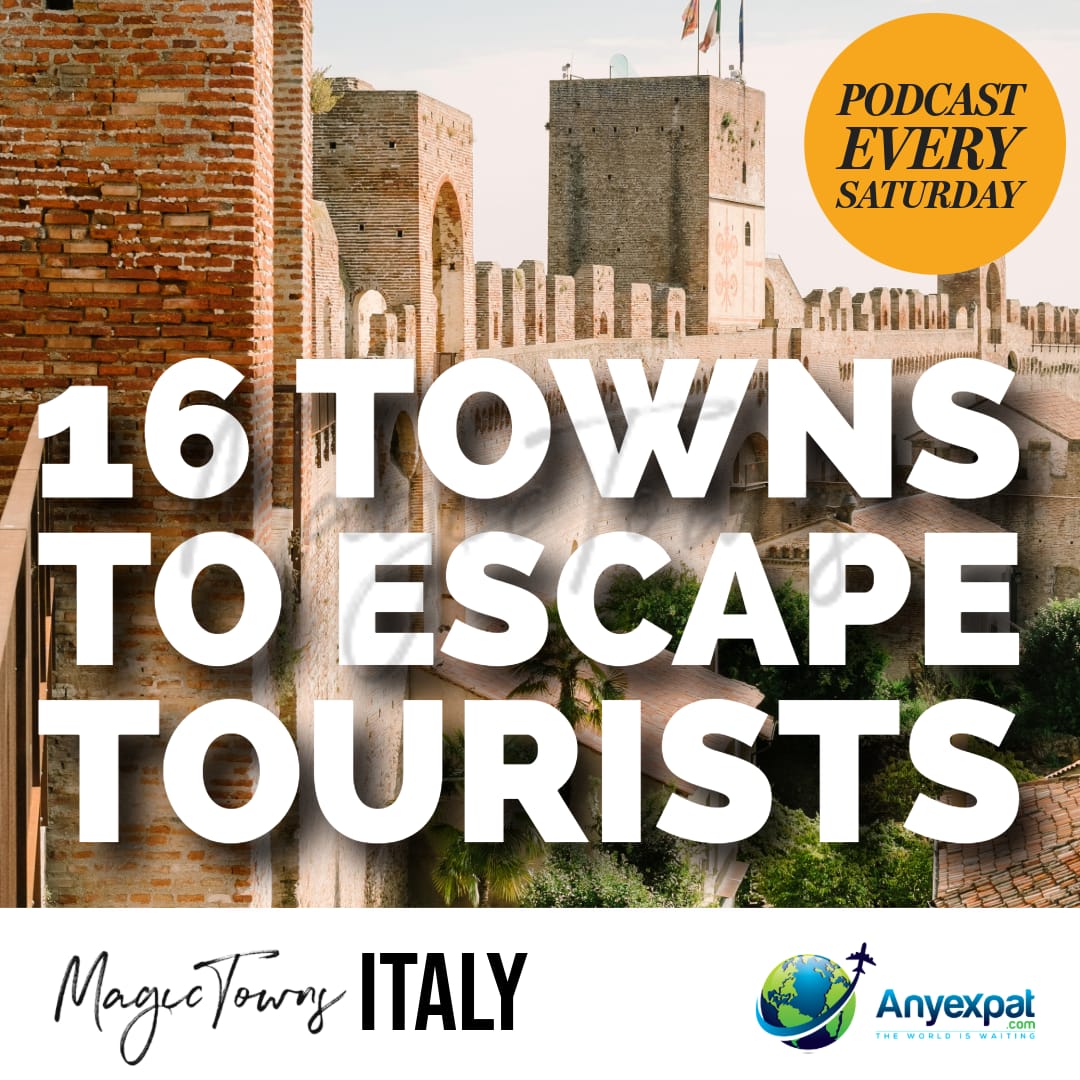
We’re going to use original data from a recent article on Magic Towns Italy. It’s called Paradise Packed, 16 Italian Towns that Escape Overtourism. They developed some really neat tools. Oh yeah. There’s a touristy index basically measures how packed a place is with visitors and a quality of life index [00:01:00] looking at livability.
We’ll use these because honestly, the sheer number of visitors can completely change daily life.
Miglia: Questo mette a dura prova le risorse, giusto?
Alessia: Assolutamente sì. E può persino erodere quel carattere autentico che ha attirato le persone in quel luogo in primo luogo. Quindi la nostra missione oggi è individuare dove il sovraffollamento turistico colpisce più duramente, ma soprattutto...
Metti in evidenza alcune città incredibili che offrono ancora quella straordinaria cultura italiana, quella comunità e quella qualità della vita. Lontano dalla folla.
Miglia: Perfetto per espatriati, pensionati e chiunque desideri vivere lì, non solo visitarla per qualche giorno.
Alessia: And this problem, it’s not just a vague feeling of, oh, it’s a bit busy.
The article has some hard numbers, doesn’t it? Here’s a staggering statistic. 70% of international tourists in Italy, they flock to just 1% of its territory.
Miglia: Wow. 70% in 1%. Just think about that. I know it means in places like Venice, you’re not just, you know, a tourist in a crowd. You’re often one of maybe 100 others for every single resident jostling for [00:02:00] space in what used to be someone’s quiet neighborhood square.
Alessia: E probabilmente potete immaginare quali siano le solite mete turistiche. Venezia, Firenze, la Costiera Amalfitana. Le Cinque Terre sono bellissime. Sì. Luoghi assolutamente mozzafiato.
Miglia: That beauty comes at a price for locals, a steep price. There’s a quote in the article from a local activist about Naples that really hits home. What does it say?
Alessia: The historic center of Naples is dead. Those streets aren’t neighborhoods anymore. They’ve become playgrounds, open air shopping malls. It’s quite powerful.
Miglia: Questo rende davvero l'idea, ma potresti spiegare meglio, in termini pratici e quotidiani?
Alessia: Certo. Beh, pensa alla struttura compatta delle città medievali. Quando ci si ammassano migliaia di persone in più, tutto diventa difficile. Trasporti pubblici, raccolta dei rifiuti, infrastrutture di base,
Miglia: A volte anche solo spostarsi deve essere un incubo.
Alessia: Absolutely. It’s not just inconvenient. It fundamentally changes the place and the daily struggles are real.
Immaginate di dover semplicemente sbrigare delle commissioni. C'era un articolo di un giornalista del Corriere della Sera sul Lago di Garda.
Miglia: Oh sì. A Sirmione. Ha raccontato di aver impiegato 40 minuti solo per cercare [00:03:00] parcheggio. 40 minuti.
Alessia: E poi pagare sette euro per un cono gelato.
Miglia: Seven euros. Okay. That’s not the relaxed evening passeggiata you picture, is it that leisurely walk?
Definitely not. And beyond the traffic and queues, there’s the whole short-term rental issue. Ah, the Airbnb effect.
Alessia: You got it. In some parts of Naples, the article says there’s literally one BNB for every three homes. Think about that density.
Miglia: That’s incredible. And it’s hollowing out the fabric of the city as they put it.
Rents go up, local tenants get pushed out. It really destabilizes communities. I guess some people would argue, you know, that these rentals bring in money for homeowners, especially if the local economy isn’t great, or maybe give tourists some more local experience.
Alessia: It’s a fair point. People do make that argument, but the data and the lived experience in many places suggests the cost to the actual resident community often outweighs those benefits.
A Venezia si può vedere l'estremo di questo fenomeno.
Miglia: Ora ci vivono meno persone del posto, vero?
Alessia: Way fewer. The historic [00:04:00] center has under 50,000 residents left. It’s a stark reminder as locals can’t afford to live there. The city just dust it slowly depopulates. It becomes more like a museum than a living, breathing city,
Miglia: perdere essenzialmente la propria anima.
Alessia: That’s a good way to put it. And then there are the seasonal swings,
Miglia: Giusto? La storia di Jekyll e Hyde.
Alessia: Esatto. Affollato, pieno zeppo in estate. Poi silenzioso come un cimitero. In inverno, quando gli autobus turistici se ne vanno, i negozi chiudono e i servizi diminuiscono.,
Miglia: lasciando i residenti permanenti un po' a bocca asciutta.
Alessia: Totally. So it raises a big question for anyone thinking of moving, uh, whether you’re an expat or retiring there, what kind of daily life are you really signing up for in these famous spots?
Spesso significa perdere quell'autentico carattere, quel senso di comunità.
Miglia: Ok, quindi se il sogno di Venezia è forse più simile a una realtà affollata, come lo misura effettivamente Magic Towns Italy? E, cosa fondamentale, cosa significa per il tuo portafoglio?
Alessia: Beh, usano quell'indice turistico di cui ho parlato, che considera il numero di visitatori rispetto alla popolazione residente, e alcune cifre sono semplicemente estreme.
Miglia: Quanto è estremo
Alessia: Prendiamo ad esempio un piccolo villaggio alpino come [00:05:00] Sesto in Alto Adige, con una popolazione di circa 1.900 abitanti e circa 184.000 visitatori nel 2023.
Miglia: Wait, that’s like nearly 100 tourists for every resident over the year.
Alessia: 99 fondamentalmente. Sì. Oppure Rio Maggiore nelle Cinque Terre, con una popolazione di circa 1.300 abitanti, ma oltre 100.000 visitatori all'anno.
That’s about 82 tourists per resident. Santa Doro in Sardinia, 1,200 locals, about 110,000 visitors. That’s almost 89 tourists per local. These numbers just show the immense pressure on local infrastructure, water waste, and prices.
Miglia: Not just the total number either, is it? It’s when they all arrive at once.
Alessia: Exactly. It’s the concentration during peak season that really overwhelms things. It’s not just crowded streets, it’s the town’s actual capacity. It’s water, it’s waste system, its ability to maintain its charm. Getting swamped.
Miglia: Il costo umano è evidente. Ma che dire dell'aspetto economico? Lei ha menzionato il legame tra turismo e costi immobiliari.
Alessia: Oh, it’s sharp, undeniably sharp. [00:06:00] These super touristy places often have sky high property prices. Homes become vacation rentals or investments, pricing out locals, and frankly, most expats too.
Miglia: Fammi qualche esempio. Di quanto stiamo parlando?
Alessia: Ok. Guarda Capri. Prezzi medi delle case intorno ai 10.000 euro al metro quadro.
Miglia: 10.000 euro.
Alessia: Yep. More than double the average for the province. Positano Amalfi, you’re looking at 7,000 to 10,000 per square meter easily. That’s like big global city prices.
Miglia: Cortina con le Olimpiadi in arrivo.
Alessia: Cortina d’Ampezzo, it’s surged to Parisian levels. Average around 12,000 euro per square meter, prime spots hitting over 20,000.
Miglia: Okay. That’s inaccessible for most people.
Alessia: Sì.
Miglia: Come si confronta questo con, diciamo, una città italiana più normale?
Alessia: It’s a huge contrast. More typical towns are usually in the low thousands per square meter, maybe 1,500 euro, 2000, something like that.
Miglia: Quindi il prezzo di Capri è di 10.000 euro. Esistono norme locali che cercano di regolamentare questo fenomeno o è solo il mercato che va a rotoli?
Alessia: It’s mostly market [00:07:00] forces. Unfortunately, some cities like Florence are trying to limit short-term rentals, but it’s a massive uphill battle.
Miglia: E il quadro più ampio,
Alessia: Ciò comporta un enorme aumento del costo della vita. Non solo per quanto riguarda gli alloggi, ma per tutto, persino per il caffè quotidiano. E purtroppo questo porta al depauperamento di queste famose città, che a lungo andare perdono la loro autenticità agli occhi di tutti.
Miglia: It’s a vicious cycle.
Alessia: It really is. The data clearly shows this trend as tourist density goes up, property prices follow suit. It’s a whole economic shift where only tourism businesses really thrive.
Miglia: Ok, quindi se i luoghi da cartolina forse non sono i migliori in cui vivere, dove si può trovare quella ricca cultura storica senza la folla?
Hai citato due categorie,
Alessia: right? The first category includes towns that are actually quite well known, maybe even famous in their own right, but they’ve managed to stay relatively livable. They aren’t total hidden gems yet, but they’re definitely not the overwhelmed hotspots.
Miglia: Cosa li rende diversi?
Alessia: Spesso hanno una forte economia locale, magari una grande università [00:08:00] o qualche industria che le mantiene vivaci tutto l'anno, non solo quando ci sono i turisti. Tendono ad essere più convenienti, sembrano più autentiche e offrono semplicemente un'esperienza quotidiana migliore ai residenti.
Miglia: Okay, let’s hear some examples.
Alessia: we take Padova in the Veneto region. It’s only 30 minutes from Venice by train.
Miglia: Right? I know. Padova Historic University. Giotto’s Chapel,
Alessia: exactly. One of Europe’s oldest universities founded in 1222. The Scrovegni Chapel, amazing squares like Prato della Valle, but when you’re there, it feels lived in.
Vedi la gente del posto che si gode i caffè, i mercati,
Miglia: meno turisti rispetto a Venezia, presumo.
Alessia: Way fewer. It gets about 770,000 visitors a year, which sounds like a lot, but compare that to Venice’s 5.6 million. So Padova has this easygoing vibe, plus median home prices are around 2,400 Euro per square meter, much less than Venice.
E ottiene un buon punteggio in termini di qualità della vita, soprattutto per quanto riguarda i trasporti e l'assistenza sanitaria.
Miglia: Bello.
Alessia: What else? How about Trieste way up in the northeast corner? It’s a really unique city. [00:09:00]
Miglia: Influenza austro-ungarica, giusto?
Alessia: Era il porto principale dell'Impero. Quindi ci sono la grande architettura asburgica e i famosi caffè storici.
È molto diversa dalle altre città italiane. Accoglie circa 480.000 turisti all'anno. Un numero piuttosto moderato per una città delle sue dimensioni, quindi anche in alta stagione l'atmosfera è tranquilla.
Miglia: e qualità della vita.
Alessia: Exceptionally high. It scored 90 out of 100 on our QOL index. Great balance of city life and nature. You’ve got the Karst Hills right behind it, the sea in front, and it’s surprisingly affordable.
Prezzo medio delle case intorno ai 2.500 euro al metro quadro.
Miglia: Ok, ancora una di questa categoria. Magari qualcosa di rinascimentale, ma non Firenze.
Alessia: Ferrara in Emilia Romagna. It’s a gem seat of the Esta court, so it has elegant palaces, a cool moated castle, and these amazing medieval walls. You can walk or bike on nine kilometers worth.
L'intero centro storico è patrimonio dell'UNESCO
Miglia: ma non invasa dai turisti.
Alessia: No, riceve solo circa 230.000 visitatori all'anno. Ha un [00:10:00] campo incantevole, tranquillo, quasi da piccola città, nonostante la sua storia. La chiamano la Città delle Biciclette, molto adatta alle biciclette, tranquilla, con strade acciottolate.
Miglia: e proprietà, davvero convenienti.
Alessia: Il prezzo medio degli immobili è di circa 1.400 euro al metro quadro.
Miglia: Okay. The article mentioned a few others briefly too, didn’t it?
Anche Cesenatico, con il canale.
Alessia: Um, charming port, designed by Da Vinci, QOL 83, real estate, about 3050 per square meter and even Jesolo, which is actually one of Italy’s most visited beach spots. The article notes, it manages the high numbers well, good organization, QOL 78 prices around 4,300 per square meter.
Miglia: That’s a great list. Uh, I’m curious though, thinking about Cervia versus Jesolo, both manage tourism well, you said, but what’s the feel like? What’s a typical day like in each, beyond the numbers?
Alessia: That’s a really good question. Cervia has this strong focus on sustainability. It’s pine forest, it’s salt pins. It attracts maybe a more eco-conscious [00:11:00] visitor, someone looking for nature alongside the beach.
Si respira un'atmosfera più tranquilla durante tutto l'anno,
Miglia: Per chi desidera davvero staccare la spina e mimetizzarsi, trovando un posto davvero fuori dai sentieri battuti, la categoria successiva è quella delle gemme nascoste. Giusto?
Alessia: Exactly. This is where it gets really interesting for people wanting to integrate. We’re talking towns that are genuinely not on the typical tourist map,
Miglia: davvero sotto il radar.
Alessia: Totally fewer than one or two tourists per resident per year, but, and this is key, they have incredibly high livability scores, QOL, often 93 to 95 out of 100 plus distinctive local charm, and they’re remarkably affordable. This is where you find that genuine Italian small town life without the crowds.
Ok,
Miglia: I’m excited. Where do we start?
Alessia: Let’s go to Marche Ascoli Piceno. Ever heard of it?
Miglia: Vagamente, ma dimmi di più.
Alessia: It’s a medieval city, about 46,000 people nestled between the Apennine Mountains and the Adriatic coast. The whole place is built from this beautiful travertine stone. It just glows and its main [00:12:00] square Piazza del Popolo.
Honestly, it’s often called one of Italy’s most beautiful, pure Renaissance elegance.
Miglia: Sembra fantastico. Numero di turisti.
Alessia: This is the kicker. Only about 38,000 tourists a year. That’s basically zero crowding. You’ll feel like you have the place to yourself most of the time. Living there. High quality of life, low crime, excellent healthcare. Reported lots of cultural events. Markets twice a week. Plus you can be hiking in the mountains or swimming in the Adriatic in under an hour.
Miglia: Ok, il problema. I prezzi degli immobili,
Alessia: No catch. It’s a bargain around 1,300 euro per square meter on average. It really delivers that Dolce Vita Dream. Incredible.
Miglia: Ok, dove andiamo adesso?,
Alessia: let’s head northwest to Piemonte.
Cuneo è una città di medie dimensioni, con circa 55.000 abitanti, spesso trascurata dagli stranieri.
Miglia: What’s special about Cuneo?
Alessia: Posizione, posizione, posizione. Si trova proprio ai piedi delle Alpi Marittime, quindi offre una vista spettacolare sulle montagne. È un luogo prospero ma tranquillo. Ha un'elegante strada principale fiancheggiata da [00:13:00] portici e un'enorme piazza centrale.
That’s buzzing on market days, and the food Piemonte is famous, right? Chocolate chestnut, slow food movement.
Miglia: Sembra fantastico. Qualità della vita, turisti.
Alessia: QOL is impressive. 93 out of 100. Low pollution, low crime, good schools and healthcare, tourists, very few, only about 55,000 annual visitors. Lots of parks, bike paths, good cultural calendar, and you’re only about 20 kilometers from the French Riviera if you fancy a day trip.
Miglia: E convenienza.
Alessia: Molto conveniente. Immobili a circa 1.500 euro al metro quadro.
Miglia: Wow. Okay. Let’s head south now. Sicily.
Alessia: Yes. Ragusa right in the heart of Sicily’s Baroque region. It’s a stunning hill town rebuilt after a massive earthquake. It’s actually split into the upper modern town in the older part, Ragusa Ibla, which is UNESCO listed
Miglia: Architettura barocca.
Strade labirintiche
Alessia: exactly. Golden stone palace’s, incredible churches perched on the hillside. The views are so [00:14:00] cinematic. They actually filmed the Inspector Montalbano TV series there.
Miglia: Oh, fantastico. È pieno per via dello spettacolo?
Alessia: Sorprendentemente, no. Accoglie solo 163.000 turisti all'anno, quindi mantiene davvero il suo carattere locale e brilla per la vivibilità. Punteggio QOL di 91. Ottima qualità dell'aria, basso livello di stress. La gente parla della comunità molto unita.
Miglia: Mi piace come suona.
Alessia: There’s a local saying, we have watches, but in Ragusa we don’t have time.
Miglia: Huh. I love that we have watches, but in Ragusa we don’t have time. That says it all doesn’t. It captures that slower pace. So many people are looking for
Alessia: È proprio così, e il costo della vita è molto ragionevole. Il prezzo medio degli immobili è di circa 1.400 euro al metro quadro.
Miglia: Fantastico. Qualche altro breve commento su questa lista di gemme nascoste?
Alessia: Sicuramente Forlì in Emilia Romagna. Ricca di arte e storia. Meno di un turista per abitante.
Incredibile. QL di 95. Proprietà 1.550 al metro quadro. Conegliano in Veneto. La capitale del Prosecco circondata da [00:15:00] vigneti UNESCO, QL 95 case 1.750 al metro quadro.
Miglia: La capitale del Prosecco Nizza
Alessia: and Cittadella also invented, oh, it’s this amazing medieval walled town where you can walk the entire circuit of the 13th century walls.
Pochissimi turisti, proprietà QOL 93 con un prezzo medio di 2.500 euro al metro quadro, tutti luoghi incredibili che offrono la vera vita italiana.
Miglia: I’m really drawn to that idea of Forlì rich history, but fewer than one tourist per resident. How do towns like that manage to stay? So under the radar, is it just location?
Alessia: It’s often a mix of things.
A volte sono, sì, un po' lontani dalle principali vie turistiche, magari non proprio sulla linea dell'alta velocità che collega Roma e Firenze. Quindi meno comodi per una gita di un giorno.
Miglia: Ha senso.
Alessia: Other times they just haven’t been heavily marketed internationally. Or maybe their treasures are more spread out, less concentrated in one single must see spot.
That’s easy for tour groups. [00:16:00] They require a bit more effort, a bit more intention to discover,
Miglia: Ed è proprio per questo che rimangono autentici per le persone che ci vivono.
Alessia: Esattamente.
Miglia: So wrapping this up, what does this all mean for you, the listener, if you’re dreaming of that authentic Italian life?
Alessia: Well, I think the main takeaway is that while Italy’s famous spots are famous for a reason, they’re captivating, they often come with significant trade-offs if you actually wanna live their day-to-day.
Miglia: Overtourism isn’t just an inconvenience. It can really strain the place and change that la Dolce Vita dream into something quite different, maybe quite frustrating for residents.
Alessia: But the striking thing is Italy’s sheer variety. As these examples show, there are so many incredible places offering history, beauty, a livable scale in that authentic life without the downsides of mass tourism.
Miglia: Whether you’re drawn to a lively mid-size city like Padova or Triste, or a real hidden gem like Ascoli Piceno, or Cuneo
Alessia: Esatto, i dati e le informazioni forniti da Magic Towns Italia, come il loro indice turistico e i punteggi relativi alla qualità della vita [00:17:00], offrono un punto di partenza davvero efficace per trovare il proprio equilibrio ideale.
Miglia: Quindi, il pensiero finale per gli ascoltatori,
Alessia: ultimately finding your perfect Italian town, your magic town, it’s a deeply personal journey.
Ti invitiamo caldamente a esplorare ulteriormente, utilizzando strumenti come Magic Towns, Italy Town Explorer. Puoi filtrare i risultati in base al clima, ai costi, all'assistenza sanitaria e a molti altri fattori.
Miglia: Leggi anche quelle guide per espatriati. Ottieni una prospettiva di prima mano.
Alessia: Assolutamente sì. Immergiti in questi articoli per consigli pratici ed esperienze reali.,
Miglia: Because it seems like with just a bit of research beyond the obvious postcard views, Italy’s vast 99% untapped territory holds incredible opportunities. Opportunities to really live La Dolce Vita, not just as a visitor passing through, but as a welcome member of a real local community.
Alessia: Ben detto. Continua a cercare e troverai sicuramente la casa italiana perfetta per te.
 English
 French
 German
 Italian
 Danish