

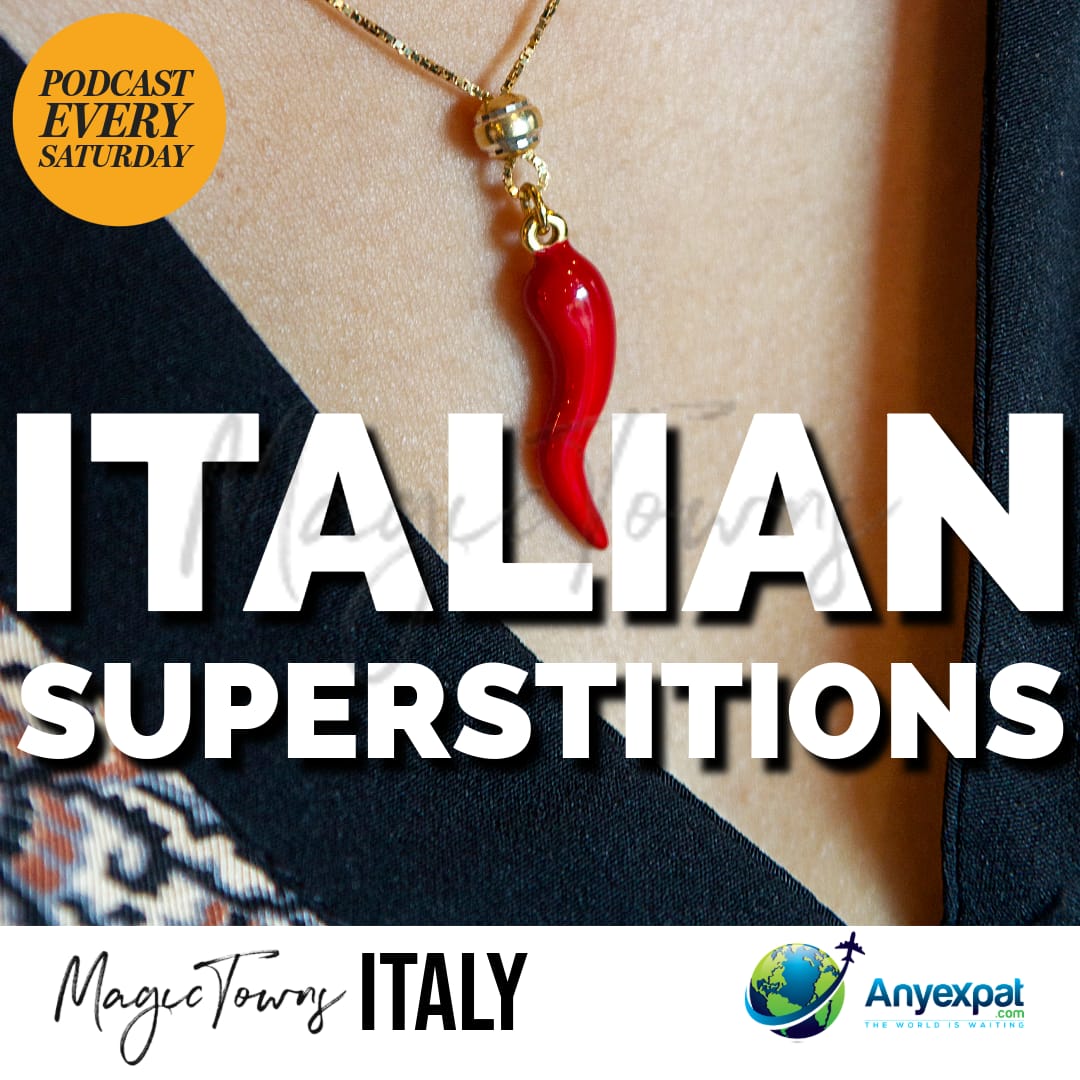

[00:00:00] Alessia: Welcome back to the Magic Towns Italy podcast. Today, we’re plunging into, well, a fascinating world where ancient beliefs kind of dance with modern life, where traditions are deeply held, but also sometimes playfully dismissed. We’re talking Italian superstitions, and it’s all summed up by that great saying, “Non è vero ma ci credo”, it’s not true, but I believe it.
[00:00:21] Miles: That phrase really does capture it perfectly, doesn’t it? It’s this charming mix of skepticism and well genuine belief. It makes Italian superstitions quite unique. They aren’t just, you know, old wives tales tucked away somewhere. Still influencing everyday life, and for anyone thinking about moving to Italy, maybe retiring there, understanding these beliefs, it’s more than just interesting. It’s actually practical. It helps you navigate social situations, you know, from dinner parties to big life events,
[00:00:50] Alessia: We’re going beyond, just knock on wood. We’ll cover protective charms, unlucky numbers, household no-nos, wedding rituals, New Year’s traditions, the whole lot.
[00:01:00] Så hvor skal vi begynde?
[00:01:01] Miles: Vi er absolut nødt til at starte med malocchio, the evil eye. Now you’re probably familiar with the general idea. It pops up in lots of cultures, but in Italy, particularly in the South, it’s this powerful belief that a certain look, usually one driven by envy can actually cause harm or bad luck.
[00:01:18] Alessia: Okay. Så hvis malocchio is this real threat, what do people actually do? What are the protections? I’ve seen those little red horn charms everywhere.
[00:01:25] Miles: Øh, ja. Du mener den Cornicelli?
[00:01:27] Alessia: That’s them.
[00:01:28] Miles: Præcis små hornformede vedhæng, ofte røde, måske koral eller emalje.
[00:01:32] You see them everywhere. Key chains, necklaces, rear view mirrors. Even on baby strollers, they kind of serve two purposes, right? Warding off the evil eye, but also attracting good luck. And here’s a crucial tip for you. A cornicello is said to be most effective when it’s given as a gift.
[00:01:47] Alessia: Åh, interessant.
[00:01:48] Miles: Yeah, so if an Italian friend gives you one, it’s a really genuine gesture of goodwill and protection.
[00:01:53] It’s lovely, and you’re right about seeing them large scale too. Think of those giant chili pepper statues in Naples. That shows how deep it runs.
[00:02:01] Alessia: So a cornicello is a great gift both ways. Now, besides charms, aren’t there hand gestures too, like le corna?
[00:02:06] Miles: Yes, le corna, the horns, it’s a really common hand sign.
[00:02:10] Du stikker din pegefinger ud i din lillefinger og krøller de andre ned. Det ligner lidt rock and roll-tegnet. Italienere kan godt finde på at vifte med den, som regel pegende nedad eller måske opad, hvis nogen nævner uheld eller ulykke, bare for at afværge det. Men, og det er virkelig vigtigt for dig at vide. Du må aldrig pege det direkte på nogen.
[00:02:28] Alessia: Hvorfor er det sådan?
[00:02:29] Miles: Det ændrer betydningen fuldstændigt. Det bliver en alvorlig fornærmelse. At antyde, at personen er hanrej, vil ikke falde i god jord.
[00:02:35] Alessia: Vigtig forskel. Peg ned eller op, men aldrig på. Det er forstået. Hvad så, hvis du har brug for noget lidt mere diskret?
[00:02:41] Miles: Ja. I høfligt selskab eller bare mere subtilt? De fleste mennesker ville vælge at toccare ferro, touch iron. That’s basically the Italian knock on wood. And well without demonstrating here. Some men might discreetly touch their groin area and women might touch a breast. It’s a similar private touch luck kind of thing when bad news is mentioned.
[00:02:59] Alessia: Så for at toccare ferro, røre ved jern. Hvorfor jern og ikke træ, som vi måske ville sige.
[00:03:03] Miles: Det går langt tilbage. Jern blev set som et magisk beskyttende metal. Tænk på en styrke. Våben, rustninger, hestesko hængt over døre og den slags. Så jern blev bare forbundet med beskyttelse. Hvis nogen i dag bekymrer sig om at blive syg eller få uheld, rækker de måske hurtigt ud og rører ved noget af jern, en nøgle eller et rækværk.
[00:03:23] Alessia: Eller måske lidt jerncharme.
[00:03:25] Miles: Or even just a nail in their pocket. It’s that better safe than sorry idea, but with an iron twist.
[00:03:30] Alessia: So if you see your new Italian neighbor, tap a lamppost after you mention your car trouble. Don’t think they’re odd.
[00:03:35] Miles: It’s just an ingrained reflex, hedging their bets against bad luck.
[00:03:39] Alessia: Okay, den næste er virkelig interessant. Den iettatore. This isn’t about bad actions, but about a person just being unlucky.
[00:03:46] Miles: That’s right. The iettatore isn’t necessarily trying to cause harm. They’re just believed to bring bad luck simply by existing, by being present. There’s even this sort of historical stereotype, pale, serious looking, maybe wears glasses, dresses in black. Often said to be from Naples or Sicily.
[00:04:03] And while it might sound like pure folklore, this belief can actually have real world impact. It could lead to someone being subtly shunned or even affect their job prospects. And here’s a key cultural point for you. In modern Italy, openly calling someone a jinx and iettatore kan faktisk betragtes som ærekrænkelse.
[00:04:22] Alessia: It carries real weight. It’s not just a lighthearted tease, then
[00:04:25] Miles: it can be, but there’s a serious undertone you need to be aware of. It really shows the gravity some labels can have.
[00:04:31] Alessia: Are there ways to counteract a yet if you think you’ve encountered one?
[00:04:35] Miles: Ja, det er rigtigt. Der er selvfølgelig modbesværgelser eller handlinger, der berører jern.
[00:04:38] Ja. At holde fast i din Cornicello. Nogle mennesker forsøger måske endda subtilt at få iettatore selv at sige, røre ved deres skulder for at bryde den formodede forbandelse. I dag behandler de fleste det med en smule humor, men. Hvis et møde går skævt, lige efter at nogen er kommet ind, og du hører mumlen, kan du måske bare skifte emne.
[00:04:56] Alessia: Good advice. Perception is clearly huge. Now, speaking of specific beliefs, let’s talk numbers. Italy has its own unique unlucky number, and it’s not 13, it’s 17.
[00:05:06] Miles: That’s the one. 17 is Italy’s big unlucky number, and the reason it’s fascinating, it comes from Latin. The Roman numeral for 17. If you rearrange those letters, you can spell VIXI.
[00:05:16] Alessia: Which strongly implies well that your life is over. It’s linked to death. Because of this, you’ll actually find some hotels in Italy, skip the 17th floor. Airlines might skip row 17.
[00:05:26] Miles: Seriøst?
[00:05:27] Alessia: Absolutely. So Friday the 17th becomes Italy’s equivalent of Friday the 13th. And it’s not just Fridays. That can be tricky. Tuesdays too.
[00:05:36] Miles: Right. There’s an old saying, “Di Venere e di Marte non si sposa né si parte”, on Venus’ Day, that’s Friday, or Mars’ Day, Tuesday. Don’t get married or start a journey. Friday was linked to sorrow, Christ’s crucifixion. Tuesday being Mars’s day, the God of war was seen as bad for starting things likely to lead to conflict.
[00:05:54] Alessia: So 17 is bad. Friday and Tuesday can be iffy for big events, but 13 isn’t universally feared. Yeah, it’s interesting. Italians know the Last Supper story, 13 at a table being bad luck for someone within the year. But outside of that specific dinner context, 13 doesn’t have the same heavy stigma as it does elsewhere.
[00:06:14] In fact, 13 can even be lucky sometimes “Fare tredici”, to make 13 means hitting the jackpot on the football lottery pools. And the number three is generally seen as very lucky, you know, linked to the Holy Trinity. So you might hear wishes or toast. Repeated three times
[00:06:32] Miles: Og Napoli har denne vidunderlige ting.
[00:06:33] Alessia: It’s this tradition of interpreting your dreams and mapping them to specific lottery numbers dreamt of a cat. There’s a number for that. Bread, a number for that too. It’s this beautiful mix of folklore trying to understand your subconscious, and while hoping to win big.
[00:06:51] Miles: Hvis vi nu bevæger os ind i huset, hvad er så den absolutte overtro, man skal kende til, hvis man vil etablere sig i Italien?
[00:06:57] Jeg tænker altid på ingen hatte på sengen.
[00:06:59] Alessia: That is probably the most classic Italian household rule. Definitely no hats on the bed. It’s believed to bring bad luck, maybe even death, and the origin is quite grim, actually, historically, when a priest came to give the last rites, he’d take off his hat and place it on the bed of the dying person.
[00:07:16] Miles: Se sammenhængen.
[00:07:18] Alessia: Exactly, so the image became strongly associated with death. Even today, you’ll see people react instantly snatching a hat off a bed. It’s almost instinctive for many.
[00:07:26] Miles: Dybt indgroet. Men hvad så med koste? Er der noget, vi bør vide om fejning?
[00:07:31] Alessia: Yes, watch where you sweep. There’s a superstition, mostly a joke now that if you accidentally sweep over an unmarried woman’s feet, she’ll never get married.
[00:07:38] And more seriously, perhaps if you move into a new house, tradition says you should buy a new broom. The idea is you’re sweeping in good fortune and leaving any bad vibes from the old place behind.
[00:07:49] Miles: Makes sense. And umbrellas indoors. That’s common elsewhere too. But is there a specific Italian angle?
[00:07:55] Alessia: There is, most cultures say opening an umbrella inside is bad luck. The Italian interpretation is often that you’re sort of tempting fate, like you’re inviting rain, meaning misfortune into your home.
[00:08:06] Miles: It’s fascinating how practical things like maybe leaky roofs in the past might blend with these beliefs. Any other bedroom superstitions.
[00:08:13] Alessia: Well, a slightly less common one, but still around is about mirrors. Some believe you shouldn’t sleep with a mirror directly facing the bed.
[00:08:20] Miles: Hvad er det?
[00:08:21] Alessia: Tanken er, at spejlet, der nogle gange ses som en portal, kan stjæle din ånd, mens du sover.
[00:08:26] So you might find perhaps older generations covering mirrors in the bedroom at night, or positioning furniture so the bed doesn’t face one.
[00:08:33] Miles: Interessant.
[00:08:34] Alessia: Du kender også udtrykket at stå op på den forkerte side af sengen. I Italien betyder det specifikt at stå ud af sengen med venstre fod først. Ordet for venstre, sinistra, deler rødder med sinister.
[00:08:44] Så venstre side har en lidt negativ konnotation.
[00:08:47] Miles: But wait, I read somewhere that sometimes you’re actually meant to enter a new house with your left foot first. It seems contradictory.
[00:08:53] Alessia: It does, doesn’t it? But yes, that’s another piece of folk wisdom. Stepping in left first confuses any evil spirits lurking at the threshold.
[00:09:01] Miles: Okay. Let’s head to the kitchen and the dining table, though the heart of the Italian home. What rules apply here? I know bread is a big one.
[00:09:08] Alessia: Helt afgørende. Læg aldrig nogensinde et brød på hovedet på bordet.
[00:09:13] Miles: Hvorfor er det så slemt?
[00:09:14] Alessia: It’s considered really unlucky, but also deeply impolite. Bread is almost sacred in Italy. You know, symbolizing the body of Christ in communion. Placing it upside down is seen as profound disrespect, almost inviting poverty or misfortune.
[00:09:27] There’s even a historical anecdote about medieval executioners having their bread left upside down by bakers.
[00:09:33] Miles: Hold da op. Så hvis du gør det ved et uheld
[00:09:34] Alessia: Højre side op med det samme. Nogle ældre mennesker giver det måske endda et lille undskyldende kys. Det fremhæver virkelig ærbødigheden for basale fødevarer som brød, salt og olie. Disse ting er dyrebare.
[00:09:44] Miles: Forstået, brødet med den rigtige side opad. Hvad med at spilde salt? Det samme som andre steder.
[00:09:49] Alessia: Stort set, ja. At spilde salt er et dårligt varsel, ofte forbundet med økonomisk tab eller skænderier. Og kuren er den klassiske. Tag hurtigt en knivspids og kast den over din venstre skulder.
[00:09:59] Miles: Specielt den venstre skulder?
[00:10:00] Alessia: Because that’s where the devil is said to lurk. The salt supposedly gets in his eyes and wards off. The bad luck. Also an etiquette point. Never pass the salt shaker directly, hand to hand. Put it down on the table for the other person to pick up. Passing it directly is thought to pass on bad feelings or discord.
[00:10:16] Miles: Okay, godt tip. Nu er olivenolie flydende guld, der spildes. Det må være forfærdeligt.
[00:10:20] Alessia: Spilling olive oil is taken very seriously, especially in the South where it’s so central to life and economy. It’s seen as incredibly unlucky, a real sign of potential disaster looming wasting this precious commodity. I’ve heard stories of Nanas getting quite upset over a dropped bottle.
[00:10:38] Miles: So what’s the remedy
[00:10:39] Alessia: Igen? Salt kommer til undsætning, drys salt på spildet med det samme. Nogle laver måske endda et kors med saltet, og rent praktisk hjælper saltet med at absorbere olien og gøre gulvet mindre glat. Gammel visdom møder praktisk anvendelighed.
[00:10:54] Miles: It does seem that way, but here’s a funny one. Spilling wine is good luck. That seems counterintuitive.
[00:10:59] Alessia: It is, isn’t it? But yes, generally spilling a little wine isn’t seen as bad luck. In fact, it’s often considered good luck. There’s even a little tradition where you might dab a bit of the spilled wine behind your ears, like perfume.
[00:11:12] Miles: Okay. Vin er godt. Olie dårligt.
[00:11:13] Alessia: Ja.
[00:11:14] Miles: Got it. And there’s a specific way not to pour wine. The poisoners pour.
[00:11:18] Alessia: Åh, ja. En vigtig del af etiketten ved middagsselskaber.
[00:11:20] Skænk aldrig vin med hånden over toppen af flasken, så håndryggen vender mod personens glas.
[00:11:26] This is called “Versare alla traditora”, pouring like a traitor.
[00:11:30] Miles: Hvorfor det? Som en forræder?
[00:11:31] Alessia: Historien går, du ved, tilbage til middelalderen, måske renæssancens intriger om, at det var sådan, en person, der skjulte gift i en ring, kunne hælde ved at bruge den omvendte håndstilling til subtilt at frigive den.
[00:11:43] Miles: Fascinerende. Så hæld altid under hånden.
[00:11:45] Alessia: Præcis. Håndfladen opad eller til siden, flasken holdes nedefra. At hælde over hånden ser mistænkeligt ud, eller i det mindste skødesløst for dem, der kender traditionen.
[00:11:55] Miles: Og selv hvordan du efterlader bestik er vigtigt.
[00:11:57] Alessia: Ja, når du holder pause under et måltid eller er færdig, så prøv ikke at lade kniv og gaffel ligge på tværs på tallerkenen.
[00:12:04] Crossing them is said to invite quarrels or misfortune, maybe because it resembles a cross, and you shouldn’t mimic secret symbols carelessly. Just keep them parallel. Similarly, when you’re toasting, don’t cross arms with someone else to reach a glass further away.
[00:12:20] Dårlig form, ikke?.
[00:12:22] Miles: Let’s talk toasting then, since everyone knows that. But what are the crucial rules for a proper Italian _brindisi _to keep the luck flowing?
[00:12:29] Alessia: Okay. Essential stuff for socializing. Rule number one. Absolutely paramount. Always make eye contact with the person you’re clinking glasses with. Look them right in the eye as your glasses touch.
[00:12:40] Miles: Hvorfor er øjenkontakt så vigtig?
[00:12:41] Alessia: Det viser oprigtig respekt, men overtroen siger, at hvis man ikke får øjenkontakt, bliver man dømt til syv års uheld eller, som den populære vittighed siger, syv års dårlig sex.
[00:12:51] Miles: Hvad? Ja, okay. Motivation til at se folk i øjnene.
[00:12:54] Alessia: Definitely. You’ll often hear Italians remind each other, look me in the eyes.
[00:12:59] The origin might be medieval too. Checking the other person wasn’t poisoning your drink.
[00:13:03] Miles: Makes sense. What else? What should you not toast with? I’ve heard water is a definite no.
[00:13:08] Alessia: A massive no-no. Toasting with plain water is considered extremely bad luck, almost like wishing death upon someone. It’s associated with things like the river sticks and the underworld, or maybe with toast to fallen sailors lost at sea.
[00:13:21] Just don’t do it.
[00:13:23] Miles: Så alt andet end vand, juice og sodavand.
[00:13:24] Alessia: Yes. Wine, prosecco, spritz, juice, soda. Anything fizzy or flavorful is fine, just not plain water. It’s a surprisingly strong taboo. Other little things, some people tap their glass on the table gently after clinking, maybe to ground the toast. Never cross arms, as we said, and never toast with an empty glass.
[00:13:42] Miles: Jeg har forstået det. Øjenkontakt, ingen vand, ingen krydsning. Hold den fuld.
[00:13:45] Jeg elsker det. Okay, vi går videre til bryllupper. Selv disse lykkelige lejligheder er fyldt med overtro for at sikre, at tingene går rigtigt til. Hvad med uheldige dage at blive gift på?
[00:13:55] Alessia: Åh, ja. Traditionalister vil stadig helt sikkert undgå fredage og tirsdage.
[00:14:01] Fredag for sorg. Tirsdag for skænderier, og naturligvis vil fredag den 17. blive betragtet som særligt uheldig for et bryllup.
[00:14:09] Miles: Makes sense. What about the bride’s preparations? Any Italian spins on the something old, something new traditions.
[00:14:15] Alessia: There are. For instance, some brides might wear something green the night before the wedding. Green symbolizes fertility and good fortune. The groom absolutely must not see the bride in her dress before the ceremony. That’s pretty universal. Italy follows the something old, new, borrowed blue custom, but with added details like the bride shouldn’t wear any gold jewelry before the wedding vows.
[00:14:39] Bortset fra hendes forlovelsesring, måske. Kun vielsesringen forsegler aftalen. Nogle brude laver måske en lille bevidst rift i sløret, som siges at afværge misundelse eller lade heldet strømme ind.
[00:14:50] Miles: Og gommen nogen lykkeamuletter til ham.
[00:14:53] Alessia: Måske har han et lille stykke jern i lommen.
[00:14:55] Miles: Og efter I dos ser vi, at der kastes ris, hvad sker der ellers?
[00:14:58] Alessia: Throwing rice or sometimes confetti or petals is classic. It symbolizes wishes for fertility and abundance for the couple. Then there’s sometimes a tradition of the couple smashing a glass, maybe a vase or a drinking glass. The number of broken shards is said to represent the number of happy years of marriage they’ll have.
[00:15:15] Choose your glass wisely. And here’s a lovely one. Rain on your wedding day in Italy. That’s considered good luck.
[00:15:21] Miles: De fleste mennesker frygter regn på deres bryllupsdag.
[00:15:23] Alessia: I know, but the saying is “Sposa bagnata, sposa fortunata”, a wet bride is a lucky bride. It’s seen as washing away the past or as a sign of abundance, like rain for crops.
[00:15:33] Miles: That’s a beautiful way to look at it, and a crucial language tip for guests.
[00:15:37] Alessia: Ja, det er meget vigtigt. Du skal ikke sige Tillykke congratulations until after they’re officially married. Saying it beforehand is thought to jinx things.
[00:15:47] Miles: Om graviditet og babyer? Der er sikkert også masser af overtro. Fortæl mig om voglie mærker,
[00:15:52] Alessia: Den voglie, the craving marks. This is such a charming one. The belief is that if a pregnant woman has a strong craving for a particular food and doesn’t get it, the baby might be born with a birthmark shape like that food.
[00:16:04] Miles: Som en lille jordbærform, hvis hun har lyst til jordbær.
[00:16:06] Alessia: Or coffee or whatever it was. It’s of course medically nonsense, but it provides a wonderful excuse for everyone to indulge. The expectant mother’s every culinary whim. Can’t risk a prou shaped mark can we?
[00:16:18] Miles: Fantastisk undskyldning. Hvad med at give barnet et navn? Er der nogen traditioner der?
[00:16:22] Alessia: Traditionally, there was a strong reluctance to name a baby directly after a living relative, especially a grandparent. The belief was it could somehow steal the luck or even the life force from the older person. So babies were very often named after deceased grandparents or patron saints instead. This isn’t followed as strictly now, but some families, especially more traditional or superstitious ones, still prefer to avoid using the exact same name as a living elder
[00:16:50] Miles: Beskyttelse af den nyfødte selv mod malocchio igen,
[00:16:53] Alessia: Absolutely. Babies are seen as very vulnerable to envy or excessive admiration, so you’ll often see a little red ribbon or a tiny Cornicello or another amulet pinned to the baby’s crib or stroller. Red is key. It’s thought to distract or repel the evil eye.
[00:17:09] Miles: Og jeg har hørt, at forældrene ofte venter ret længe med at gøre vuggestuen klar.
[00:17:12] Alessia: That’s very common. Many expecting parents avoid buying lots of baby stuff or setting up the nursery too far in advance. It comes from a place of not wanting to jinx the pregnancy, not wanting to tempt fate by being overly prepared before the baby arrives safely. That’s partly why baby showers aren’t a deeply rooted Italian tradition. But once the baby is born safely, there’s a very public announcement.
[00:17:37] Miles: Åh ja, den fiocco. It’s a big, beautiful ribbon bow hung on the front door of the family’s home. It proudly tells the whole neighborhood the wonderful news.
[00:17:46] Alessia: Let’s jump to the end of the year, New Year’s Eve. Capodanno, Italy has some fantastic good luck traditions, lentils first.
[00:17:53] Miles: Yes, lentils are a must. After midnight strikes on New Year’s Eve. It’s traditional to eat a spoonful or more of stewed lentils. They’re often served with cotechino _eller _zampone, som er fyldige pølser af svinekød.
[00:18:04] Alessia: Og hvorfor linser?
[00:18:05] Miles: Because their small round shape resembles coins. So the belief is the more lentils you eat, the more money and prosperity you’ll have in the coming year. It’s a tradition that actually goes back to Roman times.
[00:18:16] Alessia: Og så måske den mest berømte, det røde undertøj.
[00:18:18] Miles: Ah, the red underwear. Yes, it’s a huge thing. Come December, shop windows are full of red lingerie and boxers. The tradition is to wear new red underwear, ideally received as a gift on New Year’s Eve. It’s supposed to bring good luck, prosperity, fertility, and love in the year ahead.
[00:18:35] Alessia: Hvorfor rød?
[00:18:36] Miles: Well, red is often seen as a powerful color, good for warding off evil spirits, or maybe it’s just become a fun, slightly racy tradition.
[00:18:43] And the proper way to do it, you’re supposed to throw it away on January 1st. Dispose of the old year’s vibes. Along with the undies.
[00:18:49] Alessia: Hvad mener du? Ud med det gamle, ja.
[00:18:51] Speaking of throwing things out, wasn’t there a more extreme version of that in some places?
[00:18:56] Miles: Yes. Historically in some parts of the south, like Naples or Calabria, there was a tradition of literally throwing old, unwanted things out of the window at midnight on New Year’s Eve, old plates, pots, maybe even small pieces of furniture.
[00:19:11] The symbolism was clear. Chucking out the past year’s misfortunes to make space for good luck.
[00:19:16] Alessia: Farlig.
[00:19:17] Miles: Extremely. Thankfully you don’t really see that anymore for obvious safety reasons, but it shows the strength of that out with the old in, with the new sentiment.
[00:19:26] Alessia: Okay, as we start to wrap up, let’s quickly cover some of the little quirks.
[00:19:30] Those almost automatic better safe than, sorry, reactions. What’s the verdict on black cats?
[00:19:35] Miles: It’s mixed, actually like elsewhere. Some Italians believe a black cat crossing your path, especially from left to right, is bad luck linked to old witchcraft fears. But others believe that if a black cat walks towards you, it’s actually bringing good fortune. So it depends on the cat’s direction and maybe who you ask.
[00:19:52] Alessia: Og i teatret siger man aldrig held og lykke.
[00:19:54] Miles: Absolutely not. The phrases “In bocca al lupo”, literally into the mouth of the wolf.
[00:19:58] Alessia: Og svaret.
[00:19:59] Miles: The correct reply is “Crepi il lupo” meaning may the wolf die. It sounds aggressive, but it’s the standard theatrical, good luck exchange.
[00:20:07] Alessia: Fodboldfans må være en hel verden af overtro eller scaramanzia sig selv.
[00:20:11] Miles: Oh completely. Italian football fans can be incredibly superstitious, lucky scars that haven’t been washed since the last win. Always sitting in the same seat at the bar, taking the exact same route to the stadium. You do not mess with a winning streaks rituals.
[00:20:26] Alessia: Det kan jeg godt forestille mig.
[00:20:27] Hvad med, hvor du sidder ved et middagsbord?
[00:20:29] Miles: Right. Try to avoid sitting right at the corner of a rectangular table. It’s considered unlucky, particularly for single people. The belief is you might not get married for seven years or ever.
[00:20:39] Alessia: Det er godt at vide. Og et virkelig praktisk råd til vores lyttere, især dem, der overvejer at købe ejendom i Italien.
[00:20:46] Miles: Ja, det er ret vigtigt, især i mindre byer eller landsbyer. Vær opmærksom på, hvordan du taler om huse. Selv lette vittigheder om, at et sted er hjemsøgt eller har dårlige vibrationer, kan nogle gange blive taget mere alvorligt, end du har tænkt dig. Og rygtet kan sprede sig. Det kan potentielt endda påvirke, hvordan folk ser på ejendommen eller dens værdi.
[00:21:05] Alessia: Så hold ejendomschatten positiv og saglig.
[00:21:07] Miles: Generelt, ja. Hold det muntert. Gem spøgelseshistorierne til Halloween, måske.
[00:21:11] Alessia: Det er virkelig fantastisk, hvordan alle disse forskellige tråde væves sammen. Det bringer os tilbage til det vidunderlige Eduardo De Filippo-citat.
[00:21:21] At være overtroisk er uvidende, men ikke at være overtroisk bringer uheld.
[00:21:25] Miles: That just sums it all up, doesn’t it? It’s that perfect Italian blend of rational thought and well hedging your bets. You might not really believe, but why take the chance? It can’t hurt.
[00:21:34] Alessia: Lige præcis. Disse overbevisninger, disse ritualer, de tilføjer så meget farve og charme til det italienske liv.
[00:21:39] De forbinder generationer. De giver en slags rytme, en måde at føle en lille smule kontrol på i en kaotisk verden.
[00:21:46] Miles: Absolutely. And for you listening, if you’re considering a move or spending significant time in Italy, understanding these customs, it really does enrich your experience. It helps you connect, integrate, avoid accidental Fauxpas, og bare sætte pris på det unikke kulturelle stof på et dybere niveau.
[00:22:04] It’s a chance to observe, maybe even participate a little.
[00:22:07] Alessia: Maybe I said in Italy, fortune favors the prepared and perhaps also the slightly superstitious. Don’t be afraid to embrace the fun side of it. Learn the little rules, observe the traditions, engage with this unique aspect of Italian culture. You never know, it might just bring you a little bit of buona fortuna.

 English
 French
 German
 Italian
 Danish