

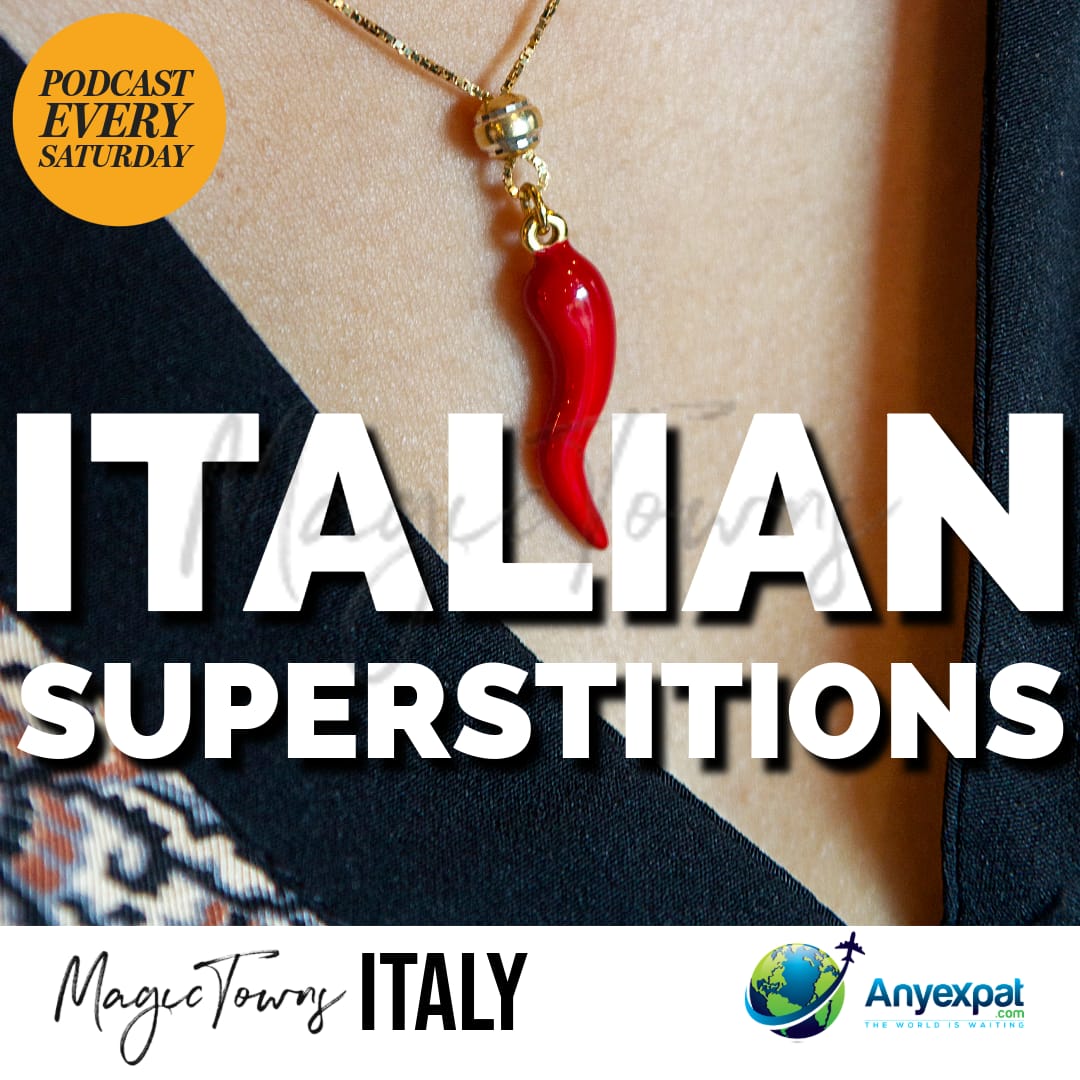

[00:00:00] Alessia: Welcome back to the Magic Towns Italy podcast. Today, we’re plunging into, well, a fascinating world where ancient beliefs kind of dance with modern life, where traditions are deeply held, but also sometimes playfully dismissed. We’re talking Italian superstitions, and it’s all summed up by that great saying, “Non è vero ma ci credo”, it’s not true, but I believe it.
[00:00:21] Miglia: That phrase really does capture it perfectly, doesn’t it? It’s this charming mix of skepticism and well genuine belief. It makes Italian superstitions quite unique. They aren’t just, you know, old wives tales tucked away somewhere. Still influencing everyday life, and for anyone thinking about moving to Italy, maybe retiring there, understanding these beliefs, it’s more than just interesting. It’s actually practical. It helps you navigate social situations, you know, from dinner parties to big life events,
[00:00:50] Alessia: We’re going beyond, just knock on wood. We’ll cover protective charms, unlucky numbers, household no-nos, wedding rituals, New Year’s traditions, the whole lot.
[00:01:00] Allora, da dove cominciare?
[00:01:01] Miglia: Dobbiamo assolutamente iniziare con il malocchio, the evil eye. Now you’re probably familiar with the general idea. It pops up in lots of cultures, but in Italy, particularly in the South, it’s this powerful belief that a certain look, usually one driven by envy can actually cause harm or bad luck.
[00:01:18] Alessia: Ok. Quindi se il malocchio is this real threat, what do people actually do? What are the protections? I’ve seen those little red horn charms everywhere.
[00:01:25] Miglia: Ah, sì. Intende il cornicelli?
[00:01:27] Alessia: That’s them.
[00:01:28] Miglia: Esattamente piccoli ciondoli a forma di corno, spesso rossi, forse di corallo o smalto.
[00:01:32] You see them everywhere. Key chains, necklaces, rear view mirrors. Even on baby strollers, they kind of serve two purposes, right? Warding off the evil eye, but also attracting good luck. And here’s a crucial tip for you. A cornicello is said to be most effective when it’s given as a gift.
[00:01:47] Alessia: Interessante.
[00:01:48] Miglia: Yeah, so if an Italian friend gives you one, it’s a really genuine gesture of goodwill and protection.
[00:01:53] It’s lovely, and you’re right about seeing them large scale too. Think of those giant chili pepper statues in Naples. That shows how deep it runs.
[00:02:01] Alessia: So a cornicello is a great gift both ways. Now, besides charms, aren’t there hand gestures too, like le corna?
[00:02:06] Miglia: Yes, le corna, the horns, it’s a really common hand sign.
[00:02:10] Si infila l'indice nel mignolo e si arricciano gli altri verso il basso. Assomiglia un po' al segno del rock and roll. Gli italiani possono mostrarlo sottilmente, di solito puntando verso il basso o magari verso l'alto, se qualcuno parla di sfortuna o di disgrazia, solo per scongiurarla. Ma, e questo è davvero importante che lo sappiate, non dovete mai puntarlo direttamente contro qualcuno. Non dovete mai puntarlo direttamente contro qualcuno.
[00:02:28] Alessia: Perché?
[00:02:29] Miglia: Questo cambia completamente il significato. Diventa un grave insulto. Se si insinua che la persona è cornuta, non sarà un buon segno.
[00:02:35] Alessia: Distinzione fondamentale. Punta verso il basso o verso l'alto, ma mai verso. Capito. E se vi serve qualcosa di più discreto?
[00:02:41] Miglia: Sì. In una compagnia educata o in modo più sottile? La maggior parte delle persone sceglierebbe di toccare ferro, touch iron. That’s basically the Italian knock on wood. And well without demonstrating here. Some men might discreetly touch their groin area and women might touch a breast. It’s a similar private touch luck kind of thing when bad news is mentioned.
[00:02:59] Alessia: Così per toccare ferro, toccare il ferro. Perché ferro, ma non legno come potremmo dire.
[00:03:03] Miglia: Beh, questo risale a molto tempo fa. Il ferro era visto come un metallo magicamente protettivo. Pensate a una forza. Armi, armature, ferri di cavallo appesi alle porte, questo genere di cose. Quindi il ferro è stato collegato alla protezione. Oggi, se qualcuno si preoccupa di ammalarsi o di essere potenzialmente sfortunato, potrebbe allungare rapidamente la mano e toccare qualcosa di ferro, una chiave, una ringhiera.
[00:03:23] Alessia: O forse un piccolo fascino di ferro.
[00:03:25] Miglia: Or even just a nail in their pocket. It’s that better safe than sorry idea, but with an iron twist.
[00:03:30] Alessia: So if you see your new Italian neighbor, tap a lamppost after you mention your car trouble. Don’t think they’re odd.
[00:03:35] Miglia: It’s just an ingrained reflex, hedging their bets against bad luck.
[00:03:39] Alessia: Ok, il prossimo è davvero interessante. Il iettatore. This isn’t about bad actions, but about a person just being unlucky.
[00:03:46] Miglia: That’s right. The iettatore isn’t necessarily trying to cause harm. They’re just believed to bring bad luck simply by existing, by being present. There’s even this sort of historical stereotype, pale, serious looking, maybe wears glasses, dresses in black. Often said to be from Naples or Sicily.
[00:04:03] And while it might sound like pure folklore, this belief can actually have real world impact. It could lead to someone being subtly shunned or even affect their job prospects. And here’s a key cultural point for you. In modern Italy, openly calling someone a jinx and iettatore può essere considerata una diffamazione.
[00:04:22] Alessia: It carries real weight. It’s not just a lighthearted tease, then
[00:04:25] Miglia: it can be, but there’s a serious undertone you need to be aware of. It really shows the gravity some labels can have.
[00:04:31] Alessia: Are there ways to counteract a yet if you think you’ve encountered one?
[00:04:35] Miglia: Oh, sì. Ci sono controincantesimi o azioni che toccano il ferro, ovviamente.
[00:04:38] Sì. Stringendo il tuo cornicello. Alcune persone potrebbero anche cercare di ottenere in modo sottile la iettatore per dire, toccargli la spalla per rompere la presunta sfiga. Al giorno d'oggi, la maggior parte delle persone la tratta con un po' di umorismo, ma... Se una riunione va male subito dopo l'ingresso di qualcuno e si sente borbottare, forse è il caso di cambiare argomento.
[00:04:56] Alessia: Good advice. Perception is clearly huge. Now, speaking of specific beliefs, let’s talk numbers. Italy has its own unique unlucky number, and it’s not 13, it’s 17.
[00:05:06] Miglia: That’s the one. 17 is Italy’s big unlucky number, and the reason it’s fascinating, it comes from Latin. The Roman numeral for 17. If you rearrange those letters, you can spell VIXI.
[00:05:16] Alessia: Which strongly implies well that your life is over. It’s linked to death. Because of this, you’ll actually find some hotels in Italy, skip the 17th floor. Airlines might skip row 17.
[00:05:26] Miglia: Sul serio?
[00:05:27] Alessia: Absolutely. So Friday the 17th becomes Italy’s equivalent of Friday the 13th. And it’s not just Fridays. That can be tricky. Tuesdays too.
[00:05:36] Miglia: Right. There’s an old saying, “Di Venere e di Marte non si sposa né si parte”, on Venus’ Day, that’s Friday, or Mars’ Day, Tuesday. Don’t get married or start a journey. Friday was linked to sorrow, Christ’s crucifixion. Tuesday being Mars’s day, the God of war was seen as bad for starting things likely to lead to conflict.
[00:05:54] Alessia: So 17 is bad. Friday and Tuesday can be iffy for big events, but 13 isn’t universally feared. Yeah, it’s interesting. Italians know the Last Supper story, 13 at a table being bad luck for someone within the year. But outside of that specific dinner context, 13 doesn’t have the same heavy stigma as it does elsewhere.
[00:06:14] In fact, 13 can even be lucky sometimes “Fare tredici”, to make 13 means hitting the jackpot on the football lottery pools. And the number three is generally seen as very lucky, you know, linked to the Holy Trinity. So you might hear wishes or toast. Repeated three times
[00:06:32] Miglia: E Napoli ha questa cosa meravigliosa.
[00:06:33] Alessia: It’s this tradition of interpreting your dreams and mapping them to specific lottery numbers dreamt of a cat. There’s a number for that. Bread, a number for that too. It’s this beautiful mix of folklore trying to understand your subconscious, and while hoping to win big.
[00:06:51] Miglia: Passando alla casa, quali sono le superstizioni domestiche da conoscere assolutamente per chi si stabilisce in Italia?
[00:06:57] Penso sempre a non mettere cappelli sul letto.
[00:06:59] Alessia: That is probably the most classic Italian household rule. Definitely no hats on the bed. It’s believed to bring bad luck, maybe even death, and the origin is quite grim, actually, historically, when a priest came to give the last rites, he’d take off his hat and place it on the bed of the dying person.
[00:07:16] Miglia: Vedere il collegamento.
[00:07:18] Alessia: Exactly, so the image became strongly associated with death. Even today, you’ll see people react instantly snatching a hat off a bed. It’s almost instinctive for many.
[00:07:26] Miglia: Profondamente radicati. E che dire delle scope? C'è qualcosa che dovremmo sapere sullo spazzare?
[00:07:31] Alessia: Yes, watch where you sweep. There’s a superstition, mostly a joke now that if you accidentally sweep over an unmarried woman’s feet, she’ll never get married.
[00:07:38] And more seriously, perhaps if you move into a new house, tradition says you should buy a new broom. The idea is you’re sweeping in good fortune and leaving any bad vibes from the old place behind.
[00:07:49] Miglia: Makes sense. And umbrellas indoors. That’s common elsewhere too. But is there a specific Italian angle?
[00:07:55] Alessia: There is, most cultures say opening an umbrella inside is bad luck. The Italian interpretation is often that you’re sort of tempting fate, like you’re inviting rain, meaning misfortune into your home.
[00:08:06] Miglia: It’s fascinating how practical things like maybe leaky roofs in the past might blend with these beliefs. Any other bedroom superstitions.
[00:08:13] Alessia: Well, a slightly less common one, but still around is about mirrors. Some believe you shouldn’t sleep with a mirror directly facing the bed.
[00:08:20] Miglia: Che cos'è?
[00:08:21] Alessia: L'idea è che lo specchio, a volte visto come un portale, possa rubare il vostro spirito mentre dormite.
[00:08:26] So you might find perhaps older generations covering mirrors in the bedroom at night, or positioning furniture so the bed doesn’t face one.
[00:08:33] Miglia: Interessante.
[00:08:34] Alessia: Inoltre, conoscete la frase "alzarsi dalla parte sbagliata del letto". In Italia, significa proprio alzarsi dal letto con il piede sinistro. La parola che indica la sinistra, sinistra, condivide le radici con sinister.
[00:08:44] Quindi il lato sinistro ha una connotazione leggermente negativa.
[00:08:47] Miglia: But wait, I read somewhere that sometimes you’re actually meant to enter a new house with your left foot first. It seems contradictory.
[00:08:53] Alessia: It does, doesn’t it? But yes, that’s another piece of folk wisdom. Stepping in left first confuses any evil spirits lurking at the threshold.
[00:09:01] Miglia: Okay. Let’s head to the kitchen and the dining table, though the heart of the Italian home. What rules apply here? I know bread is a big one.
[00:09:08] Alessia: Assolutamente fondamentale. Non mettete mai e poi mai una pagnotta di pane a testa in giù sul tavolo.
[00:09:13] Miglia: Perché è così grave?
[00:09:14] Alessia: It’s considered really unlucky, but also deeply impolite. Bread is almost sacred in Italy. You know, symbolizing the body of Christ in communion. Placing it upside down is seen as profound disrespect, almost inviting poverty or misfortune.
[00:09:27] There’s even a historical anecdote about medieval executioners having their bread left upside down by bakers.
[00:09:33] Miglia: Wow. Quindi se lo fai per sbaglio
[00:09:34] Alessia: Subito a destra. Alcuni anziani potrebbero anche dargli un piccolo bacio di scuse. Questo mette in risalto la riverenza per il pane, il sale e l'olio, che sono elementi fondamentali per il sostentamento. Queste cose sono preziose.
[00:09:44] Miglia: Capito, pane a destra in alto. E se si rovescia il sale? Come altrove.
[00:09:49] Alessia: Più o meno, sì. Versare il sale è un cattivo presagio, spesso legato a perdite finanziarie o a litigi. La cura è quella classica. Afferrate velocemente un pizzico e gettatelo sulla spalla sinistra.
[00:09:59] Miglia: In particolare la spalla sinistra?
[00:10:00] Alessia: Because that’s where the devil is said to lurk. The salt supposedly gets in his eyes and wards off. The bad luck. Also an etiquette point. Never pass the salt shaker directly, hand to hand. Put it down on the table for the other person to pick up. Passing it directly is thought to pass on bad feelings or discord.
[00:10:16] Miglia: Ok, ottimo suggerimento. Ora l'olio d'oliva è oro liquido che si rovescia. Deve essere terribile.
[00:10:20] Alessia: Spilling olive oil is taken very seriously, especially in the South where it’s so central to life and economy. It’s seen as incredibly unlucky, a real sign of potential disaster looming wasting this precious commodity. I’ve heard stories of Nanas getting quite upset over a dropped bottle.
[00:10:38] Miglia: So what’s the remedy
[00:10:39] Alessia: Ancora? Il sale viene in soccorso, cospargendo immediatamente la macchia di sale. Alcuni possono anche fare la forma di una croce con il sale e, in pratica, il sale aiuta ad assorbire l'olio e a rendere il pavimento meno scivoloso. La saggezza antica incontra la praticità.
[00:10:54] Miglia: It does seem that way, but here’s a funny one. Spilling wine is good luck. That seems counterintuitive.
[00:10:59] Alessia: It is, isn’t it? But yes, generally spilling a little wine isn’t seen as bad luck. In fact, it’s often considered good luck. There’s even a little tradition where you might dab a bit of the spilled wine behind your ears, like perfume.
[00:11:12] Miglia: Ok. Vino buono. Olio cattivo.
[00:11:13] Alessia: Sì.
[00:11:14] Miglia: Got it. And there’s a specific way not to pour wine. The poisoners pour.
[00:11:18] Alessia: Ah sì. Un elemento fondamentale del galateo delle cene.
[00:11:20] Non versate mai il vino con la mano afferrata sopra la parte superiore della bottiglia in modo che il dorso della mano sia rivolto verso il bicchiere della persona.
[00:11:26] This is called “Versare alla traditora”, pouring like a traitor.
[00:11:30] Miglia: Perché? Come un traditore?
[00:11:31] Alessia: La storia risale al Medioevo, forse all'intrigo rinascimentale, secondo cui questo era il modo in cui qualcuno che nascondeva del veleno in un anello poteva versarlo, usando la posizione invertita della mano per rilasciarlo sottilmente.
[00:11:43] Miglia: Affascinante. Quindi versare sempre sotto mano.
[00:11:45] Alessia: Esattamente. Palmo verso l'alto o di lato, bottiglia tenuta da sotto. Versare con la mano sembra sospetto, o perlomeno incauto, per chi conosce la tradizione.
[00:11:55] Miglia: Anche il modo in cui si lasciano le posate è importante.
[00:11:57] Alessia: Quando si fa una pausa durante il pasto o si finisce, si cerca di non lasciare coltello e forchetta incrociati sul piatto.
[00:12:04] Crossing them is said to invite quarrels or misfortune, maybe because it resembles a cross, and you shouldn’t mimic secret symbols carelessly. Just keep them parallel. Similarly, when you’re toasting, don’t cross arms with someone else to reach a glass further away.
[00:12:20] Brutta forma, vero?.
[00:12:22] Miglia: Let’s talk toasting then, since everyone knows that. But what are the crucial rules for a proper Italian _brindisi _to keep the luck flowing?
[00:12:29] Alessia: Okay. Essential stuff for socializing. Rule number one. Absolutely paramount. Always make eye contact with the person you’re clinking glasses with. Look them right in the eye as your glasses touch.
[00:12:40] Miglia: Perché il contatto visivo è così importante?
[00:12:41] Alessia: Dimostra sincerità e rispetto, ma la superstizione vuole che il mancato contatto visivo condanni a sette anni di sfortuna o, come dice la battuta popolare, a sette anni di cattivo sesso.
[00:12:51] Miglia: Eh? Ok. Motivazione a guardare le persone negli occhi.
[00:12:54] Alessia: Definitely. You’ll often hear Italians remind each other, look me in the eyes.
[00:12:59] The origin might be medieval too. Checking the other person wasn’t poisoning your drink.
[00:13:03] Miglia: Makes sense. What else? What should you not toast with? I’ve heard water is a definite no.
[00:13:08] Alessia: A massive no-no. Toasting with plain water is considered extremely bad luck, almost like wishing death upon someone. It’s associated with things like the river sticks and the underworld, or maybe with toast to fallen sailors lost at sea.
[00:13:21] Just don’t do it.
[00:13:23] Miglia: Quindi tutto tranne acqua, succo di frutta, soda.
[00:13:24] Alessia: Yes. Wine, prosecco, spritz, juice, soda. Anything fizzy or flavorful is fine, just not plain water. It’s a surprisingly strong taboo. Other little things, some people tap their glass on the table gently after clinking, maybe to ground the toast. Never cross arms, as we said, and never toast with an empty glass.
[00:13:42] Miglia: Capito. Contatto visivo, niente acqua, niente attraversamento. Tenetelo pieno.
[Lo adoro. Ok, passiamo ai matrimoni. Sicuramente anche queste occasioni felici sono costellate di superstizioni per assicurarsi che le cose vadano bene. E i giorni sfortunati per sposarsi?
[00:13:55] Alessia: Oh, sì. I tradizionalisti continueranno a evitare il venerdì e il martedì.
[00:14:01] Venerdì per il dolore. Martedì per i litigi, e ovviamente venerdì 17 sarebbe considerato particolarmente infausto per un matrimonio.
[00:14:09] Miglia: Makes sense. What about the bride’s preparations? Any Italian spins on the something old, something new traditions.
[00:14:15] Alessia: There are. For instance, some brides might wear something green the night before the wedding. Green symbolizes fertility and good fortune. The groom absolutely must not see the bride in her dress before the ceremony. That’s pretty universal. Italy follows the something old, new, borrowed blue custom, but with added details like the bride shouldn’t wear any gold jewelry before the wedding vows.
[00:14:39] A parte l'anello di fidanzamento, forse. Solo l'anello nuziale suggella l'accordo. Alcune spose possono fare un piccolo strappo deliberato nel loro velo, si dice per allontanare l'invidia o far entrare la buona sorte.
[00:14:50] Miglia: E allo sposo qualche portafortuna per lui.
[00:14:53] Alessia: Potrebbe portare in tasca un piccolo pezzo di ferro.
[00:14:55] Miglia: E dopo gli "I dos", vediamo il lancio del riso, cos'altro succede?
[00:14:58] Alessia: Throwing rice or sometimes confetti or petals is classic. It symbolizes wishes for fertility and abundance for the couple. Then there’s sometimes a tradition of the couple smashing a glass, maybe a vase or a drinking glass. The number of broken shards is said to represent the number of happy years of marriage they’ll have.
[00:15:15] Choose your glass wisely. And here’s a lovely one. Rain on your wedding day in Italy. That’s considered good luck.
[00:15:21] Miglia: La maggior parte delle persone teme la pioggia nel giorno del proprio matrimonio.
[00:15:23] Alessia: I know, but the saying is “Sposa bagnata, sposa fortunata”, a wet bride is a lucky bride. It’s seen as washing away the past or as a sign of abundance, like rain for crops.
[00:15:33] Miglia: That’s a beautiful way to look at it, and a crucial language tip for guests.
[00:15:37] Alessia: Sì, è molto importante. Non si deve dire congratulazioni congratulations until after they’re officially married. Saying it beforehand is thought to jinx things.
[00:15:47] Miglia: Sulla gravidanza e sui bambini? Scommetto che anche lì ci sono un sacco di superstizioni. Mi parli del voglie marchi,
[00:15:52] Alessia: Il voglie, the craving marks. This is such a charming one. The belief is that if a pregnant woman has a strong craving for a particular food and doesn’t get it, the baby might be born with a birthmark shape like that food.
[00:16:04] Miglia: Come una piccola forma di fragola se ha voglia di fragole.
[00:16:06] Alessia: Or coffee or whatever it was. It’s of course medically nonsense, but it provides a wonderful excuse for everyone to indulge. The expectant mother’s every culinary whim. Can’t risk a prou shaped mark can we?
[00:16:18] Miglia: Oh, una scusa fantastica. E il nome del bambino? C'è qualche tradizione?
[00:16:22] Alessia: Traditionally, there was a strong reluctance to name a baby directly after a living relative, especially a grandparent. The belief was it could somehow steal the luck or even the life force from the older person. So babies were very often named after deceased grandparents or patron saints instead. This isn’t followed as strictly now, but some families, especially more traditional or superstitious ones, still prefer to avoid using the exact same name as a living elder
[00:16:50] Miglia: Proteggere il neonato stesso dalle malocchio di nuovo,
[00:16:53] Alessia: Absolutely. Babies are seen as very vulnerable to envy or excessive admiration, so you’ll often see a little red ribbon or a tiny cornicello or another amulet pinned to the baby’s crib or stroller. Red is key. It’s thought to distract or repel the evil eye.
[00:17:09] Miglia: Ho sentito dire che spesso i genitori aspettano fino a tardi per preparare la cameretta.
[00:17:12] Alessia: That’s very common. Many expecting parents avoid buying lots of baby stuff or setting up the nursery too far in advance. It comes from a place of not wanting to jinx the pregnancy, not wanting to tempt fate by being overly prepared before the baby arrives safely. That’s partly why baby showers aren’t a deeply rooted Italian tradition. But once the baby is born safely, there’s a very public announcement.
[00:17:37] Miglia: Oh sì, il fiocco. It’s a big, beautiful ribbon bow hung on the front door of the family’s home. It proudly tells the whole neighborhood the wonderful news.
[00:17:46] Alessia: Let’s jump to the end of the year, New Year’s Eve. Capodanno, Italy has some fantastic good luck traditions, lentils first.
[00:17:53] Miglia: Yes, lentils are a must. After midnight strikes on New Year’s Eve. It’s traditional to eat a spoonful or more of stewed lentils. They’re often served with cotechino _o _zampone, che sono ricche salsicce di maiale.
[00:18:04] Alessia: E perché le lenticchie?
[00:18:05] Miglia: Because their small round shape resembles coins. So the belief is the more lentils you eat, the more money and prosperity you’ll have in the coming year. It’s a tradition that actually goes back to Roman times.
[00:18:16] Alessia: E poi forse la più famosa, la biancheria intima rossa.
[00:18:18] Miglia: Ah, the red underwear. Yes, it’s a huge thing. Come December, shop windows are full of red lingerie and boxers. The tradition is to wear new red underwear, ideally received as a gift on New Year’s Eve. It’s supposed to bring good luck, prosperity, fertility, and love in the year ahead.
[00:18:35] Alessia: Perché il rosso?
[00:18:36] Miglia: Well, red is often seen as a powerful color, good for warding off evil spirits, or maybe it’s just become a fun, slightly racy tradition.
[00:18:43] And the proper way to do it, you’re supposed to throw it away on January 1st. Dispose of the old year’s vibes. Along with the undies.
[00:18:49] Alessia: Eh? Fuori il vecchio.
[00:18:51] Speaking of throwing things out, wasn’t there a more extreme version of that in some places?
[00:18:56] Miglia: Yes. Historically in some parts of the south, like Naples or Calabria, there was a tradition of literally throwing old, unwanted things out of the window at midnight on New Year’s Eve, old plates, pots, maybe even small pieces of furniture.
[00:19:11] The symbolism was clear. Chucking out the past year’s misfortunes to make space for good luck.
[00:19:16] Alessia: Pericoloso.
[00:19:17] Miglia: Extremely. Thankfully you don’t really see that anymore for obvious safety reasons, but it shows the strength of that out with the old in, with the new sentiment.
[00:19:26] Alessia: Okay, as we start to wrap up, let’s quickly cover some of the little quirks.
[00:19:30] Those almost automatic better safe than, sorry, reactions. What’s the verdict on black cats?
[00:19:35] Miglia: It’s mixed, actually like elsewhere. Some Italians believe a black cat crossing your path, especially from left to right, is bad luck linked to old witchcraft fears. But others believe that if a black cat walks towards you, it’s actually bringing good fortune. So it depends on the cat’s direction and maybe who you ask.
[00:19:52] Alessia: E a teatro non si dice mai buona fortuna.
[00:19:54] Miglia: Absolutely not. The phrases “In bocca al lupo”, literally into the mouth of the wolf.
[00:19:58] Alessia: E la risposta.
[00:19:59] Miglia: The correct reply is “Crepi il lupo” meaning may the wolf die. It sounds aggressive, but it’s the standard theatrical, good luck exchange.
[00:20:07] Alessia: I tifosi di calcio devono essere un mondo intero di superstizione o di scaramanzia se stessi.
[00:20:11] Miglia: Oh completely. Italian football fans can be incredibly superstitious, lucky scars that haven’t been washed since the last win. Always sitting in the same seat at the bar, taking the exact same route to the stadium. You do not mess with a winning streaks rituals.
[00:20:26] Alessia: Lo immagino.
[00:20:27] E dove ci si siede a tavola?
[00:20:29] Miglia: Right. Try to avoid sitting right at the corner of a rectangular table. It’s considered unlucky, particularly for single people. The belief is you might not get married for seven years or ever.
[00:20:39] Alessia: Buono a sapersi. E un consiglio molto pratico per i nostri ascoltatori, soprattutto per chi sta pensando di acquistare un immobile in Italia.
[00:20:46] Miglia: Sì, questo è molto importante, soprattutto nelle città o nei villaggi più piccoli. Fate attenzione a come parlate delle case. Anche fare battute leggere sul fatto che un luogo sia infestato o abbia cattive vibrazioni può essere preso più seriamente di quanto si intenda. E le voci possono circolare. Potrebbero persino influenzare il modo in cui le persone considerano l'immobile o il suo valore.
[00:21:05] Alessia: Quindi, mantenete la chat sulla proprietà positiva e concreta.
[00:21:07] Miglia: In generale, sì. Mantenete l'allegria. Conservate le storie di fantasmi per Halloween, magari.
[00:21:11] Alessia: È davvero incredibile come tutti questi fili diversi si intreccino. Ci riporta a quella meravigliosa citazione di Eduardo De Filippo.
[Essere superstiziosi è da ignoranti, ma non esserlo porta sfortuna.
[00:21:25] Miglia: That just sums it all up, doesn’t it? It’s that perfect Italian blend of rational thought and well hedging your bets. You might not really believe, but why take the chance? It can’t hurt.
[00:21:34] Alessia: Esattamente. Queste credenze, questi riti, aggiungono tanto colore e fascino alla vita italiana.
[Collegano le generazioni. Forniscono una sorta di ritmo, un modo per sentire un po' di controllo in un mondo caotico.
[00:21:46] Miglia: Absolutely. And for you listening, if you’re considering a move or spending significant time in Italy, understanding these customs, it really does enrich your experience. It helps you connect, integrate, avoid accidental passo falso, e apprezzare il tessuto culturale unico a un livello più profondo.
[00:22:04] It’s a chance to observe, maybe even participate a little.
[00:22:07] Alessia: Maybe I said in Italy, fortune favors the prepared and perhaps also the slightly superstitious. Don’t be afraid to embrace the fun side of it. Learn the little rules, observe the traditions, engage with this unique aspect of Italian culture. You never know, it might just bring you a little bit of buona fortuna.

 English
 French
 German
 Italian
 Danish