


Anna: Welcome back to the Magic Towns Italy podcast! I’m Anna.
Luca: Sì, sei tu. E io sono Luca. Ciao Anna.
Anna: Hi. Hope everyone had a nice Easter break and you didn’t miss our podcast too much last weekend. So, today we are back with big news for anyone looking at retiring in Italy. It’s a legal change that sounds tiny on paper, but is actually quite a big deal.
Luca: Sì, infatti. Questa è una classica storia italiana con alcune parole che vengono cambiate nella legge e che finiscono per cambiare la mappa in modo molto significativo.
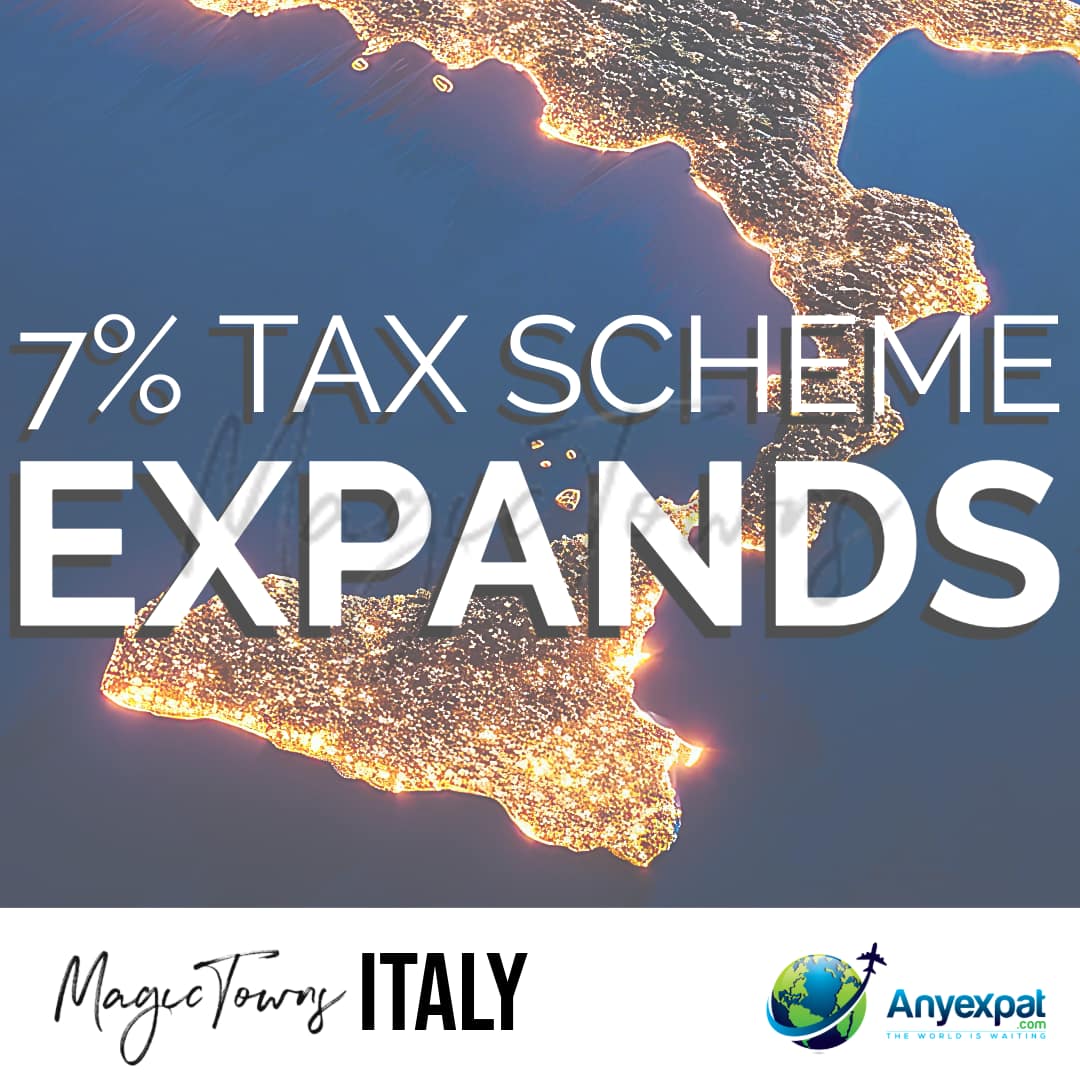
Anna: Sì. In questo caso, la modifica riguarda il cosiddetto regime fiscale dei pensionati 7%, che molti dei nostri lettori e ascoltatori conoscono già. Abbiamo scritto molti articoli al riguardo.
Luca: Yeah. And we’ve done [00:01:00] so many podcasts about it. But this is possibly the biggest change in the scheme since it was launched about 10 years ago. What has changed is not the tax rate itself and not the basic logic that’s underlying the tax regime, but it’s a type of town that you can choose.
Anna: Che in pratica può avere ancora più importanza.
Luca: Assolutamente sì.
Anna: Okay, so let’s start with the simple version. What happened?
Luca: La versione semplice è la seguente.
La legge ha innalzato la soglia di popolazione prevista dalla normativa sul regime fiscale 7% da 20.000 a 30.000 abitanti. Ciò significa che il regime 7% può ora essere applicato in un numero maggiore di città rispetto al passato, a condizione che la città si trovi nelle regioni già coperte dalla legge. E questo si applica a partire da lunedì scorso, cioè dal 7 aprile 2026.
È successo che il menu delle città eleggibili si è ampliato e questo rende molto interessante per le persone che cercano di scegliere la città in cui trasferirsi.
Anna: Perché ovviamente molti dei luoghi idonei erano, voglio dire, molto piccoli.
Luca: Piccolo? Si.
E questa era la principale lamentela che ricevevamo dai nostri lettori e ascoltatori: le città qualificate erano spesso belle, affascinanti, in qualche modo economiche, ma molti potenziali traslocatori guardavano l'elenco e dicevano: "Oh, sembra bello, ma è troppo piccolo per me".
Anna: E piccolo cosa significa? Come
Luca: Well, we’ve talked a lot about demographic resilience. We did a podcast a couple weeks ago. Towns dying out. And normally smaller towns mean fewer services, fewer shops that are open year round, fewer transportation links, fewer healthcare options, and also a quite a bit of isolation more than people can take.
Anna: Ok, quindi la riforma sposta il regime in un punto più pratico.
Luca: Yeah, that’s what [00:03:00] I would say. The list of towns now includes a whole band of towns that still feel local and “Italian”, but they are more livable on an everyday basis because they are simply bigger.
Anna: So, before we get carried away. Let’s also be clear about what has not changed.
Luca: Yes, that’s important, and these are the basic rules that underlie the 7% tax regime. It does not mean that the regime now applies everywhere in Italy. While the whole of Italy included, the North has plenty of towns that will benefit from such a tax break, the geography is still limited to the territories that were originally in the law.
What does this mean? It means that qualifying municipalities in Sicily, Calabria, Sardinia, Campania, Basilicata, Abruzzo, Molise, and Puglia, plus very few earthquake [00:04:00] affected municipalities in Central Italy qualify. Outside of these regions, nothing qualifies. No matter how big or how small. The town doesn’t qualify.
Second, it is still a tax break for people that have a qualifying foreign source pension income. It doesn’t matter what kind of pension it is: private, public, state. Irrelevant. If you receive a foreign pension, you can qualify for this.
You transfer your tax residence to one of the qualifying towns in Southern Italy. And you’re good. So this is not a general expat regime. It is not for digital nomads, and it is something aimed at foreign retirees.
Anna: Siamo rimasti davvero sorpresi perché alcune di queste città sono davvero molto popolari, direi.
Luca: Yes, well known, and that’s the fun part of this.
Anna: Okay, so let’s talk through a few of the towns that now qualify.
Luca: Assolutamente sì.
Anna: Let’s begin in Abruzzo with Francavilla al Mare.
Luca: Yes. [00:05:00] We picked this one as the first out of the 80 new qualifying towns. It is a very good example. Francavilla al Mare is the kind of town that people makes think: “Okay, well I can see me moving here”. It’s on the Adriatic coast, just south of Pescara. Quindi c'è il mare. C'è un bel lungomare. Il ritmo della città balneare è semplice, ma non è tagliato fuori dal mondo.
Anna: And that is important, isn’t it?
Luca: Yes. It’s a place where 7% town doesn’t mean you are isolated in the corner of somewhere. You are close to a bigger urban area, close to an airport, Pescara Airport. And you can, I think in many cases, imagine to have a very pleasant day-to-day life in a place like this.
Anna: La città successiva è Sulmona, che ha già un discreto profilo tra gli acquirenti stranieri e gli espatriati.
Luca: It does. Sulmona is often mentioned by people moving to Abruzzo. It was quite attractive. It has a decently sized expat community. It’s an elegant city [00:06:00] with the mountains, historic, and then it has that kind of Abruzzo mix of beauty, elegance and value, and it is one of the few mountain towns in Abruzzo with a significant population.
Anna: Assolutamente. Sembra davvero... reale, come se fosse una vera e propria città. E che dire di Pompei?
Luca: Una delle mie preferite. Ora, tutti conoscono Pompei: enorme peso culturale, patrimonio mondiale dell'UNESCO, ma quando si pensa di vivere effettivamente nella Pompei moderna, la questione è diversa.
Anna: Perché?
Luca: Well, it isn’t just archeology. It is certainly a place with a global cultural cachet. Tourism has a huge impact. You’re gonna find holds of tourists at peak times, but it is also a large-ish town, around 25,000 people. It has a real infrastructure, supermarkets, there’s something going on all year. It has transport services. The ancient side of course, is one of the great historical landscapes in the world, [00:07:00] but for relocation, you’re thinking more about the modern town, and that is of course a more realistic option now that the tax regime has expanded.
Anna: So for some people, this incentive turns Pompeii from ” lovely to visit” into possibly feasible to live in.
Luca: Maybe. I’ve been to Pompeii many times, it wouldn’t be my first choice to move to, with the tourism impact, I mean, but there is a proximity to Naples, Salerno, L'ambiente naturale è molto attraente, quindi vale sicuramente la pena di dare un'occhiata.
Anna: Ora dalla Campania alla Puglia: Putignano!
Luca: Putignano! Putignano is a good example of another great pick that’s given to us by the tax reform because it has personality. It’s not just pretty, you know, it has a town energy. It has a famous carnival, which gives it a cultural difference from a lot of the mid-size towns in the [00:08:00] list.
Anna: Già. E questo è importante se si vuole vivere lì a lungo termine. In effetti, molti lettori hanno detto di essersi stancati della mancanza di vita in alcune delle attuali città 7%. Così finiscono per desiderare l'atmosfera, l'energia, il ritmo, la consistenza.
Luca: Si'. Oh, la consistenza. Sì, direi di sì. Putignano è un buon esempio in quanto ha una forte vita locale. Non è certo nel radar dei turisti o degli espatriati, ma ha un'energia tutta sua.
Anna: To finish this off, let’s go to Sicily and Noto.
Luca: Noto we kept for last because it’s the one that will make listeners ears prick up. I wrote in our article on the website that I could almost hear the cheers from home if people found out that Noto was on the list.
Noto è uno dei nomi glamour di questa conversazione e i pensionati lo desiderano da tempo nell'elenco 7%. Ho parlato con persone che erano [00:09:00] deluse dal fatto che alcune delle frazioni più remote che fanno parte di Noto non si qualificano. Ora lo sono. La città ha un grande peso simbolico. Un altro patrimonio dell'umanità dell'UNESCO, ha un enorme pedigree barocco e si trova in questa zona. Modica, Ragusa, general area of southeastern Sicily. And it has that kind of look, that’s iconic. The stoves, the streets, it has a very distinctive architecture. So we welcome it to the expanded list of 7% towns.
Anna: Sì, assolutamente. La posizione è ottima.
Luca: It is already not obscure, but it is on people’s mental shortlist for Sicily. But now it’s going to attract, I imagine far greater retention, which is important both for people that want to move there and this being almost more so for investors.
Anna: E probabilmente molti ascoltatori stanno visitando la nostra guida alla città di Noto.
Luca: Lo spero davvero. C'è un documento, quindi andate sul sito web e leggetelo.
Anna: Ok. [00:10:00] Quindi, per riassumere: questa riforma apre il regime 7% a 80 città più grandi del Sud Italia, molte delle quali hanno sia fascino che infrastrutture funzionanti.
Luca: That’s right. And our whole project, at Magic Towns, is about helping people think beyond the usual big cities. And at the same time, we don’t want to pretend that every tiny bit suits everyone. So this reform opens up an interesting list of middle ground towns, and I think a lot of good decisions will get made around these newly editable towns.
Anna: Ed è anche per questo che abbiamo aggiornato il nostro materiale sulle nuove città qualificate.
Luca: So we’ve already listed out all the newly added municipalities. Every one of them has a profile in the Town Explorer on Magic Towns. You can search for those towns by using the 7% tax button. And listeners, if you want to go from “that sounds interesting” to “what is daily life [00:11:00] actually like there?”, now you know where to go to find that information.
Anna: Esattamente. Questo episodio è informativo, quindi non è una consulenza fiscale personale.
Luca: Molto spesso. Il cambiamento legale è reale, ma la vostra idoneità dipende dalla vostra situazione. Quindi informatevi, informatevi e non cambiate casa solo sulla base di un episodio del podcast.
Anna: Tuttavia, continuate ad ascoltare il podcast.
Luca: Sì, stavo per dirlo. Siamo molto grati di avere un pubblico così coinvolto e interessato. Se avete idee o richieste per i prossimi episodi, contattateci su Facebook, Instagram, sito web e grazie mille per averci ascoltato questa settimana.
Anna: Grazie ragazzi. Ci vediamo la prossima settimana!
Luca: Ci vediamo la prossima settimana! Ciao ciao.


 English
 French
 German
 Italian
 Danish