


[00:00:08] Alessia: Bentornati al podcast di Magic Towns Italia con Miles e Alessia.
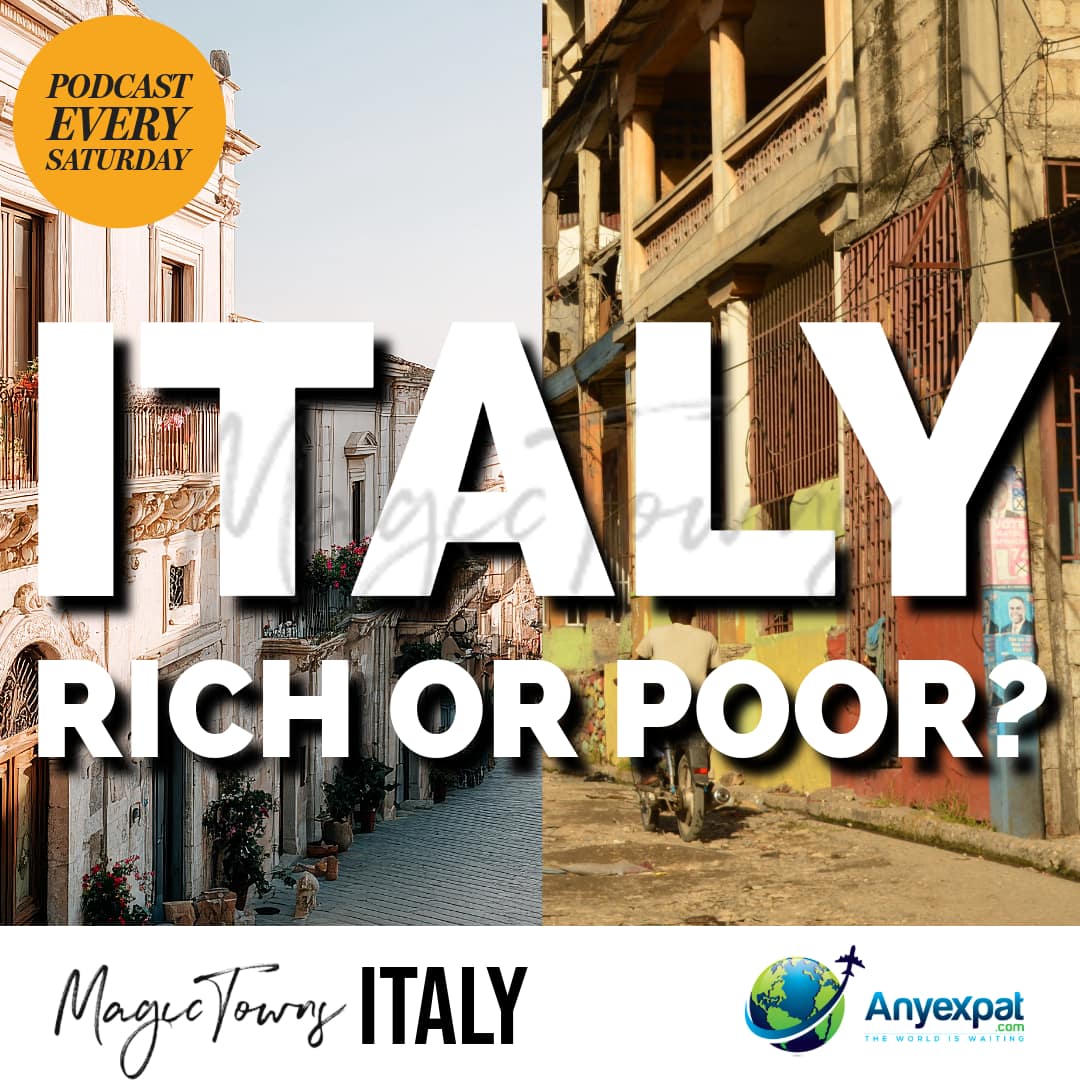
[00:00:12] Italy. It’s a country that, well, it brings up these images of just stunning beauty rich culture.
[00:00:19] La Dolce Vita definitiva.
[00:00:20] Miglia: Quella classica immagine, giusto.
[00:00:22] Alessia: But then the headlines often paint a really starkly different picture, one of economic struggle. It feels like a real paradox, doesn’t it?
[00:00:29] Miglia: Come può una nazione apparire povera secondo alcuni parametri, eppure offrire una qualità di vita così innegabilmente elevata?
[00:00:35] Alessia: It’s a question lots of people have, especially if you’re drawn to Italy, maybe thinking of visiting or even moving there. We’ve gathered some really insightful sources, that get into these realities and stereotypes to help understand what we’re calling Rich Italy, Poor Italy, these two distinct identities kind of woven together.
[00:00:52] Miglia: Mm-hmm.
[00:00:53] Alessia: The way to sort of solve this puzzle lies in the country’s really profound regional differences
[00:00:59] Miglia: Il divario tra Nord e Sud.
[00:01:00] Alessia: Sì, il famoso divario tra nord e sud.
[00:01:02] It’s so pronounced that the average Italian experience you read about it often just doesn’t really exist.
[00:01:08] Miglia: You really have to look closer. Okay, so let’s start untangling this. When we talk about poor Italy, what are the main things driving that perception? Is it mostly that high public debt? We hear so much about. That’s definitely a big part of it. The poor country image comes from a few connected issues. High public debt is constantly flagged.
[00:01:24] Then you’ve got those headlines about youth unemployment. It’s been stubbornly high, particularly down south in the Mezzogiorno.
[00:01:31] And then there’s the decades of pretty low economic growth compared to neighbors like Germany plus, you know, media sometimes highlighting older infrastructure.
[00:01:39] Tutto quadra.
[00:01:40] Alessia: So it’s easy to just look at the numbers. Italy’s overall income. Employment rates may be lagging behind Northern Europe and think, okay, perpetual crisis, which is what a lot of headlines suggest.
[00:01:50] What’s hiding beneath those surface stats?
[00:01:53] Miglia: Ed è qui che entra in gioco la contro-narrazione nella storia dell'Italia ricca, perché quando si sposta l'attenzione su aspetti quali lo sviluppo umano e il benessere generale, l'Italia inizia a sembrare decisamente ricca.
[00:02:03] Alessia: Ok, è qui che la cosa si fa davvero interessante. Per me. Gli italiani hanno una delle aspettative di vita più alte al mondo.
[00:02:09] It’s quite something. So Italy actually tops the EU even higher than places like Germany or the Uk, which we might think of as richer. That’s amazing.
[00:02:18] Miglia: È davvero notevole. Secondo gli ultimi dati Eurostat relativi al 2024, un bambino nato in Italia può aspettarsi di vivere circa 84,1 anni. Il che, in sostanza, pone l'Italia alla pari con la Svezia per quanto riguarda la durata della vita più lunga nell'intera UE.
[00:02:32] Alessia: And that’s way above the average, the full 2.4 years longer than the EU average of 81.7 years.
[00:02:37] And this high longevity, it’s seen as a really powerful shorthand for overall living conditions. It kind of pushes back against that idea of a nation just struggling constantly.
[00:02:49] Miglia: Ciò suggerisce che, nonostante le difficoltà economiche, gli italiani traggono davvero beneficio da aspetti quali, ad esempio, la famosa dieta mediterranea. Naturalmente, anche le reti di sostegno familiare incredibilmente forti, che favoriscono il benessere sociale, e un sistema sanitario nel complesso piuttosto efficiente, soprattutto nel nord più sviluppato, contribuiscono a questo risultato.
[00:03:06] Alessia: So it’s not just about how much you earn, but how income, culture, lifestyle, all combine into actual wellbeing. It’s not just long lives, but also like foundational financial security.
[00:03:15] Elevato patrimonio delle famiglie.
[00:03:16] Miglia: Sì, questo è un punto cruciale, spesso trascurato. Se si guarda solo al PIL, gli italiani hanno accumulato un patrimonio familiare significativo. Gran parte di questo è dovuto alle forti abitudini di risparmio delle famiglie e ai tassi molto elevati di proprietà immobiliare tramandati di generazione in generazione.
[00:03:30] Alessia: Quindi le persone possiedono le loro case.
[00:03:31] Miglia: Very high rates, and because of this, severe material deprivation, meaning you can’t afford basics like food, keeping your home warm, things like that, it’s relatively uncommon.
[00:03:40] Alessia: How uncommon are we talking? The rate is roughly four or 5% , so over 95% of Italians can afford the essentials. That’s much better than quite a few other European countries, right?
[00:03:51] Miglia: Significantly better than many Eastern European countries, for instance. And this directly challenges that simple poor label. It shows a basic financial security built on assets, not just yearly income. It’s like hidden wealth.
[00:04:04] Alessia: Ok. Per capirlo davvero, dobbiamo approfondire queste differenze regionali. Hai citato il cliché del ricco Nord industriale e del povero Sud agricolo. Si tratta solo di uno stereotipo o c'è del vero?
[00:04:16] Miglia: Oh, there’s significant truth to it. It’s probably the defining internal dynamic of Italy, actually. If you look at almost any socioeconomic measure, the North and South are very different.
[00:04:26] Take economic output, GDP per capita. Northern regions like Lombardy around Milan. They boast a GDP per capita around 127% of the EU average. That’s up there with prosperous parts of Germany, even Scandinavia.
[00:04:42] Alessia: Esatto, come i livelli della Baviera.
[00:04:43] Miglia: Exactly. Rich European region, territory. It’s a stark contrast. Calabria down in the toe of the boot produces only about 56% of the EU average per capita.
[00:04:53] Alessia: 56% compared to 127%. That’s huge.
[00:04:57] Miglia: It’s massive. To put in perspective, the average income in Calabria is similar to Bulgaria in Lombardy it’s like the Netherlands
[00:05:04] Alessia: All'interno dello stesso Paese.
[00:05:06] That’s wild.
[00:05:06] Miglia: It’s an enormous gap and it fuels so many other differences we see
[00:05:10] Alessia: Come il rischio di povertà. Come si manifesta il divario tra Nord e Sud in questo caso?
[00:05:13] Miglia: È qui che il divario sembra proprio un abisso.
[00:05:15] In sostanza, quante persone fanno fatica a permettersi i beni di prima necessità e potrebbero sentirsi escluse dalla società. In Italia questo dato varia letteralmente dal migliore in Europa al peggiore.
[00:05:24] Alessia: Sul serio, il meglio e il peggio.
[00:05:26] Miglia: Sì. Guarda la provincia autonoma di Bolzano Nelle Alpi, solo il 5,81% della popolazione è a rischio di povertà o esclusione sociale. Si tratta della percentuale regionale più bassa dell'intera UE.
[00:05:38] Alessia: Il più basso di tutta Europa e del Sud.
[00:05:40] Miglia: Contrast that with Calabria, again, nearly 49% of residents live at risk of poverty. Almost half the population. And Campania around Naples is close behind at 44%. It’s an extraordinary difference. You could move from Calabria to Bolzano and go from one of Europe’s highest poverty risk areas to the absolute lowest.
[00:05:59] Alessia: That’s just hard to wrap your head around. And does this affect life expectancy too, even though it’s high overall?
[00:06:05] Miglia: It does show up there too, though the gap isn’t as dramatic. Northerners live a few years longer than Southerners, roughly 83 years in the north versus 80 in the south.
[00:06:15] Alessia: Comunque anche 80 al sud è un buon risultato rispetto alla media UE.
[00:06:18] Miglia: Il dato mostra un livello di salute generalmente elevato in tutto il Paese, ma il Nord ha sicuramente un vantaggio.
[00:06:24] Alessia: Questo enorme divario economico deve ripercuotersi su tutto il resto.
[00:06:26] Lavoro, istruzione.
[00:06:28] Miglia: Si crea un ciclo. La disoccupazione nel sud è spesso il triplo di quella del nord.
[00:06:32] Alessia: Triplo Wow. Si'.
[00:06:34] Miglia: Ciò significa che molti giovani meridionali istruiti sentono di dover emigrare al nord per lavorare, il che svuota il sud di talenti.
[00:06:40] Alessia: Una fuga di cervelli, in pratica. E anche i risultati scolastici tendono a essere migliori al Nord.
[00:06:45] che porta a migliori opportunità in loco. Ma perché il divario è così profondo? Quali sono le radici storiche?
[00:06:51] Miglia: Well, it’s complex. You have historical factors. Going back to Italian unification in the 19th century, development policies often favored the North’s industrialization. The South remained more agrarian.
[Poi c'è l'impatto continuo della criminalità organizzata in alcune aree, che frena gli affari legittimi e a volte una governance meno efficace storicamente nel Sud.
[00:07:12] Alessia: Quindi un mix di storia, politica e altre sfide.
[00:07:15] Miglia: Right. The key thing for us is that Italy’s poverty isn’t spread evenly. It’s highly concentrated while other parts are as wealthy and efficient as anywhere in Europe.
[00:07:24] Milano o Bologna probabilmente hanno tassi di rischio di povertà molto più bassi rispetto, ad esempio, alle città medie della Francia, ma la Calabria o la Sicilia hanno tassi molto più alti.
[00:07:32] Questo dettaglio cruciale si perde totalmente nei numeri a livello di Paese.
[00:07:35] Alessia: It’s like averaging the temperature of Death Valley and Alaska and saying the US has a mild climate.
[00:07:41] Miglia: Precisamente. Le medie possono nascondere più di quanto rivelino a volte.
[00:07:44] Alessia: So while that poor Italy experience is definitely real for people, especially in parts of the South, it’s also not a static picture.
[00:07:51] Giusto? Le cose sono migliorate nel complesso.
[00:07:53] Miglia: Yes. That’s important too. Our sources show a clear long-term decline in severe material deprivation right across Italy, particularly since the financial crisis back in 2008.
[00:08:03] Alessia: Quindi meno persone che lottano per i beni di prima necessità.
[00:08:06] Miglia: Un numero significativamente inferiore. Il tasso si è all'incirca dimezzato rispetto al picco raggiunto intorno al 2012.
[00:08:11] It went from about 11% down to that four to 5% range we mentioned recently. That’s a major improvement in basic wellbeing for millions.
[00:08:20] Alessia: Si tratta di un vero e proprio progresso, soprattutto se si considera il difficile clima economico che talvolta si respira, e in alcune regioni si notano addirittura dei cambiamenti da un anno all'altro.
[00:08:27] Miglia: I dati regionali sono affascinanti. Tra il 2022 e il 2023 una piccola regione del sud ha visto diminuire drasticamente il suo tasso di rischio di povertà.
[00:08:37] It fell from around 37% down to 25%, a 12 percentage point drop in a single year. That’s huge.
[00:08:44] Alessia: Wow. Che cosa ha causato questo, lo sappiamo?
[00:08:45] Miglia: The specific drivers aren’t always clear from just the headline numbers, but it shows positive change as possible.
[00:08:52] Anche altre regioni, come la Liguria e Bolzano, hanno registrato miglioramenti.
[00:08:56] Alessia: La tendenza generale sembra quindi positiva per molti luoghi.
[00:08:59] Miglia: La traiettoria complessiva per gran parte dell'Italia è positiva. Sì. Tassi di povertà in generale in calo, livelli di istruzione in lento aumento, accesso ai servizi in espansione, ma, e questo è importante, non si può dire che non ci sia un'evoluzione positiva.
[00:09:10] It’s not universal. Calabria already one of the poorest actually saw its poverty risk increase by about 5.8 points in that same 2022 to 2023 period.
[00:09:22] Alessia: So convergence isn’t guaranteed. Some gaps might even be widening.
[00:09:26] Miglia: Evidenzia che i progressi sono lenti e decisamente disomogenei, e che il recupero è una sfida a lungo termine per le regioni meridionali.
[00:09:32] Alessia: Tuttavia, nonostante le sfide e le disuguaglianze, il quadro generale sembra essere che l'Italia di oggi stia generalmente meglio di una generazione fa. Il quadro generale sembra essere che l'Italia di oggi stia generalmente meglio rispetto a una generazione fa.
[00:09:41] Miglia: I think that’s fair to say. Modern living standards, reliable infrastructure. You know, electricity, water transport, internet access is pretty widespread now and relatively low crime rates all contribute to a pretty solid quality of life overall.
[00:09:57] Alessia: Anche nelle zone rurali.
[00:09:58] Miglia: Yeah, even rural areas benefit from decent infrastructure Italy’s fantastic highway network. It connects the country really effectively.
[00:10:06] Alessia: Okay, so let’s bring this back to the listener. What does all this mean for you, especially if you’re maybe dreaming of Italy, thinking about visiting or even making a move?
[00:10:15] Miglia: Il punto di partenza principale è la posizione, la posizione, la posizione. È davvero importante. La vostra esperienza dipenderà molto dall'Italia che sceglierete.
[00:10:23] Alessia: Right? So a northern city like Milan, you’re looking at infrastructure services, maybe a job market that feel very Western European, maybe quite high end
[00:10:32] Miglia: Paragonabile alle grandi città della Germania o della Francia, giusto?
[00:10:35] Se si sceglie, ad esempio, una piccola città della Calabria
[00:10:37] Alessia: potrebbe trovarsi di fronte a più sfide, come forse le infrastrutture, le opportunità di lavoro. più scarse,
[00:10:42] Miglia: More what you might call developing area challenges. But on the flip side, you’d likely find incredible cultural warmth, a slower pace of life, stunning natural beauty. Lower living costs too.
[00:10:54] Alessia: Due esperienze molto diverse all'interno dello stesso Paese.
[00:10:56] Miglia: Ma indipendentemente dal luogo in cui ci si trova, si beneficia comunque dei sistemi nazionali. L'assistenza sanitaria universale è uno dei principali.
[00:11:02] Alessia: Quindi anche nelle città meridionali più povere esiste una copertura sanitaria di base.
[00:11:06] Miglia: Sì. Le basi ci sono, ma per i trattamenti altamente specializzati, le persone possono recarsi a nord nei centri più importanti, che hanno più risorse e strutture all'avanguardia.
[00:11:14] Ma l'accesso fondamentale è nazionale.
[00:11:17] Alessia: And I guess for many expats, especially if they have income from abroad or savings. Maybe they aren’t competing in the local job market.
[00:11:26] Miglia: Right. For them, Italy’s positives, the climate, the food, the history, that whole Dolce Vita vibe might easily outweigh any negatives.
[00:11:33] It’s about understanding the trade-offs and choosing what fits you.
[00:11:37] Alessia: So wrapping this up then, poor Italy, rich Italy, it’s not just a phrase, it really describes this dual identity.
[00:11:43] Miglia: It really does. Italy often gets underestimated internationally because those standard economic stats like GDP growth don’t capture the full picture.
[00:11:51] Alessia: Manca l'elevato benessere umano, la ricchezza accumulata.
[00:11:54] Miglia: Mancano le vite lunghe e sane, i bassi livelli di grave deprivazione, i beni che la gente possiede. Il nord benestante determina gran parte del successo e offre uno standard molto europeo.
[00:12:04] Alessia: Il Sud ha le sue difficoltà, ma offre un altro tipo di ricchezza, forse una diversa autenticità.
[00:12:10] Miglia: Una realtà e un fascino italiani diversi ma non per questo meno autentici.
[00:12:13] Alessia: Sì,
[00:12:14] Miglia: The core message is Italy isn’t monolithic.
[00:12:16] Alessia: Si possono trovare le comodità e le efficienze di un Paese ricco, oppure si possono incontrare le sfide di una regione più povera. Entrambe le cose sono autenticamente Italia
[00:12:25] Miglia: E abbracciare questi contrasti è davvero parte dell'esperienza, parte di ciò che rende l'Italia così infinitamente affascinante.
[00:12:31] Italy might not look rich on paper like Germany. And yes, it has real economic hurdles, but it’s definitely not uniformly poor. It’s a developed country, albeit one with pockets of underdevelopment and in its own unique way. Maybe it’s richer than it looks, especially when you consider health community that hidden household wealth.
[00:12:49] Le cose che spesso definiscono la vera Bella Vita.

 English
 French
 German
 Italian
 Danish