

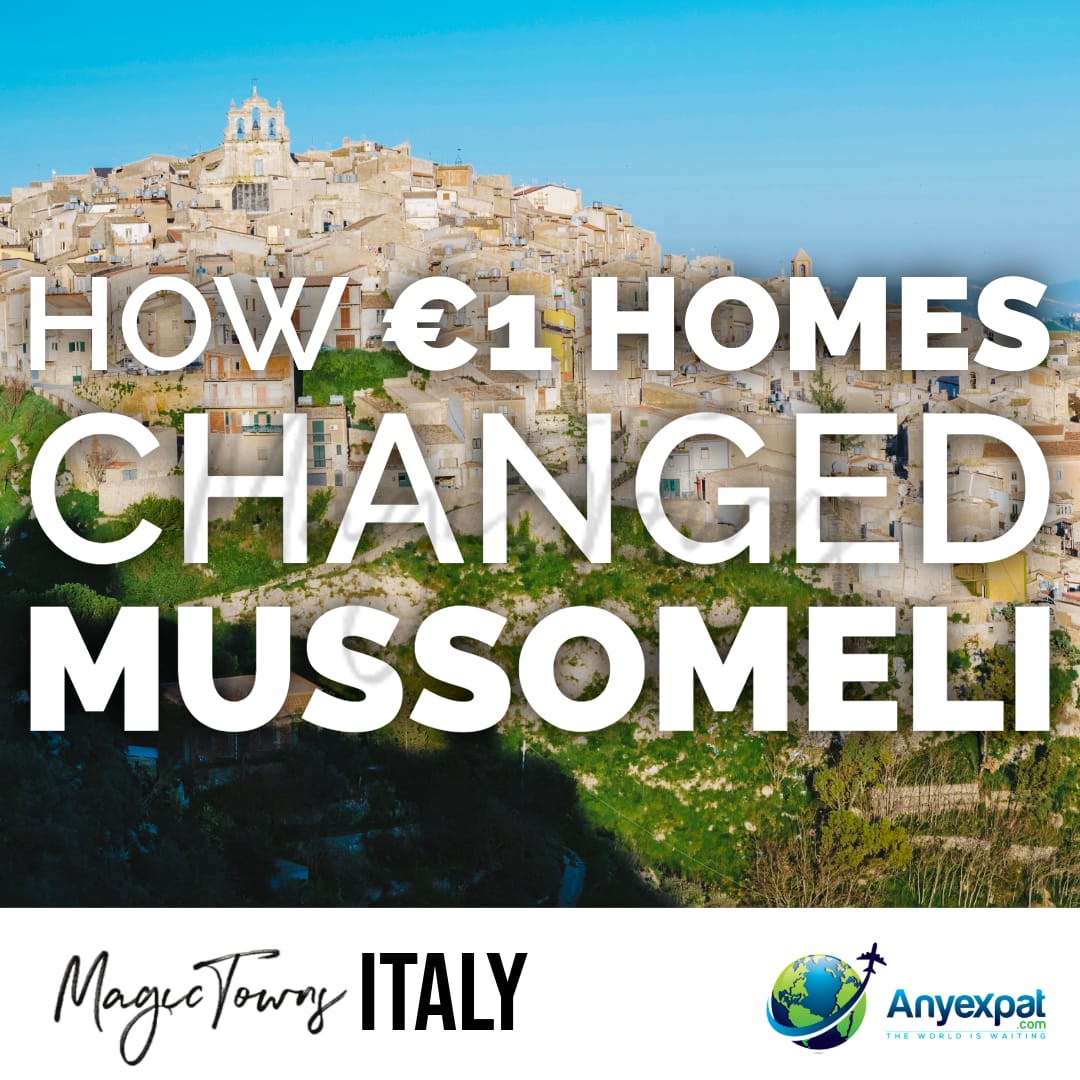

Anna: Ciao a tutti e bentornati al podcast di Magic Towns Italia.
Luca: Bentornati. Buon sabato a tutti.
Anna: Happy Saturday. So, yeah, today we’re talking about, one euro homes, Sicily, visas.
Luca: And before you say, oh no, another episode about one euro homes, we’re actually starting with something completely novel, which is the first one euro home program in northern Italy.
Anna: Cosa?
Luca: Really? Yes. Anna don’t act all surprised. You wrote an article about that.
Anyway, it’s just an inside joke. So this week?
Anna: Sì, dimmi di più su questo. Mi dispiace.
Luca: Sì, questa settimana le città di Recoaro, [00:01:00] Posina, e Valli del Pasubio, vicino a Vicenta. E per chi sa dove Vicenza is, that’s very near Venice have announced that the first batch of one euro homes in those, uh, lovely mountain villages.
Anna: Oh, ok. E perché proprio ora?
Luca: Well, you see, it’s actually a very interesting area that I personally know. I would say intimately. It was a magnet for tourists about a hundred years ago. Even Nietzsche, the German philosopher, used to go on holiday there and
Anna: Stai scherzando?
Luca: No, no. È proprio vero.
There’s proof of it. He wrote about it. He wrote, that, it was one of the most beautiful places they had ever been to, but, it kind of fell off the map tourism wise. Because, uh, spas are not as popular now as they used to be in the past in Italy at least. And so even when I was a child at this [00:02:00] place, which was in huge tourist magnet had become less popular in the past few years. It has suffered a massive exodus of people that go and work and live in the nearby cities.
So there’s a lot of empty homes and quite simply the local governments decided to make them available to investors and people that want to move there preferentially to restore very much like the schemes in southern Italy.
Anna: Sì, ma questi sono solo i primi del Nord Italia.
Luca: Esattamente. I primi nel Nord Italia.
Quindi, se volete saperne di più, andate su magictowns.it e leggete l'articolo in cui trattiamo tutto ciò che riguarda questo nuovissimo programma.
Anna: E siate i primi ad acquistarli.
Luca: Yeah, maybe. And then we can have a chat with there about how you feel about that. That is, if Anna and I don’t buy them first.
Cos'altro c'è nella puntata di oggi, Anna? Abbiamo un'intervista, giusto?
Anna: Sì, abbiamo incontrato George dopo aver visitato Mussomeli noi stessi, ed è stato, come è stato, Luca, perché sei andato [00:03:00] lì.
Luca: George è il cuore pulsante inglese di Mussomeli.
We spent, half an hour chatting with him about how things are going, how the city is changing now that he has brought in his massive social media following. He also has some new plans that he briefly mentions and he’s going to officially unveil in the next couple of weeks.
So without further ado, here’s a little excerpt of our chat with George.
Ciao George. Come stai?
George: Salve. Come andiamo?
Gill: Ciao, credo che ti abbiamo mancato di un giorno a Mussomeli.
Luca: But we met some of your fans. Even the people that haven’t met you, they’re basically all there for you, which is very interesting. We’ve actually never seen anything like this.
George: It’s been great for Mussomeli. All the locals are very happy, all the one euro houses have been sold now, all the prices are slowly starting to creep up and everyone’s spending money at the businesses. So it is just a win-win situation for everyone really.
Luca: Assolutamente sì. Noi viviamo nel nord. E abbiamo scoperto che per la prima volta, proprio oggi, hanno avviato il programma di case a un euro, proprio vicino a noi, a 10 miglia di distanza.
George: Wow.
Luca: So that’s quite exciting because, you know, so far it has only been in the south.
George: I think a lot of the times, you know, one of the reasons people have sort of come to Mussomeli. It is purely just because it’s one of the few towns in Sicily, which someone’s really marketing it heavily.
Tutte queste città sono abbastanza simili e offrono esperienze culturali simili, prezzi delle case simili. Ma Mussomeli credo sia stata molto fortunata. E il sindaco è stato molto positivo, perché in molti di questi posti c'è tanta burocrazia.
You know, with the one euro house scheme I went through, there was no upfront deposit. You had three years to do the roof and the facade, which they’ve now scrapped that rule and to incentivize people to keep coming, they’ve now introduced a new rule where you can remove the roof of your one euro house and make a garden.
The only time I’ve heard people having bad experiences in Mussomeli is by using contractors who want to charge you upfront. I know one girl at the [00:05:00] moment, she’s from LA, she spent 20 grand in the house. I think she agreed to 120,000 pound renovation budget. And she paid someone upfront or didn’t pay them upfront and now the builder thinks they’ve done 40,000 pound worth of work.
She doesn’t think 40,000 pound worth of work has been done. She’s in legal battle with another contractor. So that’s one of the reasons why I like to do a lot of the work myself, because all the times I’ve heard about bad experiences always ends up by employing someone you employ, unfortunately.
Gill: We’ve been through that. And then when you employ someone new, they blame the old guy. And you never know where the train of responsibility ends or finishes. So it’s even no matter what, it’s a disaster going forward.
George: And you don’t know if they’re cousins or the person you had before. You know, everyone seems to know everyone will be related to someone somehow.
Luca: And so you have to be careful, because if you raze the ground around you in these small towns, it’s over.
George: Sì.
Luca: Avete in programma di affittare le vostre proprietà?
George: Yeah, I mean, for my first two properties, I’ve got a waiting list of about 500 people waiting to stay at the moment. I’m gonna start [00:06:00] taking bookings on my website. But, you know, my departments aren’t being ready for at least two or three months. Once they’re ready, they’ll just be rented out.
Gill: Vivendo a Londra, il prezzo al metro quadro è semplicemente folle. Quindi lo vedi e ne vedi il valore, ma poi devi pensare ai soldi che costa sistemarlo.
George: Sì, stavo guardando una cosa su YouTube che parlava di queste donne che ristrutturavano un palazzo a Palermo, e dicevano che il Municipio locale voleva 500.000 euro, per una sovvenzione per iniziare la ristrutturazione o anche solo per iniziare il processo. Volevano mezzo milione. Solo per ottenere il
Luca: Oh, come la garanzia bancaria? Sì. Deve essere stata una garanzia storica
George: it was a historical one right in the center where you’re looking over the main square, like the huge ones on the corner.
She was just like, we may be millionaires on paper, but we don’t have half a million pounds just to pay for a permit
Luca: Che tipo di incentivo è? L'Italia è piena di vecchi immobili. Dovreste fare tutto il possibile per rendere le cose più facili.
Gill: I guess the one thing everyone here believes in, we believe in Italy, we believe the property’s cheap and we believe we should be doing more to bring people in.
Luca: That’s what we’ve been working on. Finding towns where the local [00:07:00] government is supportive. Because as you know, everything changes from town to town.
George: It puts me in a very good position, and, every time I sell a house for Mussomeli, I don’t get paid for it. I’m just doing it out of goodwill. The reason I left London is I couldn’t afford half a million pound for one bedroom flat, so now I’ve got more chance of buying a house in London in a few years than I did staying there.
Luca: Hopefully we’ll get you to move to Italy permanently. You’re working on getting a visa, right?
George: Well, that’s the thing. At the moment, I don’t have a visa. I can only say ninety outta a 180 days. So for the last probably 40 months now, I spent two weeks in Mussomeli, two weeks in London. I’ve been doing that on rotation every month for 40 months now.
So at some point it would be nice to spend longer than a couple weeks at a time. But as far as I’m aware, either I get a student visa, which I have to go into college five days a week, four hours a day, and you know, I dropped outta uni after first days.
Luca: Ora hanno cambiato la legge. Per ottenere il visto è necessario avere almeno un B1 in italiano. Quindi è necessario avere l'italiano prima di potersi iscrivere all'università.
George: L'unica alternativa è ottenere un visto per nomadi digitali, per il quale probabilmente potrei essere accettato.
Luca: Oggi hanno solo accelerato il processo. È possibile ottenerne una in circa 45 giorni.
Potreste anche sposare un italiano. Basta fare attenzione ai mariti.
George: Basically 20% of the people I bring to Mussomeli realize they don’t wanna live in Mussomeli. Actually. They wanna live by the beach. And it’s just been a rule of thumb. I’ve realized averagely about 20% of all people end up moving to the beach after coming to Mussomeli.
Luca: It’s funny that you mentioned this thing about people, things, their minds, because like we spoke to this Australian woman, she’s like, you know, I need to be somewhere else.
I like to be in Italy, but I’d like to be somewhere else as a full-time thing. so finding the few different decent options is definitely important. There are people for whom Mussomeli matter will be fine, but there would also be looking for other things.
George: Well, I think that’s the beauty of, of Sicily. You know, there’s not many places left in the world you can buy a property for sort of 20 or 30,000 and you know, if you sold your property elsewhere for a couple hundred grand, you can have two, three properties all around Sicily. Jump between each of them, vent them out.
Luca: I think people don’t understand just how much of Italy is undervalued. We just bought a [00:09:00] house around the corner from here and we paid 50 K, and it’s big, like 3000 square feet.
George: Wow.
Luca: But the beauty of it is that it’s actually very thriving town. It’s near Venezia. It’s near Padova, it’s near Verona. Si può trovare roba a buon mercato ovunque. Basta cercare.
George: Yeah. The thing that I’ve seen change about Mussomeli most recently is now all the one year houses and the house under 10 K is starting to go.
Le case sotto i 20.000 euro stanno iniziando a sparire, ma il cambiamento più grande è stato l'attesa per il pernottamento. L'ultima volta che sono stato lì, il mio cameraman di Channel 4, che è venuto a stare con me, è andato in un appartamento standard con due camere da letto a Mussomeli.
He was paying a hundred euros per night on Airbnb. He paid 700 euros for the week. I couldn’t believe it.
Luca: Ero scioccato.
Gill: And that’s a fraction of the house you just bought, you know,
Luca: la camera in cui abbiamo soggiornato. Ride, ma era anche, aveva anche un bel po 'di problemi e 90 Euro notte
Anna: Yeah. That’s crazy. It’s even more, more expensive than bigger cities like Milan, Rome….
Gill: c'era anche un sacco di gente in gamba che faceva cose per, sai, [00:10:00] bandi sociali, ESG, cose come le cucine comunitarie.
I met someone from Armenia who was like trying to set up something with wool that had indirectly met you. So there’s a lot of social good going on. On the sidelines of all the things you’ve introduced. ’cause you’ve got people who want to do good in an area where they can afford, you know, to set up premises.
Luca: And that’s what you can do when you’re in a place where you can actually play with property, where you can buy stuff and have a bit of fun with it. There’s no way someone can say, I’m gonna throw €100k something in London and make a coworking space out it. Because you’re not even gonna buy a garage.
George: There’s one guy in Mussomeli who I like a lot. He started with one house, bought it for 20,000. He now owns. All six adjoining houses in the first house, the top floor. He’s turned it into a hairdresser studio where he gets a couple young guys and girls is doing hairs. He’s turned the bottom floor into a cafe and he is got a license from the mayor to have tables and chairs outside and they’ve made a communal garden and he’s just turned his corner property now into like half the street, which he owns. And it costs him [00:11:00] like 150 grand in total.
Luca: He’s got empire
George: and he is got his own little empire, you know, and he gets people on WeWork who come and work for him for free, for sort of work experience. And um, you know, he’s living like a king.
Gill: Già. Ma poi le persone si sostengono a vicenda e questo tipo di stile di vita manca alla gente.
And the thing is, if you relocate to a big city or you relocate somewhere, there’s no foreigners. You feel very lonely. Whereas that’s what Mussomeli has. You have like-minded people and you pull them all together to a place so that that dissipates the loneliness. So I can see how it really works.
Luca: Fa un'enorme differenza.
George: Yeah. And you know, when you live in a place where you are restrained financially and you’ve got so many bills coming out, it’s almost a luxury to be able to have all these sort of ideas and go through with them, you know? But because you’re not constrained financially or by the mayor, you know, there’s a lot of freedom to sort of, I say to anyone, if you’ve got 50 grand, you can come buy a house and start a business and have a good life.
Which is, you know. In London. That’s like a year’s rent, so
Luca: Sì, sì, assolutamente.
George: No, I mean there’s, [00:12:00] people ask, why’d you choose Miss Me? I didn’t really choose Miss Somme. It was just they had a one year house scheme going on and I wanted a cheap house. And then because I was there, I started promoting it.
You know, miss, so me’s beautiful, but you know, there’s another 10,000 towns which look pretty identical to Miss Milli around sissy. But you know, it really depends who’s there and who’s promoting it.
Luca: So they come over because it is like, I’m not gonna be the only foreigner in a town.
George: Yeah. Yeah. I mean, my, my problem is I don’t really tend to think things through too much. I just sort of go with the flow and, um, hope for the best. And, uh, that’s planned out pretty well so far.
Also, I try and show, you know, a positive side of this. You know, a lot of it people who document this process, it’s quite negative. They’re talking about all this sort of things that have gone wrong.
I just try and show, doing on a shoestring budget, with not speaking the language, not knowing anyone, you know, it’s still possible.
Luca: Sì.
George: I see the people who end up in the biggest trouble are the ones who are just trying to throw money at problems all the time when that doesn’t really solve the problem.
A lot of the time, just constantly throwing money at the issue. But you learn from your mistakes and fortunately I’ve not made the [00:13:00] costly ones.
Gill: Or say, if you do nothing, you don’t make any mistakes. So the only you know, that’s how you learn, that’s how you progress.
Luca: È stato un vero piacere parlare con lei. Grazie mille, George.
Anna: È stata una conversazione fantastica.
Luca: Sì, è sempre pieno di intuizioni.
Anna: Mi piace l'onestà con cui George racconta quello che ha fatto. Voglio dire,
Luca: absolutely. We cut out some of the more, more honest, honest, honest parts, but he’s still very honest on record. Um. Anyway, it was a pleasure to talk to him. Uh, and, uh, we’re always following what he’s doing.
Sarebbe interessante vedere come si svilupperà la regione Sicilia, dato che il programma di case a un euro si sta esaurendo e la gente sta iniziando a guardare un po' più lontano per altre località. Sono quindi ottimista sulla Sicilia nel lungo periodo, vedremo.
Anna: Yeah, I mean, it’s not just about cheap property. It’s about community. It’s about [00:14:00] building something bigger and yeah finding the right one isn’t that easy.
Luca: Absolutely. It’s mostly about community. I’d say if there’s something we learned, it’s that. Thank you listeners for being here thus far and for listening to us every week.
We really appreciate you and feel free to send us your comments. The last thing I want to mention before going on to enjoy my Saturday branch is that this week we have launched, on Magic Towns Italy two new indicators, which are very, very important. We’re gonna be talking about this in next week’s podcast in a little bit more detail, but we now cover demographic fragility as an indicator on our Town Explorer.
È diventato chiaro che una grande quantità di città in Italia. Quasi due terzi di esse si stanno riducendo a un ritmo piuttosto rapido e questo, ovviamente, è un segnale pericoloso per chiunque. Potrebbero trovarsi in una comunità che si ridurrà nei prossimi 20 anni. Abbiamo quindi snocciolato i dati e li abbiamo semplificati in modo da renderli comprensibili a tutti.
Chiunque abbia accesso al Town Explorer sull'Magic Towns Italia può ora filtrare se una città è solida dal punto di vista demografico, ovvero se è probabile che abbia buoni risultati nei prossimi anni, o se si trova in una posizione di fragilità; in questi casi, si potrebbe pensare due volte a quali saranno le proprie esigenze tra 10 o 20 anni.
I hope you’re going to enjoy using this. I hope you enjoyed our podcast and I hope you enjoy your weekend.
Anna: Grazie ragazzi. Alla prossima volta.
Luca: Grazie, Anna. Grazie a tutti.
 English
 French
 German
 Italian
 Danish