

Anna : Bonjour à tous et bienvenue dans le podcast de Magic Towns Italie.
Luca : Bienvenue à tous. Bon samedi à tous.
Anna : Happy Saturday. So, yeah, today we’re talking about, one euro homes, Sicily, visas.
Luca : And before you say, oh no, another episode about one euro homes, we’re actually starting with something completely novel, which is the first one euro home program in northern Italy.
Anna : Qu'est-ce que c'est ?
Luca : Really? Yes. Anna don’t act all surprised. You wrote an article about that.
Anyway, it’s just an inside joke. So this week?
Anna : Oui, dites-m'en plus à ce sujet. Je suis désolé.
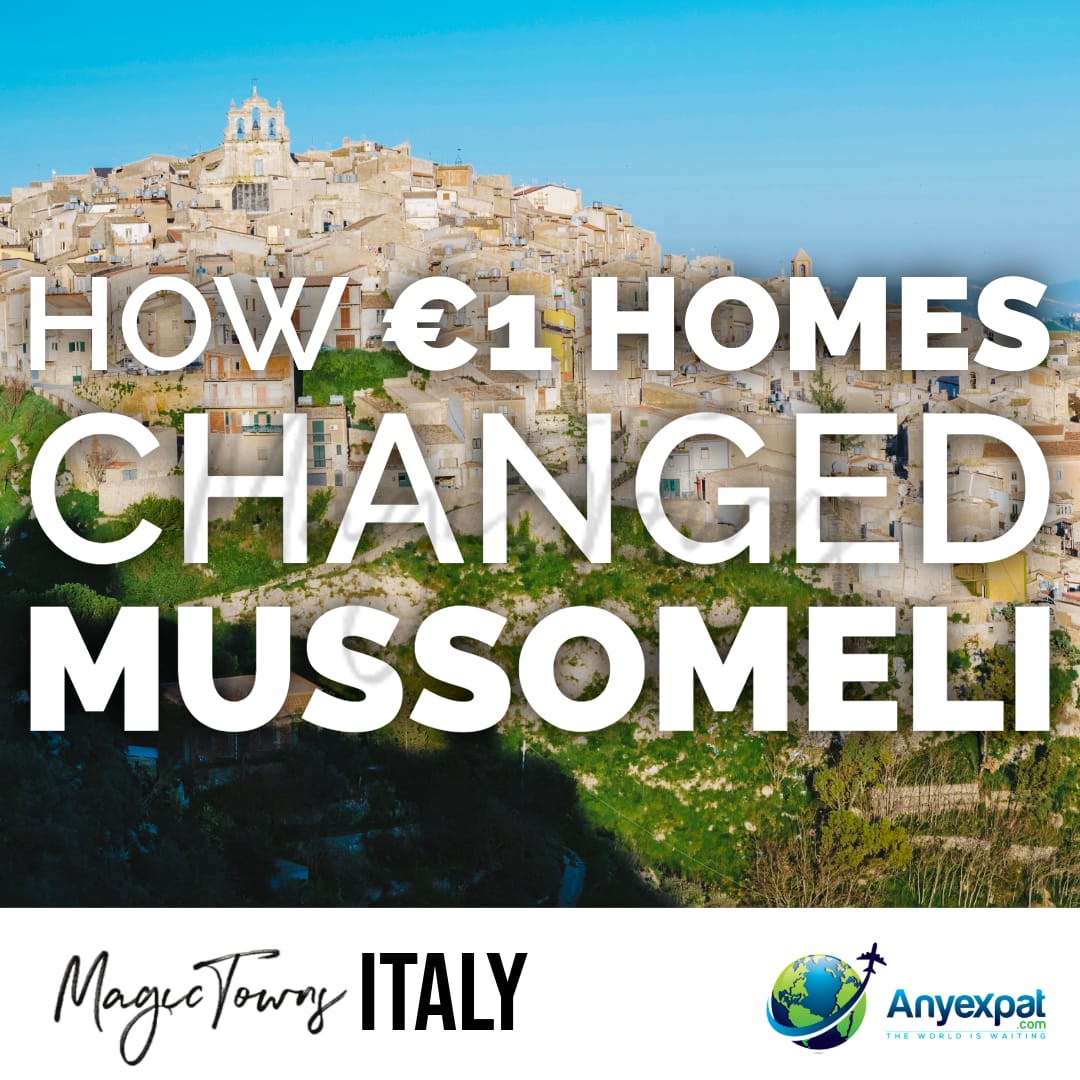
Luca : Cette semaine, les villes de Recoaro, [00:01:00] Posina, et Valli del Pasubio, tout près de Vicenta. Et pour ceux qui savent où Vicence is, that’s very near Venice have announced that the first batch of one euro homes in those, uh, lovely mountain villages.
Anna : D'accord. Et pourquoi maintenant ?
Luca : Well, you see, it’s actually a very interesting area that I personally know. I would say intimately. It was a magnet for tourists about a hundred years ago. Even Nietzsche, the German philosopher, used to go on holiday there and
Anna : Vous plaisantez ?
Luca : Non, non. C'est vraiment vrai.
There’s proof of it. He wrote about it. He wrote, that, it was one of the most beautiful places they had ever been to, but, it kind of fell off the map tourism wise. Because, uh, spas are not as popular now as they used to be in the past in Italy at least. And so even when I was a child at this [00:02:00] place, which was in huge tourist magnet had become less popular in the past few years. It has suffered a massive exodus of people that go and work and live in the nearby cities.
So there’s a lot of empty homes and quite simply the local governments decided to make them available to investors and people that want to move there preferentially to restore very much like the schemes in southern Italy.
Anna : Oui, mais ce ne sont que les premiers en Italie du Nord.
Luca : Exactement. Les premiers en Italie du Nord.
Si vous voulez en savoir plus, rendez-vous sur magictowns.it et lisez l'article dans lequel nous abordons tous les aspects de ce tout nouveau programme.
Anna : Et soyez le premier à les acheter.
Luca : Yeah, maybe. And then we can have a chat with there about how you feel about that. That is, if Anna and I don’t buy them first.
Qu'y a-t-il d'autre dans notre épisode d'aujourd'hui, Anna ? Nous avons une interview, n'est-ce pas ?
Anna : Oui, nous avons rencontré George après avoir visité Mussomeli et c'était, comment c'était, Luca, parce que tu es allé [00:03:00] là-bas.
Luca : George est aujourd'hui le cœur battant anglais de Mussomeli.
We spent, half an hour chatting with him about how things are going, how the city is changing now that he has brought in his massive social media following. He also has some new plans that he briefly mentions and he’s going to officially unveil in the next couple of weeks.
So without further ado, here’s a little excerpt of our chat with George.
Bonjour George. Comment allez-vous ?
George : Bonjour. Comment allons-nous ?
Gill : Je crois que nous vous avons manqué d'un jour à Mussomeli.
Luca : But we met some of your fans. Even the people that haven’t met you, they’re basically all there for you, which is very interesting. We’ve actually never seen anything like this.
George : It’s been great for Mussomeli. All the locals are very happy, all the one euro houses have been sold now, all the prices are slowly starting to creep up and everyone’s spending money at the businesses. So it is just a win-win situation for everyone really.
Luca : Absolument. Vous savez, nous vivons dans le nord. Et nous avons découvert [00:04:00] que pour la première fois, aujourd'hui même, ils ont lancé le programme de maisons à un euro, juste à côté de chez nous, à 10 miles de là.
George : Wow.
Luca : So that’s quite exciting because, you know, so far it has only been in the south.
George : I think a lot of the times, you know, one of the reasons people have sort of come to Mussomeli. It is purely just because it’s one of the few towns in Sicily, which someone’s really marketing it heavily.
Toutes ces villes se ressemblent et offrent des expériences culturelles et des prix immobiliers similaires. Mais je pense que Mussomeli a eu beaucoup de chance. Et le maire a joué un rôle très positif, car dans beaucoup de ces endroits, il y a tellement de paperasserie.
You know, with the one euro house scheme I went through, there was no upfront deposit. You had three years to do the roof and the facade, which they’ve now scrapped that rule and to incentivize people to keep coming, they’ve now introduced a new rule where you can remove the roof of your one euro house and make a garden.
The only time I’ve heard people having bad experiences in Mussomeli is by using contractors who want to charge you upfront. I know one girl at the [00:05:00] moment, she’s from LA, she spent 20 grand in the house. I think she agreed to 120,000 pound renovation budget. And she paid someone upfront or didn’t pay them upfront and now the builder thinks they’ve done 40,000 pound worth of work.
She doesn’t think 40,000 pound worth of work has been done. She’s in legal battle with another contractor. So that’s one of the reasons why I like to do a lot of the work myself, because all the times I’ve heard about bad experiences always ends up by employing someone you employ, unfortunately.
Gill : We’ve been through that. And then when you employ someone new, they blame the old guy. And you never know where the train of responsibility ends or finishes. So it’s even no matter what, it’s a disaster going forward.
George : And you don’t know if they’re cousins or the person you had before. You know, everyone seems to know everyone will be related to someone somehow.
Luca : And so you have to be careful, because if you raze the ground around you in these small towns, it’s over.
George : Oui.
Luca : Avez-vous l'intention de louer vos biens ?
George : Yeah, I mean, for my first two properties, I’ve got a waiting list of about 500 people waiting to stay at the moment. I’m gonna start [00:06:00] taking bookings on my website. But, you know, my departments aren’t being ready for at least two or three months. Once they’re ready, they’ll just be rented out.
Gill : Pour avoir vécu à Londres, vous savez que le prix au mètre carré est tout simplement insensé. Vous voyez donc la valeur d'une maison, mais vous devez ensuite penser à l'argent qu'il faut dépenser pour la remettre en état.
George : Oui, j'ai regardé sur YouTube un film sur ces femmes qui rénovent un palais dans le sud de l'Angleterre. Palerme, Ils m'ont dit que le Municipio local voulait une subvention de 500 000 euros pour commencer les travaux de rénovation ou simplement pour entamer le processus. Ils voulaient un demi-million. Juste pour obtenir le
Luca : oh, comme la garantie bancaire ? Oui. Ce devait être une garantie historique
George : it was a historical one right in the center where you’re looking over the main square, like the huge ones on the corner.
She was just like, we may be millionaires on paper, but we don’t have half a million pounds just to pay for a permit
Luca : De quel type d'incitation s'agit-il ? L'Italie est truffée de vieilles propriétés. Vous devez faire tout ce qui est en votre pouvoir pour faciliter les choses.
Gill : I guess the one thing everyone here believes in, we believe in Italy, we believe the property’s cheap and we believe we should be doing more to bring people in.
Luca : That’s what we’ve been working on. Finding towns where the local [00:07:00] government is supportive. Because as you know, everything changes from town to town.
George : It puts me in a very good position, and, every time I sell a house for Mussomeli, I don’t get paid for it. I’m just doing it out of goodwill. The reason I left London is I couldn’t afford half a million pound for one bedroom flat, so now I’ve got more chance of buying a house in London in a few years than I did staying there.
Luca : Hopefully we’ll get you to move to Italy permanently. You’re working on getting a visa, right?
George : Well, that’s the thing. At the moment, I don’t have a visa. I can only say ninety outta a 180 days. So for the last probably 40 months now, I spent two weeks in Mussomeli, two weeks in London. I’ve been doing that on rotation every month for 40 months now.
So at some point it would be nice to spend longer than a couple weeks at a time. But as far as I’m aware, either I get a student visa, which I have to go into college five days a week, four hours a day, and you know, I dropped outta uni after first days.
Luca : Aujourd'hui, la loi a été modifiée. Vous devez avoir au moins un niveau B1 en italien pour obtenir le visa. Vous devez donc apprendre l'italien avant de pouvoir vous inscrire à l'université.
George : La seule autre option est d'obtenir un visa de [00:08:00] nomade numérique, que je pourrais probablement obtenir.
Luca : Aujourd'hui, ils ont simplement accéléré le processus. Vous pouvez en obtenir un dans un délai de 45 jours.
Vous pouvez également épouser un Italien. Mais attention aux maris.
George : Basically 20% of the people I bring to Mussomeli realize they don’t wanna live in Mussomeli. Actually. They wanna live by the beach. And it’s just been a rule of thumb. I’ve realized averagely about 20% of all people end up moving to the beach after coming to Mussomeli.
Luca : It’s funny that you mentioned this thing about people, things, their minds, because like we spoke to this Australian woman, she’s like, you know, I need to be somewhere else.
I like to be in Italy, but I’d like to be somewhere else as a full-time thing. so finding the few different decent options is definitely important. There are people for whom Mussomeli matter will be fine, but there would also be looking for other things.
George : Well, I think that’s the beauty of, of Sicily. You know, there’s not many places left in the world you can buy a property for sort of 20 or 30,000 and you know, if you sold your property elsewhere for a couple hundred grand, you can have two, three properties all around Sicily. Jump between each of them, vent them out.
Luca : I think people don’t understand just how much of Italy is undervalued. We just bought a [00:09:00] house around the corner from here and we paid 50 K, and it’s big, like 3000 square feet.
George : Wow.
Luca : But the beauty of it is that it’s actually very thriving town. It’s near Venise. It’s near Padova, it’s near Vérone. On trouve des produits bon marché partout. Il suffit de chercher.
George : Yeah. The thing that I’ve seen change about Mussomeli most recently is now all the one year houses and the house under 10 K is starting to go.
Les maisons à moins de 20 000 euros commencent à disparaître, mais le plus grand changement a été l'attente pour une nuit par séjour. La dernière fois que j'y suis allé, mon caméraman de Channel 4, qui est venu séjourner avec moi, s'est installé dans un appartement standard de deux chambres à Mussomeli
He was paying a hundred euros per night on Airbnb. He paid 700 euros for the week. I couldn’t believe it.
Luca : J'ai été choquée.
Gill : And that’s a fraction of the house you just bought, you know,
Luca : la chambre où nous avons séjourné. Ride, mais c'était aussi, c'était aussi avec pas mal de problèmes et 90 Euro nuit
Anna : Yeah. That’s crazy. It’s even more, more expensive than bigger cities like Milan, Rome….
Gill : Il y avait aussi beaucoup de gens très bien qui faisaient des choses pour, vous savez, [00:10:00] les appels sociaux, l'ESG, des choses comme les cuisines communautaires.
I met someone from Armenia who was like trying to set up something with wool that had indirectly met you. So there’s a lot of social good going on. On the sidelines of all the things you’ve introduced. ’cause you’ve got people who want to do good in an area where they can afford, you know, to set up premises.
Luca : And that’s what you can do when you’re in a place where you can actually play with property, where you can buy stuff and have a bit of fun with it. There’s no way someone can say, I’m gonna throw €100k something in London and make a coworking space out it. Because you’re not even gonna buy a garage.
George : There’s one guy in Mussomeli who I like a lot. He started with one house, bought it for 20,000. He now owns. All six adjoining houses in the first house, the top floor. He’s turned it into a hairdresser studio where he gets a couple young guys and girls is doing hairs. He’s turned the bottom floor into a cafe and he is got a license from the mayor to have tables and chairs outside and they’ve made a communal garden and he’s just turned his corner property now into like half the street, which he owns. And it costs him [00:11:00] like 150 grand in total.
Luca : He’s got empire
George : and he is got his own little empire, you know, and he gets people on WeWork who come and work for him for free, for sort of work experience. And um, you know, he’s living like a king.
Gill : Oui, c'est vrai. Mais les gens se soutiennent les uns les autres et ce genre de style de vie manque aux gens.
And the thing is, if you relocate to a big city or you relocate somewhere, there’s no foreigners. You feel very lonely. Whereas that’s what Mussomeli has. You have like-minded people and you pull them all together to a place so that that dissipates the loneliness. So I can see how it really works.
Luca : Cela fait une énorme différence.
George : Yeah. And you know, when you live in a place where you are restrained financially and you’ve got so many bills coming out, it’s almost a luxury to be able to have all these sort of ideas and go through with them, you know? But because you’re not constrained financially or by the mayor, you know, there’s a lot of freedom to sort of, I say to anyone, if you’ve got 50 grand, you can come buy a house and start a business and have a good life.
Which is, you know. In London. That’s like a year’s rent, so
Luca : Oui, oui, absolument.
George : No, I mean there’s, [00:12:00] people ask, why’d you choose Miss Me? I didn’t really choose Miss Somme. It was just they had a one year house scheme going on and I wanted a cheap house. And then because I was there, I started promoting it.
You know, miss, so me’s beautiful, but you know, there’s another 10,000 towns which look pretty identical to Miss Milli around sissy. But you know, it really depends who’s there and who’s promoting it.
Luca : So they come over because it is like, I’m not gonna be the only foreigner in a town.
George : Yeah. Yeah. I mean, my, my problem is I don’t really tend to think things through too much. I just sort of go with the flow and, um, hope for the best. And, uh, that’s planned out pretty well so far.
Also, I try and show, you know, a positive side of this. You know, a lot of it people who document this process, it’s quite negative. They’re talking about all this sort of things that have gone wrong.
I just try and show, doing on a shoestring budget, with not speaking the language, not knowing anyone, you know, it’s still possible.
Luca : Oui, c'est vrai.
George : I see the people who end up in the biggest trouble are the ones who are just trying to throw money at problems all the time when that doesn’t really solve the problem.
A lot of the time, just constantly throwing money at the issue. But you learn from your mistakes and fortunately I’ve not made the [00:13:00] costly ones.
Gill : Or say, if you do nothing, you don’t make any mistakes. So the only you know, that’s how you learn, that’s how you progress.
Luca : Ce fut un réel plaisir de vous parler. Merci beaucoup, George.
Anna : C'était une très bonne conversation.
Luca : Oui, il est toujours très perspicace.
Anna : J'aime l'honnêteté avec laquelle George parle de ce qu'il a fait. Je veux dire..,
Luca : absolutely. We cut out some of the more, more honest, honest, honest parts, but he’s still very honest on record. Um. Anyway, it was a pleasure to talk to him. Uh, and, uh, we’re always following what he’s doing.
Et il serait intéressant de voir comment la région de la Sicile se développe, étant donné que le programme des maisons à un euro est, euh, en quelque sorte au maximum et que les gens commencent à regarder un peu plus loin pour d'autres endroits. Je suis donc optimiste sur la Sicile à long terme, nous verrons bien.
Anna : Yeah, I mean, it’s not just about cheap property. It’s about community. It’s about [00:14:00] building something bigger and yeah finding the right one isn’t that easy.
Luca : Absolutely. It’s mostly about community. I’d say if there’s something we learned, it’s that. Thank you listeners for being here thus far and for listening to us every week.
We really appreciate you and feel free to send us your comments. The last thing I want to mention before going on to enjoy my Saturday branch is that this week we have launched, on Magic Towns Italy two new indicators, which are very, very important. We’re gonna be talking about this in next week’s podcast in a little bit more detail, but we now cover demographic fragility as an indicator on our Town Explorer.
Il est devenu évident qu'un grand nombre de villes en Italie. Près des deux tiers d'entre elles se réduisent à un rythme assez rapide, ce qui constitue bien sûr un signal dangereux pour tout le monde. Ils risquent de se retrouver dans une [00:15:00] communauté qui va se réduire au cours des 20 prochaines années. Nous avons donc rassemblé les données et les avons simplifiées de manière à ce que tout le monde puisse les comprendre.
Tous ceux qui ont accès à l'explorateur de villes sur Magic Towns Italie peuvent désormais déterminer si une ville est solide d'un point de vue démographique, c'est-à-dire si elle est susceptible de bien se porter au cours des prochaines années, ou si elle est en position de fragilité. Dans ce cas, vous devriez peut-être réfléchir à vos propres besoins dans 10 ou 20 ans.
I hope you’re going to enjoy using this. I hope you enjoyed our podcast and I hope you enjoy your weekend.
Anna : Merci à tous. A la prochaine fois.
Luca : Merci, Anna. Merci à tous.
 English
 French
 German
 Italian
 Danish