

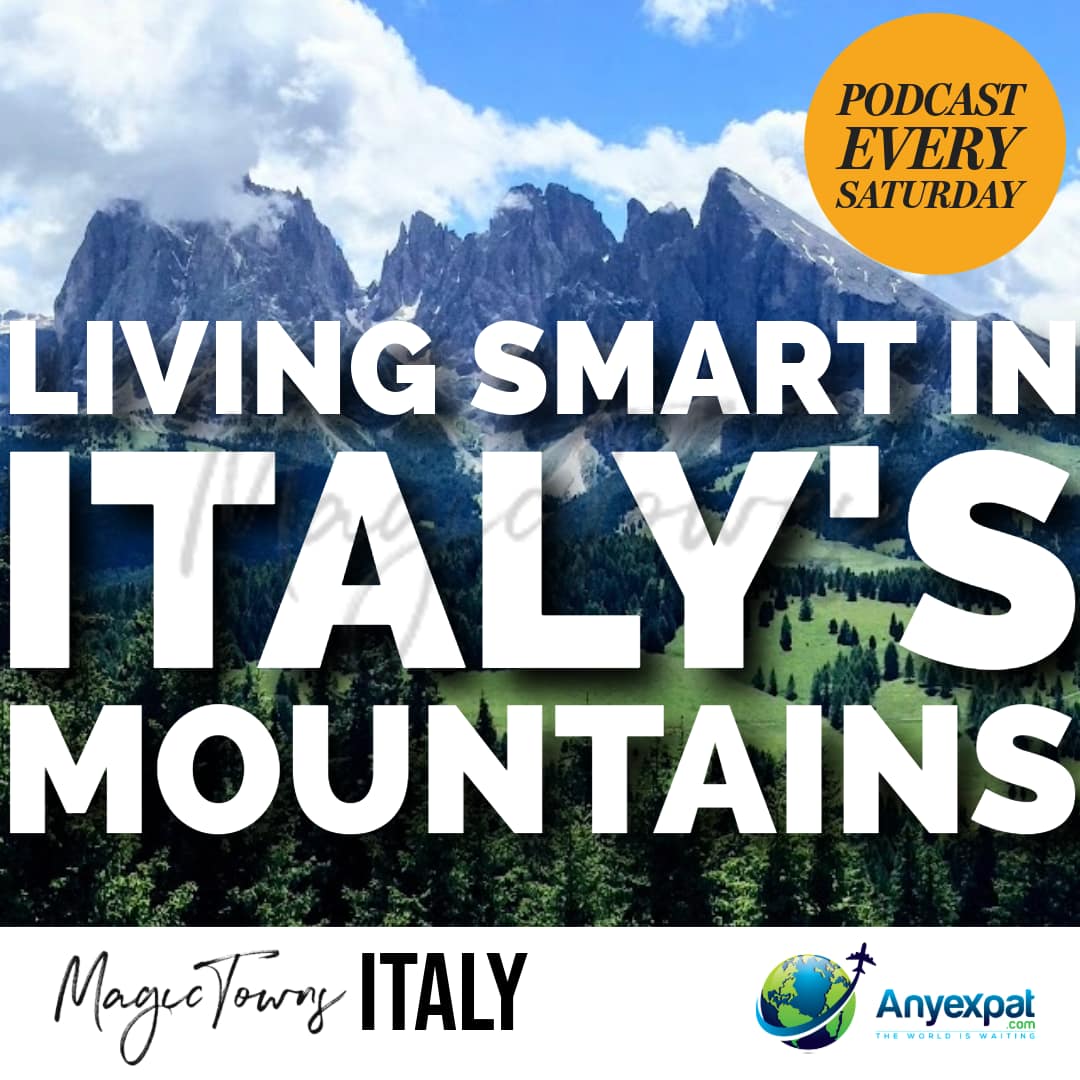

[00:00:11] Miles : Welcome back to the Magic Towns Italy podcast with Miles and Alessia. If you’ve ever dreamt of escaping to Italy’s dramatic peaks, those pristine lakes, and you know the charming villages tucked away high in the Alps or Appennines, well, you’re definitely not alone. Beyond the picture perfect postcards, there’s a really profound reality to Italy’s mountains, and actually this summer brought quite a sobering wake up call. We’ve seen some frankly alarming statistics coming out of the high country.
[00:00:38] Alessia : Indeed. Yeah, it’s been quite shocking. Maurizio Dellantonio, he’s the head of Italy’s National Alpine Rescue Corps. He revealed this tragic statistic that really underlines it all. Over 80 mountain fatalities in Italy in just one month between late June and late July. Yeah, he said, and it’s a powerful quote, I’ve never seen a summer with so many mountain deaths. We are beyond any limit. It just brings home the stark truth. You know, these majestic places demand respect. And while those like Instagram perfect images are captivating, especially with the Milano Cortina 2026 Winter Olympics coming up fast.
[00:01:19] Miles : Okay, so what does this mean for you listening, whether you’re planning a trip or maybe even dreaming of a move? We’re gonna share some crucial safety insights, and for those, thinking about a life among the peaks, we’ll pinpoint some really ideal mountain towns for expats, for retirees.
[00:01:35] Let’s dig in. Now, when most of us think Italian mountains, our minds kind of jump straight to the Dolomites, right? Those iconic jagged peaks, maybe those long cues for the perfect selfie uhhuh.
[00:01:47] Alessia : That’s the image.
[00:01:48] Mais
[00:01:48] Miles : Italy’s Alps and Aines actually have this vast, intricate network of marked trails sentieri. They stretch far beyond those, you know, well trodden tourist roots. Right at the heart of mapping and maintaining all this is the Club Alpino Italiano, the CAI.
[00:02:04] Alessia : Yeah, the CAI. They’ve been doing this for over 150 years. Charting paths, teaching hikers to follow those signature red and white blazes you see painted on rocks and trees.
[00:02:14] Miles : It’s quite something.
[00:02:15] Alessia : What’s truly striking is just the sheer scale of what they do. They actively maintain thousands of kilometers of trails and they oversee more than 700 mountain refuges, all across Italy,
[00:02:27] Miles : Right? I’ve heard about those. Are they all pretty basic?
[00:02:30] Alessia : Eh bien, ils varient beaucoup. Certains sont de simples bivouacs en haute altitude, avec des abris de base, mais beaucoup sont des lodges incroyablement confortables, servant une délicieuse polenta locale, peut-être un peu de vin, des endroits vraiment accueillants.
[00:02:42] Miles : Il a l'air génial.
[00:02:43] Alessia : Et ce réseau de rifugi, often spaced like a day’s walk apart, makes hut to hut trekking really possible.
[00:02:49] It’s super popular. Plus CAI membership gives you practical stuff too, like discounted stays in those huts. This is crucial. It includes mountaineering, rescue insurance that covers those potentially high rescue costs
[00:03:02] Miles : ah, that’s really key given those figures.
[00:03:04] Alessia : En effet, ils organisent également des sorties guidées. Ils organisent également des sorties guidées.
[00:03:07] Yeah. Great for newcomers to learn the ropes safely. So the genius of CAI isn’t just the trails, it’s how they’ve sort of democratized access and safety for everyone. Seasoned climbers, casual walkers, everyone. It makes these potentially intimidating landscapes feel much more approachable.
[00:03:24] Miles : L'accessibilité est fantastique, mais oui, le soutien du CA I semble absolument vital, car même si ces aventures sont palpitantes, la sécurité doit passer avant tout, et malheureusement, il semble que trop de randonneurs s'aventurent sans être préparés.
[00:03:39] Alessia : That’s the problem.
[00:03:40] Miles : It’s often influenced by what Dellantonio called the, “I want to do” it to effect from social media. You see someone on Instagram
[00:03:47] Alessia : Oui, c'est vrai. Peut-être sur une via ferrata très délicate ou en traversant un glacier.
[00:03:50] Miles : Exactly. And suddenly you’ve gotten honest hikers trying the same thing in like city sneakers with no safety gear. I bet you’ve seen some sight on the trails.
[00:03:57] Alessia : Oh, you wouldn’t believe it. Sometimes it looks like people are off for coffee, not climbing a mountain. Good pair of boots. Much less glamorous maybe, but way more practical. Which brings us to the crunch point. How do you really prepare for the mountain reality, not just the photo op?
[00:04:12] Miles : Okay. Let’s get practical. Tips.
[00:04:14] Alessia : C'est vrai. Tout d'abord, des vêtements et un équipement appropriés, non négociables. Des chaussures solides. Sérieusement, oubliez les baskets. Et des couches imperméables. Seule la moitié des randonneurs emportent une veste de pluie, ce qui est incroyable.
[00:04:24] Miles : Seulement la moitié. Wow.
[00:04:25] Alessia : La protection solaire est également essentielle. Et pour les itinéraires techniques, vous avez besoin d'un équipement adapté. Prévoyez toujours quelque chose de chaud et d'imperméable, car le temps en montagne peut changer du tout au tout. Il se peut que vous attendiez de l'aide pour...
[00:04:36] Miles : D'accord,
[00:04:36] Alessia : what’s next? Second, navigation tools crucial. Don’t rely on your mobile signal. It’s often just not there on the mountains. Download offline maps.
[00:04:45] Miles : La mise hors ligne correcte est essentielle.
[00:04:46] Alessia : Totally. And a traditional paper map and compass still excellent backups. Plus, always carry a power bank for your phone’s. GPS Italy’s, CAI even has its own emergency app, Georescue. It can send your exact location straight to rescuers.
[00:05:01] Miles : Cela semble incroyablement utile.
[00:05:02] Alessia : It really is. Third food and water. Carry more water than you think you’ll need. Plus, high energy snacks. Dehydration, it’s a real risk, especially on tough climbs or in the heat.
[00:05:12] Miles : C'est logique. Il faut toujours prévoir des en-cas supplémentaires,
[00:05:14] Alessia : Toujours.
[00:05:15] Fourth, check conditions. So many accidents happen because people just don’t know what they’re walking into. Check the weather forecast. Those afternoon thunderstorms in summer are classic. Be aware of surprise, snow or ice, even well into July at higher altitudes, winter and spring. You have to understand avalanche risks.
[00:05:33] Miles : So if a sign or a local says, be aware of the snow field, or you need winter gear. Take it seriously. And be willing to turn back or change your route if things look dodgy. The mountain isn’t going anywhere. It’ll be there tomorrow.
[00:05:45] Alessia : Un bon conseil. L'humilité est importante.
[00:05:47] Miles : Ce qui nous amène au dernier point.
[00:05:48] Know your limits and seek local health. Dellantonio mentioned some people feel it’s like humiliating to ask for info. That’s just silly. A quick chat with a park office or hiring a licensed alpine guide for something really challenging, like a glacier crossing that can literally save your life. There’s no shame in it and no rush to conquer everything at once. The mountains are patient.
[00:06:08] Alessia : That patience is key. But let’s circle back quickly to the money side, those rescue costs. So just to clarify, rescue for medical treatment is mostly free in Italy.
[00:06:17] Miles : Generally, yes, if you need medical attention and hospital transport, it’s usually covered by the National Health Service.
[00:06:23] Alessia : If it’s not a medical emergency, like you twist an ankle and just need help getting down or you get lost,
[00:06:28] Miles : That’s where it gets tricky. They can charge you for non-injury rescues, so that helicopter ride, if a doctor doesn’t say you need the hospital. Yeah, that could be 750 to 1000 euros per person.
[00:06:38] Alessia : Right. That’s a significant chunk of change you weren’t planning on spending.
[00:06:42] Miles : Une bonne assurance voyage couvrant les secours en montagne ou l'adhésion à l'IPE, dont nous avons parlé, sont donc fortement recommandées à tous ceux qui se rendent sur les sommets.
[00:06:51] Alessia : Ok, message reçu.
[00:06:52] C'est clair et net.
[00:06:53] Miles : Tout se résume à ce mantra essentiel, la montagna va rispettata. Les montagnes doivent être respectées. La prévention est primordiale. Un bon équipement, une formation adéquate, une information solide, une approche de ces lieux étonnants avec humilité et prévoyance.
[00:07:10] Alessia : That wisdom is actually a perfect segue because let’s shift gears now from just visiting to actually living the mountain life. It’s easy to think of places like say Cortina d’Ampezzo as just tourist playgrounds, isn’t it?
[00:07:22] Miles : C'est certainement la perception que l'on en a parfois
[00:07:24] Alessia : But Italy’s mountain community, those local municipalities, they’re vibrant, lived in places all year round, way beyond just the tourist seasons.
[00:07:33] De nombreuses villes des Alpes et des Appennins ont leurs propres écoles, hôpitaux, marchés hebdomadaires et traditions séculaires. Les fêtes des vendanges se déroulent même à 1200 mètres d'altitude.
[00:07:44] Miles : Yeah, absolutely. Living in a mountain town means joining a really close knit community, people who’ve learned to thrive despite relative isolation, long winters, natural challenges.
[00:07:55] Bien sûr, le rythme est différent de celui d'une grande ville. Vous ne trouverez probablement pas de supermarchés ouverts tard le soir ou d'événements en constante effervescence.
[00:08:02] Alessia : That’s what the trade-offs. Fresh air, incredible nature, right on your doorstep.
[00:08:06] Miles : Les liens communautaires sont très forts et les gens veillent les uns sur les autres.
[00:08:10] Alessia : Okay? So if someone’s thinking about this, it’s not just picking a pretty spot on the map.
[00:08:15] Miles : Definitely not choosing a mountain town requires real homework because mountain town can mean so many different things. You’ve got bustling, small cities like Trento, tiny little hamlets, perched on a slope, big ski tourism hubs, quiet agricultural villages. They’re all different.
[00:08:30] Alessia : Alors, comment faire pour réduire le nombre de candidats ? Comment trouver ce qui vous convient le mieux ?
[00:08:33] Miles : L'explorateur de villes. Il aide les gens à trouver la ville d'altitude qui leur convient le mieux. Vous pouvez filtrer les villes en fonction de toutes sortes de critères : altitude, proximité des pentes, données climatiques, voire risques naturels.
[00:08:44] Alessia : Oh, that’s clever. So you could search for like a town above 500 meters with a train station.
[00:08:49] Miles : Precisely. The key is finding a place that feels right for your lifestyle in all seasons, because a town that’s buzzing in August might feel very, very different come November. You need to love it then too.
[00:09:00] Alessia : Good point. Okay. Let’s make this real. Here’s a short list of towns that seem to offer a great balance, scenery, community livability.
[00:09:07] Miles : Let’s hear them.
[00:09:08] Alessia : First stop, Piemonte. Let’s look at Cuneo. It’s a mid-size city. About 56,000 people sits at 534 meters where two rivers meet. You get those amazing snow capped peaks on the horizon. It’s known for a relaxed vibe. Incredible chestnuts and cheese.
[00:09:23] Miles : Mm. La nourriture du Piémont,
[00:09:25] Alessia : right, and it’s surprisingly close to France. The Riviera is just over the mountains. It’s a regional hub, big central Piazza, lower cost of living than tourin, and easy access to hiking, skiing in the maritime Alps.
[00:09:36] Miles : Il s'agit donc d'un bon équilibre.
[00:09:38] Alessia : Then just eight kilometers from Cuneo. You’ve got Borgo San Dalmaso, smaller, about 12,000 residents, a bit higher at 636 meters. It’s really the gateway to the Alpi Maritime Natural Park. Locals here live a proper mountain lifestyle, hiking to refuges, foraging for mushrooms. That’s the weekend vibe. It has an old Abbey, and even a famous annual snail festival.
[00:10:01] Miles : A snail festival, okay, that’s definitely local culture.
[00:10:04] Alessia : Then there’s Biella, also Piemonte. Northeast of Turin at the foot of the Alps. Historic textile town. Famous for fine wool, about 44,000 people. Elegant historic center, split level connected by a funicular. Above it is the UNESCO site, Santuario di Orobba.
[00:10:20] Miles : L'histoire et les montagnes.
[00:10:22] Alessia : Exactement. Sentiers de randonnée, lacs alpins à proximité. Plus des services urbains comme les hôpitaux. Même une brasserie et un club de jazz, apparemment. Et un autre dans le Piémont, Avigliana, à l'ouest de Turin, à environ 25 kilomètres de la ville médiévale. Célèbre pour ses deux lacs et ses ruines.
[00:10:38] It’s attracting commuters, Turin’s only 30 minutes by train and remote workers looking for that slower pace with an alpine view.
[00:10:46] Miles : Les exemples du Piémont sont excellents. Ce qui me frappe vraiment, c'est ce mélange de charme traditionnel et d'accessibilité surprenante à des villes comme Turin.
[00:10:55] And that community spirit, like you said, the snail festival, it’s quirky. Sure. But it shows a real vibrant local culture that’s welcoming.
[00:11:03] Alessia : That’s a fantastic point. Okay, let’s move region. Lombardia. First up, Lecco, it’s on Lake Como, often overshadowed by Como city itself, but it’s ringed by these jagged peaks.
[00:11:12] It’s an active city, about 48,000 people. Industry and mountain culture mix here. Great base for hikers. Trails literally start from town. Good infrastructure, and only 40 minutes by train to Milan.
[00:11:26] Miles : Lecco’s got a real energy to it. I agree. Very different from the sleepier Como villages sometimes.
[00:11:30] Alessia : Then Nembro tucked in the valana, near Bergamo, more of a workaday mountain town, about 11,000 people. Deep history, it’s a springboard to the Orobi Alps. The whole valley has cycle paths, walking paths. There’s a 35 kilometer cycle route. Nembro offers that mix of convenient supermarkets, schools, plus easy nature access for skiing, hiking, strong community feel.
[00:11:55] Miles : Et la Val Seriana est très belle, très verte.
[00:11:57] Alessia : Juste à côté de Nembro, Alzano Lombardo, environ 13 000 habitants. Il s'agit davantage d'une ville de banlieue pour Bergame, qui mélange le patrimoine industriel et la proximité des Alpes, à seulement cinq kilomètres de la ville de Bergame. Reliée par le tramway, elle a peut-être un peu plus d'énergie urbaine, un grand hôpital, des centres commerciaux, mais elle reste une porte d'entrée vers les Alpes d'Orobi.
[00:12:19] Miles : What’s compelling about those towns, especially Nembro and Alzano, is how they really fuse that everyday practicality. The jobs, the shops, the transport with immediate access to stunning nature. They’re working towns where you can genuinely live, maybe raise a family and have the Orobi Alps as your backyard. It’s sort of pragmatic mountain living.
[00:12:41] Alessia : That balance is so important for real life, isn’t it? Practicality and nature access. Okay, let’s not forget Italy’s other big mountain range, the Apennines. Teramo in a bruso beautiful little city. 51,000 people offers that rare mountains and sea combo.
[00:12:57] Miles : Ah, yes, Abruzzo’s unique position
[00:12:59] Alessia : to the Northwest you’ve got the Grand Sasso, massive highest peaks in the app, Appennines. To the east, just 30 minutes drive to the Adriatic coast. Teramo itself is fairly low, but hills all around views of high peaks. Ancient Roman routes, lovely medieval cathedral, friendly, laid back vibe.
[00:13:16] Miles : Et les logements sont généralement plus abordables dans les Abruzzes, n'est-ce pas ?
[00:13:18] Alessia : Yeah, that’s a big plus. And new infrastructure is connecting it better to Rome now too. Back north, but different region. Veneto. We have Asiago. Ah, the cheese. Famous for its DOP cheese. Yes. Asiago sits at 1000 meters on this big plateau, the Altopiano dei Sette Comuni.
[00:13:36] It combines small city amenities with super easy access to nature, great for walking, cycling, and especially Nordic skiing in winter. It’s a lively year-round place, and crucially, it’s less than an hour from Vicenza, 90 minutes from Venice. Unusually well connected for a mountain town at that altitude.
[00:13:55] Miles : Ce lien est très important.
[00:13:57] What strikes me across all these examples is that common thread of deep rooted community. It thrives even with relative isolation, and it’s that social fabric that really generalizes the livability, especially in the off season, in a place like Teramo balancing mountains and sea. That’s a really special duality, hard to find elsewhere in Italy.
[00:14:17] Alessia : That list really paints a picture of just how diverse the options are. But let’s just focus slightly to a big event looming. Milano Cortina 2026 Winter Olympics. This is bringing huge investment into Italy’s Alpine regions, right? Something like $3.4 billion for loads of projects.
[00:14:35] Miles : That’s the figure. Yeah. Around 94 Olympic related projects, about 50 transport, 44 sports facilities. It’s substantial.
[00:14:42] Alessia : And the idea is these improvements aren’t just for the games, but to leave a lasting legacy. Better infrastructure. We’re already seeing new roads, tunnels, highway upgrades, near Cortina, and the Dolomites plans for better rail public transport.
[00:14:55] Pour les résidents potentiels, cela semble être une bonne chose. Une meilleure connectivité, des temps de trajet peut-être plus courts, des services publics modernes, c'est une grande victoire.
[00:15:03] Miles : It’s an excellent question because there’s definitely a double-edged sword aspect here.
[00:15:08] Alessia : Ah, d'accord. Comment cela se passe-t-il ?
[00:15:09] Miles : While the benefits of better infrastructure are clear, the Olympic spotlight is already pushing up crowds and significantly property prices, especially in those spots like Cortina d’Ampezzo. If you dig deeper, average home prices in Cortina, they’ve hit 12,000 euros per square meter. That’s like Central Paris.
[00:15:28] Alessia : 12 000 euros le mètre carré. Ouah ! Oui, c'est vrai.
[00:15:31] Miles : Certains logements haut de gamme se vendent à plus de $20 000 euros le mètre carré. Les loyers montent également en flèche. Selon les projections, les appartements se vendent à 1 000 000 de livres sterling la nuit pendant les jeux.
[00:15:41] This isn’t just about the Olympics though. It shows how these big global events can totally transform local economies. Great opportunity for some, but.
[00:15:49] Alessia : Mais cela peut avoir pour effet d'évincer les résidents de longue durée.
[00:15:51] Miles : Exactly. People who’ve lived there for generations suddenly can’t afford it. Plus the sudden influx can really strain infrastructure change the character of these usually quieter places, at least temporarily.
[00:16:03] It’s a tension we see in mountain regions worldwide when the spotlight hits.
[00:16:07] Alessia : That’s a really powerful point about the global parallels. So, okay. If you are thinking about relocating around this time, what’s the strategy? Here’s a tip. Maybe consider looking just beyond the immediate Olympic spotlight.
[00:16:19] Miles : C'est une bonne chose.
[00:16:20] Alessia : Italy’s Alps are full of charming towns that won’t actually host events, but will still benefit from the general regional upgrades. You’ll likely find better value, maybe a better quality of life there. So instead of Cortina itself, maybe look at towns in the Valbelluna area or Cadore. They’re right next door, but probably more reasonable prices, less chaotic.
[00:16:41] Miles : Historiquement, les grands événements de ski stimulent souvent l'ensemble de la région, et pas seulement la ville hôte,
[00:16:45] Alessia : Right? So areas like Valtellina that’s near the Bormio and Livigno venues, or maybe the valleys around Verona, where some ice sports will happen, they might see a positive ripple effect without the same level of tourist frenzy.
[00:16:59] Miles : Looking at the bigger picture, my advice would be yes, the Olympics will leave a mark. Infrastructure might improve, but the best strategy is always to choose a town you genuinely love. Regardless of the game’s temporary impact. Property markets can cool down after the flame goes out. What really counts after 2026 is the everyday life, the community, the rhythm of the place you choose. That’s the long game.
[00:17:22] Alessia : What an incredible deep dive this has been living among Italy’s peaks. It’s clear these Alpine and Appennine towns offer just an amazing lifestyle, that fresh air, the breathtaking beauty, endless adventure, and that really strong sense of community we keep coming back to from the Maritime Alps, right down to Apennines.
[00:17:40] Ce sont des endroits où l'on peut véritablement vivre bien, à condition bien sûr de les aborder dans le respect de l'environnement et du mode de vie local.
[00:17:48] Miles : It’s about living with it and with the right mindset, the right preparation, Italy’s Magic Towns really can be a dream come true. Offering a safe, fulfilling life, deeply connected to nature.
[00:18:00] Alessia : Cette idée de respect de l'expérience plutôt que de conquête semble primordiale.
[00:18:04] Donc, si votre imagination s'envole vers de nouvelles possibilités, nous vous encourageons à les explorer davantage. Nous vous encourageons à aller plus loin. Vous pouvez trouver des informations plus détaillées sur des villes spécifiques, les ressources que nous avons mentionnées sur le site Magic Towns Italie. Restez prudents et profitez des hauteurs.
 English
 French
 German
 Italian
 Danish