

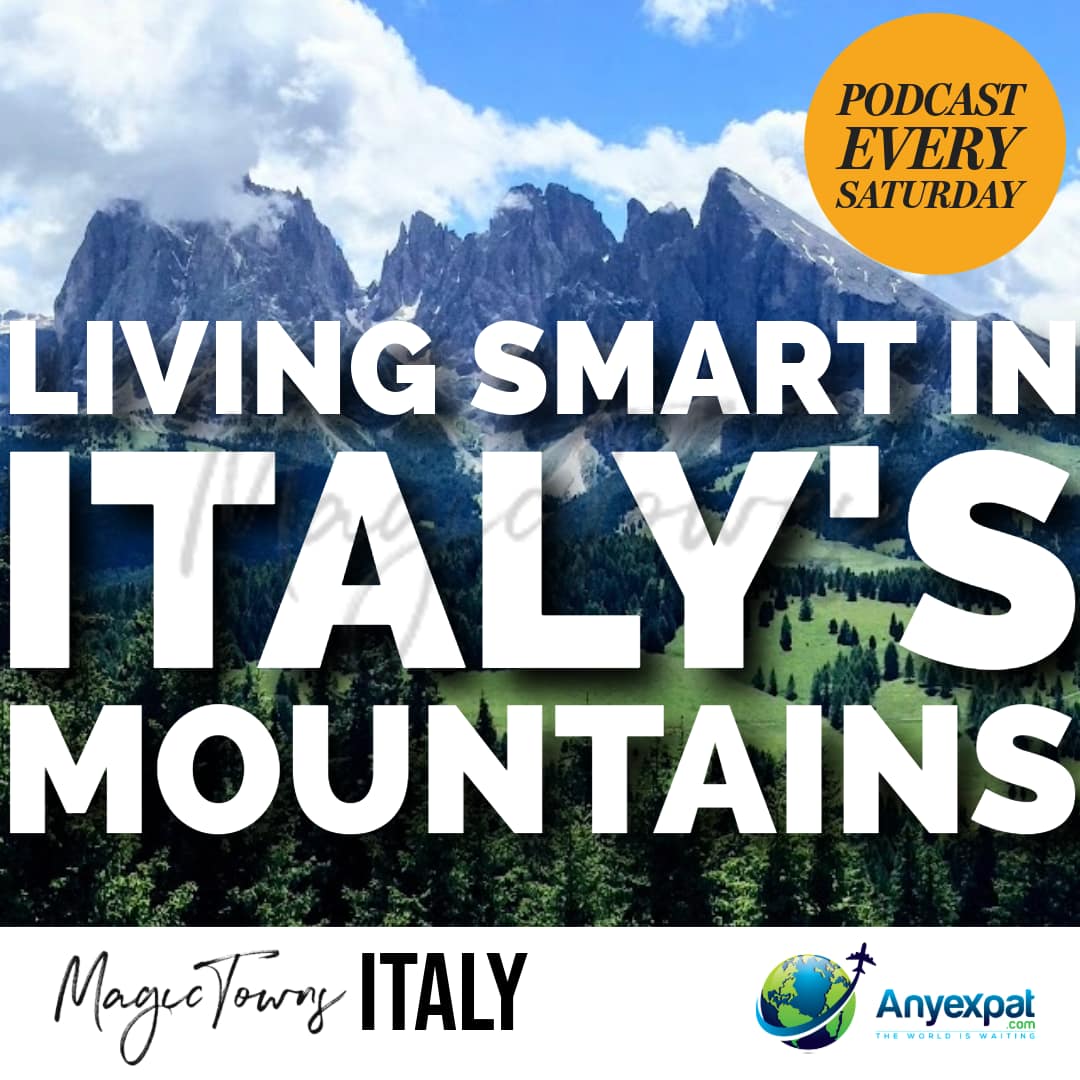

[00:00:11] Miglia: Welcome back to the Magic Towns Italy podcast with Miles and Alessia. If you’ve ever dreamt of escaping to Italy’s dramatic peaks, those pristine lakes, and you know the charming villages tucked away high in the Alps or Appennines, well, you’re definitely not alone. Beyond the picture perfect postcards, there’s a really profound reality to Italy’s mountains, and actually this summer brought quite a sobering wake up call. We’ve seen some frankly alarming statistics coming out of the high country.
[00:00:38] Alessia: Indeed. Yeah, it’s been quite shocking. Maurizio Dellantonio, he’s the head of Italy’s National Alpine Rescue Corps. He revealed this tragic statistic that really underlines it all. Over 80 mountain fatalities in Italy in just one month between late June and late July. Yeah, he said, and it’s a powerful quote, I’ve never seen a summer with so many mountain deaths. We are beyond any limit. It just brings home the stark truth. You know, these majestic places demand respect. And while those like Instagram perfect images are captivating, especially with the Milano Cortina 2026 Winter Olympics coming up fast.
[00:01:19] Miglia: Okay, so what does this mean for you listening, whether you’re planning a trip or maybe even dreaming of a move? We’re gonna share some crucial safety insights, and for those, thinking about a life among the peaks, we’ll pinpoint some really ideal mountain towns for expats, for retirees.
[00:01:35] Let’s dig in. Now, when most of us think Italian mountains, our minds kind of jump straight to the Dolomites, right? Those iconic jagged peaks, maybe those long cues for the perfect selfie uhhuh.
[00:01:47] Alessia: That’s the image.
[00:01:48] Ma
[00:01:48] Miglia: Italy’s Alps and Aines actually have this vast, intricate network of marked trails sentieri. They stretch far beyond those, you know, well trodden tourist roots. Right at the heart of mapping and maintaining all this is the Club Alpino Italiano, the CAI.
[00:02:04] Alessia: Yeah, the CAI. They’ve been doing this for over 150 years. Charting paths, teaching hikers to follow those signature red and white blazes you see painted on rocks and trees.
[00:02:14] Miglia: It’s quite something.
[00:02:15] Alessia: What’s truly striking is just the sheer scale of what they do. They actively maintain thousands of kilometers of trails and they oversee more than 700 mountain refuges, all across Italy,
[00:02:27] Miglia: Right? I’ve heard about those. Are they all pretty basic?
[00:02:30] Alessia: Beh, variano molto. Alcuni sono semplici bivacchi d'alta quota, solo rifugi di base, ma molti sono rifugi incredibilmente accoglienti, che servono una deliziosa polenta locale, magari del vino, luoghi davvero accoglienti.
[00:02:42] Miglia: Sembra incredibile.
[00:02:43] Alessia: E questa rete di rifugi, often spaced like a day’s walk apart, makes hut to hut trekking really possible.
[00:02:49] It’s super popular. Plus CAI membership gives you practical stuff too, like discounted stays in those huts. This is crucial. It includes mountaineering, rescue insurance that covers those potentially high rescue costs
[00:03:02] Miglia: ah, that’s really key given those figures.
[00:03:04] Alessia: Sicuramente. Organizzano anche corsi di escursioni guidate.
[00:03:07] Yeah. Great for newcomers to learn the ropes safely. So the genius of CAI isn’t just the trails, it’s how they’ve sort of democratized access and safety for everyone. Seasoned climbers, casual walkers, everyone. It makes these potentially intimidating landscapes feel much more approachable.
[00:03:24] Miglia: L'accessibilità è fantastica, ma sì, il supporto di CA I sembra assolutamente vitale perché, per quanto queste avventure siano emozionanti, la sicurezza deve venire prima di tutto e purtroppo sembra che troppi escursionisti si avventurino impreparati.
[00:03:39] Alessia: That’s the problem.
[00:03:40] Miglia: It’s often influenced by what Dellantonio called the, “I want to do” it to effect from social media. You see someone on Instagram
[00:03:47] Alessia: giusto. Magari su una via ferrata molto difficile o attraversando un ghiacciaio.
[00:03:50] Miglia: Exactly. And suddenly you’ve gotten honest hikers trying the same thing in like city sneakers with no safety gear. I bet you’ve seen some sight on the trails.
[00:03:57] Alessia: Oh, you wouldn’t believe it. Sometimes it looks like people are off for coffee, not climbing a mountain. Good pair of boots. Much less glamorous maybe, but way more practical. Which brings us to the crunch point. How do you really prepare for the mountain reality, not just the photo op?
[00:04:12] Miglia: Okay. Let’s get practical. Tips.
[00:04:14] Alessia: Giusto. Innanzitutto, abbigliamento e attrezzatura adeguati, non negoziabili. Calzature robuste. Davvero, dimenticate le scarpe da ginnastica. E strati resistenti alle intemperie. Solo circa la metà degli escursionisti porta con sé una giacca antipioggia, il che è assurdo.
[00:04:24] Miglia: Solo la metà. Wow.
[00:04:25] Alessia: Anche la protezione solare è fondamentale. E per i percorsi tecnici è necessario il kit giusto. Mettete sempre in valigia qualcosa di caldo e impermeabile, perché il tempo in montagna può cambiare da un momento all'altro. Potreste aspettare i soccorsi per.
[00:04:36] Miglia: Ok,
[00:04:36] Alessia: what’s next? Second, navigation tools crucial. Don’t rely on your mobile signal. It’s often just not there on the mountains. Download offline maps.
[00:04:45] Miglia: L'offline giusto è fondamentale.
[00:04:46] Alessia: Totally. And a traditional paper map and compass still excellent backups. Plus, always carry a power bank for your phone’s. GPS Italy’s, CAI even has its own emergency app, Georescue. It can send your exact location straight to rescuers.
[00:05:01] Miglia: Sembra incredibilmente utile.
[00:05:02] Alessia: It really is. Third food and water. Carry more water than you think you’ll need. Plus, high energy snacks. Dehydration, it’s a real risk, especially on tough climbs or in the heat.
[00:05:12] Miglia: Ha senso. Preparate sempre degli spuntini extra,
[00:05:14] Alessia: Sempre.
[00:05:15] Fourth, check conditions. So many accidents happen because people just don’t know what they’re walking into. Check the weather forecast. Those afternoon thunderstorms in summer are classic. Be aware of surprise, snow or ice, even well into July at higher altitudes, winter and spring. You have to understand avalanche risks.
[00:05:33] Miglia: So if a sign or a local says, be aware of the snow field, or you need winter gear. Take it seriously. And be willing to turn back or change your route if things look dodgy. The mountain isn’t going anywhere. It’ll be there tomorrow.
[00:05:45] Alessia: Un buon consiglio. L'umiltà è importante.
[00:05:47] Miglia: Il che porta al punto finale.
[00:05:48] Know your limits and seek local health. Dellantonio mentioned some people feel it’s like humiliating to ask for info. That’s just silly. A quick chat with a park office or hiring a licensed alpine guide for something really challenging, like a glacier crossing that can literally save your life. There’s no shame in it and no rush to conquer everything at once. The mountains are patient.
[00:06:08] Alessia: That patience is key. But let’s circle back quickly to the money side, those rescue costs. So just to clarify, rescue for medical treatment is mostly free in Italy.
[00:06:17] Miglia: Generally, yes, if you need medical attention and hospital transport, it’s usually covered by the National Health Service.
[00:06:23] Alessia: If it’s not a medical emergency, like you twist an ankle and just need help getting down or you get lost,
[00:06:28] Miglia: That’s where it gets tricky. They can charge you for non-injury rescues, so that helicopter ride, if a doctor doesn’t say you need the hospital. Yeah, that could be 750 to 1000 euros per person.
[00:06:38] Alessia: Right. That’s a significant chunk of change you weren’t planning on spending.
[00:06:42] Miglia: Quindi avere una buona assicurazione di viaggio che copra il soccorso alpino o l'iscrizione al CAI, di cui abbiamo parlato: altamente, altamente raccomandato per chiunque si diriga verso le vette.
[00:06:51] Alessia: Ok, messaggio ricevuto.
[00:06:52] Forte e chiaro.
[00:06:53] Miglia: Tutto si riduce a questo mantra fondamentale, la montagna va rispettata. Le montagne devono essere rispettate. La prevenzione è tutto. Un buon equipaggiamento, una formazione adeguata, una solida informazione, avvicinarsi a questi luoghi straordinari con umiltà e lungimiranza.
[00:07:10] Alessia: That wisdom is actually a perfect segue because let’s shift gears now from just visiting to actually living the mountain life. It’s easy to think of places like say Cortina d’Ampezzo as just tourist playgrounds, isn’t it?
[00:07:22] Miglia: Sicuramente la percezione a volte
[00:07:24] Alessia: But Italy’s mountain community, those local municipalities, they’re vibrant, lived in places all year round, way beyond just the tourist seasons.
[00:07:33] Molti paesi alpini e appenninici hanno scuole, ospedali, mercati settimanali, tradizioni secolari. Feste della vendemmia anche a 1.200 metri.
[00:07:44] Miglia: Yeah, absolutely. Living in a mountain town means joining a really close knit community, people who’ve learned to thrive despite relative isolation, long winters, natural challenges.
[Certo, il ritmo è diverso da quello di una grande città. Probabilmente non troverete supermercati aperti fino a tarda notte o un costante brusio di eventi.
[00:08:02] Alessia: That’s what the trade-offs. Fresh air, incredible nature, right on your doorstep.
[00:08:06] Miglia: E questi legami comunitari davvero forti, le persone si guardano le spalle a vicenda.
[00:08:10] Alessia: Okay? So if someone’s thinking about this, it’s not just picking a pretty spot on the map.
[00:08:15] Miglia: Definitely not choosing a mountain town requires real homework because mountain town can mean so many different things. You’ve got bustling, small cities like Trento, tiny little hamlets, perched on a slope, big ski tourism hubs, quiet agricultural villages. They’re all different.
[00:08:30] Alessia: Come si fa a restringere il campo? Come trovare la soluzione giusta per voi?
[00:08:33] Miglia: L'Esploratore di città. Aiuta le persone a trovare l'abbinamento ideale con l'alta quota. È possibile filtrare le città in base a diversi fattori: l'altitudine, la vicinanza alle piste, i dati climatici e persino il rischio di rischi naturali.
[00:08:44] Alessia: Oh, that’s clever. So you could search for like a town above 500 meters with a train station.
[00:08:49] Miglia: Precisely. The key is finding a place that feels right for your lifestyle in all seasons, because a town that’s buzzing in August might feel very, very different come November. You need to love it then too.
[00:09:00] Alessia: Good point. Okay. Let’s make this real. Here’s a short list of towns that seem to offer a great balance, scenery, community livability.
[00:09:07] Miglia: Let’s hear them.
[00:09:08] Alessia: First stop, Piemonte. Let’s look at Cuneo. It’s a mid-size city. About 56,000 people sits at 534 meters where two rivers meet. You get those amazing snow capped peaks on the horizon. It’s known for a relaxed vibe. Incredible chestnuts and cheese.
[00:09:23] Miglia: Mm. Il cibo in Piemonte,
[00:09:25] Alessia: right, and it’s surprisingly close to France. The Riviera is just over the mountains. It’s a regional hub, big central Piazza, lower cost of living than tourin, and easy access to hiking, skiing in the maritime Alps.
[00:09:36] Miglia: Quindi un buon equilibrio.
[00:09:38] Alessia: Then just eight kilometers from Cuneo. You’ve got Borgo San Dalmaso, smaller, about 12,000 residents, a bit higher at 636 meters. It’s really the gateway to the Alpi Maritime Natural Park. Locals here live a proper mountain lifestyle, hiking to refuges, foraging for mushrooms. That’s the weekend vibe. It has an old Abbey, and even a famous annual snail festival.
[00:10:01] Miglia: A snail festival, okay, that’s definitely local culture.
[00:10:04] Alessia: Then there’s Biella, also Piemonte. Northeast of Turin at the foot of the Alps. Historic textile town. Famous for fine wool, about 44,000 people. Elegant historic center, split level connected by a funicular. Above it is the UNESCO site, Santuario di Orobba.
[00:10:20] Miglia: Quindi storia e montagne.
[00:10:22] Alessia: Esattamente. Sentieri escursionistici, laghi alpini nelle vicinanze. Oltre a cose cittadine come gli ospedali. Anche un brew pub e un jazz club, a quanto pare. E un'altra in Piemonte, Avigliana, a ovest di Torino, a circa 25 chilometri dalla città medievale. Famosa per i suoi due laghi e le sue rovine.
[00:10:38] It’s attracting commuters, Turin’s only 30 minutes by train and remote workers looking for that slower pace with an alpine view.
[00:10:46] Miglia: Gli esempi del Piemonte sono fantastici. Ciò che mi colpisce è la miscela di fascino tradizionale, ma con una sorprendente accessibilità a luoghi come Torino.
[00:10:55] And that community spirit, like you said, the snail festival, it’s quirky. Sure. But it shows a real vibrant local culture that’s welcoming.
[00:11:03] Alessia: That’s a fantastic point. Okay, let’s move region. Lombardia. First up, Lecco, it’s on Lake Como, often overshadowed by Como city itself, but it’s ringed by these jagged peaks.
[00:11:12] It’s an active city, about 48,000 people. Industry and mountain culture mix here. Great base for hikers. Trails literally start from town. Good infrastructure, and only 40 minutes by train to Milan.
[00:11:26] Miglia: Lecco’s got a real energy to it. I agree. Very different from the sleepier Como villages sometimes.
[00:11:30] Alessia: Then Nembro tucked in the valana, near Bergamo, more of a workaday mountain town, about 11,000 people. Deep history, it’s a springboard to the Orobi Alps. The whole valley has cycle paths, walking paths. There’s a 35 kilometer cycle route. Nembro offers that mix of convenient supermarkets, schools, plus easy nature access for skiing, hiking, strong community feel.
[00:11:55] Miglia: E la Val Seriana è deliziosa, molto verde.
[00:11:57] Alessia: E proprio accanto a Nembro, Alzano Lombardo, circa 13.000 abitanti. Più che una città di pendolari per Bergamo, unisce il patrimonio industriale con la vicinanza alle Alpi, a soli cinque chilometri da Bergamo città. Collegata con il tram, ha forse un po' più di energia urbana, un grande ospedale, centri commerciali, ma è comunque una porta d'accesso alle Alpi Orobie.
[00:12:19] Miglia: What’s compelling about those towns, especially Nembro and Alzano, is how they really fuse that everyday practicality. The jobs, the shops, the transport with immediate access to stunning nature. They’re working towns where you can genuinely live, maybe raise a family and have the Orobi Alps as your backyard. It’s sort of pragmatic mountain living.
[00:12:41] Alessia: That balance is so important for real life, isn’t it? Practicality and nature access. Okay, let’s not forget Italy’s other big mountain range, the Apennines. Teramo in a bruso beautiful little city. 51,000 people offers that rare mountains and sea combo.
[00:12:57] Miglia: Ah, yes, Abruzzo’s unique position
[00:12:59] Alessia: to the Northwest you’ve got the Grand Sasso, massive highest peaks in the app, Appennines. To the east, just 30 minutes drive to the Adriatic coast. Teramo itself is fairly low, but hills all around views of high peaks. Ancient Roman routes, lovely medieval cathedral, friendly, laid back vibe.
[00:13:16] Miglia: E gli alloggi sono generalmente più accessibili in Abruzzo, giusto?
[00:13:18] Alessia: Yeah, that’s a big plus. And new infrastructure is connecting it better to Rome now too. Back north, but different region. Veneto. We have Asiago. Ah, the cheese. Famous for its DOP cheese. Yes. Asiago sits at 1000 meters on this big plateau, the Altopiano dei Sette Comuni.
[00:13:36] It combines small city amenities with super easy access to nature, great for walking, cycling, and especially Nordic skiing in winter. It’s a lively year-round place, and crucially, it’s less than an hour from Vicenza, 90 minutes from Venice. Unusually well connected for a mountain town at that altitude.
[00:13:55] Miglia: Questo legame è importante.
[00:13:57] What strikes me across all these examples is that common thread of deep rooted community. It thrives even with relative isolation, and it’s that social fabric that really generalizes the livability, especially in the off season, in a place like Teramo balancing mountains and sea. That’s a really special duality, hard to find elsewhere in Italy.
[00:14:17] Alessia: That list really paints a picture of just how diverse the options are. But let’s just focus slightly to a big event looming. Milano Cortina 2026 Winter Olympics. This is bringing huge investment into Italy’s Alpine regions, right? Something like $3.4 billion for loads of projects.
[00:14:35] Miglia: That’s the figure. Yeah. Around 94 Olympic related projects, about 50 transport, 44 sports facilities. It’s substantial.
[00:14:42] Alessia: And the idea is these improvements aren’t just for the games, but to leave a lasting legacy. Better infrastructure. We’re already seeing new roads, tunnels, highway upgrades, near Cortina, and the Dolomites plans for better rail public transport.
[Per i potenziali residenti, quindi, tutto ciò sembra fantastico. Connettività migliorata, tempi di percorrenza forse più rapidi, servizi moderni, una grande vittoria.
[00:15:03] Miglia: It’s an excellent question because there’s definitely a double-edged sword aspect here.
[00:15:08] Alessia: Ah, ok. In che senso?
[00:15:09] Miglia: While the benefits of better infrastructure are clear, the Olympic spotlight is already pushing up crowds and significantly property prices, especially in those spots like Cortina d’Ampezzo. If you dig deeper, average home prices in Cortina, they’ve hit 12,000 euros per square meter. That’s like Central Paris.
[00:15:28] Alessia: 12.000 euro al metro quadro. Wow. Già.
[00:15:31] Miglia: Alcuni locali di fascia alta costano oltre $20.000 al metro quadro. Anche gli affitti sono in aumento. Secondo le proiezioni, durante i giochi gli appartamenti vengono venduti a $3.000 a notte.
[00:15:41] This isn’t just about the Olympics though. It shows how these big global events can totally transform local economies. Great opportunity for some, but.
[00:15:49] Alessia: Ma può escludere i residenti a lungo termine.
[00:15:51] Miglia: Exactly. People who’ve lived there for generations suddenly can’t afford it. Plus the sudden influx can really strain infrastructure change the character of these usually quieter places, at least temporarily.
[00:16:03] It’s a tension we see in mountain regions worldwide when the spotlight hits.
[00:16:07] Alessia: That’s a really powerful point about the global parallels. So, okay. If you are thinking about relocating around this time, what’s the strategy? Here’s a tip. Maybe consider looking just beyond the immediate Olympic spotlight.
[00:16:19] Miglia: Una cosa positiva.
[00:16:20] Alessia: Italy’s Alps are full of charming towns that won’t actually host events, but will still benefit from the general regional upgrades. You’ll likely find better value, maybe a better quality of life there. So instead of Cortina itself, maybe look at towns in the Valbelluna area or Cadore. They’re right next door, but probably more reasonable prices, less chaotic.
[00:16:41] Miglia: Storicamente, i grandi eventi sciistici spesso danno impulso all'intera regione, non solo alla città ospitante,
[00:16:45] Alessia: Right? So areas like Valtellina that’s near the Bormio and Livigno venues, or maybe the valleys around Verona, where some ice sports will happen, they might see a positive ripple effect without the same level of tourist frenzy.
[00:16:59] Miglia: Looking at the bigger picture, my advice would be yes, the Olympics will leave a mark. Infrastructure might improve, but the best strategy is always to choose a town you genuinely love. Regardless of the game’s temporary impact. Property markets can cool down after the flame goes out. What really counts after 2026 is the everyday life, the community, the rhythm of the place you choose. That’s the long game.
[00:17:22] Alessia: What an incredible deep dive this has been living among Italy’s peaks. It’s clear these Alpine and Appennine towns offer just an amazing lifestyle, that fresh air, the breathtaking beauty, endless adventure, and that really strong sense of community we keep coming back to from the Maritime Alps, right down to Apennines.
[Si tratta di luoghi in cui si può vivere veramente bene, a patto ovviamente di affrontarli nel rispetto dell'ambiente e dello stile di vita locale.
[00:17:48] Miglia: It’s about living with it and with the right mindset, the right preparation, Italy’s Magic Towns really can be a dream come true. Offering a safe, fulfilling life, deeply connected to nature.
[00:18:00] Alessia: L'idea del rispetto dell'esperienza piuttosto che della conquista è fondamentale.
[00:18:04] Quindi, se la vostra immaginazione si sta impennando con le possibilità. Vi incoraggiamo davvero a esplorare ulteriormente. Potete trovare informazioni più dettagliate su città specifiche, le risorse che abbiamo citato su Magic Towns Italia. Rimanete tutti al sicuro e godetevi le altezze.
 English
 French
 German
 Italian
 Danish