

Luca: Hvordan har du det, Anna?
Anna: I’m good. What about you?
Luca: I am doing great. It’s really good to see you for the last episode before Christmas. We’re gonna take a couple of weeks of well-deserved break.
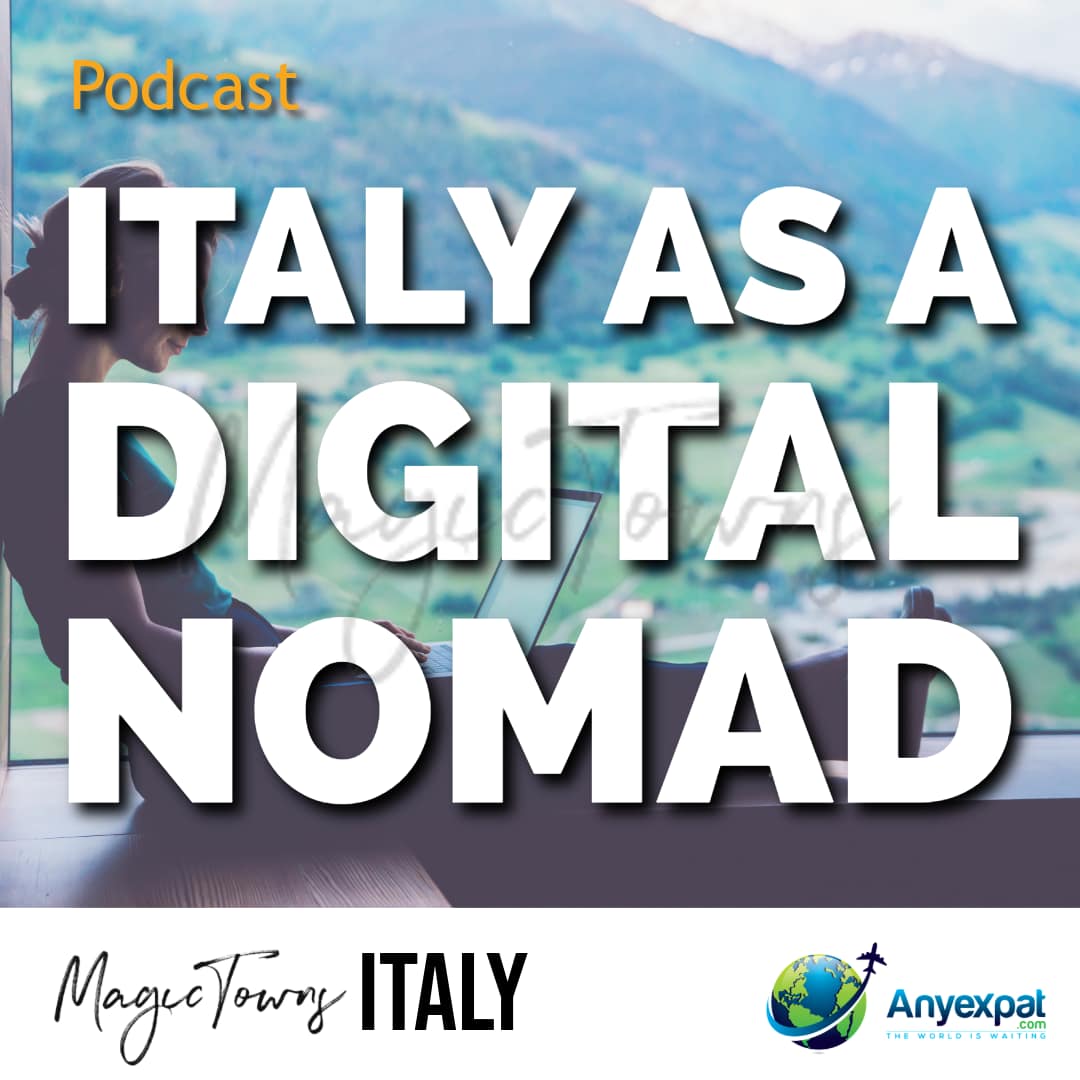
Anna: And today we’re diving into one of the most interesting topics for remote workers and expats, which is Italy’s new digital nomad visa.
Luca: Yes. I’m so excited about that. And I know you’re excited about it too because you’ve been covering it assiduously for a couple of months now, haven’t you?
Anna: And I’m sure lots of people are interested as well.
Luca: The Digital Nomads Visa has been in the works for a while, and finally it’s live. The Italian government started talking about a couple of years ago, but as it happens in Italy, it only took off in, uh, May or June.
Kan vi tale lidt om, hvad der egentlig skal til for at få [00:01:00] det?
Anna: The good thing is that it’s absolutely doable. Let’s break down what the visa is, uh, who it’s for and what the real world requirements look like.
Luca: Det digitale nomadevisum er, ligesom andre digitale nomadevisa i Europa, hvoraf det portugisiske nok er det mest kendte, rettet mod ikke-europæiske borgere, der arbejder eksternt som freelancere eller virksomhedsejere eller ansatte i udenlandske virksomheder.
Det er gyldigt i et år. Det kan fornyes, og det giver dig mulighed for at leve lovligt i Italien, mens du tjener flere penge fra virksomheder og kunder i udlandet.
Anna: Exactly. So, there are two broad tracks. The remote worker visa, if you are employed by a company, and then digital nomad visa, if you are employed or if you’re self-employed or freelance. The paperwork changes slightly depending on which route you’re taking, but the general [00:02:00] principles, let’s say, are the same.
Luca: Når vi taler om, hvad du skal bruge for at kvalificere dig til DNV, som vi kalder det, indkomst, skal du kunne fremvise en indtægt på mindst 28.000 euro om året, hvilket er det lovpligtige minimum.
Anna: Men realistisk set har succesfulde ansøgere en tendens til at tjene en hel del mere, baseret på virkelige sager. De fleste godkendelser lå på mellem 43.000 og 80.000.
Luca: Og indkomst alene er ikke nok til, at du kan få visum. Du skal bevise, at du historisk set har haft en stabil økonomi.
Med ting som selvangivelser, kontoudtog og kundekontrakter.
Anna: Og et godt tip er at lave en forklarende note på italiensk. Så dette er som et finansielt følgebrev.
Luca: Now, paperwork wise, as we said, you need two to five years of tax returns. Six to 12 months worth of bank statements, a lease or registered housing [00:03:00] contract. And we’re gonna get back on that point because it’s a bit of a sticky point in a second. A private health insurance policy, a degree or proof of professional experience for the sector you’re applying in. And, don’t be discouraged sworn translations in Italian for a lot of these documents.
Anna: So you need to prove you’ve got a place lined up before you even apply. So, 12 month lease registered with the Agenzia delle Entrate is the safest bet.
Luca: Du er ekspert i dette emne. Du skrev også en artikel i denne uge, Anna, om, hvor vanskeligt det er at få disse 12 måneders lejemål, så lytterne kan gå direkte til Magic Towns og læse den.
Det er meget, meget interessant. Det er rigtigt, at nogle konsulater for denne særlige type visum accepterer Airbnb-lejemål på mellemlang sigt. Så hvis du er i tvivl, så vælg en 12 måneders registreret [00:04:00] lejekontrakt.
Anna: And people often ask like, how much is this going to cost me? So let’s be honest. Mm-hmm. It’s not cheap, but. It’s not outrageous either.
Luca: The Visa itself only costs 116 euro, let’s say 130 US dollars. But, the paperwork, that goes with it and the translations, notarizations, accommodation deposits, insurance, and lawyers fees can add up.
So figure out between 3000 to 6,000 euro between one thing and the other. And of course, if you want professional help, you should add another 1000 to 3000 euro for a consultant. All that being said we have a relationship with a consultant that works at the lower end of that, uh, range. So feel free to get in touch if you’d like an introduction.
Hvis vi antager, at du har fået dit visum, hvad sker der så efter [00:05:00] din ankomst? Du lander i Italien, og du skal inden for otte arbejdsdage ansøge om permesso di soggiorno. Din opholdstilladelse.
Anna: Which means a trip to your local questura. So they might ask for additional translations or documentation, so don’t throw anything away.
Luca: Nej. Tag stakken af papirer med dig. Du skal også være opmærksom på reglerne for skattemæssigt ophold. Hvis du bliver skattemæssigt bosiddende, skal du betale skat i Italien, som i de fleste andre lande, for at være fair. Den generelle regel er, at 183 dage i et kalenderår udløser skattemæssigt ophold.
So if you arrive in say July, you probably won’t be a tax resident for that year, but from the following January, Italy will want to tax a slice of your income.
Anna: So definitely speak to a commercialista, which is a tax consultant who understands international [00:06:00] taxation. It’s not always straightforward.
Luca: Yeah. Is it ever straightforward? No. I’m joking. This is one of the easier things if a professional looks after you.
Anna: Ja.
Luca: Vi har talt med en hel masse digitale nomader, og vi har faktisk planlagt et lille interview som en del af denne podcast.
Efter at have talt med alle disse digitale nomader, Anna, hvad synes du så er de største forhindringer, de har mødt?
Anna: Language is a big one. A lot of official documents must be translated into Italian, as we said before, and communication with consulates. It’s nearly always in Italian.
Luca: Og hvad med indkvartering? Vi berørte det kort.
Anna: Problemet er, at udlejerne gerne vil se dit visum, men du skal bruge lejekontrakten for at få visummet, så det hjælper at arbejde med relocation services eller Airbnb-værter for at forstå processen.
Luca: I expat-kredse går der et ordsprog om, at italienere ikke har lov til at [00:07:00] udleje til dig, medmindre du har et visum. Men det er absolut ikke sandt. Du skal bare forklare din situation en lille smule tydeligt for din potentielle udlejer eller udlejerinde. Så alt taget i betragtning, er det det værd?
Anna: Yeah, if you’re ready to put in the work this digital nomad visa gives you a real legal foothold in Italy with a path to renewal and maybe even permanent residency later.
Luca: Ja, og folk på et digitalt nomadevisum kan medbringe pårørende, når de flytter ind.
So if you wanna bring in your spouse or your children, you, it will allow you to do that too. So that’s a piece of good news. Just, make sure you’re prepared, be patient and get comfortable with it. Italian bureaucracy, it’s like a starter of the Italian bureaucracy you get after you move in.
Anna: But guys, it’s absolutely worth it if your dream is to live in a small town in Umbria, Abruzzo, or you know, a beach side town in Puglia.
Luca: Og du kan stadig holde din karriere [00:08:00] i gang.
Anna: Præcis.
Luca: So it would be remiss of me to not mention at this point that if you’re not sure where to settle in Italy, you can check out our Town Explorer of Magic Towns, it, which covers more than 1500 towns in Italy and has, hundreds of data points for each one of these.
Ingen andre har noget lignende. Nogle gange har jeg svært ved at forklare folk, hvad det er, men når de så bruger det, bliver de helt vilde. Så slut på reklamepausen.
Jeg tror, Anna, at det ville være rigtig godt og betimeligt, hvis vi bragte et par lydbidder fra den samtale, vi havde med en af vores foretrukne digitale nomader indtil videre, skal vi?
Anna: Helt sikkert.
Luca: Så uden videre er her vores 10 minutters samtale med Riaan Fourie, som havde en masse interessante ting at fortælle os om sin oplevelse i Digital Nomad Village i Tursi, Basilicata, en smuk, malerisk lille by [00:09:00], hvor han fandt meget mere, end han havde forventet.
Luca: Hvor lang har din karriere som digital nomade været?
Riaan: Det er et interessant spørgsmål. Hvad definerer du som en digital nomade? Jeg startede mine rejser i landet, altså i Sydafrika, og det var nok i 2019.
The path was not as walked for the digital nomads, not that much going on . Um, so it was quite scary, but I’d say outside of South Africa, traveling different country every month, about three and a half, four years now.
Luca: Havde du været i Italien, før du tog til Tursi?
Riaan: Mm, ja. Det var faktisk min anden gang i Italien
Luca: Hvordan var din oplevelse?
Riaan: Det er utroligt. Jeg mener, den første oplevelse, vi havde, var på den nordvestlige del af Sicilien, en lille ø ved navn Ustica.
We started on a boat there and then traveled all the islands, the Ionian Islands. And then made our way all the way around, to Mount Etna then across to Greece. Uh, incredible experience. I really love Sicily. And it was interesting to see the contrast [00:10:00] between, let’s say, Sicily and like Tursi, very different.
Luca: It wasn’t really an Italian crowd, was a mostly international crowd, I imagine?
Riaan: Mest, ja, mest internationalt. Ikke så mange italienere.
Luca: Hvordan havde du det med Sicilien?
Riaan: It’s absolutely beautiful. Food is incredible. The beaches were very beautiful.
I really enjoyed the marina life that you can have there. So you’re just hopping from one marina to another? It is very well, well set up for that. Definitely would go back. We didn’t, never ventured too far inland, like we visited all the tiny coastal towns.
I see why Italians are always so fit and healthy. ’cause you have to walk up hills every single day.
Luca: Det kommer an på, hvor i Italien du befinder dig, og Tursi passer godt ind i billedet.
Riaan: Ja.
Jeg tror, jeg fik 15.000 skridt på en langsom dag i Tursi.
Anna: Og hvordan endte du i Tursi til co living-ugen?
Riaan: I had three months to plan in Europe And I saw this Facebook post this post about Tursi, and I was like, ah, co-living. I’m not so sure if I’m really keen for this.
And I just remember seeing [00:11:00] Salva and Maria and I was like, this whole idea that they’re selling. It’s really cute. They’ve got this little village, very authentic living, and that’s what hooked me. It was that like authentic small village experience in Italy.
And I was like, okay, let’s try this. Do not give me a recommendation to go to Paris and see the Eiffel Tower. I wanna see things in Paris that are off the beaten track. Like I’ve seen so many monuments. You’ve seen so many museums. At some point it becomes all the same. So you wanna see something different. And that’s what was, for me, it was different. It was authentic. And yeah, when I, after speaking to them, I was like, wow, let’s do this.
Luca: Et af de store salgsargumenter er, at de forsøger at skabe en lille smule forbindelse mellem nomaderne, som nogle gange er lidt reserverede, og de lokale. Havde du den oplevelse? Følte du det?
Riaan: Helt sikkert. Jeg tror, at det faktum, at de gjorde en indsats for at tage os med til alle disse, til alle de lokale [00:12:00] restauranter, for at tale med en masse mennesker, for at have workshops, hvor de ville inkludere nogle af de lokale børn
Luca: Vælger du normalt at gå til strukturerede arrangementer eller strukturerede oplevelser, eller kan du også lide at gå solo?
Riaan: It depends on my mindset. Um, I’d say both. So right now I’m in a co-living space, which has got 27 rooms. You’ve got a co-working space inside the co-living laundry sorted for you. There’s a gym, they constantly have little events happening. I love that when I want to focus and work.
When I’m on holiday, so not really holiday, but just not working that hard, I way prefer to do my own thing, to go off the path, to go, I will rent a motorbike, put my laptop on the back and just go, and every day is a new experience.
Like for me, that’s the real experience where you just really go with the flow and every day is a new experience.
Luca: Så da du var i Syditalien, var du i feriemodus eller semi [00:13:00] feriemodus, eller 12 timer i døgnet?
Riaan: Jeg var meget i feriemode. Jeg kunne virkelig fordybe mig i nomadescenen, ligesom i Village. Jeg lavede ketogen kost, så ingen kulhydrater.
Eggs and steak. Luckily Southern Italy has good meat. I would wake up, go for my first training station of the day, have a good breakfast, head up to the coworking station where I’m sure you guys know it was up in the cathedral, which is really beautiful. Spent some time working. Stay up there for like a sunset and I love to fly my fly drones. So got some really beautiful videos of Tursi, especially like when the sun is setting, you’ve got that golden hour. I would then go for a second training session and join the evening activities. So whatever was happening on the evening, um, be it the pasta workshops or pizza making workshops, I’ll join those.
Luca: Du nævnte keto, nogle gange omtales keto for sjov som prinsessediæten på grund af omkostningerne ved at få alt proteinet. Hvordan oplevede du leveomkostningerne [00:14:00] i forhold til dine forventninger?
Riaan: Honestly much lower than I expected. Yeah, no, I mean the butchers were incredibly good. Um, it was very, very affordable, I would say, especially compared to the rest of Europe. In Paris, or let’s say Berlin or you know, wherever you’re gonna be traveling, um, things are gonna be expensive ’cause you’re in the tourist hub, but Tursi is not a tourist hub. People are there to live a day-to-day life, but I found it quite affordable.
Luca: Oplevede du, at du blev taget godt imod af lokalsamfundet?
Riaan: Åh, absolut. Så mange samtaler, gebrokkent engelsk, gebrokkent italiensk. Vi kan knap nok kommunikere, men de er bare så imødekommende, og man kan gøre en masse med sine hænder.
Right. Exactly. Luckily you don’t need to speak. I remember just walking up the mountain there once and, uh, there was this old man with this very, very cute dog and he would just try and invite us into his house for drinks and offer us [00:15:00] beer and, he was just so happy that someone else also wanted to play with his dog.
Så små, små interaktioner som den
Luca: Du følte, at folk virkelig satte pris på, at I kom med noget, eller at de i det mindste kunne lide, hvor de boede, forestiller jeg mig.
Riaan: Som jeg forstår det. De var meget glade for at have os der, og de viste det.
Anna: I think that that’s the beauty of being a digital nomad, that you can choose between the, the flexibility of traveling around and working, but at the same time choosing to, settle and live, let’s say, a different life for a while. You can say that you’ve lived in, in Italy, it’s as if you were living different lives. That’s beautiful.
Riaan: Jeg læste et indlæg forleden, som handlede om dette, hvor mange mennesker rejser til et sted, og de rejser der bare for deres egen fornøjelses skyld.
Just to consume and take in what’s there. And then they leave. But they never integrate. They never immerse themselves into the local population. [00:16:00] They never speak to the people. And that, that for me is the way I prefer to travel, is to try and actually speak to the people and, you know, see what it’s about.
Like you can say you’ve been to Italy, but have you, you ever eaten in an Italian’s home?
That’s the beauty of this project, like, I must say, the, the place where I’m staying in now, it’s, it’s very nice, but I
Anna: betyder.
Riaan: Nobody’s, everybody here speaks perfect English. Um, we’re not really doing much effort to be integrated into the Thai community or, you know, speak to the Thai people.
Luca: Har du planer om at tage tilbage til Italien på et tidspunkt?.
Riaan: Absolutely. Even if it’s just to see Salva and Maria. I made a few friends, maybe two, three friends that I still keep contact with, but top of that list of those two.
Luca: It’s a great endorsement.
Riaan: I, I grew up in Cape Town, which is considered a big city in South Africa, but not, not that big by international standards. But I’ve always been a small town guy. I like connecting with people. I [00:17:00] prefer to. Take life a little bit slower. Um, and big cities, there’s just not much for me in a big city.
Så ja, for mig er det helt klart et krav at foretrække mindre byer eller at være tæt på naturen. Og de mennesker, man møder i små byer, er også helt anderledes end dem, man møder i byerne.
Anna: Ja, det gør de. De bliver overraskede over din tilstedeværelse og er mere tilbøjelige til at engagere sig.
Riaan: And they’re always super friendly.
De interaktioner, man får i disse landsbyer, som når man bare skal købe en sandwich, og fyren inviterer en med til sit bryllup, du ved?
Anna: Og hvad er for dig fordele og ulemper ved at leve et digitalt nomadeliv.
Riaan: Åh, stort spørgsmål. Jeg mener, fordelene er, du ved, livsstilen er fantastisk. Du kan tage hvor som helst hen. Du kan gøre hvad som helst. Den mængde indflydelse, du har på dit liv.
So if you have high agency, you have a lot of choices in life. [00:18:00] So what I mean like is you are able to choose the country you wanna live in. If I don’t like this place, I’ll just go. So having like high agency, being able to just make a choice and act on it, that is really, very cool for me. The cons are interesting. You get very lonely. I would say if you don’t really put effort into friendships and co-living help a lot. Like especially this Tursi project, you know, it helped a lot because you were with the same friends for five, six weeks, that makes a big difference.
Anna: You are working, but at the same time, you are living because you’re seeing lots of places that many people are waiting to see just once or twice.
Riaan: South Africa means we have to do the Schengen visa. Which is really annoying. And it’s only like three months per six months. So you can stay in Europe for half a year, but you have to leave the whole time. So you can come in and then you have to leave.
That’s why this digital nomad visa is super [00:19:00] interesting because now you can, you actually have the opportunity to stay in a European country. And initially it wasn’t. It wasn’t all the cool countries. Like I would love to stay in Italy. And then, I mean, another thing is that. For me, it’s, it’s really nice because it gives you some form of a residency. It helps you with taxes, basically.
So it helps you to prove to your home country that, hey, I’m actually in this country, you know, I’m actually paying tax. Where’s your financial residency? So these digital nomad visas are really, really useful for that as well.
Anna: Yeah, because how, how does it work? Like in Thailand for example, if you’re staying for three months, how does it work for the taxes?
Riaan: If you stay three months, it’s not a problem. But if you stay longer it can become a problem.
Anna: Yeah, absolutely. It’s, it’s quicker, compared to other routes, just to find a job in the country that it’s absolutely difficult and all these things, it’s. It’s beautiful that the [00:20:00] government like decided to do this thing.
Riaan: It shows that they’re actually like progressive and thinking forward to say, Hey, there’s, there’s this big demand. Are we gonna stay a bureaucracy and not adapt? Or are we actually gonna adapt and move towards these? Because initially it was just like some of the lower income countries that offered this as like, mm-hmm we want to get people in. This is another way to get people in. But now everybody’s seeing the opportunity and, okay, well we can actually like, have more nomads, have more people.
I’m very much strongly considering, um, uh, going to Italy on this visa.
Anna: Hvis du har brug for støtte, er vi her. Tusind tak for, at du deler din historie og dine tanker.
Riaan: Anna, tak. Tusind tak for det. Jeg sætter også stor pris på din tid.
Luca: Så Anna, det var interessant.
Anna: Det var det helt sikkert.
Luca: Og at finde sådan en fantastisk oplevelse i en lillebitte by er noget, man måske ikke forventer. Så jeg håber, at nogle af vores lyttere vil overveje at slå Tursi digital nomad [00:21:00] village op, og måske kan de være der til den næste popup-event, som jeg tror bliver i foråret 2026.
Anna: Et godt tidspunkt at indånde lidt autentisk italiensk energi.
Luca: Talking about authentic Italian energy, I think it’s time for us to go and, uh, enjoy our last weekend before Christmas. I assume we both have a lot of cooking to do, right, Anna?
Anna: That’s what I was thinking about.
Luca: What’s gonna be on your Christmas lunch table
Anna: I’ll definitely do the antipasti guys.
Luca: Do we know what they’re gonna be or are you gonna keep us on ten You’re still thinking about it.
Anna: Ja, ja. Ja, ja. Noget med gorgonzola, forresten.
Okay.
Luca: Okay. I see that there’s a trip to the supermarket coming up for you.
Anna: Ja.
Luca: Hvad mig selv angår, vil jeg se, hvad min mor vil lave til mig. I julen vil jeg lade hende stå for al madlavningen. I så fald vil jeg ønske jer den bedste jul. Og vi er tilbage med vores podcast i den første uge [00:22:00] af 2026.
Anna: God ferie, venner.
Luca: Tak til jer alle sammen. Pas godt på jer selv. Tak skal I have
 English
 French
 German
 Italian
 Danish