

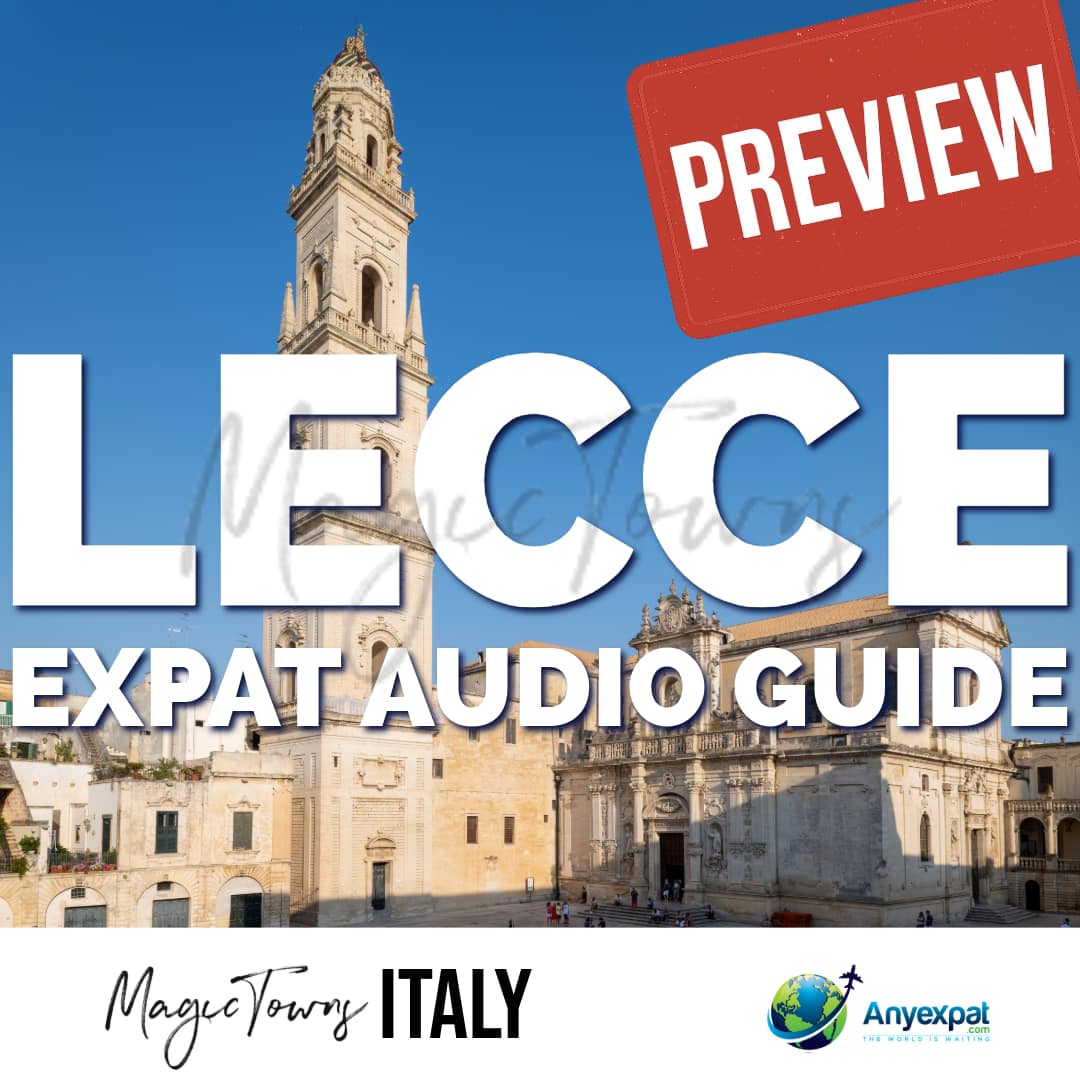

Puoi accedere all'audio guida completa riservata agli abbonati su Lecce qui.
Miglia: Immaginate di entrare in un luogo dove la storia antica sembra sussurrare tra queste strade acciottolate dorate, dove il profumo di cibo incredibile si diffonde invitante e il sole sembra, beh, un compagno costante.
Alessia: That’s the dream of Italy for so many people, isn’t it?
Miglia: Exactly. But what if we told you there’s a truly unique gem nestled right in its heel. A city often called the Florence of the South.
Alessia: Ah, Lecce.
Miglia: Today we’re taking a really comprehensive look at this enchanting city.
Alessia: We’ve pulled out the most important nuggets, the key things you need to know to really understand what living in Lecce is actually like.
Miglia: Sì. Non solo dal punto di vista turistico.
Alessia: Aiutarti a ottenere rapidamente [00:01:00] informazioni e, chissà, magari decidere se Lecce è in linea con ciò che stai cercando per il tuo prossimo capitolo.
Miglia: So we’ll journey through its absolutely stunning Baroque architecture, its vibrant culture, but also get right down to the practical stuff.
Alessia: Yeah, the nitty gritty -cost of living housing, what the infrastructure is like, even the climate, and crucially, we’ll try it and help figure out who Lecce might be the perfect fit for.
Miglia: Okay. Let’s dive in then. Let’s start by painting a picture of Lecce, this golden heart of Apulia. Geographically, where are we?
Alessia: We’re right down at the very tip of Italy’s heel deep in the Salento Peninsula, which is part of the wider Puglia region.
Miglia: E i dintorni, e una foto di uliveti.
Alessia: It’s embraced by these seemingly endless rolling olive groves. Huge golden fields, and you’re just minutes away from both the Adriatic and the Ionian seas. Really unique position.
Miglia: Il meglio di entrambi i mondi dal punto di vista marittimo
Alessia: And what’s really fascinating, maybe something you wouldn’t [00:02:00] just guess from a map is how the landscape itself shapes Lecce’s whole identity, even its nickname.
Miglia: Come, quindi
Alessia: Well, the city’s built on this flat limestone, and it’s this limestone that gives everything that incredible warm, golden glow. It’s absolutely magical at sunset.
Miglia: Ah, il cuore d'oro... ora capisco.
Alessia: Exactly. That very same limestone is the material used for its breathtaking 17th century Baroque architecture. That architecture plus its rich cultural spirit, that’s precisely why it earned the name the Florence of the South.
Miglia: It’s more than just pretty buildings, right? Our sources talked about the old center being like labyrinth.
Alessia: It really is. Not just streets, but a true maze of narrow twisting alleys that suddenly just open onto these grand, almost theatrical piazzas. In every corner you turn there are these palatial facades, churches just dripping in intricate carvings, [00:03:00] cherubs, flowers, mythical creatures. It’s almost overwhelming the level of detail.
Miglia: Tanta storia stratificata che
Alessia: Certamente, voglio dire, ci sono stati i Greci, i Romani, i Normanni, che hanno lasciato il segno nel corso dei secoli, ma è stata davvero l'epoca barocca a plasmare Lecce in questo modo.
Miglia: Camminando attraverso la storia,
Alessia: It absolutely feels like that, but it’s not just about old buildings. It’s a living history. You know, it defines the city’s unique charm. Every stroll through the center genuinely feels like stepping onto a beautifully preserved stage set.
Miglia: It’s easy to get lost in just the baroque beauty I imagine. What our sources really emphasize, and this struck me, is that Lecce is far from being some static museum.
Alessia: Oh, assolutamente no. Pulsa di una vita molto distinta, di una personalità propria,
Miglia: Come il dialetto locale.
Alessia: It is. It’s apparently peppered with words and sounds you can trace all the way back to the ancient Greek [00:04:00] settlers. Think about that connection.
Miglia: Incredibile. Un legame vivente con il passato.
Alessia: E se vi capita di essere lì ad agosto, potrete vivere l'esperienza de La Notte della Taranta.
Miglia: Oh, il festival musicale.
Alessia: Yeah. A huge folk music festival. It fills the night air with this infectious beat of traditional pizzica music and dance. It’s meant to be incredibly vibrant, really authentic.
Miglia: Sembra fantastico. Sì, e dal punto di vista pratico, il centro storico è prevalentemente pedonale.
Alessia: That’s a huge plus for residents. It’s often called a walker’s paradise. It scores really high on walkability. You can genuinely just wander and get lost in its charm on foot without dodging cars.
Miglia: Questo fa una grande differenza nell'atmosfera di un luogo.
Alessia: È proprio così.
Miglia: Okay, so with that stunning backdrop, what about the actual, like, rhythm of life there? We heard it’s pleasant, relaxed. How does that feel day to day if you’re thinking of [00:05:00] moving?
Alessia: Well, it seems to translate into a noticeably high quality of life. That slower pace, especially if you compare it to Italy’s bigger, more chaotic cities, it just means less stress, maybe more time to actually enjoy things.
Miglia: Non un tipo diverso di ricchezza.
Alessia: Exactly. And that slower rhythm doesn’t mean it’s sleepy or hard to connect. The locals in Lecce are renowned for their friendliness, their warmth.
Miglia: È sempre bello sentirlo.
Alessia: Yeah. Newcomers often say they feel genuinely welcome. There seem to be plenty of opportunities to connect, whether it’s through, you know, specific expat meetups, Facebook groups, or just striking up a chat at a local cafe. That openness really helps with social integration
Miglia: Più facile che forse in altri posti,
Alessia: Sì. Quel calore sembra piuttosto caratteristico.
Miglia: E hai parlato di incontri tra espatriati. C'è una grande comunità di espatriati allora?
Alessia: It seems active and growing. Regular meetups, [00:06:00] online forums where people share social gatherings. There was this great quote from a long-term resident that really stuck with me. She said, I’ve been here 34 years. I love it here. Simple as that.
Miglia: Wow. 34 anni. Questo la dice lunga.
Alessia: It really does. It paints a picture of this blend you’ve got. The long time locals, this growing group of expats and retirees too, all enjoying this lifestyle that’s relaxed, but you know, still vibrant.
Miglia: It’s not boring.
Alessia: Not at all. The work week is fairly standard apparently. The weekends, that’s when things really come alive. Markets pop up. The squares fill with music and chatter, cafe terraces get busy. There’s a real buzz market owners winemakers. Everybody’s jumping on the bandwagon.
Miglia: A proposito di caffè, dobbiamo parlare del caffè, giusto?
Alessia: Oh, absolutely. Yeah. You have to try this signature coffee. It’s espresso or mocha, but with ice and almond milk.
Miglia: Oh, [00:07:00] interessante. Sembra rinfrescante con questo caldo.
Alessia: Exactly. And the local treats. Don’t forget the pasticciotto,
Miglia: La pasticceria.
Alessia: Yes, that sweet pastry. Usually with a custard filling. Delicious. Or the savory version, the rustico leccese. It’s flaky filled with mozzarella, tomato, maybe some bechamel. So good.
Miglia: Mi sta già venendo l'acquolina in bocca.
Alessia: As that ties back to the region’s agricultural roots, Lecce is a major hub for olive oil and wine production, so the local bounty it, genuinely ends up right there in the cities, kitchens and markets. It’s very farm to table naturally.
Miglia: Quali sono alcuni piatti classici da non perdere?
Alessia: There’s ciceri e tria, that’s pasta with chickpeas. Kind of hearty. Acqua e sale è un'insalata rinfrescante a base di pane. E naturalmente, la classica pasta a forma di orecchio con cime di rapa. Semplice ma straordinaria.
Miglia: Delizioso.
Anche i frutti di mare, essendo [00:08:00] vicini alla costa,
Alessia: Sicuramente Baccalà alla Salentina, baccalà alla maniera del Salento. Ehm, e una vera prelibatezza locale che potresti trovare è bombette . Um, they’re small rolled up pieces of pork, usually stuffed with cheese. Incredible.
Miglia: Ok. Sicuramente una meta gastronomica.
Alessia: Certamente. E la scena gastronomica lo riflette.
You’ve got your traditional trattorias serving up these classics, but also modern eateries. There are even a couple of Michelin starred places like Bros and Primo Restaurant. So, a real mix.
Miglia: Una gamma impressionante. E per cucinare a casa o semplicemente curiosare nei mercati?
Alessia: Yep. Really good market culture. There’s a daily open air market just outside Porta Rudia. Great for fresh produce, staples, and then a bigger one every Monday and Friday. Sells everything. Fruit, veg, clothes, household goods.
Miglia: Puoi trovare praticamente tutto ciò di cui hai bisogno.
Alessia: Sì, tra i mercati, i supermercati, i negozi. [00:09:00] Piccole boutique indipendenti e negozi specializzati in prodotti gastronomici. Le opzioni per lo shopping sono piuttosto varie, un buon mix tra la comodità moderna e il fascino dei mercati tradizionali.
Miglia: Okay, practicalities. Let’s talk money. What does all this wonderful lifestyle cost. Lecce has a reputation for being affordable, right?
Alessia: Sì, e sembra ben meritato, soprattutto se lo si confronta con grandi città come Roma, Firenze o Milano.
Puoi accedere all'audio guida completa riservata agli abbonati per Lecce qui.
 English
 French
 German
 Italian
 Danish