

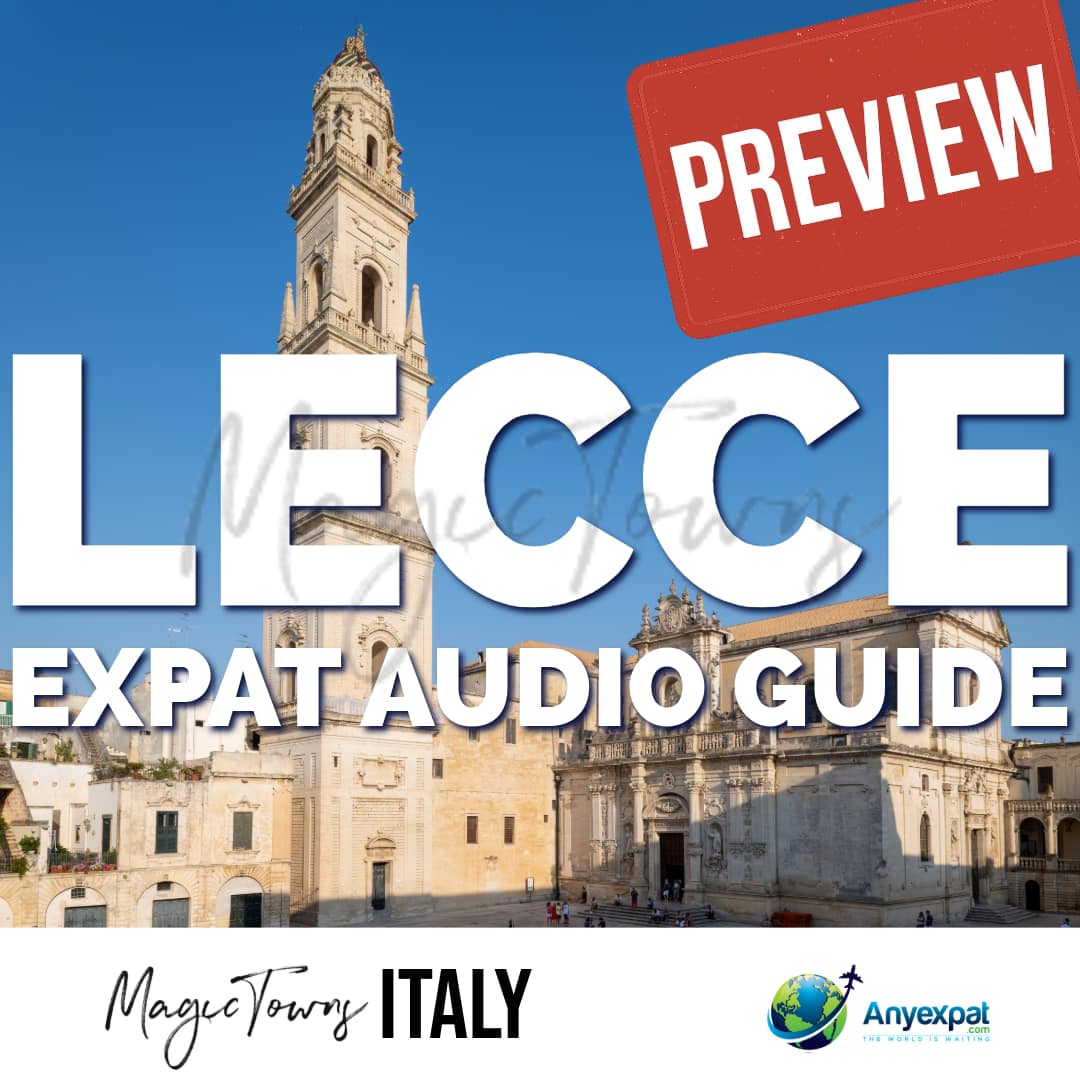

Du kan få adgang til hele lydguiden til Lecce, som kun er for abonnenter, her.
Miles: Forestil dig at træde ind på et sted, hvor den gamle historie hvisker i de gyldne brostensbelagte gader, hvor duften af fantastisk mad driver indbydende omkring, og hvor solskinnet føles som en konstant følgesvend.
Alessia: That’s the dream of Italy for so many people, isn’t it?
Miles: Exactly. But what if we told you there’s a truly unique gem nestled right in its heel. A city often called the Florence of the South.
Alessia: Ah Lecce.
Miles: Today we’re taking a really comprehensive look at this enchanting city.
Alessia: We’ve pulled out the most important nuggets, the key things you need to know to really understand what living in Lecce is actually like.
Miles: Ja, ja. Ikke kun turistudsigten.
Alessia: Hjælpe dig med hurtigt at blive [00:01:00] informeret og måske beslutte, om Lecce passer til det, du leder efter i dit næste kapitel.
Miles: So we’ll journey through its absolutely stunning Baroque architecture, its vibrant culture, but also get right down to the practical stuff.
Alessia: Yeah, the nitty gritty -cost of living housing, what the infrastructure is like, even the climate, and crucially, we’ll try it and help figure out who Lecce might be the perfect fit for.
Miles: Okay. Let’s dive in then. Let’s start by painting a picture of Lecce, this golden heart of Apulia. Geographically, where are we?
Alessia: We’re right down at the very tip of Italy’s heel deep in the Salento Peninsula, which is part of the wider Puglia region.
Miles: Og omgivelserne, og et billede af olivenlunde.
Alessia: It’s embraced by these seemingly endless rolling olive groves. Huge golden fields, and you’re just minutes away from both the Adriatic and the Ionian seas. Really unique position.
Miles: Det bedste fra begge verdener havmæssigt
Alessia: And what’s really fascinating, maybe something you wouldn’t [00:02:00] just guess from a map is how the landscape itself shapes Lecce’s whole identity, even its nickname.
Miles: Hvordan, så
Alessia: Well, the city’s built on this flat limestone, and it’s this limestone that gives everything that incredible warm, golden glow. It’s absolutely magical at sunset.
Miles: Ah, det gyldne hjerte - det giver mening.
Alessia: Exactly. That very same limestone is the material used for its breathtaking 17th century Baroque architecture. That architecture plus its rich cultural spirit, that’s precisely why it earned the name the Florence of the South.
Miles: It’s more than just pretty buildings, right? Our sources talked about the old center being like labyrinth.
Alessia: It really is. Not just streets, but a true maze of narrow twisting alleys that suddenly just open onto these grand, almost theatrical piazzas. In every corner you turn there are these palatial facades, churches just dripping in intricate carvings, [00:03:00] cherubs, flowers, mythical creatures. It’s almost overwhelming the level of detail.
Miles: Så meget historie i lag, at
Alessia: Helt sikkert, jeg mener, der var grækerne, romerne, normannerne, de har alle sat deres præg gennem århundrederne, men det var virkelig barokken, der formede Lecce til dette.
Miles: Gå gennem historien,
Alessia: It absolutely feels like that, but it’s not just about old buildings. It’s a living history. You know, it defines the city’s unique charm. Every stroll through the center genuinely feels like stepping onto a beautifully preserved stage set.
Miles: It’s easy to get lost in just the baroque beauty I imagine. What our sources really emphasize, and this struck me, is that Lecce is far from being some static museum.
Alessia: Nej, bestemt ikke. Den pulserer med et meget tydeligt liv, sin egen personlighed,
Miles: Som den lokale dialekt.
Alessia: It is. It’s apparently peppered with words and sounds you can trace all the way back to the ancient Greek [00:04:00] settlers. Think about that connection.
Miles: Utroligt. Et levende link til fortiden.
Alessia: Og hvis du tilfældigvis er der i august, kan du opleve La Notte della Taranta
Miles: Åh, musikfestivalen.
Alessia: Yeah. A huge folk music festival. It fills the night air with this infectious beat of traditional pizzica music and dance. It’s meant to be incredibly vibrant, really authentic.
Miles: Det lyder fantastisk. Ja, og en praktisk pointe er, at den gamle bydel for det meste er en gågade.
Alessia: That’s a huge plus for residents. It’s often called a walker’s paradise. It scores really high on walkability. You can genuinely just wander and get lost in its charm on foot without dodging cars.
Miles: Det gør en stor forskel for fornemmelsen af et sted.
Alessia: Det gør det virkelig.
Miles: Okay, so with that stunning backdrop, what about the actual, like, rhythm of life there? We heard it’s pleasant, relaxed. How does that feel day to day if you’re thinking of [00:05:00] moving?
Alessia: Well, it seems to translate into a noticeably high quality of life. That slower pace, especially if you compare it to Italy’s bigger, more chaotic cities, it just means less stress, maybe more time to actually enjoy things.
Miles: Ikke en anden slags rig.
Alessia: Exactly. And that slower rhythm doesn’t mean it’s sleepy or hard to connect. The locals in Lecce are renowned for their friendliness, their warmth.
Miles: Det er altid godt at høre.
Alessia: Yeah. Newcomers often say they feel genuinely welcome. There seem to be plenty of opportunities to connect, whether it’s through, you know, specific expat meetups, Facebook groups, or just striking up a chat at a local cafe. That openness really helps with social integration
Miles: Nemmere end måske andre steder,
Alessia: Ja. Den varme virker ret karakteristisk.
Miles: Og du nævnte expat-møder. Er der så et stort expat-fællesskab?
Alessia: It seems active and growing. Regular meetups, [00:06:00] online forums where people share social gatherings. There was this great quote from a long-term resident that really stuck with me. She said, I’ve been here 34 years. I love it here. Simple as that.
Miles: Hold da op. 34 år. Det siger en hel del.
Alessia: It really does. It paints a picture of this blend you’ve got. The long time locals, this growing group of expats and retirees too, all enjoying this lifestyle that’s relaxed, but you know, still vibrant.
Miles: It’s not boring.
Alessia: Not at all. The work week is fairly standard apparently. The weekends, that’s when things really come alive. Markets pop up. The squares fill with music and chatter, cafe terraces get busy. There’s a real buzz market owners winemakers. Everybody’s jumping on the bandwagon.
Miles: Når vi taler om caféer, er vi nødt til at tale om kaffen, ikke sandt?
Alessia: Oh, absolutely. Yeah. You have to try this signature coffee. It’s espresso or mocha, but with ice and almond milk.
Miles: Åh, [00:07:00] interessant. Det lyder forfriskende i varmen.
Alessia: Exactly. And the local treats. Don’t forget the pasticciotto,
Miles: Kagerne.
Alessia: Yes, that sweet pastry. Usually with a custard filling. Delicious. Or the savory version, the rustico leccese. It’s flaky filled with mozzarella, tomato, maybe some bechamel. So good.
Miles: Min mund løber allerede i vand.
Alessia: As that ties back to the region’s agricultural roots, Lecce is a major hub for olive oil and wine production, so the local bounty it, genuinely ends up right there in the cities, kitchens and markets. It’s very farm to table naturally.
Miles: Hvilke klassiske retter skal man holde øje med?
Alessia: There’s ciceri e tria, that’s pasta with chickpeas. Kind of hearty. Acqua e sale er en forfriskende brødbaseret salat. Og selvfølgelig den klassiske øreformede pasta med majroe. Enkelt, men fantastisk.
Miles: Lækkert.
Også fisk og skaldyr, fordi vi er [00:08:00] tæt på kysten,
Alessia: Helt sikkert Baccalà alla Salentina, salttorsk på Salento-vis. Øh, og En rigtig lokal delikatesse, du kan finde, er bombette . Um, they’re small rolled up pieces of pork, usually stuffed with cheese. Incredible.
Miles: Okay. Helt sikkert en maddestination
Alessia: Helt sikkert. Og restaurantscenen afspejler det.
You’ve got your traditional trattorias serving up these classics, but also modern eateries. There are even a couple of Michelin starred places like Bros and Primo Restaurant. So, a real mix.
Miles: Imponerende udvalg. Og til at lave mad derhjemme eller bare kigge på markeder?
Alessia: Yep. Really good market culture. There’s a daily open air market just outside Porta Rudia. Great for fresh produce, staples, and then a bigger one every Monday and Friday. Sells everything. Fruit, veg, clothes, household goods.
Miles: Du kan få stort set alt, hvad du har brug for.
Alessia: Ja, mellem markederne, supermarkederne og butikkerne. [00:09:00] Små uafhængige butikker og specialiserede gourmetbutikker. Indkøbsmulighederne er ret forskellige, en god blanding af moderne bekvemmelighed og den traditionelle markedscharme.
Miles: Okay, practicalities. Let’s talk money. What does all this wonderful lifestyle cost. Lecce has a reputation for being affordable, right?
Alessia: Det gør det, og det virker velfortjent, især når man sammenligner med de store byer som Rom, Firenze eller Milano.
Du kan få adgang til hele lydguiden til Lecce, som kun er for abonnenter, her.
 English
 French
 German
 Italian
 Danish