


[00:00:08] Miles : Here’s the big question, maybe the final piece of the puzzle for some people. How do you make the move financially smart? Especially if you’re thinking about retirement or just a big life change?
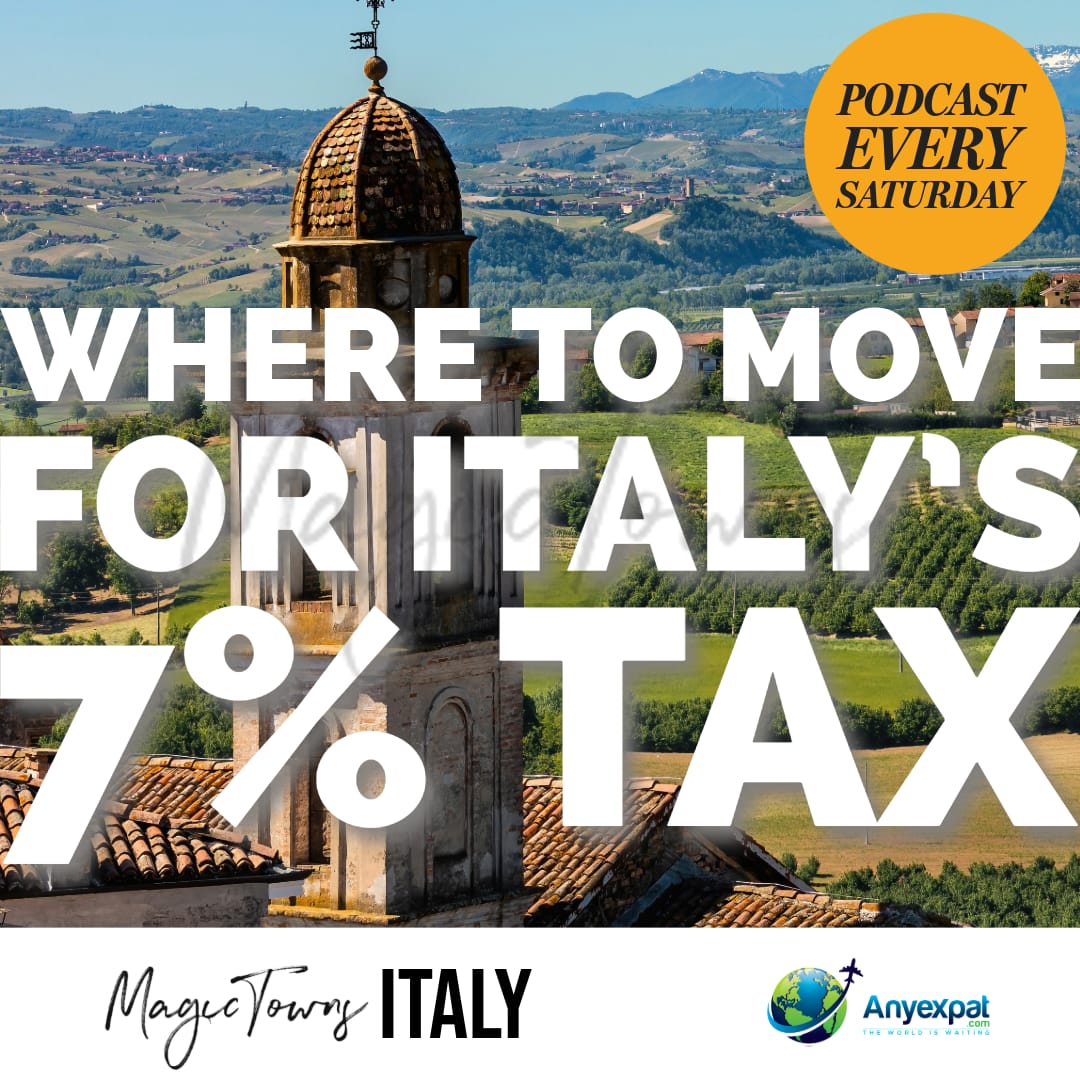
[00:00:19] Alessia : Well, this is where Italy offers something quite remarkable, actually. It’s a special tax regime, a 7% flat tax on non Italian income. It’s specifically designed to attract certain foreign retirees and even Italians who’ve lived abroad and are returning to relocate to particular small towns.
[00:00:39] Miles : Attendez, 7%. Oui, c'est vrai. Un impôt forfaitaire de 7% sur les revenus étrangers semble presque trop beau pour être vrai. Il doit y avoir des pièges, n'est-ce pas ? Quels sont les détails ?
[00:00:48] Alessia : Oui, cela semble incroyable et ça l'est, mais oui, il y a des qualifications spécifiques que vous devez remplir.
[00:00:54] It’s precise. First crucial one. You cannot have been tax resident in Italy for the previous five tax years, so you need to be genuinely moving there or moving back after a long time.
[00:01:08] Miles : Ok, cinq ans d'absence. J'ai compris. Deuxièmement, vous devez percevoir une pension étrangère.
[00:01:12] Alessia : Il s'agit d'un élément clé. Il couvre des éléments tels que la pension d'État du Royaume-Uni, la sécurité sociale des États-Unis, les pensions privées. Même les retraits réguliers d'un IRA peuvent être pris en compte.
[00:01:26] Miles : Le revenu de la pension est donc l'élément déclencheur ?
[00:01:29] Alessia : Generally? Yes. It’s geared towards pensioners. And third, the big one, you must move to an eligible town. This means a town with a population of 20,000 or less located in one of Italy’s southern regions: Sicily, Calabria, Sardinia Campania, Basilicata, Abruzzo, Molise, or Puglia.
[00:01:50] Il peut également s'agir d'une des communes de moins de 20 000 habitants situées dans les zones touchées par le tremblement de terre en Italie centrale, dans certaines parties du Latium, de l'Ombrie et des Marches.
[00:02:00] Miles : C'est vrai ? Des endroits spécifiques, des petites villes dans le sud ou ces zones spécifiques. zones centrales.
[00:02:06] Alessia : Exactement, et si vous répondez à toutes ces conditions, vous devez opter activement pour ce régime, en le choisissant sur votre toute première déclaration fiscale italienne. Si vous le faites, il peut s'appliquer jusqu'à 10 années fiscales consécutives.
[00:02:20] Miles : 10 years. That’s a really significant period. So what income exactly gets this amazing 7% rate? Just the pension or other foreign income too.
[00:02:30] Alessia : It’s actually quite broad for foreign sourced income. So yes, your foreign pensions. Public or private, but also potentially foreign employment income or freelance income earned from clients abroad, overseas rental income, dividends from foreign stocks, interests, royalties, even other foreign gains. It covers a lot. Importantly, it’s a flat 7% calculated on the gross amount of that foreign income. No deductions against it.
[00:02:59] Miles : Gross amount. Okay, but what about income inside Italy? If I moved there and decided to, I don’t know, do some consulting work locally?
[00:03:08] Alessia : Good question. Any income you earn from Italian sources like that local consulting work, or maybe rent from an Italian property you bought that gets taxed normally under Italy’s standard progressive income tax rates called IRPEF
[00:03:24] You can’t mix and match the 7% regime with other special flat tax regimes Italy offers for foreign income, either. It’s one or the other, but beyond the low rate, there are other practical pluses. You can actually move between different qualifying 7% towns during those 10 years without losing the benefit, which is handy.
[00:03:48] Maybe just as important for some, you get significant relief from reporting foreign assets. Normally, Italian residents have to declare all worldwide assets annually on specific forms, RW they’re called, under the 7% regime. You’re generally exempt from that for your foreign assets. That simplifies paperwork a lot.
[00:04:08] Miles : Oh, that’s a huge bonus. Dealing with complex tax forms is never fun.
[00:04:12] Alessia : Certainement pas. Ainsi, pour donner un aperçu des types d'endroits qui entrent en ligne de compte, voici une liste rapide des lieux que vous pouvez envisager. Voici une liste rapide de ce que vous pourriez envisager Scalea in Calabria. It’s a seaside town. Prices are low and it’s got a train link up to Naples or Venosa en Basilicate, une ville romaine historique dans une colline médiévale. Célèbre pour son vin Aglianico. Dans les Pouilles, peut-être Tricase. You get that unique Salento culture. Greek influences, amazing coast. It’s only five minutes from these beautiful crystal clear coves.
[00:04:47] Miles : Le Salento est magnifique.
[00:04:48] Alessia : C'est vraiment le cas. Ou en Sardaigne, Tempio Pausania known for its dramatic granite landscapes. It’s cooler in summer than the coast and has a big jazz festival.
[00:04:59] Et de retour en Sicile, Cefalù. It’s got a famous UNESCO list, Norman Cathedral, a really lively beach scene. Lots going on with tourism, so a real mix of vibes.
[00:05:11] Miles : It’s a great little snapshot. Shows the diversity, doesn’t it? Seaside hills history culture.
[00:05:16] Alessia : Bien sûr. La taxe 7% est manifestement une attraction potentielle massive.
[00:05:22] Miles : But what I’m hearing weaving through everything we’ve discussed is that the real win isn’t just the tax rate, is it? It’s finding that place, that town, that lifestyle that genuinely feels right for you.
[00:05:34] Alessia : Exactly. The tax is an enabler, a fantastic one for those who qualify. It shouldn’t be the only driver. Combining this kind of data, affordable towns, lifestyle factors, tax benefits, with eventually going there yourself, doing a proper scouting trip, but that’s how you make the best decision. It’s about being informed. Not just dreaming.
[00:05:57] Miles : Right. Making an informed dream, perhaps. It really shifts the perspective, doesn’t it? Seeing Italy, not just as a holiday spot, but as a place you could genuinely build a life.
[00:06:07] Alessia : It really does, and it’s all about making those informed decisions, like we said. Exploring all the angles, understanding the possibilities that lets you envision a future in Italy that’s both, you know, deeply enriching, but also financially sustainable.
[00:06:22] There’s always more detail, of course, but hopefully this gives a strong starting point. Seeing these different pieces together is key.
[00:06:30] Miles : If that’s your dream and if you are ready to take that next step to explore these towns in more detail, maybe use that Town Explorer tool we mentioned, or get the full list of places qualifying for the 7% tax. You absolutely need to check out Magic Towns Italy.
[00:06:43] Alessia : That’s the resource. Yes.
[00:06:44] Miles : Go to Magic Towns. Seriously consider your roadmap, whether you’re planning a move or just a deeper kind of journey to Italy. It’s all there. Definitely worth a visit.

 English
 French
 German
 Italian
 Danish