Zum Hauptinhalt springen Oben blättern

What People Say About Living in Ostuni

Discover what living in Ostuni, in Puglia, is really like through our data and the firsthand experiences of its residents.

As we explored in a recent article, the 7% Pauschalsteuerregelung has expanded and now covers towns with up to 30,000 inhabitants – which means bigger and better-served places now qualify. Among these, popular towns that you wouldn’t imagine, like Ostuni.

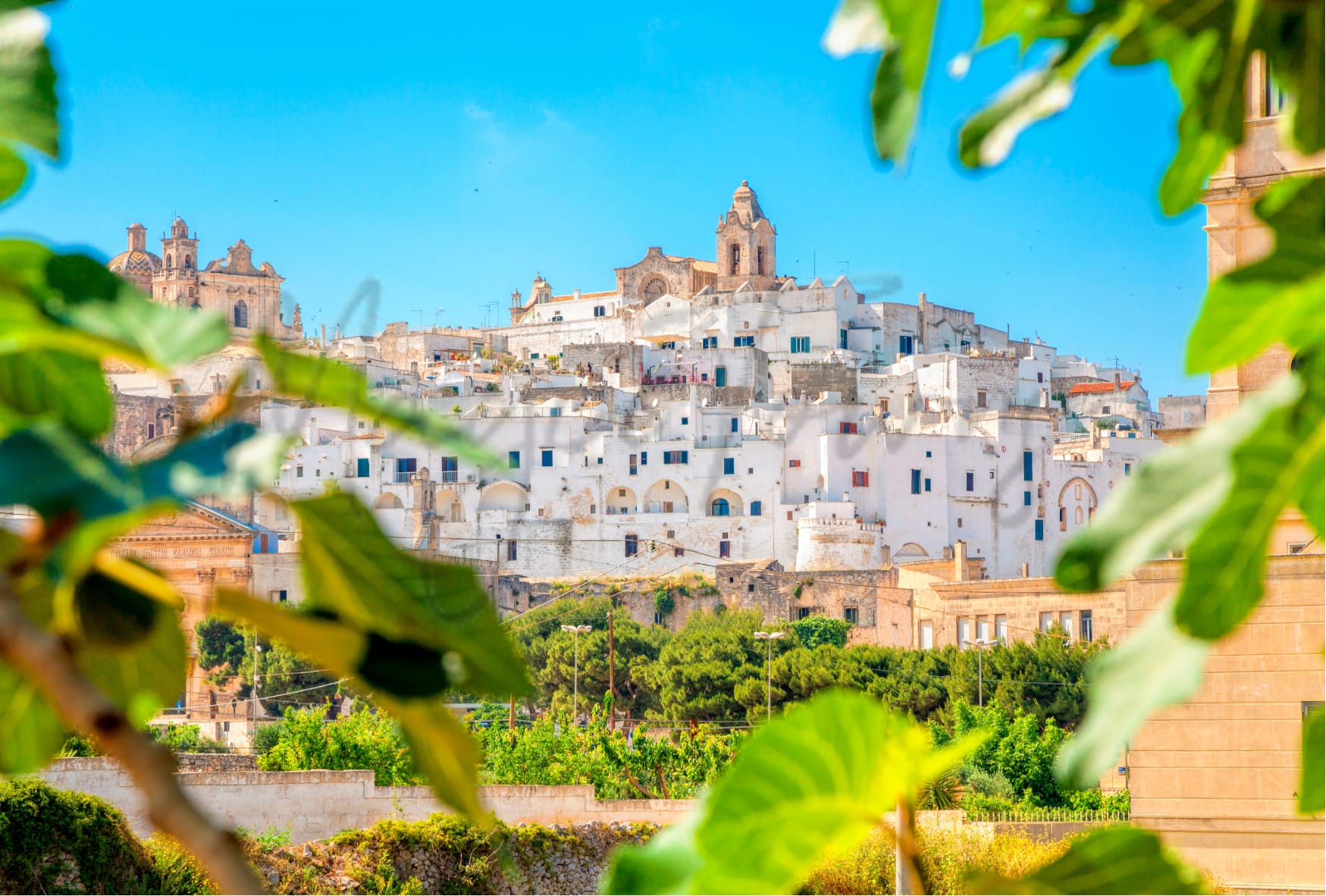
Ostuni is one of those places that a lot of people fall in love with instantly when visiting it for the first time. The whitewashed buildings, the winding alleys, the olive groves – this town is simply unique.

But as you already know, our job here isn’t to sell you a dream. It’s to give you a real picture of what living here is actually like, 365 days a year. So, in this article of our series Was die Leute über das Leben in... sagen, we’re taking a closer look at Ostuni – combining the unique data we have on the town with the honest opinions of the people who live here.

Life in Ostuni: What People Say

Whoever moves to Ostuni does it for three main reasons: its aesthetic, its location, and the fact that there’s already a pretty big expat community from all over the world:

Honestly, the best thing about living here is how relaxed everything feels. The food is just on another level – everything’s fresh and tastes better. The old town centres are beautiful. And having both the Adriatic and Ionian coasts nearby is amazing… even in winter you can go for a walk by the sea, and the beaches are up there with the Caribbean.

In fact, the town is located in a really popular area, a few minutes away from the sea and quiet little villages, but also close to bigger cities like Brindisi, Alberobello and Monopoli. Moving here means being aware of this and of the fact that it’s one of Puglia’s most visited towns – which, as we’ll see in more detail later.

“I love Ostuni. It’s feels really safe, near great places nearby to visit. But in the old town centre it’s almost unbearable in summer – packed with people, noisy, parking is a nightmare.”

Living in ostuni, expats in ostuni, move to ostuni
Ostuni, Puglia

Transport and Connectivity in Ostuni

Ostuni is actually reasonably gut vernetzt for a town of its size – especially when you compare it to other parts of southern Italy.

First of all, you’re in the middle of Valle d’Itria, an area with huge expanses of olive trees, hiking trails, art cities, and the coast. At just 15 minutes by car, können Sie erreichen Strände like Lido Morelli, Pilone, and Torre Guaceto – all well-equipped. So whether you like the sea, history or hiking, you have a wide choice.

Der nächstgelegene Flughafen ist Papola Casale in Brindisi, just 28 minutes away by car. It’s a decent airport (not huge, but functional) – with regular routes to several European destinations. If you need more options, Bari Karol Wojtyła Airport is about an hour away and has more international flights.

For trains, the Bahnhof von Ostuni is about 10 minutes from the centre and sits on the Adriatic line (Ancona–Lecce), which means you can easily reach cities like Bologna, Bari, Brindisi, Lecce, and Rome. It’s not high-speed, so expect a few stops for longer trips, but still, it’s genuinely useful, and more than you can say for a lot of towns in the south.

However, although the town centre itself is pretty walkable, getting around the wider area ohne Auto is really limiting – so expect to buy one.

Where to Live in Ostuni: Housing & Cost of Living

Given its popularity, property prices in Ostuni are medium-high. The average price per square meter is €2,580/m², so a 100m² apartment will typically cost somewhere around €250,000–€260,000. That’s more than somewhere like the nearby Cisternino, or places like Noto (Sicily), but you’re also buying into one of the most in-demand towns in the region. Here’s a breakdown of prices by neighbourhood:

Bereich Verkaufspreis (€/m²) Durchschnittliche 100m² Wohnung (€) Miete (€/m²) Durchschnittliche 100m² Miete (€/Monat)
Via Ludovico, Corso Umberto I, Vittorio Emanuele €2,170 €217,000 €6.52 €652
Santa Caterina, Ramunno, Chianchizzo €2,556 €255,600 €7.63 €763
Campanile, Fumarola, Cavalleriza €3,082 €308,200 €9.65 €965
Ostuni Costa €3,213 €321,300 €18.06 €1,806
Via Pola, Via Papa Giovanni XXIII €1,819 €181,900 €5.61 €561
Tamburroni, Grottone, Rosara €3,430 €343,000 €10.44 €1,044
Centro Storico €2,904 €290,400 €7.11 €711
Contrada Guardariello, Giovanni Fasano €2,939 €293,900 €10.25 €1,025

Daten von Immobiliare.it ausgearbeitet

The range is pretty wide, which reflects the difference between properties just outside town and restored homes in the historic centre. Several residents specifically recommend looking at properties just outside the historic center if you want to save some money on property and be in a quieter area. A few options could be Ceglie (1.398 €/m²) and Galatina (the cheapest alternative – 836 €/m²), or if you want a bigger town, there’s also Martina Franca (1.363 €/m²):

“If you’re open to somewhere a bit less touristy in Puglia, Martina Franca is worth looking at. It’s a bit bigger, so there’s more going on, loads of places to eat, and quite a few expats around too. And you’re still close to all the cute, more touristy towns. Otherwise, Ceglie or Galatina are also really nice options.

Alternatively, if you like the Ostuni vibe, don’t mind being in a popular but historic town, there’s also Monopoli, though prices are pretty similar (2.514 €/m²).

I’m actually between Ostuni and Cisternino. Even in winter there’s still a bit going on in both, just quieter and more local. It kind of comes down to whether you want people around year-round. Most towns in the Itria Valley have pretty good expat communities from what I’ve seen. If you’re into the sea even in winter, Monopoli and nearby spots are worth checking out.

Challenges of Living in Ostuni

First, the tourist crowds. Ostuni is one of the most visited towns in Puglia. In July and August, the historic centre gets extremely busy – noise, foot traffic, packed restaurants, impossible parking. Most full-time residents manage this by adapting their routines or, as mentioned, by not living right in the heart of the old town. But if your idea of Italian life involves quiet cobblestone evenings, summer in Ostuni centro might be a shock.

Second, the winter humidity. The coast brings moisture, and the typical local housing stock isn’t built to handle it. Mould is a real issue that multiple residents flag – it’s not a one-off complaint. If you’re buying or renting an older property, this is worth inspecting carefully and budgeting to address properly.

“I’ve been living on the coast between Ostuni and Carovigno for almost 5 years now. The humidity is kind of constant, and while it didn’t bother me much at first, after a few winters it just feels cold all the time. A lot of houses aren’t really built for winter either – heating is basic and ventilation isn’t great, so mould becomes a bit of an ongoing issue. Driving here can be… intense, but you get used to it. Work-wise, it’s not easy – jobs are limited and salaries are low. And the amount of rubbish dumped around is frustrating, a lot of people just seem to ignore it.”

Third, employment. If you’re working remotely or retired, this probably doesn’t affect you. But if you need to find local work, the Stellenmarkt is limited and wages are low. The Gesundheitspunkte (44/100) is also below average for Italy, and while the Ospedale Civile di Ostuni is only 4 minutes away, more complex care means travelling to Brindisi or Bari.

Vierter, internet speed is average. The average download speed sits at around 149 Mbps, with slower connections dropping to 48 Mbps. That’s workable for most people, but if your livelihood depends on a fast, stable connection, it’s worth checking the specific address before committing.

Fifth, seasonality. Winters are quieter – significantly so. One full-time resident notes it’s manageable and there’s still enough going on, but some businesses close or reduce hours, and the vibe changes considerably. That can be a feature or a bug depending on what you’re looking for.

Living in ostuni, expats in ostuni, move to ostuni
Ostuni, Puglia

Ostuni by the Numbers: Key Data

  • Bewertung der Lebensqualität: Gut (82/100)
  • Luftqualität: Gut (80/100)
  • Nächstes Krankenhaus: Civile di Ostuni (4 minutes)
  • Sicherheit: Moderate to low earthquake risk; very low flood risk
  • Internet-Geschwindigkeit: Average (149 Mbps download)
  • Transport: Car is essential; parking in the centre is difficult in peak season
    • Flughäfen: Papola Casale, Brindisi (28 min), Karol Wojtyła, Bari (56 min), Capodichino, Neapel (2h 36 min)
    • Bahnhöfe: Bahnhof von Ostuni (10 Minuten), Bahnhof von Cisternino (20 Minuten), Bahnhof von Carovigno (20 min)

For more detailed information about Ostuni and its services and infrastructure, Besuchen Sie das Profil der Stadt Magic Towns.

Is Ostuni Right for You?

✅ Wählen Sie Ostuni wenn:

  • You want to live in one of the most beautiful and iconic towns in Puglia – a few minutes drive away from the Strand
  • You’re interested in the 7% Pauschalsteuerregelung for foreign retirees, for which Ostuni now qualifies
  • You’re retired and don’t need the lokaler Stellenmarkt to support you
  • You want to live in a pretty well-connected area – 30 minutes from Brindisi airport and under an hour from Bari one
  • Sie schätzen Lebensstil above all else – the food, the climate, the pace – and you’re ready to adapt to the rhythms of a southern Italian town

❌ Denken Sie zweimal nach, wenn:

  • You can’t stand Touristenmassen – summer in the historic centre is intense, and there’s no way around it
  • You’re planning to work locally – job opportunities are limited and wages don’t go far
  • Sie haben komplex Gesundheitswesen needs – day-to-day care is available, but specialists mean a trip to Brindisi or Bari
  • You don’t mind the hohe Temperaturen – the global warming aside, the further south you go, the higher the temperatures get. Here, summers can easily reach 30,5 °C – so check that your home has air conditioning (not a given everywhere)
  • You’re moving with a knappes Budget – property prices in the area are medium-high, and Puglia is big, so you can definitely find cheaper alternatives (click here)
Living in ostuni, expats in ostuni, move to ostuni
Ostuni, Puglia

Abschließende Überlegungen

Ostuni is one of those places where the good parts hit you straight away – the setting, the food, the slower pace, the sea nearby, and a solid expat community, which can make things easier if you’re starting on your own.

But living here also means dealing with the parts you don’t notice on a short stay: heavy crowds in summer, a much quieter winter, average healthcare, and the fact that you’ll need ein Auto for pretty much everything outside the centre. If you’re fine with that balance, and you’re here more for lifestyle than convenience, then Ostuni can work really well.

War dies hilfreich?

✅ Ja

❌ Nein


Vielen Dank für Ihr Feedback!

Kommentare? Fragen? Nehmen Sie an der Diskussion mit unseren Autoren teil auf unserer Facebook-Seite.

abonnieren Sie unseren Newsletter

Entdecken Sie Italien? Fragen Sie Magic AI.

Beginnen Sie Ihr italienisches Abenteuer mit Magic AI, dem innovativen Herzstück von Magic Towns Italien. Unsere KI-Technologie, die in eine umfassende Datenbank integriert ist, liefert Antworten auf Ihre Fragen zum Leben, zu rechtlichen Fragen und zu den verborgenen Schätzen Italiens.

Mit einer Datenbank, die von Reise-, Umzugs- und Rechtsexperten zusammengestellt wurde, bietet Magic AI Ihnen fachkundige Beratung, ohne dass Sie dafür einen hohen Preis zahlen müssen.

 
Neueste Beiträge
Filter löschen
Beliebteste Beiträge