

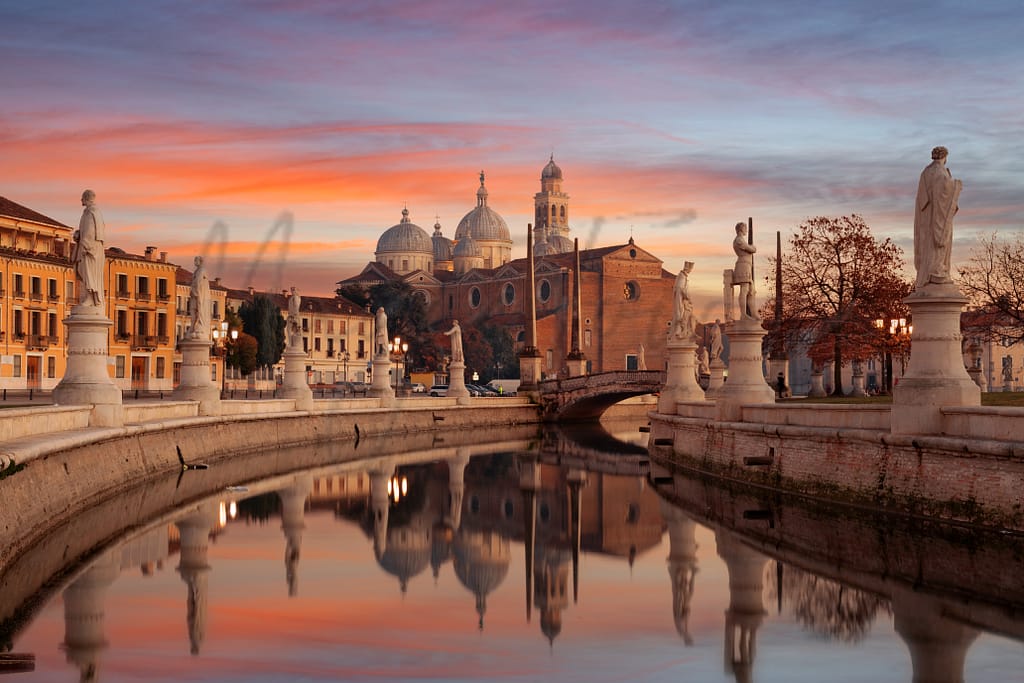
Padova
207,400 residents · 434,100 within 5 km · 17 m above sea level
What Padova is actually like
Padua, or Padova as the locals call it, is a city and comune in Veneto, northern Italy, rich in academic and artistic heritage. It is home to Italy's second-oldest university, founded in 1222, and a cultural hotspot with ancient architecture and important artworks. These include the famous Giotto's frescoes in the Scrovegni Chapel. Padua's importance is not limited to culture and history only. The city maintains an important role in the industrial and agricultural sectors of the Veneto region. Its well-preserved marketplaces and piazzas offer the best of both worlds: a glimpse into history without compromising that modern touch expats love. Conveniently located in Northern Italy, Padua has excellent transport connections to major cities like Venice. For this and many other reasons, this city is favoured by expats who want to enjoy a calm atmosphere, top-notch educational institutions, history, and contemporary amenities.
How Padova is built
Post-war expanded comune
Building age, condition and occupancy from the ISTAT census (2011), by census section. Occupancy is shown as one honest split — the 2011 census does not reliably separate holiday homes from vacant ones.
Towns like Padova
Closest matches in Veneto on quality of life, infrastructure and economy.
- Treviso — Treviso · 85,700 residents
- Albignasego — Padova · 27,400 residents
- Mogliano Veneto — Treviso · 28,000 residents
- Mirano — Venezia · 27,000 residents
- Preganziol — Treviso · 16,800 residents
- San Donà di Piave — Venezia · 41,900 residents
The rest of the Padova profile — cost of living, healthcare, climate, broadband, schools and the full pros & cons — is behind a free account.
 English
 French
 German
 Italian
 Danish