Skip to main content Haut de page
Magic AI
Ask anything about Italy
En ligne
Hello! I'm the AI Assistant for Magic Towns. Need info on relocating, towns, properties, or culture? Ask away! For detailed queries, I'll connect you with our experts. How can I assist?
Magic AI · Just now

What People Say About Living in Bologna

Discover what living in Bologna, in Emilia-Romagna, is really like – through our data and the firsthand experiences of its residents.

Not everyone idealizes life in a petite ville en Italie. Many people don’t want to rely on a car to get from one place to another. They want to live in a place that can guarantee more job opportunities, and maybe also more international schools for their children.

However, we all know that most of the time, living in a big city means coping with crazy prices, traffic, and chaos. But there’s a city which, through all this, keeps being very livable. A place where you have all the amenities of a big city, but with that “small-town” feel. And that’s Bologne.

Bologne is about 100 km south of Milan, the same distance north of Florence, and it offers something that’s harder to find than you’d think: a big, genuinely alive Italian city that hasn’t been entirely flattened by mass tourism. With a population of just under 400,000, it’s Italy’s seventh-largest city, home to the oldest university in the Western world, and consistently ranked among the best cities to live in Italy.

But how does it actually feel to live in Bologna year-round? In this article, we’ll try to give you an answer, combining our data and the reviews of people who live there.

Life in Bologna: What People Say

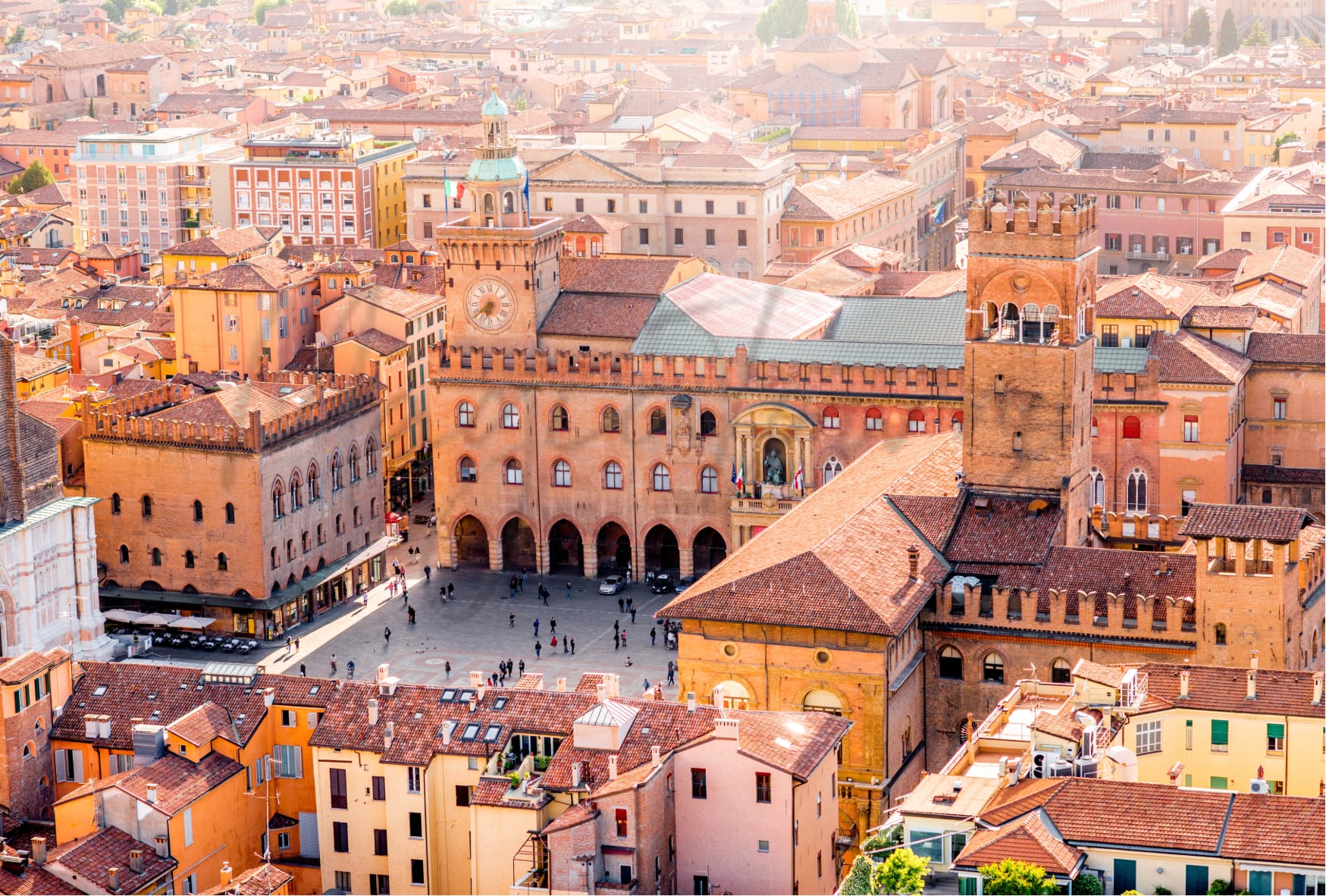
Bologne carries three nicknames that tell you a lot about the place. La Dotta (the Learned) for its ancient university. La Grassa (the Fat) for its food culture – and indeed, it’s full of great and affordable restaurants. And La Rossa (the Red) for those warm terracotta rooftops, but also for a long tradition of left-leaning politics that has shaped a city known for social progressiveness.

Les university’s influence runs through everything here, so there’s always a mix of people – from students who arrived for a degree and then decided to stick around, to established Bolognesi who’ve been here their whole lives. There are events year-round, and most of the time they’re free or cost very little.

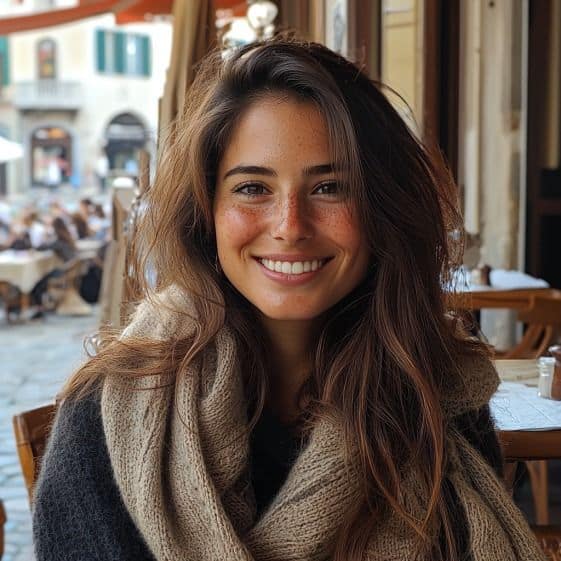
“After two years here, what keeps striking me is that Bologna has worked out something most cities haven’t – it’s big enough to have real energy, but small enough to still feel human. And the architecture genuinely is extraordinary.”

In general, I think Bologna is the perfect example of a city that works. A super welcoming place where you can still “breathe”. A city that certainly doesn’t have the frenzy of Milan, the “slowness” of Rome, or the heavy tourism of Florence and Venise.

Living in bologna, expats in bologna
Bologne, Émilie-Romagne

Transport and Connectivity in Bologna

Bologne has three main advantages in terms of connectivity. First, it sits in the north of Italy but leans toward the centre – which means you can easily reach many places across the country in very little time.

Deuxièmement, le rail connections are excellent. Bologna Centrale is one of Italy’s most important rail hubs. You can reach Florence en seulement 37 minutesMilan in just over an hour, Rome in about 2 hourset Venise in an hour and a half.

Third, it has a medium-sized airportGuglielmo Marconi (BLQ) – just 6 km northwest of the city centre, which you can easily reach by train. The Marconi Express shuttle from Bologna Centrale gets you there in 7 minutes, making it easily the most convenient airport connection of any Italian city I can think of.

The city is also well-served by buses. The TPER network covers the main routes, but frequency drops outside the centre and there’s no tram – a gap several long-term residents have flagged. The good news: the historic centre is très accessible à pied, and those 40+ km of covered porticoes (UNESCO-listed) mean you can get around on foot in almost any weather. In short, it’s a city where you can easily live without a car.

Where to Live in Bologna: Housing & Cost of Living

Bologne is not cheap. Cheaper than Milan and Rome, but more expensive than most comparable cities in the south. The housing market is under continuous pressure from a large student population and a short-term rental sector that has eaten into long-term stock:

ZonePrix de vente (€/m²)Maison moyenne de 100m² (€)Loyer (€/m²)Loyer moyen pour 100m² (€/mois)
Centro€4,688€468,800€18.35€1,835
Costa, Saragozza, Saffi€3,956€395,600€15.85€1,585
Murri, Massarenti€3,953€395,300€16.04€1,604
Bolognina, Corticella€3,557€355,700€15.82€1,582
Toscana, Savena€3,492€349,200€14.00€1,400
San Donato, Pilastro€3,109€310,900€15.42€1,542

Source: Immobiliare.it, Quotazioni Immobiliari Bologna, May 2026

Finding a place takes time and, ideally, Italian and a local contact. As a foreigner with no network, budget more time than you think. The good news is that Bologna is walkable and bikeable well beyond the historic centre, so you have several options.

The most sought-after neighbourhoods among residents are Mazzini, Murriet Saragozza – quiet, well-maintained, close to the centre, but priced accordingly. Alternatively, if you want to spend less, Saffi, Massarenti/Cirenaicaet Bolognina are the ones to look at:

“Neighbourhoods like Mazzini, Murri, and Saragozza are quiet, well-maintained, and only a short distance from the core – which is exactly why they’re expensive. If you want to stay close to the centre but pay a bit less, Saffi, Massarenti/Cirenaica, and Bolognina are the ones to look at.”

Bolognina in particular has become the go-to for expats and remote workers: it’s diverse, changing fast, and right next to the train station. Further west, Santa Viola is another option that residents rate well – good bus connections into the centre and the Ospedale Maggiore à proximité.

“I’ve lived in three different parts of Bologna – Via Toscana, Cirenaica, and now Santa Viola. Working close to the centre, I can say Santa Viola has been my best experience: well connected, plenty of buses that get you to the centre quickly, and the Maggiore hospital is right there. Services are fine for day-to-day life.”

Challenges of Living in Bologna

First, le housing situation. The market is tight, landlords know it, and as a foreigner with no local network you’re at a structural disadvantage. Budget more time and money than you expect, and start looking months before you arrive.

“Culturally, Bologna is incredible. People are super welcoming, and there are real job opportunities here too. Eating out is still pretty affordable, the main issue is rent.. it’s been going up steadily and honestly it’s getting close to Rome and Milan levels, which feels a bit mad for a city this size.”

Second, le le climat. The Po Valley means proper seasons at both extremes. Summers are hot and humid – genuinely uncomfortable in July and August, with temperatures above 35°C and barely moving air. Winters are cold, damp, and frequently foggy for weeks. The porticoes help with rain, but not with the heat or the grey.

“The summer heat is the one real downside – but in 50 minutes by car or an hour on a regional train you’re on the Romagna coast, eating a piadina and walking along the seafront.”

Third, if you travel long-haul frequently, Bologna’s airport will feel limiting. Guglielmo Marconi covers about lots of destinations across Europe and the Mediterranean. But there are no direct flights to North America, South America, or Asia-Pacific. The only intercontinental route is Emirates to Dubaï. So if you need transatlantic or long-haul flights, you’ll need to connect through Milan Malpensa (about 1 hour by train + shuttle) or Rome Fiumicino (2 hours by train). That’s manageable, but it adds cost and logistics to every long-distance trip.

Living in bologna, expats in bologna
Bologne, Émilie-Romagne

Bologna by the Numbers: Key Data

  • Score de qualité de vie : Excellent (93/100)
  • Hôpital le plus proche : Maggiore C.A. Pizzardi (6 min drive)
  • La sécurité : Moderate to low earthquake risk; moderate flood risk
  • Vitesse de l'Internet : Excellent (Avg. 347 Mbps download)
  • Transport : bike-friendly centre; car largely unnecessary
    • Aéroports : Bologna Guglielmo Marconi (13 min), Reggio Emilia Airport (41 min), Amerigo Vespucci, Florence (52 min)
    • Gares : Bologna Centrale (city centre), Bologna Zanolini (4 min), San Lazzaro di Savena (16 min)

If you want to explore all the specific details about Bologna, visit its Profil de la ville Magic Towns.

Is Bologna Right for You?

✅ Choisir Bologne si :

  • You want the advantages of a big city – jobs, international schools, universities – but in a calmer, more affordable place than Milan
  • Train connectivity matters to you: you can reach most major Italian cities in just a few hours from Bologna Centrale
  • You want to live somewhere you don’t need a car
  • You work remotely and want excellent internet (347 Mbps) and direct European flights from your doorstep
  • You want access to Emilia-Romagna’s public healthcare – consistently ranked Italy’s best-performing region

❌ Pensez-y à deux fois si :

  • Housing budget is tight – prices are still high, and finding a place takes a lot of time regardless of budget
  • You need direct long-haul flights – BLQ has no transatlantic or Asia-Pacific routes; you’ll need to connect through Milan or Rome
  • Hot, humid summers and grey, foggy winters would genuinely wear you down – the Po Valley delivers both
Living in bologna, expats in bologna
Bologne, Émilie-Romagne

Réflexions finales

Bologna is not a budget destination, or an easy place to find housing, but it works well for many expats. For example, if you’re a travailleur à distance who wants to live in a real, functioning Italian city and can absorb the rent, this is probably your best option in northern Italy outside of Milan. You get a city with proper infrastructure, excellent healthcare, a university calendar that keeps things alive year-round, and train connections that let you use Milan or Rome as gateways for international travel without paying to actually live there.

Pour familles, it’s one of the stronger options in the region: the International School of Bologna handles English-language education, Murri et Saragozza are proper family neighbourhoods, and the healthcare system is genuinely good.

Cela a-t-il été utile ?

✅ Oui
❌ Non
Merci pour vos commentaires !

Des commentaires ? Des questions ? Participez à la discussion avec nos auteurs sur notre page Facebook.

s'inscrire à notre lettre d'information

Découvrir l'Italie ? Demandez à Magic AI.

Embarquez pour votre aventure italienne avec Magic AI, le cœur innovant de Magic Towns Italie. Notre technologie d'intelligence artificielle, intégrée à une base de données complète, répond à vos questions sur la vie, la législation et les trésors cachés de l'Italie.

Alimentée par une base de données constituée par des professionnels du voyage, de la relocation et du droit, Magic AI vous donne des conseils d'experts sans que vous ayez à payer le prix fort.

 
Messages récents
Effacer les filtres
Messages les plus populaires

Magic Towns Italy est votre feuille de route pour déménager ou voyager en Italie. Fournissant des données détaillées sur les villes et des services de relocalisation, il est parfait pour ceux qui recherchent un mélange d'excitation et d'informations utiles sur les villes captivantes de l'Italie.

Découvrez nos entreprises :

© 2026 magictowns. @ Tous les droits d'auteur 2026 par Content Ventures Limited