
Sicily is one of those places many people keep coming back to – first as tourists, then as people quietly wondering whether they could actually live here. And for good reason. The light is different. The food is great. History is literally built into the streets. And the pace of life? It’s exactly what a lot of people are running towards.
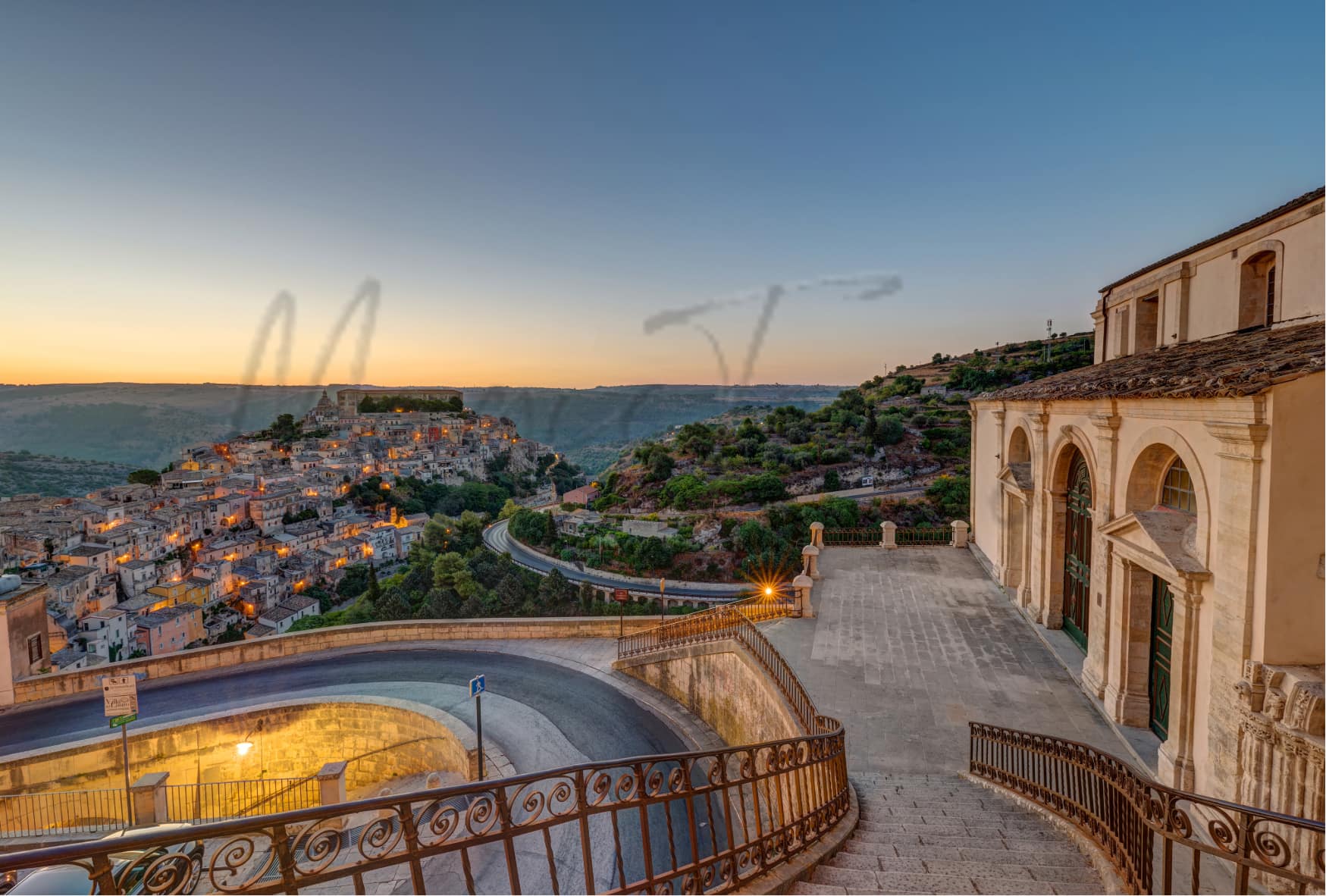
Among Sicily’s many options, Ragusa tends to stop people in their tracks. This is a UNESCO World Heritage city of around 73,700 residents, split into two very distinct personalities: Ragusa Ibla, the ancient baroque lower town with its winding alleys, beautiful churches, and jaw-dropping views – and Ragusa Superiore, the more modern upper town where most people actually do their shopping, errands, and everyday living. Then there’s Marina di Ragusa, the coastal arm of the city, about 25 minutes away by car, with a completely different feel altogether.
In short: choosing Ragusa isn’t just one decision. It’s basically three.
Life in Ragusa: What People Say
What keeps coming up in conversations about Ragusa with residents is the quality of the surrounding area. Within 30 minutes you’ve got Modica (a town we already covered in a separate article), Scicli, Noto, and a coastline that runs through some genuinely spectacular beaches.
Families seem to find a workable rhythm too – especially those who’ve settled somewhere between the city and the coast. One expat who moved five years ago with a young child describes what that looks like day to day:
“I moved to Ragusa 5 years ago. We’ve chosen the middle between Ragusa and Marina, in campagna. And we love it. We’ve restored everything and built a pool in the garden. Our 3-year-old daughter goes to kindergarten in Ragusa and in the afternoon, when the weather gets reasonable, we always go to the sea.”
That said, it’s not a place for everyone, especially if you don’t have a car, or you don’t like humidity and excessive heat:
“Ragusa has basically everything you’d need for daily life. But bear in mind that the area – and Sicily in general – is pretty humid because of the sea. Between July and October, you definitely want to be in the mountains or at the sea to avoid the discomfort of the humidity/heat combo when it’s 80% humidity and temperatures in the high 80s to 90s°F.”

Transport and Connectivity in Ragusa
Let’s be upfront: Ragusa is not the most connected place in Italy. In terms of flights, there are a few options. The closest airport is Catania Fontanarossa, about 1h 20 minutes by car. It’s a solid airport with connections to Rome, Munich, Amsterdam, London, and low-cost routes via Ryanair and Wizz Air – useful for European travel. Further out, you’ve got Palermo’s Falcone Borsellino (around 3 hours) for more route options, and Reggio Calabria’s Tito Minniti (about 2h 30 minutes), which covers mostly domestic connections.
Trains exist but are regional-only. The closest stations are Stazione di Donnafugata (9 minutes) and Stazione di Ragusa (14 minutes), with connections to Modica, Siracusa, and other nearby towns. There are no high-speed trains. Getting to Palermo by rail takes the better part of a day.
“I would highly recommend to get a car and live the whole area as a big city: all towns in the provincia di Ragusa are close enough to do it.”
The honest summary: you need a car here, full stop. Not just for exploring – for getting to the airport, for daily errands if you’re not right in the center, and for making the most of what the province offers. Within Ragusa itself, walkability is actually quite good, particularly in Ibla and the upper town center. But the moment you want to go further, you’re driving.
“Just be aware that ‘ubering’ is not really a thing here and buses are not that great or reliable. It’s completely unrealistic for everyday use. Italy has the highest rate of cars per capita in the EU and Sicily ranks pretty high compared to the rest of Italy.”
Where to Live in Ragusa: Housing & Cost of Living
Property prices in Ragusa are definitely low. The median sits around €804/m², which means a 100m² apartment will cost you in the region of €80,000–€85,000. The nearby village of Marina di Ragusa is obviously way more expensive – but if living right on the coast isn’t a priority, the rest of Ragusa offers genuinely strong value. Here’s a full breakdown by zone:
| Area | Sale price (€/m²) | Avg. 100m² home (€) | Rent price (€/m²) | Avg. 100m² rent (€/month) |
|---|---|---|---|---|
| Ibla, Centro, San Luigi, Archimede | €632 | ~€63,200 | €5.17 | ~€517 |
| Zona Industriale, Conservatore, San Giacomo | €780 | ~€78,000 | €5.86 | ~€586 |
| Puntarazzi, Pozzillo, Donnafugata, Punta Braccetto | €1,096 | ~€109,600 | €8.63 | ~€863 |
| Bruscè, Selvaggio, Pianetti | €1,220 | ~€122,000 | €6.55 | ~€655 |
| Marina di Ragusa | €2,923 | ~€292,300 | €9.65 | ~€965 |
Data elaborated from Immobiliare.it – reference period: March 2026
If you’ve ever visited Ragusa, chances are you’ve fallen in love with its older part, Ragusa Ibla, which looks incredible on paper, and it is beautiful – but definitely not for everyone. Steps everywhere, almost no parking, expensive restorations that rarely come out cheaper than building new, and the commercial center has long since moved uphill. People who do live in Ibla tend to either love the aesthetic deeply or run some kind of tourism business. Both are valid reasons. Just go in with your eyes open.
The countryside option is genuinely interesting for people looking for space and value. Several expats in the area have bought and restored rural properties at a fraction of what you’d pay elsewhere in Italy, with the added bonus of being 20–30 minutes from the sea and the city.
“We live in the countryside between Santa Croce Camerina and Cassuzze. We’re in a great position, as we often cycle to the Marina. We absolutely love it, but your own transport is pretty much a necessity out of the town centres. Grocery shopping is inexpensive but property prices are definitely rising.“
Challenges of Living in Ragusa
First, connectivity is genuinely limited. Getting anywhere by train takes time. The airports nearby are quite connected, but obviously if you’re from the US, expect a connection or two. If direct flight routes are a priority for you, then you should consider other places, for example near Rome Fiumicino or Milan Malpensa. If so, you can use our Town Explorer and filter what you’re looking for in a specific town/city.
Second, the heat and humidity in summer can be intense. Temperatures peak at around 30.5°C, but the humidity is what residents consistently flag. July to October can be uncomfortable inland, and most locals head to the coast or the hills to cope. For expats coming from northern climates, it’s worth spending a summer here before committing.
Third, public services have their limits. This comes up again and again from residents – roads, public transport, bureaucracy, and in some areas healthcare – all reflect the broader challenges of southern Italy. The healthcare score (94/100) and the nearby hospital (Giovanni Paolo II, just 5 minutes away) are actually quite positive, but specialists and more complex care may require travelling to Catania or Palermo.
“Sicily is beautiful, but it can also be a bit challenging in everyday life. It’s not always cheap compared to what you get, and depending on where you are, opportunities for kids can feel a bit limited. Public services, roads, and healthcare aren’t always very reliable, which can make things harder at times. There are other places in Italy that are much better suited for a family.”
Fourth, language is more of a factor here than in more expat-heavy towns. English is not widely spoken, particularly outside the city center. Older residents may speak Sicilian dialect more naturally than standard Italian, which takes some adjustment even for Italian speakers.
Fifth, seismic risk is high. Ragusa sits in a seismically active zone. This doesn’t stop people from living here – and hasn’t for centuries – but it’s worth factoring in, particularly when buying and restoring older properties.

Ragusa by the Numbers: Key Data
- Quality of Life Score: Excellent (91/100)
- Air Quality: Good (80/100)
- Nearest Hospital: Giovanni Paolo II (5 minutes)
- Safety: High earthquake risk; very low flood risk
- Internet Speed: Excellent (average 280 Mbps download)
- Transport: Buses aren’t always reliable; having a car here is a must.
- Airports: Catania Fontanarossa (1h 3o min), Reggio Calabria Tito Minniti (2h 3o min), Palermo Falcone Borsellino (3h)
- Railway Stations: Stazione di Donnafugata (10 min), Stazione di Ragusa (15 min), Stazione di Modica (20 min)
For more detailed information about Ragusa and its services and infrastructure, visit the Magic Towns city profile.
Is Ragusa Right for You?
✅ Choose Ragusa if:
- You want to live in a beautiful, affordable place just 20 minutes from the beach
- You want to be well positioned to explore the rest of Sicily – towns like Modica, Scicli, and Noto are very close, and there are plenty of beaches within 30 minutes
- You like the idea of sunshine most of the year and mild winters – summers can get very hot, but you can still expect good weather even into October and November
- You plan to buy (and possibly restore) property – the value here is hard to find elsewhere in Italy
- You’re happy to have a car and rely on it in daily life
❌ Think twice if:
- You need convenient international flight access – the 79-minute drive to Catania is manageable, but options can be limited, especially if you’re coming from far away and want direct or smooth routes
- You have young children and are prioritizing career opportunities, international schools, or an easy path back home
- You struggle in extreme heat and humidity – July and August in Ragusa can be genuinely tough
- You don’t speak Italian – the language barrier is more significant here than in more expat-saturated areas
- You need frequent access to specialized healthcare – basic care is solid, but complex needs mean travelling to larger cities

Final Thoughts
Ragusa is definitely a wonderful (and affordable) city. And the quality of life, for the right person, is very high. But it demands something in return: flexibility, a car, some Italian, and a tolerance for being off the beaten path. This isn’t a city with an international airport 15 minutes away or a high-speed train to Milan. It’s a place that rewards people who are ready to put down roots, learn the rhythms of the province, and genuinely integrate into Sicilian life.
If that sounds like a compromise, it might not be for you. If it sounds like exactly what you’re looking for, then you’ll likely have a great time in Ragusa!