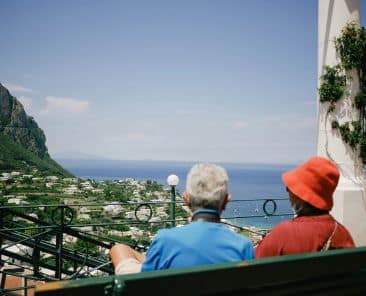
Who hasn’t visited Italy without passing through Sorrento? Along with Tuscany, this is probably one of the first places that comes to mind abroad when people think of Italy. The cliffs, the Bay of Naples, the limoncello, the ferry to Capri…
But living somewhere is a very different thing from visiting it. And when it comes to Sorrento, residents are surprisingly candid: it’s beautiful, yes, but it comes with some serious trade-offs. In this article from our “What People Say About Living in…” series, we’ll tell you what living in Sorrento is actually like, the good and the less good.
Life in Sorrento: What People Say
On the positive side, the setting is genuinely hard to beat. The climate is mild year-round, the area is incredibly well-connected by ferry and train to places like Pompeii, Capri, and Naples, and for those who want a mix between small-town feel and bigger city access, it delivers:
“Sorrento is wonderful – mild climate, stunning beaches, and it’s ideal if you’re looking for a mix between a small and a large city. Excellent transport links connect you to the Amalfi Coast, and you’re just minutes from Pompeii, Capri, and Naples.”
Winters are a different story. Once the tourists leave, a quieter, more authentic version of the town emerges, which many long-term residents actually prefer:
“Tourist season keeps getting longer every year, and the crowds just… don’t stop. Buses won’t even bother pulling over if they’re full — so good luck if you actually need to be somewhere. But winter? That’s when the island is finally itself again. Quiet. Safe. Peaceful.”
But here’s the thing most people won’t tell you before you move: living in Sorrento as a resident is genuinely challenging. The same things that make it a dream destination for visitors – the fame, the beauty, the location – create real headaches for people who actually live there.

Transport and Connectivity in Sorrento
Transport is one of Sorrento‘s genuine strengths. The Circumvesuviana train connects the town directly to Naples and stops at Pompeii and Herculaneum, running every 30 minutes during peak hours. The station is just 4 minutes from the town center. For ferries, you’re well-connected to Capri, Positano, and the rest of the Amalfi Coast.
The main airport is Naples Capodichino, about 50 minutes away, which is a serious hub – handling over 12 million passengers annually with connections to London, Barcelona, New York, and major European cities. A second airport, Salerno Costa d’Amalfi, is about an hour away and gradually resuming services, targeting full operations by 2026-2027.
However, during peak season the roads become a serious problem. The narrow coastal roads, combined with tourist traffic, can make even short journeys take much longer than expected:
“The roads are a nightmare in the busy season, not just cars but people walking as well. Sorrento is beautiful but I think you can find somewhere just as beautiful, for much cheaper with less chaos.“
The town itself is really walkable – daily errands, restaurants, and shops are all easily accessible on foot within the center. But getting anywhere outside Sorrento in summer requires patience.
Where to Live in Sorrento: Housing & Cost of Living
This is where things get real. Sorrento has one of the most difficult housing markets in Italy for actual residents. The short-term rental boom has swallowed up most of the available housing stock, making it incredibly hard to find long-term rentals at a reasonable price. And buying? The median property price is around €7,798/m²:
“The most difficult thing will be finding affordable housing. If you choose to rent then it’s very, very hard to find something as everything is BnBs for the tourists. If you choose to buy, the average price of just an apartment is around half a million. It took my partner and I over a year to find a place to rent and we ended up in one of the neighbouring towns.”
The property market has become so distorted that even parking spaces are selling for absurd prices:
“The real estate market has prices so crazy that you now find listings online selling tiny garages for over €200,000 as if they were homes.”
If you’re open to it, considering nearby towns like Vico Equense or Piano di Sorrento on the same peninsula offers much better value and a more livable environment, while still giving you easy access to Sorrento.
| Area | Sale Price (€/m²) | Avg. 100 m² Home (€) | Rent Price (€/m²) | Avg. 100 m² Rent (€/month) |
|---|---|---|---|---|
| Sorrento | €7,798 | ~€779,800 | €20.99 | ~€2,099 |
| Massa Lubrense | €4,303 | ~€430,300 | €14.02 | ~€1,402 |
| Sant’Agnello | €6,313 | ~€631,300 | €17.38 | ~€1,738 |
| Meta | €4,845 | ~€484,500 | €14.87 | ~€1,487 |
| Vico Equense | €4,767 | ~€476,700 | €10.56 | ~€1,056 |
| Castellammare di Stabia | €2,779 | ~€277,900 | €12.08 | ~€1,208 |
| Pimonte | €2,407 | ~€240,700 | €6.90 | ~€690 |
| Agerola | €1,612 | ~€161,200 | €7.79 | ~€779 |
Data elaborated from Immobiliare.it
Challenges of Living in Sorrento
When you take into consideration a tourist town like Sorrento, it’s obvious that many of the drawbacks come as a direct consequence of its tourism appeal. Between around March and November, the town is obviously overwhelmed, so it can be a big stress to move around, both for traffic, for finding parking and for public transportation:
“It’s very touristic, overpriced, and overcrowded during summer. Plus it gets crazy hot. Buses won’t stop for you if they’re full, so if you have somewhere to be you have to plan ahead.”
Second, healthcare is a concern. There’s a hospital nearby (5 minutes), but residents are honest that it’s not great and you’ll likely need to go to Naples or Salerno for anything serious. The healthcare score sits at 46/100, with particular weaknesses in emergency responsiveness and heart attack care.
Third, employment is very limited. Unless you work in tourism, finding stable local work is extremely difficult. This makes Sorrento primarily suited to retirees and remote workers.
Fourth, the cost of living is high across the board – not just housing, but everyday expenses are elevated by the tourist economy.

Sorrento by the Numbers: Key Data
- Quality of Life Score: Good (77/100) – considering infrastructure, economy, and amenities
- Air Quality: Moderate (70/100)
- Nearest Hospital: Santa Maria della Misericordia (5 minutes)
- Safety: Moderate to low earthquake risk
- Internet Speed: Good (71 Mbps average download)
- Transport
- Airports: Capodichino Naples (50 min), Salerno Costa d’Amalfi (1 h), Ciampino, Rome (125 min)
- Railway Stations: Stazione di Sorrento (4 min), Stazione di Piano di Sorrento (10 min), Stazione di Meta (12 min)
For more detailed information about Sorrento and its services and infrastructure, visit the Magic Towns city profile.
Is Sorrento Right for You?
✅ Choose Sorrento if:
- You’re a retiree or remote worker with a solid budget who wants coastal Italian living at its most iconic – the setting, the food, the climate are genuinely exceptional
- You embrace the winter months as “your” Sorrento – quiet, authentic, and peaceful once the tourists leave
- You don’t need to drive much and can work around the seasonal chaos – the town is walkable and the train to Naples is excellent
❌ Think twice if:
- You’re on a budget – housing, services, and daily life here are expensive, and the tourist economy inflates everything
- You need good local healthcare – the hospital is basic; for anything serious you’re heading to Naples or Salerno
- You’re looking for local employment – work outside tourism is extremely limited
- You hate summer crowds – the tourist season is intense, long, and getting longer every year
- You were hoping to find a quiet long-term rental quickly – expect a lengthy search and fierce competition

Final Thoughts
So is Sorrento right for you? If you have the budget, can work remotely or are retired it can absolutely work. The setting is hard to beat, the connections are good, and there’s a genuine quality of life once the crowds clear out.
But go in with open eyes. Housing is a real struggle, the tourist season is long and intense, healthcare is limited, and the cost of everything is inflated by the same economy that makes it so attractive to visitors.
If your heart is set on this corner of Italy but the numbers don’t add up, look at the wider peninsula. Towns like Vico Equense or Piano di Sorrento give you the same landscapes, the same train, the same ferry to Capri — at a fraction of the price and stress.
You can visit Sorrento whenever you want. You just don’t have to live in the middle of it.