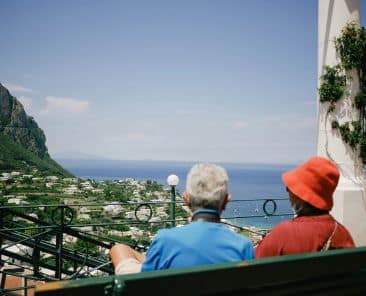

When most people think of Umbria, they picture Assisi or Perugia. But there’s a whole collection of medieval towns scattered across this green region that remain largely under the radar. Towns where life still moves at an authentic Italian pace, where locals outnumber tourists, and where you can actually afford to buy property.
Narni is one of them. Perched on a hill with sweeping views, just an hour from Rome by train, it’s the kind of place where residents have stayed for 15+ years and still love it. A medieval town that’s managed to keep its soul while staying genuinely livable.
But what’s it actually like day-to-day? In this article from our “What People Say About Living in…” series, we’ll break down what living in Narni is really like through the eyes of people who actually live there, supported by our data.
Life in Narni: What People Say
According to locals and expats, Narni is a great town if you want to move somewhere quiet, not too far from bigger cities, but still with plenty of cultural events happening throughout the year. The town has a small but active university student population, and there’s a growing expat community that’s eager to help newcomers settle in:
“Narni is lovely. There are a number of festivals, music, theatre, and other cultural events. We have a movie theatre that shows films in original language and a nice group of expats who will be happy to welcome you. We’ve lived here for 15 years and still enjoy it very much.”
The town’s location is one of its biggest draws. The train connections are really good for a town of this size, and you’re directly linked to Rome in around 45 minutes. In fact, many people actually use Narni as a quiet base and commute to Rome for work:
“Many people decide to use Narni as a base and commute to Rome. I had a colleague who did it for 25 years, and many friends still do it. Even though there are sometimes peaks of air outside the norm, it’s all motivated by breathtaking views, green mountains, enchanted valleys, rivers of a thousand colors.”

Transport and Connectivity in Narni
Narni is situated in a great location. You’re in the middle of nature, while still being connected to major cities. From the local train station you can reach Rome in around 45 minutes, Terni in 10 minutes, and Spoleto in 30 minutes. And if you need better connectivity to other destinations, you can go to Orte station, which is just 20 minutes away.
However, according to residents, getting to/from international airports can be tricky. The closest is Perugia-San Francesco d’Assisi (45 minutes), but it’s a modest airport with limited connections. Rome’s airports – Ciampino (51 minutes) and Fiumicino (52 minutes) – offer much better options. There’s a direct train from Orte to Fiumicino running every hour until 19:30, though it takes around 2 hours 20 minutes and the schedule can be challenging:
“Transit to/from international airport is a problem. For short trips we drive to the airport and park at one of the many parking lots outside. Private drivers can take you but it will cost 130 euros each way. There is a train going straight to Fiumicino from Orte. That would be the best choice but the schedule is a bit tricky.”
Daily life is quite manageable without a car, as the town is very walkable, but having one is practically essential for accessing services and exploring the beautiful surrounding countryside.
Where to Live in Narni: Housing & Cost of Living
Property prices in Narni are very reasonable. According to recent data, the median price is around €850/m² for buying. This makes a 100m² apartment cost approximately €85,000 to purchase – significantly more affordable than nearby towns and much cheaper than Todi or other popular destinations in the region.
The town is split into two distinct parts: Narni, the historic hilltop center, and Narni Scalo, the modern town below. For day-to-day living, Narni Scalo is the practical choice – it’s where you’ll find schools, supermarkets, banks, and shops. The historic center is undeniably beautiful, but most residents treat it as a destination rather than a base, heading up for restaurants, cultural events, and atmosphere while relying on Narni Scalo for everything else:
“I moved from Rome to Narni Scalo two and a half years ago and I feel very good here. Narni Scalo is more convenient for services and you can go up to Narni in 5 minutes with bus or car. Then in Narni Scalo there is the train station that takes you to Rome in just 45 minutes!”
| Town | Sale Price (€/m²) | Avg. 100 m² Home (€) | Rent Price (€/m²) | Avg. 100 m² Rent (€/month) |
|---|---|---|---|---|
| Narni | €847 | ~€85,000 | €5,98 | ~€600 |
| Assisi | €1.427 | ~€143,000 | €8,43 | ~€840 |
| Perugia | €1.347 | ~€135,000 | €9,61 | ~€960 |
| Todi | €1.161 | ~€115,000 | €6,62 | ~€660 |
Data elaborated from Immobiliare.it
Challenges of Living in Narni
First, the job market is limited. This is consistently mentioned as one of the main drawbacks. Many young people are leaving because local employment opportunities are scarce. If you’re not retired or willing to commute to Rome, finding stable local work will be very difficult.
“One of the cons of living here is definitely the employment situation. More and more people, especially young people, are leaving because the market is very limited. So I’d recommend it if you’re already retired.”
Second, while healthcare quality is good overall, it’s not exceptional. The local hospital is 7 minutes away, which is convenient, but for specialized care you might need to travel to larger cities. Hospital care surpasses national standards in some areas (like timely heart attack intervention) but has room for improvement in others (like bone fracture treatment).
Third, getting around Umbria requires a car. While Narni Scalo itself is walkable and well-served, public transportation across the broader region is limited. Relying solely on it for day-to-day life outside the town (or for reaching international airports) will quickly become frustrating.
Fourth, remote workers should think carefully before committing. Internet connectivity in Narni isn’t particularly strong, with average download speeds around 52 Mbps, which may be a dealbreaker if your work depends on a reliable, fast connection.
Fifth, families prioritizing international schooling will find options limited. There are no international schools in Narni, so if that’s important to your family, you should consider other towns.
Sixth, integration requires genuine effort with the Italian language. Narni has a growing expat community and a welcoming atmosphere, but it remains a very local town at heart – English isn’t widely spoken, and building real roots here means committing to learning Italian.

Narni by the Numbers: Key Data
- Quality of Life Score: Very good (85/100) – considering infrastructure, economy, and amenities
- Air Quality: Excellent (90/100)
- Nearest Hospital: Narni Hospital (7 minutes)
- Safety: Moderate earthquake risk
- Internet Speed: Good (52 Mbps average download, up to 77 Mbps)
- Transport: Walkable in center, but car essential to explore the area
- Airports: Perugia-San Francesco d’Assisi (45 min), Ciampino Rome (50 min), Leonardo da Vinci Rome Fiumicino (50 min)
- Railway Stations: Stazione di Nera Montoro (5 min), Stazione di Narni-Amelia (5 min), Stazione di Orte (20 min)
For more detailed information about Narni and its services and infrastructure, visit the Magic Towns city profile.
Is Narni Right for You?
✅ Choose Narni if:
- You’re a retiree looking for an authentic, quiet and affordable town near Rome – the hour-long train connection makes it perfect for staying connected without city chaos
- You have a car or plan to get one – while Narni Scalo has services, exploring Umbria requires your own transport
- You appreciate strong community and cultural life – festivals, theatre, expat groups, and local events create genuine connections
- You want excellent air quality and pleasant climate – abundant sunshine, mild temperatures, and clean air year-round
- Nature and the outdoors matter to you – Narni is surrounded by stunning countryside, with hiking paths and green valleys right on your doorstep
❌ Think twice if:
- You’re looking for local employment – the job market is limited, and many young people leave for work opportunities elsewhere
- You work remotely and need a fast, reliable connection – internet speeds average around 52 Mbps, which may not cut it for demanding remote work
- You’re moving with a family and international schooling is a priority – there are no international schools in Narni, and you’d be better served by a larger city
- You’re not willing to learn Italian – despite a welcoming expat community, Narni remains a very local town and daily life will be a struggle without the language

Final Thoughts
Narni works well for a specific kind of move: retirees, or anyone who doesn’t need local employment and values a quiet, affordable base with good Rome access. The 45-minute train connection is genuine and reliable – you’re not isolated.
The practical advice is simple: live in Narni Scalo, use the historic center for leisure. You get the convenience of a functioning modern town and medieval Umbria five minutes up the hill.
The downsides are real – limited jobs, patchy internet, no international schools, and a need for Italian. But if none of those are dealbreakers for you, Narni is an affordable, well-connected, and genuinely pleasant place to live.
Want to explore more options?
If Narni hasn’t fully convinced you and you’d like to explore other options, use our search tools to explore over 1,500 towns and cities in Italy. You can filter by cost of living, transport, healthcare, and other lifestyle factors – making it easy to find the perfect place for you.