

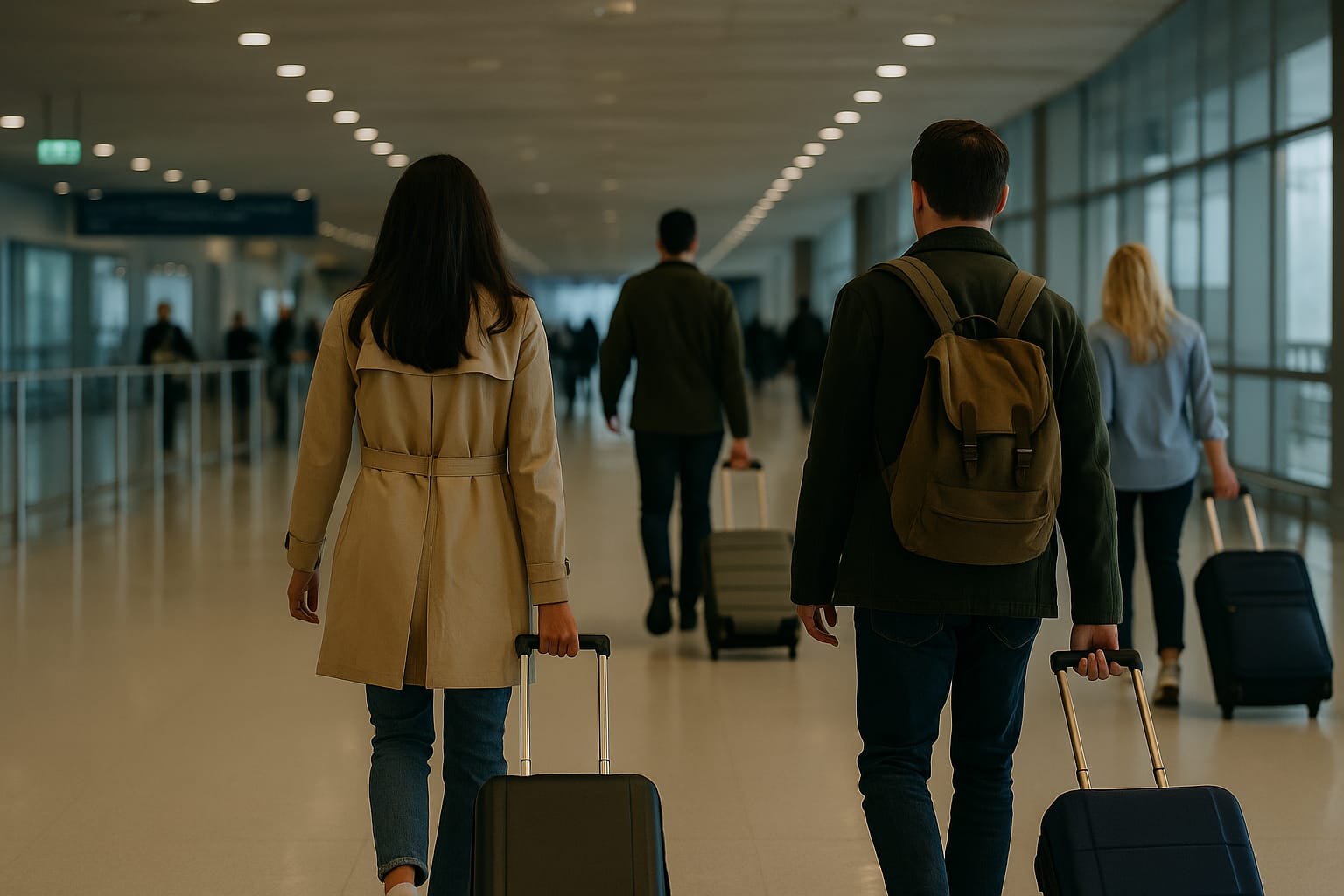
EES – the Entry/Exit System is no longer just a policy headline. It’s here, and it’s already reshaping how people move across Europe. From 12 October 2025, the European Union began operating its long-planned digital border system, replacing the familiar inked passport stamp with a secure, biometric record.
For anyone living in Italy but travelling in and out of the Schengen Area, whether for work, family, or leisure, this change matters. It affects how your travels are recorded, how long you can stay abroad, and what information border officers can see.
A New Kind of Border Experience
The concept behind EES is simple but revolutionary: every time a non-EU national crosses a Schengen external border, the system logs their entry and exit electronically. No more manual stamps. Instead, your travel details, facial image, and sometimes fingerprints are stored in a central European database.
This reform is grounded in Regulation (EU) 2017/2226, a law designed to make border management smarter and more transparent. The idea is to detect overstays automatically, reduce identity fraud, and speed up border checks. In the long run, it will also simplify the way you prove your travel history, especially if you work, study, or live in Europe for part of the year.
For most travellers, that means a few extra seconds at border control while the system captures your biometrics. For expats, it marks the start of a digital footprint that accompanies you each time you enter or leave the continent.
Italy’s Implementation
Italy officially activated EES in its airports, seaports, and land crossings on October 12th. At Rome Fiumicino, Milan Malpensa, and Venice Marco Polo airports, you may already notice new biometric kiosks and clearly marked lanes for non-EU passengers.
In larger ports, like Genoa and Civitavecchia, the rollout will continue over the coming weeks as staff and equipment are fully trained and integrated. Smaller border points, particularly at ferry terminals, may still use a hybrid system — a mix of digital registration and traditional stamps — until all systems are synchronized.
For most expats in Italy, EES won’t disrupt everyday life. Holders of long-stay visas or residence permits are generally not processed under the same short-stay rules as tourists. However, if you frequently travel for work, or leave the Schengen Area often, your entries and exits will still be logged digitally.
What You’ll Notice at the Border
The new system is designed to be seamless. When you travel through an Italian airport, a border officer or automated gate will scan your passport, take a quick facial photo, and in many cases, record your fingerprints. The process happens in seconds, and your information is stored automatically.
Children under 12 are exempt from fingerprinting, and travellers with residence permits may undergo simplified verification. The goal isn’t to slow travel down – it’s to make each crossing more secure and easier to verify in future.
During these first weeks, don’t be surprised if you see both digital and manual lanes operating side by side. Italy, like many EU countries, is easing into the new system to make sure travellers and officers adapt smoothly.
How Other EU Countries Are Rolling Out the New Digital Border System

While Italy is now transitioning into the new Entry/Exit System, it’s not alone. Across the continent, Europe’s airports and land borders are quietly entering a new era of travel – one shaped by facial scans, fingerprint kiosks, and digital records instead of stamps.
In Germany, the first few days of EES have been marked by cautious enthusiasm. Airports like Düsseldorf and Frankfurt introduced biometric corridors ahead of schedule, using them initially during off-peak hours to avoid queues. Border officers there describe the system as “a test of patience and precision,” balancing faster technology with human oversight.
Over in Croatia, the process looks quite different. Because its borders connect directly with several non-EU neighbours, Croatia’s implementation was among the most visible. Travellers crossing by car now pass through lanes equipped with new cameras and fingerprint scanners, turning one of Europe’s newest Schengen members into an early showcase for the system.
France has taken a more gradual approach, especially at busy hubs like Charles de Gaulle and Marseille. Here, EES booths have been operating alongside traditional passport lanes, allowing border police to observe and adapt before full automation takes over later this year.
Meanwhile, Estonia and Luxembourg have opted for a faster rollout — both countries have already activated EES in most external entry points. Smaller in size, they have managed to test and integrate the system more smoothly, showing what early adoption can look like when logistics are simpler.
Even at northern ferry ports like Rotterdam and Zeebrugge, biometric kiosks are slowly replacing manual booths, with travellers getting their first taste of Europe’s “digital frontier.” Some airports are posting online wait-time updates to help passengers plan, suggesting that awareness is becoming as important as infrastructure.
Across the European Union, one thing is clear: each country is learning in real time. Some are moving fast; others are fine-tuning the process. The lessons unfolding in these first weeks will shape how Italy, and every other Schengen country, adjusts in the months ahead. For travellers and residents alike, the EES marks not just a procedural shift, but a new rhythm to crossing borders in Europe.
Understanding the S1 Form: A Key To Healthcare for Retirees and Expatriates Across Europe
Understanding Who Is Affected
EES applies to non-EU citizens entering or leaving the Schengen Area for short stays — that is, up to 90 days within any 180-day period.
If you live in Italy with a residence permit or long-stay visa, you’re usually processed differently. However, the system still registers your entries and exits at the external Schengen border (for example, if you travel to the UK, the US, or North Africa and return).
European citizens, including those from the EU, EEA, and Switzerland, are not part of EES. The system focuses specifically on Third-Country Nationals (TCNs).
Privacy, Data and Your Rights
Because EES collects biometric data, privacy protection has been built directly into the system. All information is stored securely within the EU and can only be accessed by authorised border and law enforcement authorities.
Data is kept for three years, or five, if a traveller overstays. You have the right to request access to your data, correct mistakes, or request deletion if something is recorded incorrectly. The system’s transparency rules are part of what the EU calls “responsible digital borders.”
For most travellers, this means greater accuracy and fewer bureaucratic misunderstandings. For expats, it means your travel record will be clearer, but it also makes accuracy vital.
What Non-EU Nationals in Italy Should Do Now
While the new system doesn’t require any pre-registration, there are a few simple habits worth adopting.
First, always travel with your passport and residence permit together as it helps border officers immediately identify your status. Second, double-check that the details on your documents match perfectly: your name, dates, and passport number should align across your visa or permesso di soggiorno.
If you plan to travel outside the EU, allow a bit of extra time at airports until the new technology becomes routine. Most early travellers describe the experience as quick, but like any digital rollout, some minor delays are inevitable at first.
Finally, stay informed. The Italian Ministry of the Interior and major airports will publish regular updates on which terminals and ports have full biometric functionality.
A Digital Border Future
The arrival of EES marks a defining moment for how Europe handles mobility. What once required ink and paper is now becoming a shared digital record, one that aims to protect, simplify, and modernise travel across 29 countries.
For expats in Italy, it’s a reminder that Europe is becoming ever more connected, not just through open travel, but through technology that recognises who you are each time you cross a border.
The change may take getting used to, but it’s here to stay. The passport stamp is officially part of Europe’s past. The next time you travel from Rome, Milan, or Naples, remember: you’re stepping into the digital side of the Schengen zone.








 English
 French
 German
 Italian
 Danish