

If you’re thinking about moving, one of the first questions you’ve probably asked yourself is whether you need to speak Italian to live in Italy. The short answer is: generally yes, but it really depends on a number of factors. It depends on your lifestyle, your goals, whether you’re retiring, working, or moving with a partner, and the kind of connection you want to build with the country.
Let’s start from the basics and look at when knowing Italian is truly necessary and when it’s not a deal-breaker.
What level of Italian is legally required to stay in Italy?
If you’re planning to stay long-term and apply for the EU Long-Term Residence Permit, you’ll need to demonstrate at least an A2 level of Italian. That’s a very basic level – just enough to handle everyday situations and understand simple conversations.
For those applying for a regular residence card (‘carta di soggiorno’), Italian language skills are not officially required. But if you’re planning to apply for Italian citizenship later on, a B1 level certificate will be necessary unless you qualify for an exemption.
There are certified language tests available several times a year and through various schools across Italy. These usually cost around €100 and are valid for several official purposes, such as applying for university or residency permits. You don’t necessarily need to attend a course, so passing the test is enough.
While all are recognized, the structure of the exams varies. For example, CILS is valid for citizenship but requires you to retake the entire exam if you fail just one section. On the other hand, CELI and PLIDA allow you to retake only the sections you didn’t pass, which many find more manageable.
However, when it comes to bureaucracy, having a basic grasp of Italian definitely helps – but if you want to make the process smoother, it’s a good idea to get support from a professional. If you’re thinking of starting a business, it’s especially smart to consult with a trusted Italian accountant or financial advisor before making the move.
What about for getting a driver’s license?
If you’ve already applied for your residence permit, you’ve likely picked up a basic understanding of Italian. While many people worry this won’t be enough to pass the written driving theory test, it’s more achievable than it seems. Many language schools now offer courses that mix Italian materials with some English explanations. The questions might seem tricky, but the language used is often repetitive. So if you study the vocabulary and practice with mock quizzes, you’ll start to recognize patterns.
Instead of seeing the license exam as a hurdle, try seeing it as an opportunity. You’re not just gaining freedom on the road – you’re also improving your Italian in a very practical way, without even realizing it.
What about work?
That depends entirely on the kind of job you’re looking for.
If you’re applying to Italian companies, you’ll most likely need at least a basic understanding of the language, especially for interviews. Some roles involve a mix of English and Italian, but many will expect some Italian communication in daily tasks.
That said, if you don’t speak Italian yet, you’ll likely gravitate toward roles in tourism, English teaching, translation, or remote freelance work. Some expats also choose to open their own businesses, such as a guesthouse or B&B, especially in scenic or rural areas. There are industries in Italy where demand for skilled professionals is high, and sometimes these companies are open to hiring non-Italian speakers, particularly in international firms or startups in larger cities. Still, even then, some knowledge of Italian is usually expected.
Keep in mind that the job application process in Italy can feel slow compared to what you might be used to. It’s not unusual for companies to take weeks to respond, and even longer to make decisions, so be patient. Also, be aware of formatting: most local employers prefer a Europass-style CV, which includes a photo and a more structured layout than American-style resumes.
For remote work, platforms like Upwork are popular among expats. Clients post job offers, freelancers pitch their proposals, and once accepted, all work is managed through the platform.

Does where I live affect how much Italian I need?
Yes, it does, but this doesn’t have to limit you. In larger cities and tourist hubs, many people speak at least some English. But as you move away from those areas, especially into small towns or rural regions, English becomes less common. But that’s true in much of Europe – it’s not unique to Italy. The same is true in much of Europe, whether you’re in Spain or France, for example.
So rather than worrying about how “English-friendly” a place is, ask yourself some practical questions. How long do I plan to stay? Will I be here year-round? Do I have the essentials nearby – things like healthcare, grocery stores, and transportation? Is there an expat community nearby? And how much do I want to immerse myself in the local culture?
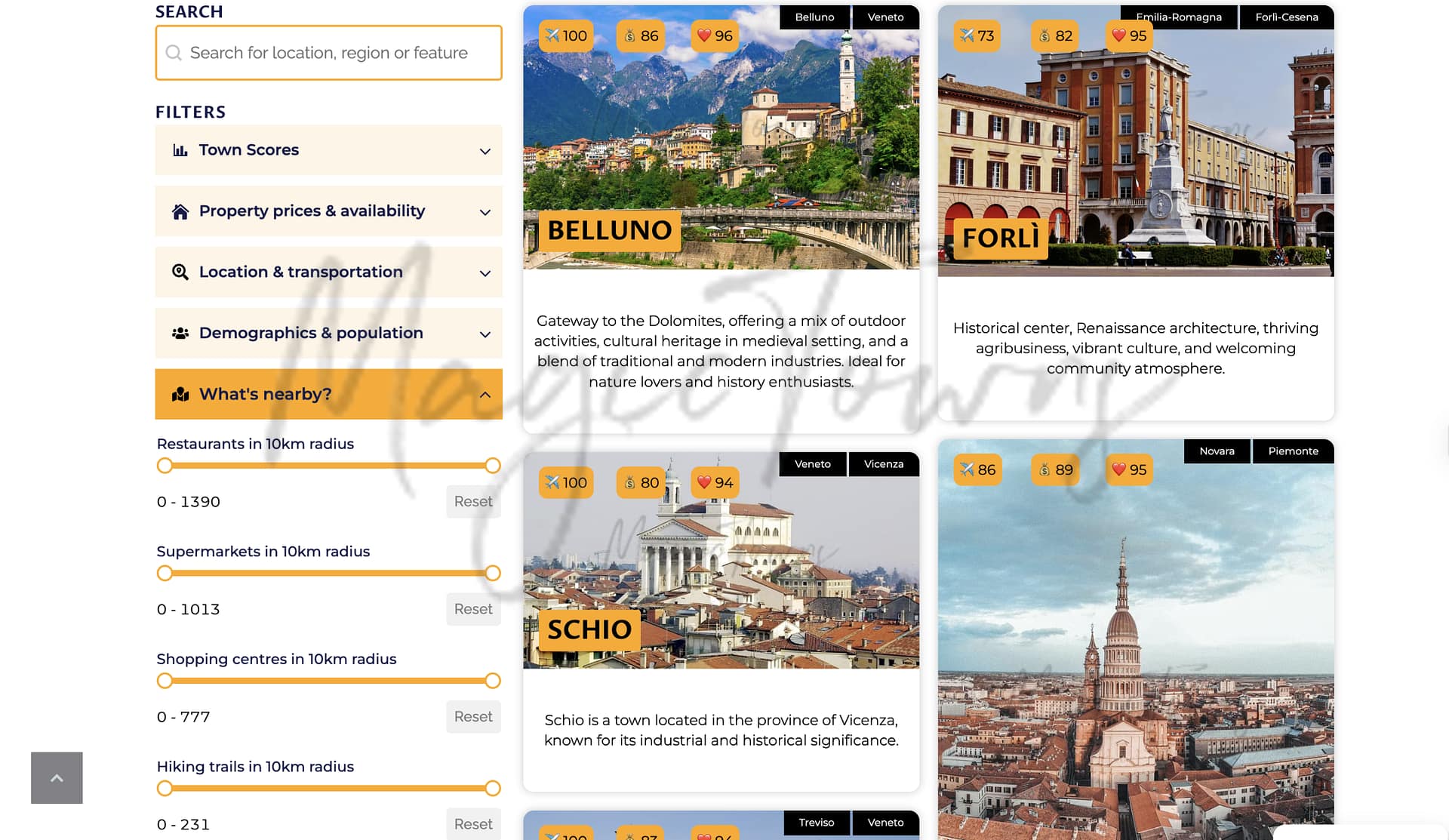
To help you answer these questions, we’ve built a free online tool that lets you filter cities in Italy based on your priorities – whether that’s proximity to schools, hospitals, international airports or a low cost of living. The results will help you discover towns and cities that best match your lifestyle, language level and long-term goals.
This doesn’t mean your only options are big cities. In fact, many expats we’ve interviewed have moved to small Italian villages and made it work without speaking much Italian at all at the beginning. Take Winnifred and her husband, who opened a B&B in Polinago, a town of just 1,600 people in the Marche region. Or Wendy, who lives near Bisenti, a quiet village in Abruzzo. Neither of them spoke fluent Italian when they arrived, and they’ve built a full life here.
So, is Italian really necessary?
In short: a basic level of Italian is required for paperwork and really helpful for everyday life, but it doesn’t have to be perfect when you arrive. You’ll pick up more as you go.
What matters most is your mindset. If you’re open to learning, even slowly, and curious about your surroundings, you’ll find Italy far more welcoming than intimidating. And remember, millions of others have done this before you – with far less language, and far fewer tools than you have now.








 English
 French
 German
 Italian
 Danish