We all know how tricky it can be for many expats moving to Italy to get a driver’s license. That’s why so many of you ask us about towns and cities where you can enjoy a good quality of life without needing a car, places that are calm but well connected, with solid public services and access to airports or train stations.
If you’re wondering how to live in Italy without a car, the good news is that it’s absolutely doable. So, putting aside the major cities you probably already know – like Milan, Rome, Turin or Bologna – here are a few mid-sized Italian cities where going car-free doesn’t feel like a compromise at all.
Padua
Padua, in the Veneto, has around 210,000 residents, but surprisingly, it’s still relatively unknown outside of Italy. It’s a great choice for those looking for a balance between peaceful living and year-round events. So, it’s ideal for families, young professionals, and retirees alike. You can walk almost everywhere, and the city is served by a reliable network of buses and trams. The central station is a major hub with high-speed trains heading to places like Venice and Florence. And if you need to fly, you’re less than an hour away from the region’s three main airports: Venice Marco Polo (reachable by train and shuttle bus), Treviso, and Verona.
If you like the area and want to explore more options nearby, Treviso (just an hour away by car) is another great alternative.

Brescia
Brescia is a city of nearly 200,000 people in Lombardy, conveniently located near Bergamo, Verona, and Milan. It’s big enough to offer everything you need but still manageable and relaxed. The city center isn’t huge, but it’s well served by buses and even a metro line, something rare in Italy outside major cities. Public transport covers the city and surrounding areas, and you’re close to both Bergamo’s Orio al Serio airport and the smaller Montichiari airport. It’s also well-connected by train, so day trips or commutes to Milan, Verona, or Lake Garda are all possible.
A few months ago, we interviewed Lisa, an expat from the US who moved here – so check that out if you want to hear her story. There’s a growing expat community and lots of local social events being organized online.

Bolzano
In the north, Bolzano (South Tyrol) is often ranked among Italy’s top cities for overall quality of life. It’s clean, organized, bike-friendly, and beautifully surrounded by mountains. Prices here are significantly higher compared to the other cities listed, so expect to pay around €380,000 for a 70 m² apartment in the center. However, if you’re a young couple looking for work, it’s worth noting that salaries are aligned with the cost of living.
Despite its size, the public transportation system is excellent, with regional trains, buses, and even cable cars. Bolzano also has its own small airport, though most people fly from Verona, just a short train ride away. The city center is compact and walkable, and everything from shops to healthcare is within reach.
If you’re drawn to the area but looking for something more affordable, nearby Trento offers similar advantages.

Rimini
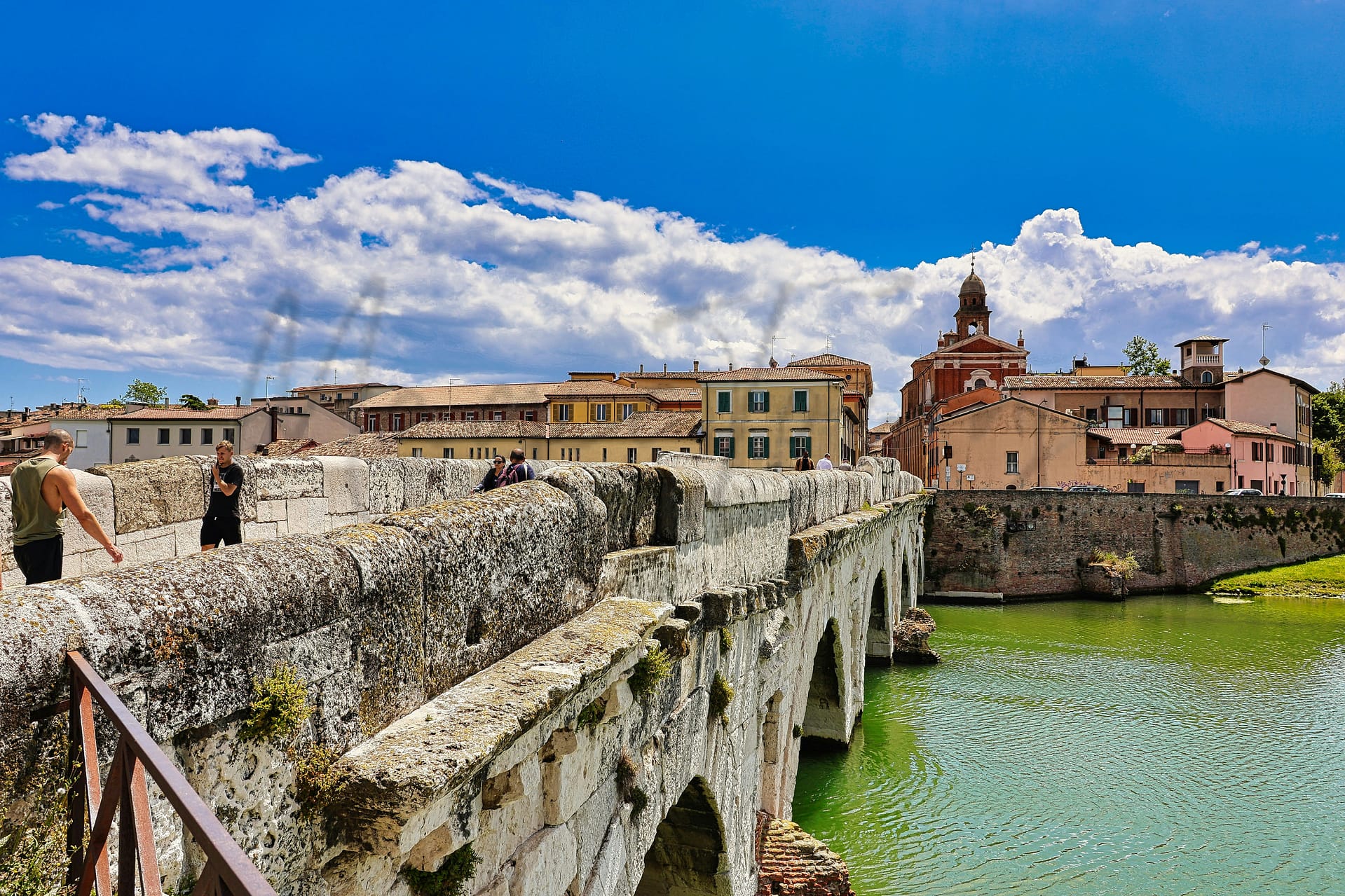
Rimini may be famous as a summer beach destination, but it actually works surprisingly well for year-round living, especially without a car. It has a walkable old town, a growing network of bike paths, and good public transit, including the coastal “Metromare” line that connects Rimini with Riccione. The train station links you easily to Bologna, Milan, and beyond, and Bologna Airport is just one hour away by shuttle.
While it is known as a summer destination, there’s plenty going on even in winter, especially in the city center and university areas. I’d say it’s perfect for everyone, including digital nomads, as there are many coworking spaces nearby.

Parma
Parma, in Emilia-Romagna, is a small but elegant and organized city. You’ve probably heard of it because of the food, as Parmigiano Reggiano and Prosciutto di Parma come from here, but it’s also a great place to live in without a car. Most places are walkable or reachable by bike, and local buses cover the entire city.
The central train station has fast daily connections to destinations all over Italy, for example you can reach Reggio Emilia in 20 minutes, Milan and Bologna in just about 1 hour. On the other hand, for air travel, Bologna Airport is less than an hour away, you just need to take the train, and then the “Marconi Express” will get you there in just 7 minutes.

Want to Find the Right Town for Your Lifestyle?
We built a tool that helps you discover your ideal Italian town based on the lifestyle you actually want – like living without a car, access to trains, healthcare, walkability, international schools, and more. Whether you’re working remotely, retiring, or moving with family, it’ll help you narrow down your search with real data.