
Skip to main content Scroll Top

What People Say About Living in Verona

Discover what living in Verona, in the Veneto, is really like through our data and the firsthand experiences of its residents.

Most people’s first encounter with Verona is as tourists. Indeed, it’s a city full of history – from the Arena, the famous balcony of Romeo and Juliet, not to mention all the food and wine scene. But beyond all of this, Verona is a super livable and human-sized city, with 256,000 people, a walkable centre where you can genuinely get by without a car, and connections that are hard to beat for a city this size: three airports within an hour, and direct trains to Milan, Venice, Padua, and Vicenza.

Just outside the city, the Valpolicella wine country begins almost immediately – vineyards, hilltop villages, cycling paths. The expat community is growing steadily, from a handful a decade ago to well over a thousand registered foreign residents today.

But what’s it actually like living in Verona all year round? To answer that, we combined our own data with reviews and opinions from residents, to give you a general overview of the city.

Life in Verona: What People Say

Verona is a great compromise for those of you looking for a medium-sized city that still has that “town feel”. It’s one of those places you can easily explore on foot in a day, but where there is still plenty to do – from the events held throughout the year to all the places you can visit nearby. Plus, there is already a growing expat community:

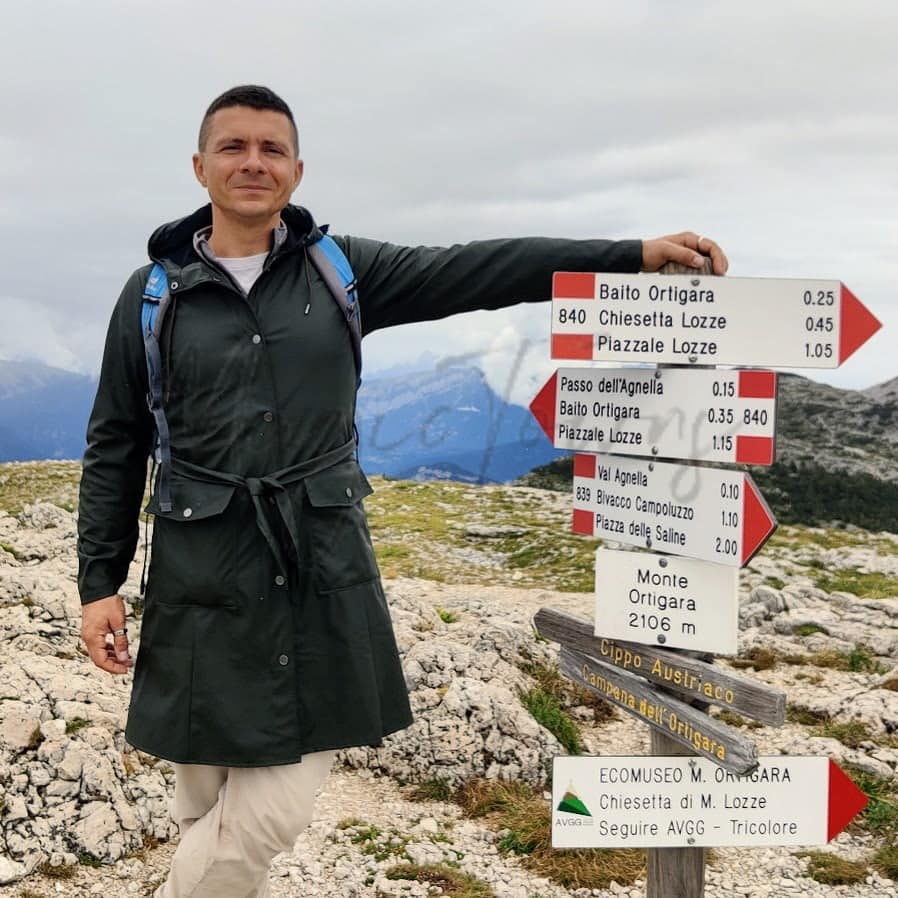
“Been living in Verona for half a year now, after a year or so in Monza and 8 years Hong Kong. Love it here, Verona is a beautiful old city and even though there are quite a bit of tourists here in the summer, it’s not overrun by them like some other Italian cities in high season. I’m into hiking so having hills very closeby and the Dolomites within driving distance is huge plus to me.” – Mark

What helps is that the area around the city is genuinely extraordinary. Lake Garda is 30–40 minutes away, with towns like Bardolino, Lazise, Malcesine, and Sirmione along its shores. And that’s not all: Lake Idro, Lake Ledro, and Lake Iseo are within easy reach if you want somewhere quieter and a bit further off the tourist trail. To the northwest, the Valpolicella wine country begins almost as soon as you leave the city – rolling hills, vineyards, pretty historic villages, cycling paths and hiking trails, and the home of Amarone della Valpolicella, one of Italy’s most famous red wines. So no worries, you won’t be short of things to do at the weekend!

“I moved here 2 years ago and I love it. The original plan was to live here for a year to use it as a base to explore Italy/Europe but after traveling for almost 2 years, the more I know, the more I like to live here.” – Alan

Living in verona
Verona, Veneto

Transport and Connectivity in Verona

One of the biggest pros of living in Verona is definitely connectivity, both in terms of airports and trains. Generally speaking, Veneto is a very well-connected region, with several airports within easy reach. And Verona is no exception – wherever you need to go, there’s almost always a way to get there.

When it comes to airports, Verona Valerio Catullo Airport is just 20 minutes from the city. It’s not Italy’s biggest airport, but it has several regular year-round connections to European and non-European destinations. Beyond this, Venice Marco Polo and Treviso Antonio Canova Airport are about an hour away by car, and offer many connections to both short and long-haul destinations.

On the rail side, Verona Porta Nuova is a major hub on the Milan–Venice line, with direct trains to Milan (1h 10), Venice (1h), Bologna (50 min.), Florence (1h 30) and Rome (3h 20). Plus, Vicenza and Padua are 25-45 minutes away.

Within the city, public transport is mainly based on buses, operated by ATV. The network covers the centre, residential neighbourhoods, the train station, and the surrounding municipalities, so it’s practical enough for daily life if you live in a well-served area. That said, Verona is still a very walkable city, especially around the historic centre, and many people also get around by bike or e-bike. So you can live comfortably without using a car every day, especially if you choose a central neighbourhood.

Where to Live in Verona: Housing & Costs

Verona isn’t the cheapest city in Italy, but it’s not Milan either. The city average sits at €2,874/m² for purchase (so around €287,400 for a 100m2 home) and €12.42/m² per month for rent. Prices vary a lot depending on the neighbourhood though, so it’s worth knowing where to look.

Area Sale price Avg 100m² price Rent Avg 100m² rent
Centro €4,129/m² €412,900 €13.82/m²/month €1,382/month
Pindemonte, Valdonega €3,640/m² €364,000 €11.67/m²/month €1,167/month
Quinzano, Parona €2,802/m² €280,200 €10.84/m²/month €1,084/month
Borgo Nuovo, Navigatori, Ponte Crencano €2,678/m² €267,800 €11.27/m²/month €1,127/month
Avesa, Torricelle €2,594/m² €259,400 €11.42/m²/month €1,142/month
Borgo Venezia, Santa Croce, Porto San Pancrazio €2,345/m² €234,500 €10.27/m²/month €1,027/month
Via Mantovana, Dossobuono, Castel D’Azzano €2,278/m² €227,800 €12.24/m²/month €1,224/month
Borgo Milano, Stadio, San Massimo, Croce Bianca €2,226/m² €222,600 €10.56/m²/month €1,056/month
Borgo Roma, Cà di David €2,159/m² €215,900 €11.41/m²/month €1,141/month
Poiano, Quinto, Montorio €2,016/m² €201,600 €10.03/m²/month €1,003/month
San Michele Extra, Castiglione €2,006/m² €200,600 €10.80/m²/month €1,080/month
Chievo, Bassone €1,930/m² €193,000 €10.33/m²/month €1,033/month
Santa Lucia, Golosine, Zona Fiera €1,866/m² €186,600 €11.02/m²/month €1,102/month

Data: Immobiliare.it – reference period April 2026

Borgo Trento, Valdonega, and Torricelle are the most sought-after neighbourhoods in the city – and the prices reflect that. If you want something more affordable without sacrificing connectivity, you should consider places like Borgo Venezia or Chievo:

“Borgo Trento, Valdonega, Torricelle – great neighbourhoods, but the best spots come with the highest price tags. If you want to be just outside the city without paying city prices, Ferrazze would be my first choice.”

For those open to living outside Verona itself, in the middle of the vineyards, in the Valpolicella area, there are plenty of beautiful towns – Fumane, Sant’Ambrogio and Negrar di Valpolicella, and many more.

Valpolicella is a fantastic place to base yourself. You’re 20–30 minutes by car from the city centre, the airport, and Lake Garda – all at once. And it’s not just a convenient location: it’s a destination in its own right. World-famous wine producers, beautiful countryside, places like the Molina waterfalls. It has its own identity.”

Challenges of Living in Verona

All the challenges of living in Verona are kind of related to the main one, which is tourism.

Verona attracts tourists year-round, so the historic centre – around Juliet’s House, Piazza Bra, and the Arena – gets genuinely crowded from spring through early autumn. For residents, it’s mostly manageable because the crowds concentrate in specific spots, but it also means dealing with traffic and parking on a regular basis. That said, it’s still very liveable. The centre is genuinely walkable, but leaving it by car is a different story. Congestion is a daily reality, particularly at rush hour and during peak tourist periods. So if you’re looking at property near the historic core, having a garage or a parking space is worth factoring seriously into the equation.

Then there’s something worth being upfront about: Verona is more of a large town than a proper city. Don’t expect the internationality of Milan or Rome. And the job market reflects it. The area is full of industry and trade, but finding opportunities as an English speaker without fluent Italian is genuinely difficult. For remote workers this matters much less – internet infrastructure is excellent (with an average download speed of 314 Mbps), but if local employment is part of the plan, go in with realistic expectations.

On a related note: for younger people, Verona can also feel a bit too quiet. The social scene is pleasant but not exactly buzzing, and nightlife is limited compared to a university city. If that matters to you, nearby Padua might actually be a better fit – it has a much younger, more international energy, largely driven by one of the oldest and most prestigious universities in the world.

Living in verona italy
Verona, Veneto

Verona by the Numbers: Key Data

  • Quality of Life: Excellent (88/100)
  • Air Quality: Good (76/100)
  • Nearest Hospital: Civile Maggiore (9 min)
  • Safety: Moderate earthquake risk
  • Internet: Good (314 Mbps avg. download)
  • Transport: Really walkable, feasible even without a car
    • Airports: Verona, Valerio Catullo (19 min), Bergamo, Orio al Serio (62 min), Venice Marco Polo (60 min), Treviso, Antonio Canova (60 min)
    • Train: Verona Porta Nuova (13 min.), Verona Porta Vescovo (12 min.)

For more detailed data on Verona’s infrastructure, safety, and services, visit the Magic Towns city profile.

Is Verona Right for You?

Choose Verona if:

  • You want a walkable, beautiful, culturally rich city, with events throughout the year – but without the cost or scale of Milan or Rome
  • You travel regularly and want multiple airport options within reach, including year-round scheduled flights
  • You’re a retiree or remote worker looking for high quality of life, strong healthcare, and good food and wine on your doorstep
  • You love being outdoors – Lake Garda, Monte Baldo, the Dolomites, Valpolicella’s hills, and Lessinia are all within an hour
  • You’re moving with children and care about long-term access to top universities (Verona, Padua, Venice are all within easy reach by train)

Think twice if:

  • You expect a cosmopolitan, international city – Verona is more of a large town, and feels like one
  • You hate tourist crowds and want year-round quiet – with 5.6 tourists per resident, the high season is genuinely intense
  • You need a local job in English – the market is limited and Italian is essentially required
  • You’re young and want a buzzing nightlife – nearby Padua is a much better fit for that
Living in verona
Verona, Veneto

Final Thoughts

Verona is a walkable, well-connected city in one of the best-positioned areas of northern Italy – three airports within an hour, direct trains to Milan and Venice, Lake Garda on the doorstep, and a human-sized centre where you can actually have a life without a car. It’s not cosmopolitan, and it’s not trying to be. But for retirees, remote workers, and families who want quality of life over buzz, it’s a genuinely hard deal to beat in the region.

Was this helpful?

✅ Yes

❌ No


Thanks for your feedback!

Comments? Questions? Join the discussion with our authors on our Facebook page.

subscribe to our newsletter

Discovering Italy? Ask Magic AI.

Embark on your Italian adventure with Magic AI, the innovative heart of Magic Towns Italy. Our AI technology, integrated with a comprehensive database, provides answers to your queries about life, legalities, and the hidden treasures of Italy.

Powered by a database curated by travel, relocation and legal pros, Magic AI gives you expert advice without the premium price tag.

 
Recent Posts
Clear Filters
Most Popular Posts