As part of our series “What People Say About Living in…”, today we’re focusing on Genoa (or Genova in Italian), the capital of Liguria in northern Italy.
Genoa is one of those cities with a kind of quiet magic and melancholy that’s hard to explain. It’s no coincidence that some of Italy’s most iconic songwriters, like Fabrizio De André and Gino Paoli, spent years here. You can feel this through its narrow streets, historic churches, small artisan shops, and its port, which for centuries has been a meeting point for fishermen and merchants alike.
But what’s it actually like living in Genoa? To answer that, we’ve gathered insights from locals and combined them with our data.
Life in Genoa: What People Say
What residents often appreciate most about life in Genoa is its calm pace and how close everything feels, whether it’s the mountains or the sea. At the same time, there’s a good choice of cultural events and things to do:
“I love the theatre, and Genoa has a great program. I enjoy eating out—there are so many good spots around town. I like walking along the seafront at sunset, and on weekends, I head into the Apennines, which are just behind the city. My husband loves stand-up paddleboarding, and you can do that even if you only have a couple of hours. I know the historic center like the back of my hand, but every time I look up, I see something new. Sure, it doesn’t have the same scale as Milan or the mountains of Valle d’Aosta—but Liguria has a bit of everything, and it’s beautiful.” – Simona S.
Most people seem to agree. Genoa is a well-connected city where the quality of life is high – though, as we’ll see later, it’s not without its downsides.
“I’m American, born in New York, and moved to Genoa when I was little. I travel a lot for work, but every time I come back, I feel truly at home. Everything you need is here.” – Francesca M.

Transport and Connectivity in Genoa
There’s one thing pretty much everyone agrees on: traffic in Genoa can be a pain. Some routes take longer than expected, especially if you have appointments or tight schedules. That’s why locals always recommend using a scooter:
“I’d never live anywhere else—I love Genoa. But I use a scooter because driving a car here is chaos. We’ve got a good port, but the airport doesn’t have many flights.” – Laura C.
The good news is that public transport works well and covers the city quite efficiently. There are plenty of buses, a metro line connecting Rivarolo to the city center, and two funiculars that go up to the hills above town, which is perfect if you live in the higher neighborhoods.
There’s also a shuttle service that takes you straight to Genoa’s Cristoforo Colombo Airport. While the airport is small and offers mostly domestic and short-haul European flights, it’s still a useful hub. However, if you need long-haul or intercontinental routes, Milan Malpensa is about a two-hour drive away.
“Genoa is convenient in many ways—there’s the port, the airport, buses, metro, taxis, even some bike lanes (on the flat parts). If you know how to plan your trips and avoid peak times, everything’s within 20 minutes: the hills, beaches from Nervi to Villa Azzurra. And with the highway, you can easily reach the beautiful beaches of the western coast, starting from Varazze.” – Giampa G.
Where to Live in Genoa: Housing & Cost of Living
Property prices in Genoa vary a lot depending on the area, but compared to other northern Italian cities of similar size, they’re fairly average. Whether you’re looking to rent or buy, there are options for different budgets and lifestyles. To give you an idea:
| Area | Buying (€/m²) | Avg. Buying Price (70 m²) | Renting (€/m²) | Avg. Rent Price (70 m²) |
|---|---|---|---|---|
| Centro | €2,937 | €205,600 | €13.09 | €916 |
| Circonvallazione | €2,071 | €145,000 | €8.71 | €610 |
| Dinegro, San Teodoro | €1,360 | €95,200 | €8.46 | €592 |
| Sestri Ponente, Borzoli | €1,252 | €87,600 | €8.38 | €587 |
| Bolzaneto, Pontedecimo, Rivarolo, Certosa | €966 | €67,600 | €8.01 | €561 |
| Marassi, San Fruttuoso, Quezzi | €1,296 | €90,700 | €8.00 | €560 |
| Albaro, Sturla | €3,442 | €241,000 | €11.25 | €788 |
| Quarto, Quinto, Sant’Ilario | €3,217 | €225,200 | €11.13 | €779 |
| Apparizione, San Desiderio, Bavari | €1,760 | €123,200 | €7.75 | €543 |
| Pegli, Multedo | €1,924 | €134,700 | €8.13 | €569 |
| Granarolo, Oregina, Lagaccio | €1,255 | €87,900 | €7.81 | €547 |
| Centro Storico | €2,338 | €163,700 | €11.10 | €777 |
| San Martino, Borgoratti | €1,676 | €117,300 | €9.12 | €638 |
| Principe, Carmine | €2,221 | €155,500 | €11.46 | €802 |
Data elaborated from Immobiliare.it
One of the most loved areas by locals is the historic neighborhood of La Maddalena, right in the old town. It offers a real sense of Genoa’s identity, with narrow alleys, traditional shops, and a strong community vibe.
“A lot depends on what you’re looking for. I’ve lived in several very different neighborhoods—Sturla was nice but I wouldn’t go back, Sestri Ponente felt like a small town and I have great memories there, Sampierdarena is run-down now but property is cheap, Castelletto (Corso Firenze) is more upmarket with beautiful views. Now I live in La Maddalena in the old town, and I wouldn’t trade it for anywhere else. This is where you really live Genoa.” – Francesco G.
What many residents appreciate is that the city offers a wide range of options. Most neighborhoods are well connected, so it’s easy to choose based on budget, lifestyle, and needs.
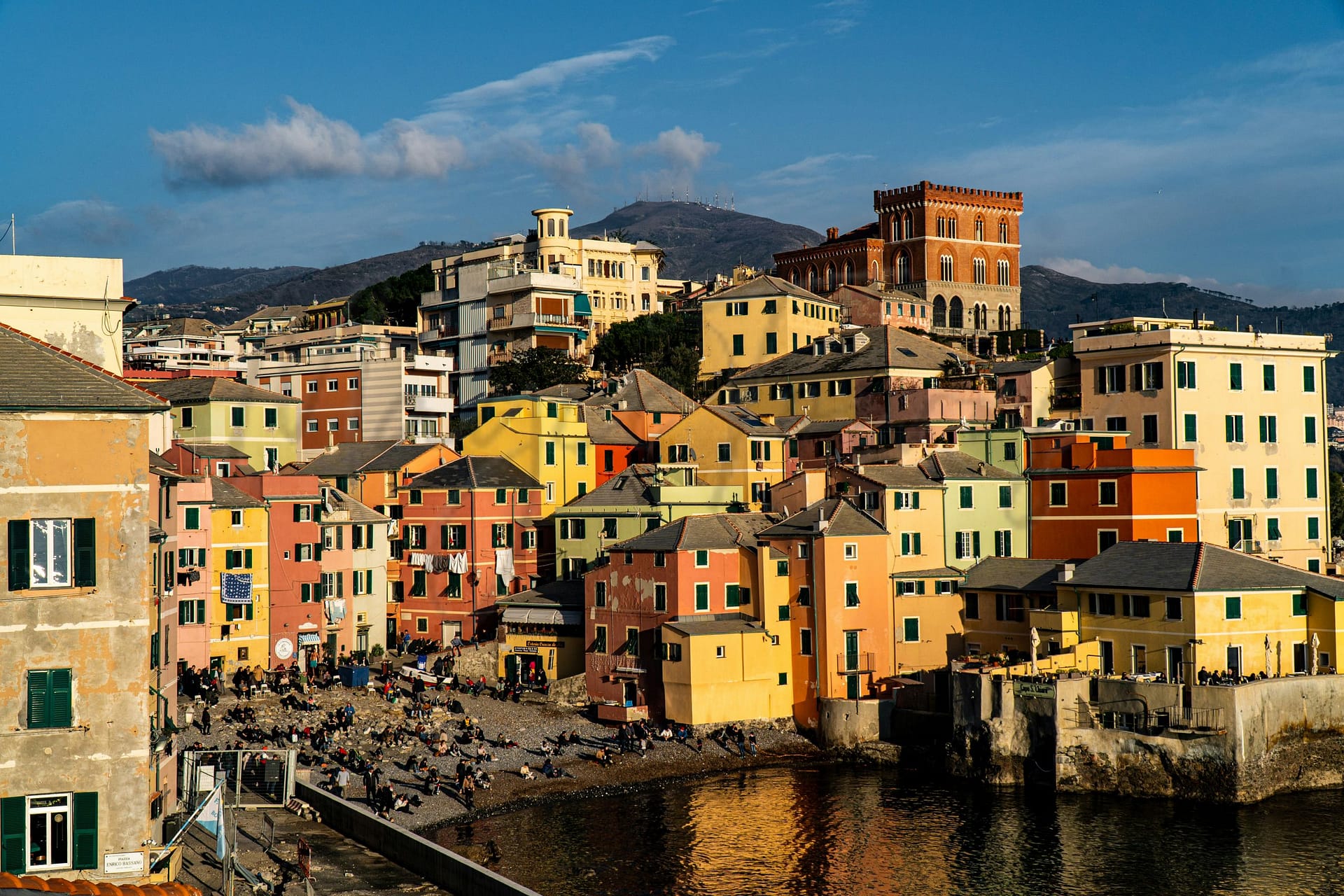
“Genoa has the same problems as many other cities, but here you have everything: the sea, the mountains, the hills, historic buildings. You can live further out and pay less, or live high up in the hills with the port below you. You can even live in Boccadasse with the sea right outside your window. It all depends on what you’re looking for and what you can afford.” – Maria Grazia C.
Challenges of Living in Genoa
Like any city, Genoa isn’t perfect. Alongside the traffic issues we mentioned earlier, one of the main downsides, especially for younger people, is the limited social and professional opportunities. In fact, despite having over 560,000 residents, it’s a relatively quiet city:
“Genoa is a lot of things, and it’s hard to describe. But it’s not for everyone. It’s an old city—with some of the most beautiful views and alleyways in Italy. Each neighborhood has its own feel, and lifestyles vary a lot. You never fully know Genoa, and getting from one end to the other can take hours by car. If you thrive on crowds, nightlife, and constant social interaction, Genoa probably isn’t for you. It’s beautiful..very beautiful, but that’s not always enough. Jobs are hard to find, and that’s not something the views in Boccadasse or Nervi can fix.” – Bruno A.
Others mention issues with the healthcare system, high prices, and cleanliness in certain areas. And actually, from the data we’ve gathered, the local healthcare system in this part of Liguria is a bit of a mixed bag. While hospital care is generally high-quality, especially for certain procedures like minimally invasive breast cancer surgery, there are gaps in emergency services and follow-up care. Cardiac emergencies and treatments for fractures, for example, could see improvement, while some areas do perform well in managing post-heart attack care.
“The city is beautiful, but there are downsides—healthcare, cleanliness in some parts of town, and the high cost of living.” – Irene D.

Genoa by the Numbers: Key Data
- Quality of Life: Good (83/100) – taking into account air quality, amenities, walkability, population, and environmental risks
- Air Quality: Really good (86/100)
- Safety: Moderate to Low Earthquake Risk
- Healthcare: Villa Scassi-Pronto Soccorso (12 min.)
- Internet Speed: Excellent (average of 258 Mbps)
- Rent: ~ €540 – €900 (70 m²)
- Transport: Good
- Airport: Cristoforo Colombo, Genoa (11 min.), Linate, Milan (70 min.), Galileo Galilei, Pisa (78 min.)
- Train Stations: Stazione di Genova Rivarolo (2 min), Stazione di Genova Bolzaneto (5 min), Stazione di Genova Sampierdarena (8 min.)
For more detailed information about Genoa and its services and infrastructure, visit the Magic Towns city profile.

Is Genoa Right for You?
✅ Choose Genoa if:
- You want a city with a mix of nature nearby – beaches, hills, and plenty to explore just outside town
- You want a well-connected city, close to an airport and with good regional links
- You’re looking for a city with an active expat community
- You want a mid-sized city with more affordable housing options in certain areas
❌ Think twice if :
- You know you won’t use a scooter and plan to rely on a car (traffic is no joke)
- You’re looking for a city full of job opportunities, especially if you’re young or just starting out
- You’re looking for a cheap town – Genoa can be expensive compared to other Italian towns of this size
- You’re concerned about safety – some neighborhoods do have higher crime rates and can feel less well-kept
Final Thoughts
Genoa can be a good choice if you’re looking for a city of its size that’s close to both the sea and the hills. Although it has around 500,000 residents, it remains a quiet city with some typical downsides: traffic (so get a scooter), not always low prices, and limited job opportunities if you’re a young person. For many, however, this is the price to pay for living in a place so rich in history, from its port to the narrow streets of the city center.
Want to explore more options?
If Genoa hasn’t fully convinced you and you’d like to explore other options, use our search tools to explore over 1,500 towns and cities in Italy. You can filter by cost of living, transport, healthcare, or lifestyle factors to find the right place for you.