
 English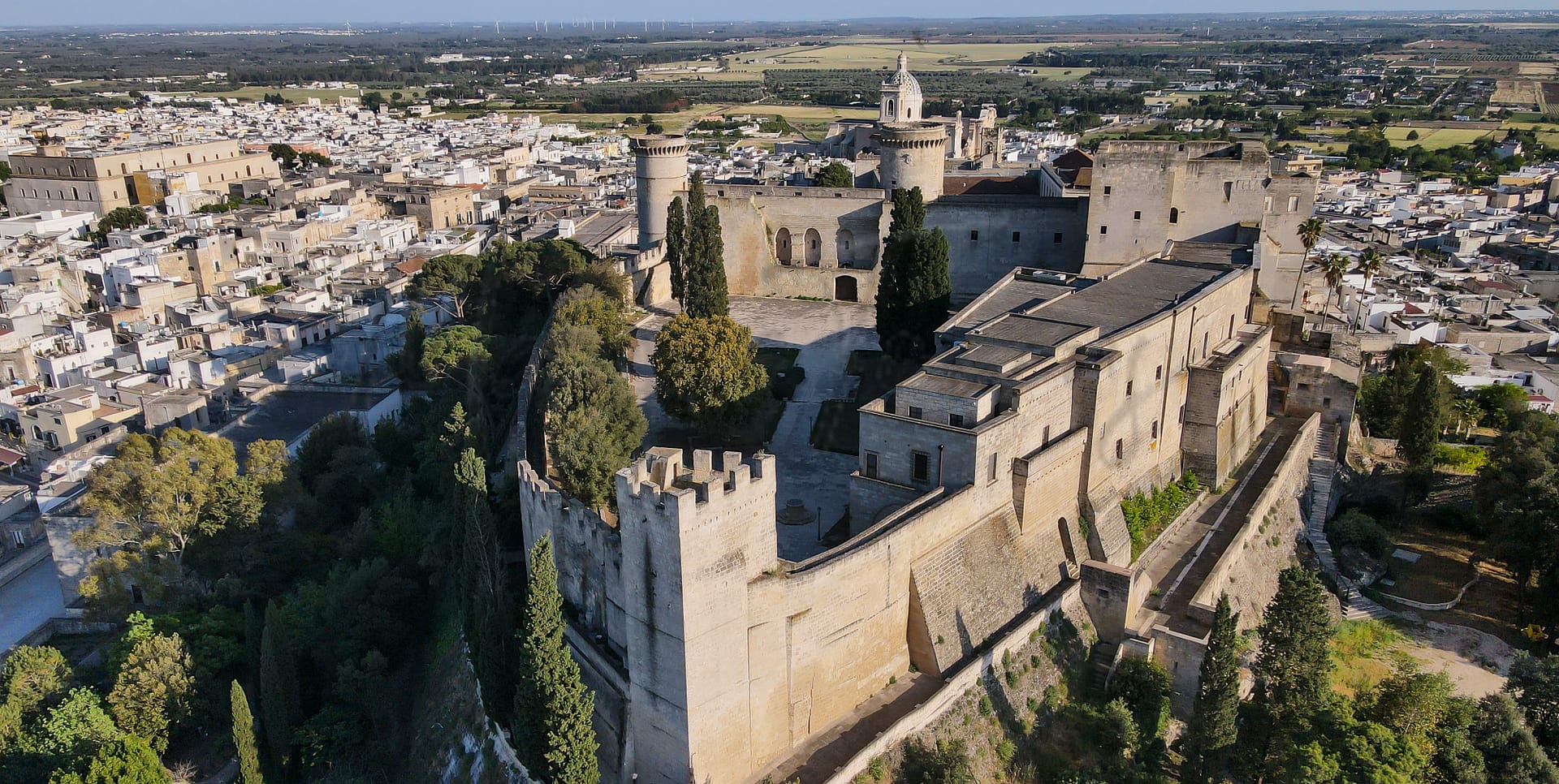

Elevation
[?]
Elevation of a city refers to the height above sea level at which the city is located, measured in meters.
128
Population
[?]
This is a town's official population, measured each year by the national statistics authority.
14500
Real Population (5km)
[?]
Our "Real Population" metric reflects more accurately a town's real size by including inhabitants in the immediate vicinity of the town's official borders.
86500
Air Quality Rating
[?]
Based on PM10, PM2.5, NO2, SO2, and ozone levels. Higher scores indicate cleaner air.
90
Region
Puglia
Walkability
Very Walkable
Housing availability
[?]
Based on total number of properties (sale and rent) classifies housing availability into five categories: low, relativel ylow, medium, relatively high and high.
Relatively Low
Avg Download Speed (Mbps) / Avg Upload Speed (Mbps)
116
/ 54
Climate Description
Mild winters, warm summers, ample sunshine, cool nights, moderate rainfall, stable year-round.
Oria
Puglia
Historic town in Puglia with medieval architecture, Jewish quarter, agriculture-based economy, and cultural events.
Quality of Life Score
[?]Factors in air quality, amenities, walkability, population, and environmental risks. Higher scores suggest better living conditions.
82
Quality of Infrastructure
[?]Measures internet speed, healthcare access, airports, rail, and walkability. Higher scores mean better connectivity and essential services.
54
Quality of Economy
[?]Based on income, property prices, job availability, and population density. Higher scores indicate stronger economic conditions.
62
Oria Demographics
Population
[?]
This is a town's official population, measured each year by the national statistics authority.
14500
Real Population (5km band)
[?]
Our "Real Population" metric reflects more accurately a town's real size by including inhabitants in the immediate vicinity of the town's official borders.
86500
Births Per 100 Deaths
50.0
Population Data Source
ISTAT,2023
Estimated Unemployment Rate
Touristy Index
[?]
Calculation of tourist density index for the city, comparing its total tourist number to the overall average tourist number of the region
relative to its own population.The index indicates how a location’s tourist density compares to the average, with values above
100 representing higher-than-average density and values below 100 representing lower-than-average density.
Not Touristic
Income per capita (2023)
[?]
This is an estimation of average income per resident for this town, based on 2023 data from the Italian Ministry of Finance.
16600
Income rank in Italy (2023)
[?]
This is a ranking of the town's average income per resident, against the full list of townships in Italy.
6215 out of 7901
Infrastructure and Connectivity
Create an account to explore more
This content is for Members only | Already a Member? Sign in
Closest Airport
Name
Papola Casale (Brindisi)
Connectivity Score
[?]
Measures travel time and service quality of nearby airport stations. Higher scores mean better transport access.
4
Driving Time
26min(s)
Papola Casale (Brindisi) Airport is located approximately 6 kilometres from Brindisi’s city centre in southern Italy. In 2023, it served over 3 million passengers, acting as a focus city for Ryanair with regular and seasonal flights connecting to destinations such as London, Milan, and Rome. Known for its dual role as a civilian airport and strategic military facility, it provides essential humanitarian services and supports regional travel, making it both an important transport hub and a vital strategic location.
2nd Closest Airport
Name
Karol Wojtyla (Bari)
Connectivity Score
[?]
Measures travel time and service quality of nearby airport stations. Higher scores mean better transport access.
7
Driving Time
71min(s)
Bari Karol Wojtyła Airport is located approximately 8 kilometres northwest of Bari, Italy, and serves as a significant hub in the Puglia region. It handled over 6 million passengers in 2023, largely acting as a focus city for low-cost carriers like Ryanair and Volotea. The airport connects to numerous European cities, with main routes including destinations such as London, Paris, Milan, and Istanbul, and benefits from seasonal services to cities like New York and Vienna, marking it as a convenient base for both domestic and international travel.
3rd Closest Airport
Name
Lamezia Terme (Lamezia)
Connectivity Score
[?]
Measures travel time and service quality of nearby airport stations. Higher scores mean better transport access.
5
Driving Time
145min(s)
Lamezia Terme International Airport (SUF) is located in Calabria, southern Italy, approximately 9 km south of the city of Lamezia Terme. It overlooks the Tyrrhenian Sea and is especially busy during the summer months, accommodating over 2.6 million passengers in 2022. The airport is a hub for low-cost airlines such as Ryanair, EasyJet, and WizzAir, offering connections to major Italian cities like Rome and Milan, as well as seasonal flights to destinations like Toronto, Vienna, and Cologne. Notably, the airport does not emphasize any particular hub designation but offers significant connectivity for both domestic and international flights, making it a convenient option for travellers seeking both leisure and business routes.
Closest Rail
Name
Stazione di Oria
Connectivity Score
[?]
Measures travel time and service quality of nearby rail stations. Higher scores mean better transport access.
4
Driving Time
6min(s)
Train service at Stazione di Oria includes local trains operated by Trenitalia. The station is located on the Taranto–Brindisi railway line. Key destinations connected by direct trains include Taranto, Francavilla Fontana, and Brindisi. Departures occur every few hours, generally with a frequency of about every four hours on weekdays. The services offered at this station are predominantly regional local trains, and there are no high-speed train services available.
2nd Closest Rail
Name
Stazione di Francavilla Fontana
Connectivity Score
[?]
Measures travel time and service quality of nearby rail stations. Higher scores mean better transport access.
7
Driving Time
11min(s)
Train service at Stazione di Francavilla Fontana includes connections on the Taranto–Brindisi railway and the Martina Franca-Lecce railway. Key destinations connected by direct trains include the major cities of Taranto, Brindisi, and Lecce, as well as Milan and Ancona via the night train service. The primary train operators are Trenitalia and Ferrovie del Sud Est. Departures occur frequently throughout the day, with local services running multiple times, while the night service is less frequent. The station primarily handles regional trains, though it does offer night services which connect to high-speed routes.
3rd Closest Rail
Name
Stazione di Latiano
Connectivity Score
[?]
Measures travel time and service quality of nearby rail stations. Higher scores mean better transport access.
5
Driving Time
14min(s)
Train service at Stazione di Latiano is primarily operated by Trenitalia. The station is part of the Taranto–Brindisi railway and accommodates regional train services (Treno regionale). Key destinations connected directly by train include Taranto and Brindisi, with Mesagne and Oriato as the adjacent stations on this route. Train frequency varies, with local services running several times throughout the day. Notably, the services are regional only, and high-speed trains do not stop at this station.
Infrastructure & Amenities
Create an account to explore more
This content is for Members only | Already a Member? Sign in
Healthcare
Create an account to explore more
This content is for Members only | Already a Member? Sign in
Housing & Property Market
Create an account to explore more
This content is for Members only | Already a Member? Sign in
Connectivity & Digital Access
Create an account to explore more
This content is for Members only | Already a Member? Sign in
Education
Create an account to explore more
This content is for Members only | Already a Member? Sign in
Climate & Weather
Create an account to explore more
This content is for Members only | Already a Member? Sign in
Precipitation
[?] Based on daily climate data for precipitation from OPEN-METEO this parameter indicates how a city's annual precipitation compares to others in terms of percentage, with values ranging from 0 (lowest) to 1 (highest). For example, a percentile rank of 0.75 means the city's total precipitation is higher than 75% of other cities.
Very Low (Bottom 10%)
Sunshine
Exceptional (Top 10%)
Snowfall
Very Low (Bottom 10%)
Min Annual Temperature (°C)
[?] This parameter represents the monthly average of daily minimum temperatures for January, based on data from OPEN-METEO.
5.8
Max Annual Temperature (°C)
[?] This parameter represents the monthly average of daily minimum temperatures for January, based on data from OPEN-METEO.
31.9
Climate Description
Oria, Italy presents a harmonious climate that caters well to retirees and expats, particularly those enchanted by the Magic Towns narrative. The weather in Oria balances between mild winters, characterized by rare, light snowfall, and warm summers. The town benefits from ample sunshine throughout the year, fostering outdoor activities and vibrant local life. Nights tend to cool off even in summer, ensuring that the heat is seldom oppressive. The region experiences moderate rainfall, which maintains the natural greenery without leading to excessive wet periods. Overall, Oria offers a stable and pleasant climate year-round, suitable for those looking for an escape from more extreme weather conditions.
Annual Temperature Chart (Min)
Error
There was a problem with your SQL connection - Please contact the administrator
There was a problem with your SQL connection - Please contact the administrator
Annual Temperature Chart (Max)
Error
There was a problem with your SQL connection - Please contact the administrator
There was a problem with your SQL connection - Please contact the administrator
Sunny Days By Month
Error
There was a problem with your SQL connection - Please contact the administrator
There was a problem with your SQL connection - Please contact the administrator
Environmental & Air Quality
Create an account to explore more
This content is for Members only | Already a Member? Sign in
Classifications
PM10
[?]
PM10 levels indicate Good air quality at 0–20 µg/m³, Fair at 20–40 µg/m³, Moderate at 40–50 µg/m³, Poor at 50–100 µg/m³, Very Poor at 100–150 µg/m³, and Extremely Poor at 150–1200 µg/m³.
Good
PM2.5
[?]
PM2.5 is Good if PM2.5 levels are between 0–10 µg/m³, Fair between 10–20 µg/m³, Moderate between 20–25 µg/m³, Poor between 25–50 µg/m³, Very Poor between 50–75 µg/m³, and Extremely Poor between 75–800 µg/m³.
Good
NO2
[?]
NO₂ levels are considered Good at 0–40 µg/m³, Fair at 40–90 µg/m³, Moderate at 90–120 µg/m³, Poor at 120–230 µg/m³, Very Poor at 230–340 µg/m³, and Extremely Poor at 340–1000 µg/m³.
Good
SO2
[?]
SO₂ levels indicate Good air quality at 0–100 µg/m³, Fair at 100–200 µg/m³, Moderate at 200–350 µg/m³, Poor at 350–500 µg/m³, Very Poor at 500–750 µg/m³, and Extremely Poor at 750–1250 µg/m³.
Good
O₃
[?]
For O₃, the air is Good at 0–50 µg/m³, Fair at 50–100 µg/m³, Moderate at 100–130 µg/m³, Poor at 130–240 µg/m³, Very Poor at 240–380 µg/m³, and Extremely Poor at 380–800 µg/m³.
Fair
Air Quality Rating
[?]
Based on PM10, PM2.5, NO2, SO2, and ozone levels. Higher scores indicate cleaner air.
90
Air Quality Description
In Oria, Italy, the air quality supports a healthy, outdoor lifestyle, apt for expats looking to enjoy their retirement under the sun-kissed skies of this historical town. The particulate matter is notably low, ensuring crisp, clean air which complements the region’s rich cultural tapestry and serene landscapes. While ozone levels are slightly elevated, they pose little to disrupt daily activities, allowing residents and visitors alike to indulge in leisurely pursuits without concern. This environmental aspect of Oria promises an appealing setting for those seeking a tranquil haven with the benefit of good air standards.
In Oria, Italy, the air quality supports a healthy, outdoor lifestyle, apt for expats looking to enjoy their retirement under the sun-kissed skies of this historical town. The particulate matter is notably low, ensuring crisp, clean air which complements the region’s rich cultural tapestry and serene landscapes. While ozone levels are slightly elevated, they pose little to disrupt daily activities, allowing residents and visitors alike to indulge in leisurely pursuits without concern. This environmental aspect of Oria promises an appealing setting for those seeking a tranquil haven with the benefit of good air standards.
Town Descriptions
Create an account to explore more
This content is for Members only | Already a Member? Sign in
Getting There
Oria is accessible via key road connections, including the SS613 and SS16, enhancing its integration within the region. The nearest airport, Brindisi, is a short distance away, while two train stations nearby provide limited connectivity, reflecting an overall moderate infrastructure rating.
Getting Around
Local Cuisine
Oria, situated in the Puglia region of Italy, boasts a rich culinary scene characterized by traditional dishes that include orecchiette with turnip greens, focaccia, burrata cheese, and panzerotti. This town embraces a variety of local cuisines that highlight its agricultural abundance and proximity to the Adriatic Sea, allowing for fresh seafood and vibrant vegetables to play a significant role in the local diet. Dining establishments range from casual trattorias serving authentic Apulian fare to more refined venues featuring contemporary interpretations of traditional recipes. International influences are evident with options for Mediterranean and other global cuisines, catering to diverse palates and a growing tourist audience. Notably, the Michelin-starred Masseria Palombara Restaurant exemplifies the blend of local tradition and gourmet dining, providing an upscale experience within the region’s gastronomic landscape.
Shopping Overview
The area offers a diverse shopping landscape featuring specialty and gift shops, alongside larger retail centres. Shoppers can explore various boutiques and supermarkets that cater to everyday needs. Notable shopping venues, including major commercial centres, offer a wide assortment of goods, ranging from clothing to food products. Farmers’ markets and local artisan markets supplement these options, allowing for a unique shopping experience.
Neighborhoods
Green Areas and Parks
Oria, Puglia offers a variety of outdoor activities and green spaces ideal for expatriates and retirees. Villa Comunale Di Oria is a notable park providing greenery for leisure walks. For trail enthusiasts, various routes support both hiking and biking, including mountain bike trails like Oria terra Jonica and the Oria SMarzano SS7 circuit. Additionally, Oria facilitates a range of outdoor adventures, from road trips to bicycle touring. These activities complement the area’s environmental assets, promoting a vibrant outdoor lifestyle amid its scenic Italian backdrop.
✅ Pros
– Rich cultural and historical backdrop to explore daily.
– Favorable climate with warm summers and mild winters.
– Opportunities for community integration and local engagement.
– Acceptable healthcare services available for residents.
– Clean air quality conducive to a healthy lifestyle.
– Low tourist traffic, ensuring a peaceful living environment.
– Moderate infrastructure supports daily commuting and local access.
– Affordable cost of living compared to other Italian towns.
– Local cuisine renowned for its freshness and quality.
– Charming architecture and scenic landscapes enhance daily life.
❌ Cons
– Healthcare quality could be better, scoring below average.
– Public transportation options are limited and not very reliable.
– Job opportunities may be sparse for newcomers seeking employment.
– Internet speeds are average, not ideal for remote work.
– Limited entertainment options for those seeking vibrant nightlife.
– Educational facilities may not meet all expat family needs.
– Economic conditions slightly challenging with higher unemployment rates.
– Local shops may have limited hours and selections.
– Language barrier could pose challenges for non-Italian speakers.
– Less cosmopolitan environment may feel isolating for some.
FAQs
Summary
Oria, nestled in Puglia’s Salento region, offers a blend of historic charm and vibrant culture, ideal for expats and retirees seeking a tranquil lifestyle. This ancient town, originally founded by Messapians, is characterized by its medieval architecture, including the impressive castle and Basilica Cathedral, with roots tracing back to the Roman era. The narrow, winding streets of the historical center reveal a well-preserved Jewish quarter, marked by the notable Porta Ebrei.
Local industries thrive on agriculture, with olive oil and wine production being key economic drivers. Cultural nuances are evident during the annual Corteo of Frederick II and Palio dei Rioni events, showcasing the town’s rich heritage. While access to beaches is limited, with the nearest being a short drive away, Oria’s air quality and local community spirit compensate for these challenges, offering a serene base for an engaging life in Southern Italy.
✅ Pros
– Rich cultural and historical backdrop to explore daily.
– Favorable climate with warm summers and mild winters.
– Opportunities for community integration and local engagement.
– Acceptable healthcare services available for residents.
– Clean air quality conducive to a healthy lifestyle.
– Low tourist traffic, ensuring a peaceful living environment.
– Moderate infrastructure supports daily commuting and local access.
– Affordable cost of living compared to other Italian towns.
– Local cuisine renowned for its freshness and quality.
– Charming architecture and scenic landscapes enhance daily life.
❌ Cons
– Healthcare quality could be better, scoring below average.
– Public transportation options are limited and not very reliable.
– Job opportunities may be sparse for newcomers seeking employment.
– Internet speeds are average, not ideal for remote work.
– Limited entertainment options for those seeking vibrant nightlife.
– Educational facilities may not meet all expat family needs.
– Economic conditions slightly challenging with higher unemployment rates.
– Local shops may have limited hours and selections.
– Language barrier could pose challenges for non-Italian speakers.
– Less cosmopolitan environment may feel isolating for some.
Related Posts
No posts found for the town.
More questions about Oria ? Ask Magic AI.
Our innovative AI assistant is eager to help. Try it out here: