
 English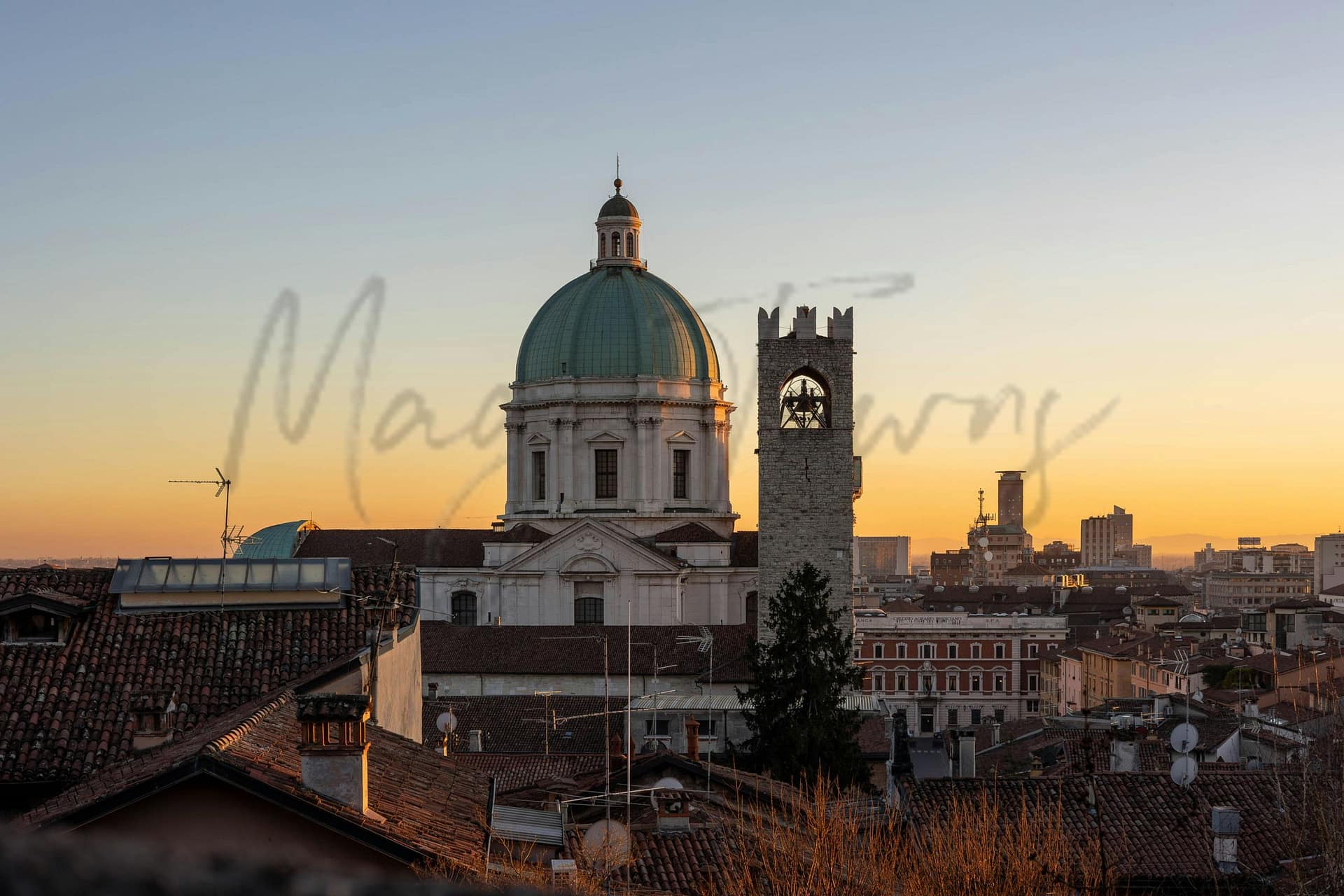

Elevation
[?]
Elevation of a city refers to the height above sea level at which the city is located, measured in meters.
146
Population
[?]
This is a town's official population, measured each year by the national statistics authority.
198300
Real Population (5km)
[?]
Our "Real Population" metric reflects more accurately a town's real size by including inhabitants in the immediate vicinity of the town's official borders.
354400
Air Quality Rating
[?]
Based on PM10, PM2.5, NO2, SO2, and ozone levels. Higher scores indicate cleaner air.
82
Region
Lombardia
Walkability
Walker’s Paradise
Housing availability
[?]
Based on total number of properties (sale and rent) classifies housing availability into five categories: low, relativel ylow, medium, relatively high and high.
High
Avg Download Speed (Mbps) / Avg Upload Speed (Mbps)
324
/ 198
Climate Description
Marked seasons, mild winters, warm summers, sunny, adequate rainfall, comfortable lifestyle.
Brescia
Lombardia
Historical architecture, strong economy, local gastronomy, outdoor activities, and cultural venues define this Italian town.
Quality of Life Score
[?]Factors in air quality, amenities, walkability, population, and environmental risks. Higher scores suggest better living conditions.
88
Quality of Infrastructure
[?]Measures internet speed, healthcare access, airports, rail, and walkability. Higher scores mean better connectivity and essential services.
74
Quality of Economy
[?]Based on income, property prices, job availability, and population density. Higher scores indicate stronger economic conditions.
83
Brescia Demographics
Population
[?]
This is a town's official population, measured each year by the national statistics authority.
198300
Real Population (5km band)
[?]
Our "Real Population" metric reflects more accurately a town's real size by including inhabitants in the immediate vicinity of the town's official borders.
354400
Births Per 100 Deaths
60.0
Population Data Source
ISTAT,2023
Estimated Unemployment Rate
Touristy Index
[?]
Calculation of tourist density index for the city, comparing its total tourist number to the overall average tourist number of the region
relative to its own population.The index indicates how a location’s tourist density compares to the average, with values above
100 representing higher-than-average density and values below 100 representing lower-than-average density.
Some Tourism
Income per capita (2023)
[?]
This is an estimation of average income per resident for this town, based on 2023 data from the Italian Ministry of Finance.
24200
Income rank in Italy (2023)
[?]
This is a ranking of the town's average income per resident, against the full list of townships in Italy.
815 out of 7901
Infrastructure and Connectivity
Create an account to explore more
This content is for Members only | Already a Member? Sign in
Infrastructure & Amenities
Create an account to explore more
This content is for Members only | Already a Member? Sign in
Healthcare
Create an account to explore more
This content is for Members only | Already a Member? Sign in
Housing & Property Market
Create an account to explore more
This content is for Members only | Already a Member? Sign in
Connectivity & Digital Access
Create an account to explore more
This content is for Members only | Already a Member? Sign in
Education
Create an account to explore more
This content is for Members only | Already a Member? Sign in
Climate & Weather
Create an account to explore more
This content is for Members only | Already a Member? Sign in
Precipitation
[?] Based on daily climate data for precipitation from OPEN-METEO this parameter indicates how a city's annual precipitation compares to others in terms of percentage, with values ranging from 0 (lowest) to 1 (highest). For example, a percentile rank of 0.75 means the city's total precipitation is higher than 75% of other cities.
Above Average (51st-60th percentile)
Sunshine
Below Average (31st-40th percentile)
Snowfall
Average (41st-50th percentile)
Min Annual Temperature (°C)
[?] This parameter represents the monthly average of daily minimum temperatures for January, based on data from OPEN-METEO.
-0.2
Max Annual Temperature (°C)
[?] This parameter represents the monthly average of daily minimum temperatures for January, based on data from OPEN-METEO.
28.1
Climate Description
Brescia offers a marked climate with distinct seasons, ideal for Magic Towns readers who appreciate natural variety without extreme conditions. The city enjoys a sunny temperament for most of the year, contributing positively to outdoor leisure opportunities beloved by retirees and expats. Winters are mild, seldom allowing snow to linger, which favors unhindered exploration of the historic cityscape. Summers provide warm but not sweltering days conducive to enjoying al fresco dining and verdant surrounding vineyards. With gentle annual temperature variations, Brescia's climate underpins a comfortable lifestyle, complemented by adequate rainfall to sustain its lush landscapes and agricultural richness.
Annual Temperature Chart (Min)
Error
There was a problem with your SQL connection - Please contact the administrator
There was a problem with your SQL connection - Please contact the administrator
Annual Temperature Chart (Max)
Error
There was a problem with your SQL connection - Please contact the administrator
There was a problem with your SQL connection - Please contact the administrator
Sunny Days By Month
Error
There was a problem with your SQL connection - Please contact the administrator
There was a problem with your SQL connection - Please contact the administrator
Environmental & Air Quality
Create an account to explore more
This content is for Members only | Already a Member? Sign in
Classifications
PM10
[?]
PM10 levels indicate Good air quality at 0–20 µg/m³, Fair at 20–40 µg/m³, Moderate at 40–50 µg/m³, Poor at 50–100 µg/m³, Very Poor at 100–150 µg/m³, and Extremely Poor at 150–1200 µg/m³.
Fair
PM2.5
[?]
PM2.5 is Good if PM2.5 levels are between 0–10 µg/m³, Fair between 10–20 µg/m³, Moderate between 20–25 µg/m³, Poor between 25–50 µg/m³, Very Poor between 50–75 µg/m³, and Extremely Poor between 75–800 µg/m³.
Fair
NO2
[?]
NO₂ levels are considered Good at 0–40 µg/m³, Fair at 40–90 µg/m³, Moderate at 90–120 µg/m³, Poor at 120–230 µg/m³, Very Poor at 230–340 µg/m³, and Extremely Poor at 340–1000 µg/m³.
Good
SO2
[?]
SO₂ levels indicate Good air quality at 0–100 µg/m³, Fair at 100–200 µg/m³, Moderate at 200–350 µg/m³, Poor at 350–500 µg/m³, Very Poor at 500–750 µg/m³, and Extremely Poor at 750–1250 µg/m³.
Good
O₃
[?]
For O₃, the air is Good at 0–50 µg/m³, Fair at 50–100 µg/m³, Moderate at 100–130 µg/m³, Poor at 130–240 µg/m³, Very Poor at 240–380 µg/m³, and Extremely Poor at 380–800 µg/m³.
Fair
Air Quality Rating
[?]
Based on PM10, PM2.5, NO2, SO2, and ozone levels. Higher scores indicate cleaner air.
82
Air Quality Description
In Brescia, the atmospheric composition holds a balance satisfactory to those sensitive to environmental purity. The city presents an air quality that, while not pristine, generally supports comfortable day-to-day living. Levels of particulate matters, both PM10 and PM2.5, are decent, maintaining a standard conducive to a good quality of life. Nitrogen dioxide and sulphur dioxide, often problematic in urban settings, are notably low here, reflecting effective local measures against pollutants. Ozone levels are moderate, which might merit caution during certain high-emission periods but generally do not detract from the overall ambient air healthiness.
In the context of Brescia’s environmental setting, one finds an air quality that aligns well with healthy living standards. Fine particles in the air, which can penetrate deep into the respiratory tract, are present at levels that many would find acceptable, especially when compared to more industrialized locales. This is complemented by low concentrations of nitrogen and sulphur dioxides—typical irritants in many urban atmospheres—ensuring a lesser occurrence of acid rain and smog-related issues. Ozone quantities are moderate; a consideration for outdoor enthusiasts particularly sensitive to this gas. Overall, Brescia’s air supports an active and fulfilling expatriate lifestyle without significant compromise on wellness.
Air quality in Brescia meets a standard that is generally agreeable for long-term residents and sensitive groups. The presence of particulate material like PM10 and PM2.5, while existent, does not typically reach levels of major concern, allowing for routine outdoor activities without undue worry. Similarly, nitrogen dioxide and sulphur dioxide—common markers of pollution—are maintained at reassuringly low amounts due to efficient regulatory practices. Ozone levels hold at equitable measurements; necessary awareness for certain vulnerable populations but overall conducive to regular urban life. Such conditions make Brescia an amiable choice for those prioritizing environmental health in their living conditions.
In Brescia, the atmospheric composition holds a balance satisfactory to those sensitive to environmental purity. The city presents an air quality that, while not pristine, generally supports comfortable day-to-day living. Levels of particulate matters, both PM10 and PM2.5, are decent, maintaining a standard conducive to a good quality of life. Nitrogen dioxide and sulphur dioxide, often problematic in urban settings, are notably low here, reflecting effective local measures against pollutants. Ozone levels are moderate, which might merit caution during certain high-emission periods but generally do not detract from the overall ambient air healthiness.
In the context of Brescia’s environmental setting, one finds an air quality that aligns well with healthy living standards. Fine particles in the air, which can penetrate deep into the respiratory tract, are present at levels that many would find acceptable, especially when compared to more industrialized locales. This is complemented by low concentrations of nitrogen and sulphur dioxides—typical irritants in many urban atmospheres—ensuring a lesser occurrence of acid rain and smog-related issues. Ozone quantities are moderate; a consideration for outdoor enthusiasts particularly sensitive to this gas. Overall, Brescia’s air supports an active and fulfilling expatriate lifestyle without significant compromise on wellness.
Air quality in Brescia meets a standard that is generally agreeable for long-term residents and sensitive groups. The presence of particulate material like PM10 and PM2.5, while existent, does not typically reach levels of major concern, allowing for routine outdoor activities without undue worry. Similarly, nitrogen dioxide and sulphur dioxide—common markers of pollution—are maintained at reassuringly low amounts due to efficient regulatory practices. Ozone levels hold at equitable measurements; necessary awareness for certain vulnerable populations but overall conducive to regular urban life. Such conditions make Brescia an amiable choice for those prioritizing environmental health in their living conditions.
Town Descriptions
Create an account to explore more
This content is for Members only | Already a Member? Sign in
Getting There
Brescia is well-connected with easy access to Montichiari airport and Orio al Serio airport, both within 31 minutes. The town benefits from two nearby train stations, enhancing its rail connectivity. Key road links include the A4 motorway, facilitating travel to Milan and Verona.
Getting Around
Local Cuisine
Brescia, located in the Lombardy region of Italy, boasts a rich culinary scene recognized as the European Region of Gastronomy in 2017. The local cuisine features traditional dishes such as ‘casonsei’, a type of stuffed pasta with a meat filling, and ‘risotto allo Franciacorta e caviale’, which combines the region’s renowned Franciacorta sparkling wine with caviar. Fresh fish from nearby lakes, including trout and perch, is commonly featured in meals, along with various local cheeses like Bagòss and Grana Padano. Brescia is also known for its exceptional olive oils, and it produces a variety of wines including 10 DOCG and DOC varieties, with Franciacorta being particularly notable. The presence of the Slow Food movement emphasizes the connection to land and respect for traditional food production. The culinary scene is complemented by several restaurants, including at least one Michelin-starred establishment, further enhancing Brescia’s status as a gastronomic hub.
Shopping Overview
The shopping landscape features both modern and traditional elements. In addition to large shopping centres, such as outlet villages, there are also pedestrian-friendly streets that host big-name retailers and local boutiques. Weekly markets offer fresh produce and local goods, while the antiques market adds a unique charm, operating monthly. Districts with vibrant nightlife further enhance the atmosphere. Overall, the variety caters to diverse shopping preferences, from luxury to local, within a compact urban setting.
Neighborhoods
Green Areas and Parks
Brescia, located in Lombardy, offers various outdoor activities and trails suitable for nature enthusiasts and retirees. Parco delle Colline di Brescia provides several challenging hikes, including the Corna Trentapassi – Passo Croce Loop and Monte Guglielmo via Cislano. For those interested in moderate difficulty trails, the Bresciana Valley – Campiani – Sanctuary of the Star offers a 7.2-mile route. Meanwhile, Monte Maddalena is accessible via multiple paths, such as the Porta Venezia trail and Signora delle Nevi pathway. These areas offer varying levels of difficulty and scenic views of the surrounding Lombard landscapes.
✅ Pros
– High-quality healthcare services available for residents and expats.
– Well-connected transportation network facilitates easy travel within Italy.
– Vibrant cultural and historical scene enriching daily life experience.
– Mild climate ideal for outdoor activities and year-round living.
– Low unemployment rate promotes economic stability and job opportunities.
– Opportunities for integration into local community and culture.
– Good air quality contributes to a healthier living environment.
– Reliable internet connectivity supports remote work and communication.
– Quality educational facilities catering to various age groups.
– Proximity to scenic attractions enhances recreational options.
❌ Cons
– Limited nightlife options may disappoint night owls and party-goers.
– Language barrier could hinder social interactions for newcomers.
– Higher cost of living compared to other Italian towns.
– Public services can be slower than expected at times.
– Traffic congestion may frustrate daily commuters during peak hours.
– Weather can be humid, especially during hot summer months.
– Some areas may feel less tourist-friendly than major cities.
– Limited expat community support compared to larger cities.
– Local cuisine may not cater to all international tastes.
– Occasional air pollution issues despite generally good air quality.
FAQs
Summary
Brescia, located in the Lombardy region, is renowned for its blend of history and modernity, making it an attractive choice for expats and retirees. The city boasts impressive medieval architecture, exemplified by the Duomo and Palazzo Pubblico, alongside vibrant cultural venues like theaters and art galleries. Its robust economy thrives on sectors such as metalworking, machine manufacturing, and renewable energy, providing opportunities for skilled professionals. The local gastronomy is notable for specialties like Franciacorta sparkling wine and various traditional cheeses, while the surrounding countryside offers outdoor activities.
However, expats may encounter challenges, including language barriers and a bureaucratic system that can be cumbersome. Moreover, while Brescia’s healthcare and education systems rank highly, the city’s nightlife is less vibrant compared to larger Lombard cities. Despite these considerations, Brescia’s rich traditions, such as the Mille Miglia race, and a welcoming community create a fulfilling living environment.
✅ Pros
– High-quality healthcare services available for residents and expats.
– Well-connected transportation network facilitates easy travel within Italy.
– Vibrant cultural and historical scene enriching daily life experience.
– Mild climate ideal for outdoor activities and year-round living.
– Low unemployment rate promotes economic stability and job opportunities.
– Opportunities for integration into local community and culture.
– Good air quality contributes to a healthier living environment.
– Reliable internet connectivity supports remote work and communication.
– Quality educational facilities catering to various age groups.
– Proximity to scenic attractions enhances recreational options.
❌ Cons
– Limited nightlife options may disappoint night owls and party-goers.
– Language barrier could hinder social interactions for newcomers.
– Higher cost of living compared to other Italian towns.
– Public services can be slower than expected at times.
– Traffic congestion may frustrate daily commuters during peak hours.
– Weather can be humid, especially during hot summer months.
– Some areas may feel less tourist-friendly than major cities.
– Limited expat community support compared to larger cities.
– Local cuisine may not cater to all international tastes.
– Occasional air pollution issues despite generally good air quality.
More questions about Brescia ? Ask Magic AI.
Our innovative AI assistant is eager to help. Try it out here: