
 English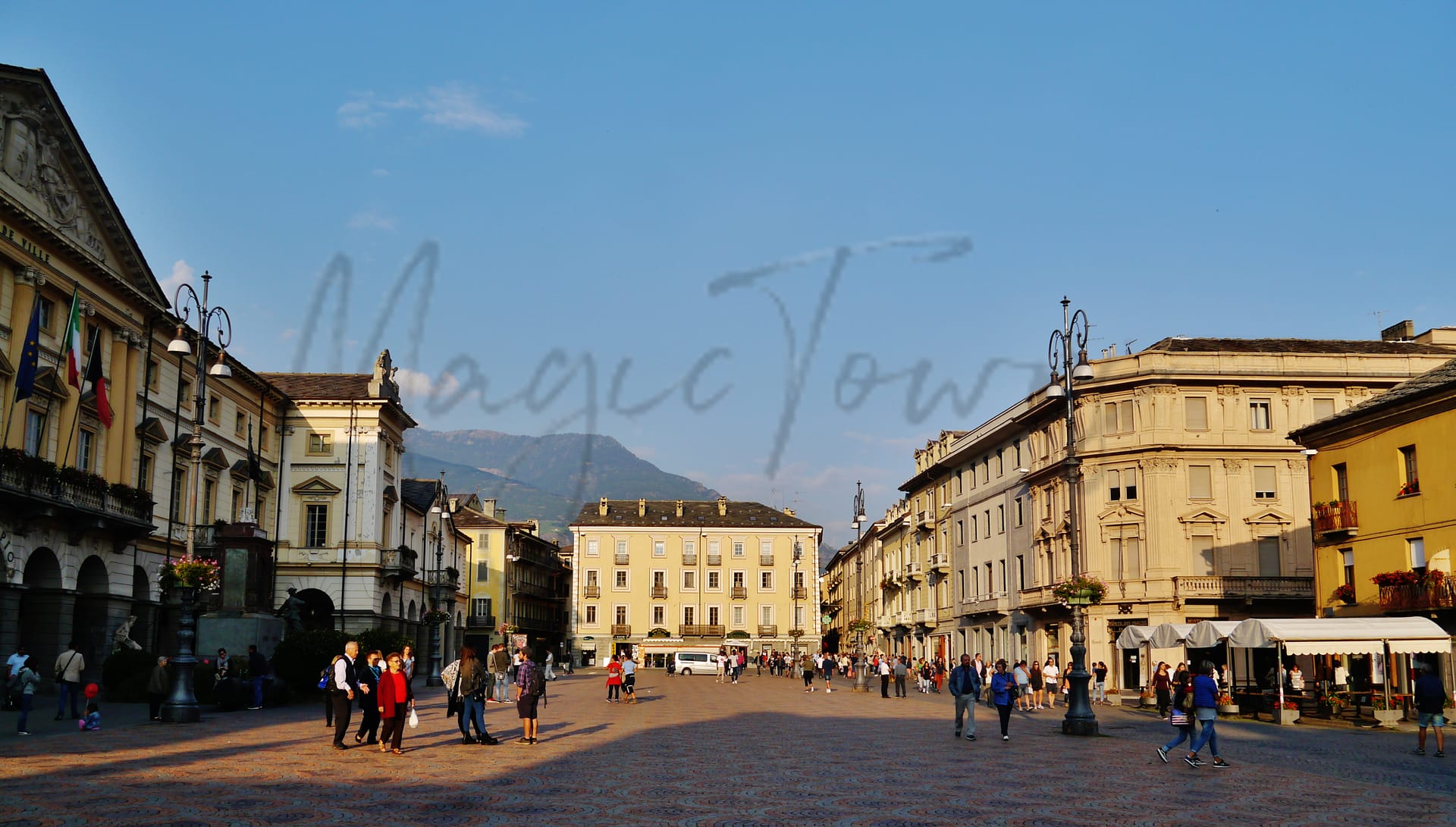

Elevation
[?]
Elevation of a city refers to the height above sea level at which the city is located, measured in meters.
578
Population
[?]
This is a town's official population, measured each year by the national statistics authority.
33100
Real Population (5km)
[?]
Our "Real Population" metric reflects more accurately a town's real size by including inhabitants in the immediate vicinity of the town's official borders.
59200
Air Quality Rating
[?]
Based on PM10, PM2.5, NO2, SO2, and ozone levels. Higher scores indicate cleaner air.
96
Region
Valle d’Aosta/Vallée d’Aoste
Walkability
Car-Dependent
Housing availability
[?]
Based on total number of properties (sale and rent) classifies housing availability into five categories: low, relativel ylow, medium, relatively high and high.
Relatively High
Avg Download Speed (Mbps) / Avg Upload Speed (Mbps)
225
/ 114
Climate Description
Seasonal temperature shifts; snowy winters; warm summers; abundant sunshine year-round.
Aosta
Valle d'Aosta/Vallée d'Aoste
Historical town in Aosta Valley, offering outdoor activities, local cuisine, and community atmosphere.
Quality of Life Score
[?]Factors in air quality, amenities, walkability, population, and environmental risks. Higher scores suggest better living conditions.
43
Quality of Infrastructure
[?]Measures internet speed, healthcare access, airports, rail, and walkability. Higher scores mean better connectivity and essential services.
53
Quality of Economy
[?]Based on income, property prices, job availability, and population density. Higher scores indicate stronger economic conditions.
82
Aosta Demographics
Population
[?]
This is a town's official population, measured each year by the national statistics authority.
33100
Real Population (5km band)
[?]
Our "Real Population" metric reflects more accurately a town's real size by including inhabitants in the immediate vicinity of the town's official borders.
59200
Births Per 100 Deaths
40.0
Population Data Source
ISTAT,2023
Estimated Unemployment Rate
Touristy Index
[?]
Calculation of tourist density index for the city, comparing its total tourist number to the overall average tourist number of the region
relative to its own population.The index indicates how a location’s tourist density compares to the average, with values above
100 representing higher-than-average density and values below 100 representing lower-than-average density.
Some Tourism
Income per capita (2023)
[?]
This is an estimation of average income per resident for this town, based on 2023 data from the Italian Ministry of Finance.
24500
Income rank in Italy (2023)
[?]
This is a ranking of the town's average income per resident, against the full list of townships in Italy.
678 out of 7901
Infrastructure and Connectivity
Create an account to explore more
This content is for Members only | Already a Member? Sign in
Closest Airport
Name
Torino Airport (Turin)
Connectivity Score
[?]
Measures travel time and service quality of nearby airport stations. Higher scores mean better transport access.
7
Driving Time
58min(s)
Turin Airport, also called Turin-Caselle Airport, is situated in Caselle Torinese, approximately 16 km north-west of Turin, Italy. In 2022, it catered to over 4 million passengers with significant connections to international destinations including Frankfurt, Barcelona, and London, and domestic routes like Rome and Naples. The airport hosts a mix of European carriers, providing travellers with connectivity suitable for both business and leisure, featuring mainline and budget airlines.
2nd Closest Airport
Name
Malpensa (Milan)
Connectivity Score
[?]
Measures travel time and service quality of nearby airport stations. Higher scores mean better transport access.
10
Driving Time
86min(s)
Milan Malpensa Airport (MXP) is located near Milan, Italy, and is the second largest and busiest airport in the country. Handling 28.5 million passengers, the airport connects to around 195 destinations worldwide, serving as a major hub for EasyJet. Key routes include flights to New York, London, Dubai, and Istanbul, making it a significant international gateway. Notable for its effective connectivity with Milan’s city centre via the Malpensa Express, the airport caters extensively to travellers heading to diverse European, American, and Asian destinations.
3rd Closest Airport
Name
Linate (Milan)
Connectivity Score
[?]
Measures travel time and service quality of nearby airport stations. Higher scores mean better transport access.
7
Driving Time
98min(s)
Milan Linate Airport (LIN), situated in Segrate and Peschiera Borromeo in Lombardy, Italy, serves around 10.6 million passengers annually. It focuses on flights within Europe and the United Kingdom, serving as a hub for ITA Airways. The airport offers convenient connections to popular destinations such as Rome, Cagliari, and Paris, making it an accessible choice for travellers seeking direct European flights.
Closest Rail
Name
Stazione di Aosta Viale Europa
Connectivity Score
[?]
Measures travel time and service quality of nearby rail stations. Higher scores mean better transport access.
7
Driving Time
14min(s)
Train service at Stazione di Aosta Viale Europa is operated primarily by Trenitalia and features both express and regional services. The main rail lines that stop here include the Chivasso–Ivrea–Aosta line and the Aosta–Pré-Saint-Didier line. Key destinations connected by direct trains include Turin, Chivasso, and Ivrea. While specific frequencies of departures are not explicitly stated, the station experiences significant passenger movements indicating a reasonable frequency of service. The station serves a mix of high-speed express services (Regionale Veloce) and regional trains (Treno regionale).
2nd Closest Rail
Name
Stazione di Aosta
Connectivity Score
[?]
Measures travel time and service quality of nearby rail stations. Higher scores mean better transport access.
6
Driving Time
15min(s)
Train service at Stazione di Aosta includes the following features:
– **Rail lines that stop here:** Stazione di Aosta is served by the Chivasso–Ivrea–Aosta line and the Aosta–Pré-Saint-Didier line.
– **Key destinations connected by direct trains:** Key destinations from Aosta include Turin, Chivasso, and Ivrea.
– **Train operators:** The station is operated by Trenitalia along with Rete Ferroviaria Italiana and Centostazioni.
– **Frequency of departures:** There are frequent express services from Turin to Aosta and regional services from Ivrea to Aosta, with several departures per day, particularly busy during peak hours with at least one train per hour.
– **Type of services:** The station accommodates both regional trains and express services, but does not offer high-speed trains.
3rd Closest Rail
Name
Stazione di Aosta Istituto
Connectivity Score
[?]
Measures travel time and service quality of nearby rail stations. Higher scores mean better transport access.
5
Driving Time
16min(s)
Train service at Stazione di Aosta Istituto provides connections primarily through Trenitalia. The main rail lines serving the station include regional connections from Ivrea to Aosta, as well as express services (Regionale Veloce) connecting Aosta with Turin, Chivasso, and Ivrea. Key destinations accessible via direct train include Turin, which is a significant hub in the region, and Ivrea. Departures are relatively limited, with regional trains operating a few times per day rather than on an hourly or half-hourly schedule. The station does not serve high-speed trains, focusing primarily on regional services.
Infrastructure & Amenities
Create an account to explore more
This content is for Members only | Already a Member? Sign in
Healthcare
Create an account to explore more
This content is for Members only | Already a Member? Sign in
Housing & Property Market
Create an account to explore more
This content is for Members only | Already a Member? Sign in
Connectivity & Digital Access
Create an account to explore more
This content is for Members only | Already a Member? Sign in
Education
Create an account to explore more
This content is for Members only | Already a Member? Sign in
Climate & Weather
Create an account to explore more
This content is for Members only | Already a Member? Sign in
Precipitation
[?] Based on daily climate data for precipitation from OPEN-METEO this parameter indicates how a city's annual precipitation compares to others in terms of percentage, with values ranging from 0 (lowest) to 1 (highest). For example, a percentile rank of 0.75 means the city's total precipitation is higher than 75% of other cities.
Exceptional (Top 10%)
Sunshine
Very Low (Bottom 10%)
Snowfall
Exceptional (Top 10%)
Min Annual Temperature (°C)
[?] This parameter represents the monthly average of daily minimum temperatures for January, based on data from OPEN-METEO.
-2
Max Annual Temperature (°C)
[?] This parameter represents the monthly average of daily minimum temperatures for January, based on data from OPEN-METEO.
26.7
Climate Description
Aosta, Italy boasts a climate characterized by a significant variation in seasonal temperatures and precipitation patterns, making it a unique setting for residents and newcomers alike. Surrounded by towering Alps, Aosta experiences brisk winters—which see considerable snowfall—favorable for winter sports enthusiasts and those who relish snowy vistas. The summers are comfortably warm, appealing especially to retirees and expats from hotter climates. Throughout the year, the city is graced with abundant sunshine, ensuring that even the colder days are bright. This balance of sunny days and diverse weather conditions makes Aosta an inviting prospect for those exploring relocation or seeking a scenic retirement backdrop in Italy.
Annual Temperature Chart (Min)
Error
There was a problem with your SQL connection - Please contact the administrator
There was a problem with your SQL connection - Please contact the administrator
Annual Temperature Chart (Max)
Error
There was a problem with your SQL connection - Please contact the administrator
There was a problem with your SQL connection - Please contact the administrator
Sunny Days By Month
Error
There was a problem with your SQL connection - Please contact the administrator
There was a problem with your SQL connection - Please contact the administrator
Environmental & Air Quality
Create an account to explore more
This content is for Members only | Already a Member? Sign in
Classifications
PM10
[?]
PM10 levels indicate Good air quality at 0–20 µg/m³, Fair at 20–40 µg/m³, Moderate at 40–50 µg/m³, Poor at 50–100 µg/m³, Very Poor at 100–150 µg/m³, and Extremely Poor at 150–1200 µg/m³.
Good
PM2.5
[?]
PM2.5 is Good if PM2.5 levels are between 0–10 µg/m³, Fair between 10–20 µg/m³, Moderate between 20–25 µg/m³, Poor between 25–50 µg/m³, Very Poor between 50–75 µg/m³, and Extremely Poor between 75–800 µg/m³.
Good
NO2
[?]
NO₂ levels are considered Good at 0–40 µg/m³, Fair at 40–90 µg/m³, Moderate at 90–120 µg/m³, Poor at 120–230 µg/m³, Very Poor at 230–340 µg/m³, and Extremely Poor at 340–1000 µg/m³.
Good
SO2
[?]
SO₂ levels indicate Good air quality at 0–100 µg/m³, Fair at 100–200 µg/m³, Moderate at 200–350 µg/m³, Poor at 350–500 µg/m³, Very Poor at 500–750 µg/m³, and Extremely Poor at 750–1250 µg/m³.
Good
O₃
[?]
For O₃, the air is Good at 0–50 µg/m³, Fair at 50–100 µg/m³, Moderate at 100–130 µg/m³, Poor at 130–240 µg/m³, Very Poor at 240–380 µg/m³, and Extremely Poor at 380–800 µg/m³.
Fair
Air Quality Rating
[?]
Based on PM10, PM2.5, NO2, SO2, and ozone levels. Higher scores indicate cleaner air.
96
Air Quality Description
Aosta, Italy, offers remarkably clean air, with particulate and gaseous pollutants well within comfortable levels. Residents can enjoy refreshing breezes that are predominantly free from the smog and industrial pollutants typical of more urbanized environments. The town’s commitment to maintaining low levels of nitrogen and sulfur oxides contributes to a pleasant atmosphere, suitable for those particularly sensitive to air quality. While ozone levels are moderate and occasionally noticeable, they rarely detract from the overall quality of life. Aosta represents a breath of fresh air for retirees and expats seeking a healthier living environment.
Aosta, Italy, offers remarkably clean air, with particulate and gaseous pollutants well within comfortable levels. Residents can enjoy refreshing breezes that are predominantly free from the smog and industrial pollutants typical of more urbanized environments. The town’s commitment to maintaining low levels of nitrogen and sulfur oxides contributes to a pleasant atmosphere, suitable for those particularly sensitive to air quality. While ozone levels are moderate and occasionally noticeable, they rarely detract from the overall quality of life. Aosta represents a breath of fresh air for retirees and expats seeking a healthier living environment.
Town Descriptions
Create an account to explore more
This content is for Members only | Already a Member? Sign in
Getting There
Aosta is accessible via the A5 motorway, connecting to Turin and subsequently to Milan via the A4. The nearest airports are Torino and Malpensa, while regional train stations provide additional links, scoring 7 and 6 for connectivity. Infrastructure is assessed at 53 out of 100.
Getting Around
Local Cuisine
The culinary scene in Aosta, situated in the Valle d’Aosta region of Italy, is characterized by its rich tapestry of traditional dishes, predominantly featuring local ingredients such as Fontina cheese, prized for its quality and used in various dishes like fondue and polenta concia. Notable traditional dishes include Valdostana-style chops, carbonade (beef stew), and various preparations of venison and cured meats. The dining landscape in Aosta is diverse, incorporating both local and international influences, with a range of dining establishments from trattorias to more upscale Michelin-starred options. The Michelin-starred restaurant Vecchio Ristoro exemplifies this blend by offering both traditional Aosta Valley cuisine and international dishes. Additionally, the region is known for its fine wines, complementing the dining experience with prestigious local varieties, further enriching its culinary appeal.
Shopping Overview
The shopping landscape features a mix of classic franchised outlets and local boutiques offering apparel, perfumes, and unique crafts. Visitors can explore concept shops and establishments dedicated to local culinary products, including wine and cheese. Traditional markets and annual fairs showcase regional artisans. Shopping centres offer diverse options from fashion to home decor, while craft workshops provide a glimpse into local craftsmanship. Overall, the area caters to varied shopping preferences, blending contemporary retail with traditional fare.
Neighborhoods
Green Areas and Parks
Aosta, situated in Valle d’Aosta, offers diverse outdoor activities for expats and retirees. Explore the renowned Parco Nazionale Gran Paradiso, Italy’s oldest national park, which provides ample hiking opportunities and wildlife experiences. Val Ferret is notable for its picturesque trails, perfect for walking or more strenuous hikes. Additionally, the Cascate di Lillaz in Cogne are famous waterfalls accessible via popular trekking routes. These areas cater to both leisurely strolls and challenging hikes, allowing residents to engage with the region’s natural environment fully.
✅ Pros
– Rich cultural and historical backdrop to explore daily.
– Excellent air quality, promoting a healthy lifestyle.
– Low unemployment rate ensures job stability.
– Integration opportunities within a welcoming community.
– Quality healthcare services available for residents.
– Beautiful alpine climate suitable for outdoor activities.
– Convenient transportation options for easy travel.
– Moderate tourism provides a balanced local atmosphere.
– Access to stunning natural landscapes and outdoor adventures.
– Good internet connectivity for remote work and communication.
❌ Cons
– Limited healthcare quality may lead to longer wait times.
– Public transportation options can be infrequent and inconvenient.
– Limited local job options for specific professional fields.
– Winters can be harsh and challenging for some residents.
– Small-town vibe may feel isolating for some expats.
– Limited entertainment and nightlife options for younger residents.
– Integration may take time in a close-knit community.
– Alpine weather can lead to seasonal mood changes.
– Local dialect might pose communication challenges for newcomers.
– Some amenities may be less accessible compared to larger cities.
FAQs
Summary
Aosta, nestled in the beautiful Aosta Valley, is an appealing choice for expats and retirees seeking a serene lifestyle. Surrounded by the stunning Alps, it offers a wealth of outdoor recreational activities, including excellent hiking trails and ski resorts like Pila and Courmayeur nearby. Culturally rich, the town boasts Roman ruins, a charming medieval center, and a vibrant local gastronomy highlighted by fine wines and hearty mountain cuisine.
While Aosta enjoys a low crime rate, the town’s walkability is limited, and the nearest major airport is an hour’s drive away, which may be a consideration for frequent travelers. The healthcare system is adequate, though some expats seek alternative arrangements. Despite these drawbacks, Aosta presents a friendly community atmosphere, lower living costs compared to other Italian provinces, and good educational facilities, making it a wonderful choice for those looking to embrace a slower pace of life in a picturesque setting.
✅ Pros
– Rich cultural and historical backdrop to explore daily.
– Excellent air quality, promoting a healthy lifestyle.
– Low unemployment rate ensures job stability.
– Integration opportunities within a welcoming community.
– Quality healthcare services available for residents.
– Beautiful alpine climate suitable for outdoor activities.
– Convenient transportation options for easy travel.
– Moderate tourism provides a balanced local atmosphere.
– Access to stunning natural landscapes and outdoor adventures.
– Good internet connectivity for remote work and communication.
❌ Cons
– Limited healthcare quality may lead to longer wait times.
– Public transportation options can be infrequent and inconvenient.
– Limited local job options for specific professional fields.
– Winters can be harsh and challenging for some residents.
– Small-town vibe may feel isolating for some expats.
– Limited entertainment and nightlife options for younger residents.
– Integration may take time in a close-knit community.
– Alpine weather can lead to seasonal mood changes.
– Local dialect might pose communication challenges for newcomers.
– Some amenities may be less accessible compared to larger cities.
Related Posts
No posts found for the town.
More questions about Aosta ? Ask Magic AI.
Our innovative AI assistant is eager to help. Try it out here: