

/
Feed RSS
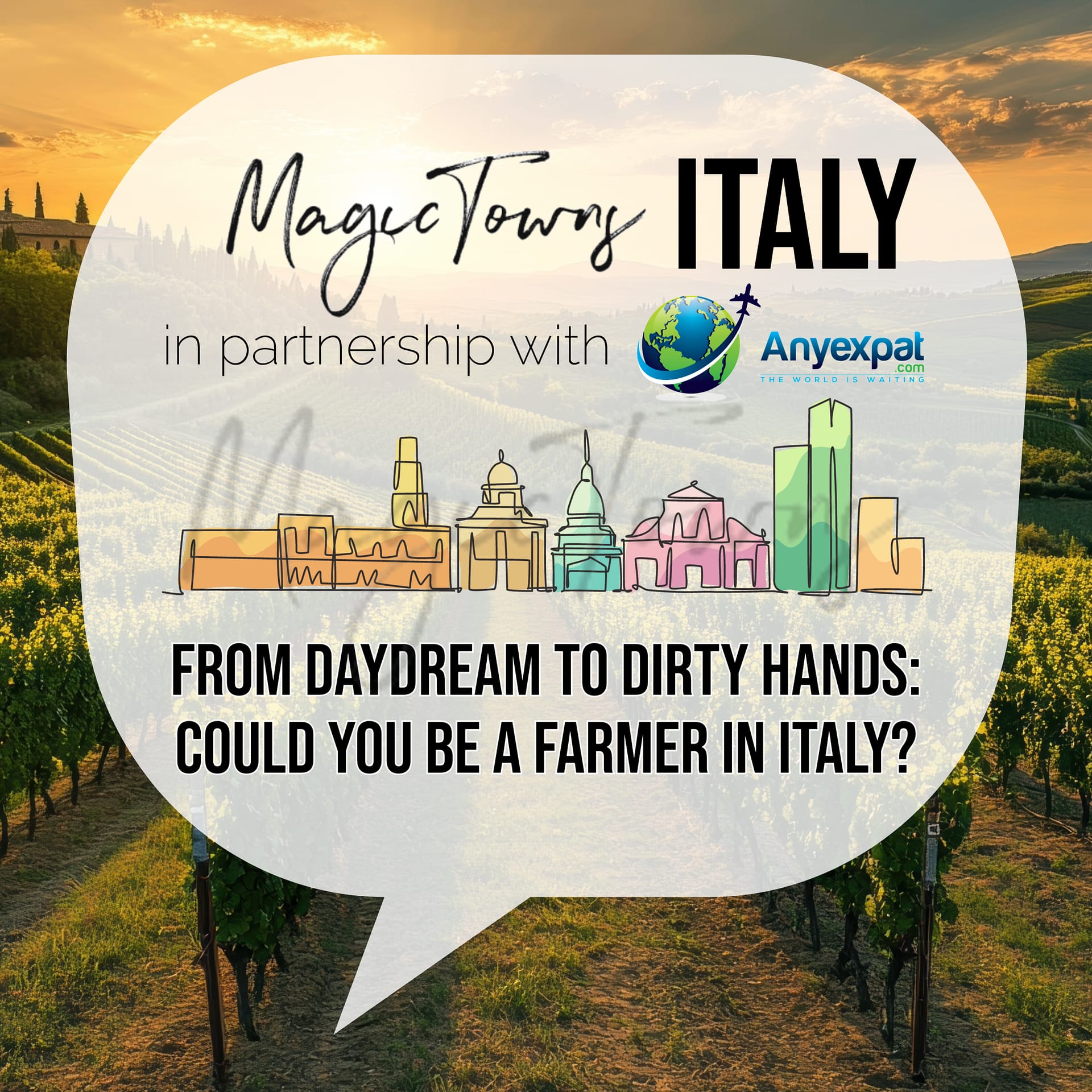
Questo episodio del podcast si basa in larga misura sulla nostra guida su L'agricoltura in Italia.
[00:00:11] Miglia: Welcome back to Magic Towns Italy, the podcast with Miles and Alessia. Today we’re taking a really fascinating journey to Italy, in this episode all about Italian farming and produce. When you think Italy, you think food, right? Amazing food. Well, there’s a good reason for that. But is Italian farming just about that incredible produce, or is there something I don’t know, deeper, maybe even a whole new life calling for some of you thinking about relocating. [00:00:41] Alessia: We’re going to look at the, well, the huge cultural and economic role farming plays, and then explore how this unique landscape might actually offer a really unexpected opportunity for a fresh start. Our insights are coming straight from Magic Towns Italy. [00:00:58] Miglia: Okay, great. Let’s dig in then. Italy’s got this, uh, incredibly long history. This identity is a place for fresh, really flavorful and key affordable produce. What’s amazing to me is that buying direct from farmers, it’s not some like niche hipster thing there, you know, it’s totally mainstream, uh, a really cherished everyday part of life. [00:01:18] Alessia: It absolutely is. And the numbers, while they really back that up. Studies show, get this, 73% of Italians believe buying direct is the best way to guarantee quality and safety. And even more, something like 86% wish they had a farmer’s market right near them. Italy’s built Europe’s largest network, over 1,200 markets. They serve about 15 million consumers. [00:01:40] Miglia: Wow. 15 million. That’s huge. [00:01:42] Alessia: It is. And it’s a model that, uh, honestly is looked at worldwide now because it’s just so woven into daily life. [00:01:51] Miglia: And that scale, it leads us to something that was really eye-opening for me. The farm produce price gap. We’re not just talking slightly fresher food here, we’re talking serious savings, financially speaking. Think about this. Italian supermarkets markup produce by on average a massive 194% compared to what farmers sell it for directly. [00:02:15] Alessia: I mean, farmers get a fair wholesale price. Sure. But then the retail chain adds so much. Let me give you some concrete examples. A kilo of fennel the farmer might get say 0.37 euro. In the supermarket, it jumps to 2.18. That’s a 489% increase. [00:02:36] Miglia: 489%. Wow. [00:02:39] Alessia: O le zucchine. Si passa da circa 0,96 al cancello dell'azienda agricola a quasi due euro nel negozio. Quindi più 107% di pomodori, circa 93% di ricarico. Anche le carote, che sono piuttosto semplici, hanno una maggiorazione di 83%. I consumatori pagano quasi il doppio di quanto l'agricoltore ha effettivamente ricevuto. [00:02:59] Miglia: Okay, so these aren’t trivial differences at all. What does that mean in like real terms for an average family’s budget? [00:03:04] Alessia: This savings can be quite significant. For a family that could easily add up to say, 325 saved over a year, maybe more. And remember, it’s not just the money. You’re often getting stuff picked that morning or the day before. Peak ripeness, much better flavor, more nutrients compared to something that sat in supermarket cold storage for a week. [00:03:27] Miglia: E questo vantaggio regge se guardiamo a livello internazionale, ad esempio rispetto al Regno Unito o agli Stati Uniti? [00:03:32] Alessia: Oh, absolutely. It becomes even more dramatic. Actually, let’s stick with that fennel example. Okay. A kilo might be five pounds, five pounds, 50 in a place like Waitrose or Sainsbury’s. That’s roughly three times the Italian supermarket price. And compared to the Italian farm price, it’s almost 17 times more expensive. [00:03:53] Miglia: 17 volte. Bontà. [00:03:55] Alessia: Yeah. And in the US fennel can be like $3 99 a pound. That works out to about 7.7 euros per kilo. So for many items, the price difference is just huge. It makes shopping direct in Italy incredibly attractive, especially if you’re coming from one of those countries. This isn’t just a few random markets either. There’s this massive network called Campagna Amica is run by the Farmers Association. It’s the world’s biggest direct to consumer system. Over 10,000 farms. Those 1,200 markets we mentioned generating something like $4 billion in sales. No other country really has anything on that scale. [00:04:38] Miglia: Okay, so the economics are well undeniable. Huge benefits. But you mentioned earlier this isn’t just about money. There’s a deeper cultural thing going on, right? [00:04:48] Alessia: Absolutely. This whole farm direct culture, it’s not some new fad. It’s properly woven into Italy’s heritage for so many Italian families. The weekly trip to the open air market is just what you do. It’s preferred over the supermarket, and yet partly for savings, but also it’s about trust, tradition. [00:05:09] There’s a real connection, shaking the hand of the person who grew your vegetables. That means something. It’s normal. It’s quite different from, say, the US, where farmer’s markets can sometimes feel a bit, I don’t know, quaint or maybe, premium, expensive. In Italy, the mercato contadino, the farmer’s markets, it’s completely mainstream. [00:05:30] Even in big cities like Rome or Milan. People know their local market days and they genuinely get excited about stocking up on seasonal stuff. Farm eggs, artisanal cheese, and this cultural connection, it runs so deep. It’s even recognized on a global level. [00:05:47] Miglia: Ho letto che nel 2019 l'UNESCO ha riconosciuto la transumanza, lo spostamento stagionale del bestiame, come patrimonio culturale immateriale. [00:05:56] Alessia: That’s right. And that recognition, it really underscores how agriculture and culture are just, well, inseparable here. If you ever go up into Italy’s alpine regions in the summer, you can actually experience this quite directly. You can visit these places called malghe, the rustic mountain dairy farms. [00:06:18] The cows are up there grazing on wild flowers, and the farmers are making cheese, butter, using these really traditional methods passed down for generations. These aren’t tourist traps, they’re living heritage sites. Tasting for formaggio di malga, that’s the alpine farm cheese, right where it’s made or seeing shepherds moving their flocks. It’s powerful. It reminds you how deep these roots go. It’s actually quite common for families, especially in Northern Italy, to hike up to these farms specifically for that experience. [00:06:51] Miglia: A proposito di esperienze autentiche. Molti stranieri quando immaginano la campagna italiana. Potrebbero pensare alle costosissime ville toscane. Ma la realtà, soprattutto con cose come gli agriturismi, sembra molto più accessibile e autentica. E anche conveniente. [00:07:09] Alessia: Oh, it’s a fantastic network there. Now get this over 26,000 agriturismo farmhouses. They’re spread across something like two thirds of all Italian towns and villages. [E mentre la Toscana ne ha molti, certo, luoghi come l'Alto Adige, sulle Alpi, hanno la densità più alta. Si va da luoghi rustici molto semplici a case di campagna un po' più curate. Ma l'idea di fondo è sempre la stessa: mettere in contatto gli ospiti con la fattoria e i suoi prodotti. [00:07:40] Miglia: E questa connessione finisce dritta nel tuo piatto, immagino. [00:07:43] Alessia: it absolutely does. Picture a Sunday lunch at an agriturismo. It’s a big deal, a cherished Italian family thing to do. You’ll likely get this amazing multicourse meal, all super fresh from the farm. Maybe handmade pasta with their own eggs, roast from their livestock, vegetables picked that morning. [00:08:01] Wine from the vineyard next door and all this for honestly, a fraction of what you’d pay in some touristy restaurant because these are real working farms first, not just hotels dressed up to look rustic. You might wake up to roosters, crowing, maybe even get invited to help pick some tomatoes or join the family for a meal. It’s very genuine. [00:08:22] Miglia: Come ha fatto l'Italia a costruire un settore agrituristico così forte e soprattutto così autentico? Sembra piuttosto unico. [00:08:28] Alessia: The government’s actually played a big role. They started encouraging this back in the eighties, offering tax breaks to family farms if they opened up rooms or served meals to guests. [00:08:37] But, and this is really crucial, there’s a legal requirement. By law, an agriturismo has to earn more money from its farming activities, selling crops, livestock, whatever, than from hospitality. That’s what keeps them grounded as real farms. It stops them just turning into hotels in the countryside, and it helps keep them authentic and frankly affordable. [00:09:03] You’re often looking at prices that are surprisingly low for the experience. Maybe say 50 to 80 euro per person for dinner, bed and breakfast. It’s really about connecting with the land, the food source, not about five star luxury. [00:09:20] Miglia: This brings up a bigger question though. How does Italy actually manage to support all these small, often family run farms, especially when you hear about struggles elsewhere? What’s the secret sauce for this thriving ecosystem? [00:09:31] Alessia: Italy genuinely benefits from a policy environment that’s remarkably supportive for small scale farmers. Think tax advantages, a lighter touch on regulations, things that really help in a lot of countries starting. Even a small farm can feel like drowning in paperwork or facing huge costs. [00:09:49] Ma in Italia la barriera all'ingresso è piuttosto bassa. È possibile registrarsi come azienda agricola individuale per circa 200 euro, e la burocrazia è relativamente minima per iniziare. [00:09:59] Miglia: Okay? 200 euro isn’t much. What about ongoing costs like taxes? That’s always a big worry, especially for someone moving from abroad. [00:10:07] Alessia: That’s where it gets really interesting and quite unique. If your farm income is small, under about 7,000 euros a year you’re actually exempt from income tax and VAT. It’s called the esonero regime. It’s basically a super simplified tax system for tiny businesses. Record keeping is minimal. You just keep basic track of things. [00:10:27] Only if you grow bigger beyond that threshold, do you need to formally register with the Chamber of Commerce. That involves a small annual fee and a bit more paperwork, but it’s still manageable. And here’s the really compelling part, something often surprising to foreigners. Italian farmers generally don’t pay income tax on their profits. [00:10:50] Miglia: Aspetta, davvero? Nessuna tassa sul profitto. Come funziona? [00:10:53] Alessia: Invece di tassare il profitto ottenuto dalla vendita dei prodotti, l'imposta si basa interamente sul valore del terreno. Si tratta di valutazioni ufficiali del governo del terreno, spesso molto inferiori al reale valore di mercato. Funziona un po' come l'imposta sulla proprietà, quindi sia che abbiate un ettaro di fragole o un grande vigneto, la vostra responsabilità fiscale è legata principalmente al terreno stesso. Non direttamente a quanto avete guadagnato quell'anno. [00:11:21] Miglia: Sembra un incentivo enorme. Oppure ci sono ancora più vantaggi se ci si impegna davvero a coltivare il proprio lavoro principale? [00:11:27] Alessia: Yes, definitely. If farming becomes your primary profession, you can get special status. It’s called coltivatore diretto or IAP, which stands for certified professional farmer. [Questo status conferisce alcuni diritti piuttosto importanti. Il più importante è il diritto di costruire una casa sul proprio terreno agricolo. Si pensa che un agricoltore abbia bisogno di vivere vicino al suo campo, quindi questo status lo consente, aggirando le regole di zonizzazione che spesso limitano l'edificazione sui terreni agricoli per i non agricoltori. [00:11:58] Professional farmers also get lower property taxes on their farmland and incredibly low transaction taxes when they buy more farmland. Just 1% on that cast value compared to the standard 9% or even 15% for non-farmers. It’s clearly policy designed to get people, especially new people, onto the land, and the government does step in too. [00:12:20] Like in early 2024, they brought back an income tax exemption for farmers who are struggling financially. It shows there’s broad political support, plus you’ve got EU grants and regional micro loans often available to help farmers get started or invest. [00:12:36] Miglia: Ok. Quindi l'Italia è decisamente amica degli agricoltori. Questo sembra chiaro. [00:12:40] But despite all this support. Our sources point out this kind of youth dilemma. There’s a big question hanging over Italy: who’s gonna carry on this tradition? The average age of an Italian farmer is apparently 63, and only about 7% or 8% of farms are run by someone under 40. That’s way too low for generational turnover. Especially when you compare it to the EU average, where it’s closer to one in three farms led by under forties. [00:13:06] Alessia: Yeah. It’s a real demographic challenge, a vacuum really, and it has potentially serious consequences. You could see whole categories of artisanal products, local crop varieties, just disappear. [00:13:18] The countryside itself could become neglected as older farmers retire, and there’s no one new stepping in. There are reasons, of course, high land costs in some popular areas, the hard physical work involved, and maybe social pressure too to go for office jobs instead. Italian farms have often been very family based, right? So if the kids move to the city, the farm often just stops when the older generation retires. [00:13:43] Miglia: Quindi, che cosa significa in realtà per, ascoltate, questa sfida, questo divario, in realtà crea un'opportunità piuttosto unica, soprattutto per le persone disposte ad abbracciare la vita rurale, gli espatriati, i pensionati, in cerca di qualcosa di completamente diverso. [00:13:57] The policies, the clear need. It means Italy is perhaps unusually quite welcoming to new farmers right now. And the government and farming groups, they’re actively trying to address this with incentives. Recent finance laws in Italy have included better tax rates specifically for entrepreneurs under 40 starting farms. [00:14:17] There are even grants to help buy land or equipment sometimes, and the EU’s big agricultural policy, the CAP, also directs funds towards young farmers. We’re seeing success stories because of this. Young people starting organic farms, boutique cheese makers popping up. In Tuscany alone apparently the number of food businesses run by under 30 fives jumped 7% recently. So there is movement. [00:14:40] Alessia: This all leads to. A really provocative question , from daydream to dirty hands. Should you be a farmer in Italy? I mean, could you listening right now actually do this? Could you become a farmer there? And the message seems to be, while it’s maybe not as crazy as it sounds, Italy, possibly more than many places, seems to lower the barriers for small scale farming, even if you’re a newcomer. So if you’ve ever, you know, daydreamed about having an olive grove, a small vineyard, maybe a little farm stay with some goats and chickens, Italy might genuinely be the place to give it a shot. [00:15:19] Miglia: Okay. Let’s break down the practical steps then, ’cause it does seem surprisingly doable First. Obviously you need land and there’s actually quite a lot of rural property available, often at decent prices if you look outside the really famous touristy regions. And remember that key point, if you register as a farmer, you generally can get permission to build a home on agricultural land, which is huge. Magic Towns Italy actually has a tool the Town Explorer. It’s great for scouting locations. You can filter for places with good amenities, community feel, that sort of thing. [00:15:52] Alessia: Okay. What’s next? The official bit. [00:15:56] Miglia: Yeah. Registering as a farmer, it basically means getting a partita IVA. That’s your business tax ID number. You register it with a specific code. For agriculture, it’s usually just a few forms, maybe 20 euro in fees. [00:16:09] Alessia: Piuttosto semplice. [00:16:10] Miglia: And then you’re officially a sole proprietor farmer if you’re starting small, expecting to sell less than that. 7,000 euros a year. You operate under that lightweight, a scenario regime, almost no tax. Very simple bookkeeping. Just keep track of your sales and expenses. If you grow beyond that, you just upgrade your registration. It’s designed to be scalable. [00:16:36] Alessia: E per quanto riguarda l'ottenimento dello status di agricoltore professionista? Quello con i grandi vantaggi, come i diritti di costruzione, è un salto enorme? E quali sono le richieste effettive per un nuovo agricoltore? [00:16:47] Miglia: It’s optional, but definitely beneficial. If you’re serious, you can qualify if you have an agriculture degree or if farming becomes your main source of income and work time. Here’s the interesting bit. You can also qualify by completing just 150 hours of classes. These are often offered in the evening, sometimes online and frequently financed by the EU, so they might even be free or low cost. [Ottenere questo status sblocca diritti cruciali. Costruire sulla propria terra, ottenere la prelazione se i vicini vendono i loro terreni agricoli. Per quanto riguarda le richieste, sì, l'agricoltura è un lavoro. Il lavoro stagionale può essere intenso, ma per molti nuovi arrivati, soprattutto per gli espatriati, l'attenzione potrebbe essere rivolta a piccole aziende agricole diversificate. Olive, frutta, qualche camera per il bed and breakfast, gestibili da una o due persone, magari con qualche aiuto durante il raccolto. [00:17:35] And yes, there are duties. You’ll need to contribute to the Farmer’s Social Security Fund, which provides a pension, albeit a modest one. Have insurance, but the contribution rates are generally quite low compared to other sectors reflecting the support for farming. [00:17:50] Alessia: E il grande problema, la burocrazia, i regolamenti. Sarà un incubo? Soprattutto per uno straniero che si trova a navigare in un nuovo sistema. [00:18:00] Miglia: You know, it’s often less daunting than people fear, especially for small farms. The bureaucratic burden, as they call it, is generally lighter than for many other types of businesses in Italy. A lot of it can be managed with help from a local accountant. [00:18:13] They’re used to dealing with farm specifics and the big farmers associations like Coldiretti or CIA offer tons of support services to members. They’re often very helpful to newcomers, whether Italian or foreign. And crucially, for direct sales, selling your veg at the market or from a little stand at your farm gate, you generally don’t need endless permits in Italy, as long as you follow basic food hygiene rules. It’s quite straightforward. Honestly, the biggest initial hurdle for a foreigner might just be the language or getting used to local ways of doing things, but the system itself isn’t designed to trip you up. [00:18:50] Alessia: It really sounds like a genuinely supportive environment then. You’re stepping into a place where customers actually want to buy directly from you, where there might be regional funds to help you start, uh, say an organic beekeeping project, and where local restaurants are actively looking for chilometro zero, zero food miles. [00:19:14] Ingredienti provenienti da aziende agricole vicine. Sembra un quadro completamente solidale. [00:19:18] Miglia: It really is. Just picture it for a second. You find a piece of land, maybe it even has some olive trees or vines already. You get permission to build or renovate a small place nearby because you’re a registered farmer. You pay hardly any tax on your initial earnings, and you have this built-in market of locals and tourists who value fresh local produce, you’d be tapping into a lifestyle that’s well, incredibly earthy, steeped in tradition, but also surprisingly modern, powered by centuries of farming knowledge, but maybe also using smartphone apps to connect with customers for direct deliveries. [00:19:52] Look, it’s not gonna be effortless, of course not farming is hard work, but it seems like a path with potentially immense rewards, both financially and in terms of all purpose. [00:20:04] Alessia: Pulling it all together. What’s the big takeaway here? We’ve definitely seen that farming in Italy is way more than just growing food. It’s a lifestyle. It’s deeply connected to tradition. It’s earthy, but it’s also in its own way, remarkably modern and supported. [00:20:19] Miglia: And that leads right back to that intriguing question for you, the listener. Could this becoming a farmer in Italy, actually be your next chapter? Now, obviously it’s a huge life change. It needs commitment. You need to be prepared for hands-on work, but in a country that so clearly values and celebrates the people who work its land, you wouldn’t just be earning a living. You’d arguably be helping preserve a really precious way of life. You’d be experiencing La Dolce Vita maybe in its most authentic form. [00:20:48] And importantly, you’d be helping to fill that demographic gap. We talked about bringing new life and energy to the countryside. [00:20:54] Alessia: So whether you actually decide to put on the wellies and become a farmer yourself or maybe just embrace Italy’s amazing direct from farm culture as a shopper, really seeking out those markets and producers. One thing seems pretty clear, it’s a win-win. [Buono per le vostre papille gustative, sicuramente buono per il vostro portafoglio e forse anche per l'anima stessa della cultura italiana. Se siete interessati a tutto questo, a trasferirvi in Italia, alla vita da espatriati o a esplorare meglio questo sogno agricolo, date un'occhiata alle risorse e alle informazioni di Magic Towns Italia. Date un'occhiata.È stato utile?
Grazie per il tuo feedback!
 English
  French
  German
  Italian
  Danish