

Most people who start researching the €1 homes scheme end up in a rabbit hole that begins with excitement and ends, about two hours later, with a quiet “hmm.” Everything seems extraordinary, almost too good to be true. A house in Italy for one euro, in a peaceful and authentic village, with other expats around. It sounds like a dream.
But somewhere along the way – usually around the time you read the words “renovation commitment” and “security deposit” – a question starts forming. What if you just… bought a cheap house instead? On the normal market, for €40,000 or €50,000? Because you can. In the very same regions where those €1 schemes operate, there are habitable properties going for less than a decent used car back home. So which is actually the better deal? That’s what we’re going to figure out.
Do the Maths Before You Sign
Whatever path you choose, buying old property in rural Italy almost certainly means dealing with a renovation – the question is just how much of one. A €1 home is typically uninhabitable and the renovation is not optional – it’s contractually required. A €50,000 property on the open market might be dated or cosmetically tired, but structurally sound. You’re fixing a house, not rebuilding one.
But how much would you actually spend? We’re actually in a good position to give you real numbers, because we’re currently mid-renovation on Tenuta Augusta, an early 1700s property in the Veneto. Windows will run you between €700 and €1,000 per aperture. Doors, installed, come in at €400 to €800. Floors depend on the material, but between tiles, adhesive and labour, budget at least €60 per square metre. A bathroom will set you back €8,000 to €12,000 – and that’s before you touch the heating system, which is a separate line entirely. You can of course spend much more; a bathroom has no real ceiling.
The roof is the single most important thing to check. If it’s healthy, you can take your time with everything else and spread the costs out over years. If it just needs patching up, count on €40 to €60 per square metre. If you have to rebuild it from scratch, you’re looking at no less than €300 per square metre – and on an old building, that bill adds up fast.
Unless you do a large part of the work yourself – as George Laing did with his Mussomeli house, which we wrote about in our one euro house post – in practice, you often end up spending the same or much more than you would on a move-in-ready property, for a house that was genuinely worth nothing when you bought it.
There’s also a cost that doesn’t appear in any spreadsheet: your time. Managing a renovation in Italy – especially from abroad – means coordinating contractors remotely, making trips back and forth, chasing suppliers who don’t call back, and accepting that August doesn’t exist as a working month. A project you hoped would take eighteen months can quietly stretch to three years. Meanwhile, you’re paying for accommodation somewhere else. With a move-in-ready €50,000 house, none of that applies. You buy it, you move in, you fix the kitchen when you feel like it. So you’re moving in a house you can actually live in, in a town you chose and often spend the same as a €1 home.
What You’re Actually Signing
When you buy a €1 home, you’re not just buying a house. You’re entering a legal agreement with the local municipality - e viene fornito con condizioni.
These vary by comune, so always check the official municipal website, but most schemes follow the same logic: you must submit a renovation plan within 60 to 180 days of purchase, begin work within a year, and complete a full structural restoration within three years (sometimes less). Some towns require the external appearance to be restored to its original character, meaning heritage constraints apply. And you can’t sell immediately – most schemes impose a hold period. Miss the deadline and you lose your deposit; in some cases, the municipality can reclaim the property entirely.
None of this is necessarily a dealbreaker, but it’s nothing like a normal property purchase. It’s more of a public-private arrangement: you do the town a “favour”, the town gives you a symbolic property in exchange.
With a regular €40,000 house, you own it outright. No timelines, no municipal contracts, no renovation plans to file with anyone. If you decide to take two years to do the kitchen first and leave the rest for later, that’s your call. If you want to rent it out before renovating, you can. If life changes and you want to sell after a year, you can do that too. You’re completely free.
You Don’t Get to Pick the Town
As mentioned, with a €1 home, the location is fixed. You’re choosing from towns that have active schemes, and these tend to be places that are struggling – shrinking populations, limited services, often no train station, sometimes hours from a major city. Gangi in Sicily is 120 km from Palermo on winding mountain roads. Ollolai in Sardinia, a village of around 1,300 people in the Barbagia mountains, is stunning, but 90 minutes from the nearest city of any size.
That doesn’t mean these places are wrong for everyone – we’ve been to Mussomeli and spoken with expats there who are genuinely happy. But it’s subjective, and it varies a lot by town. The deeper issue is that the €1 home reverses the normal order of decision-making: instead of choosing the place and then finding a property, you’re choosing the property (because it’s €1) and then rationalising the place.
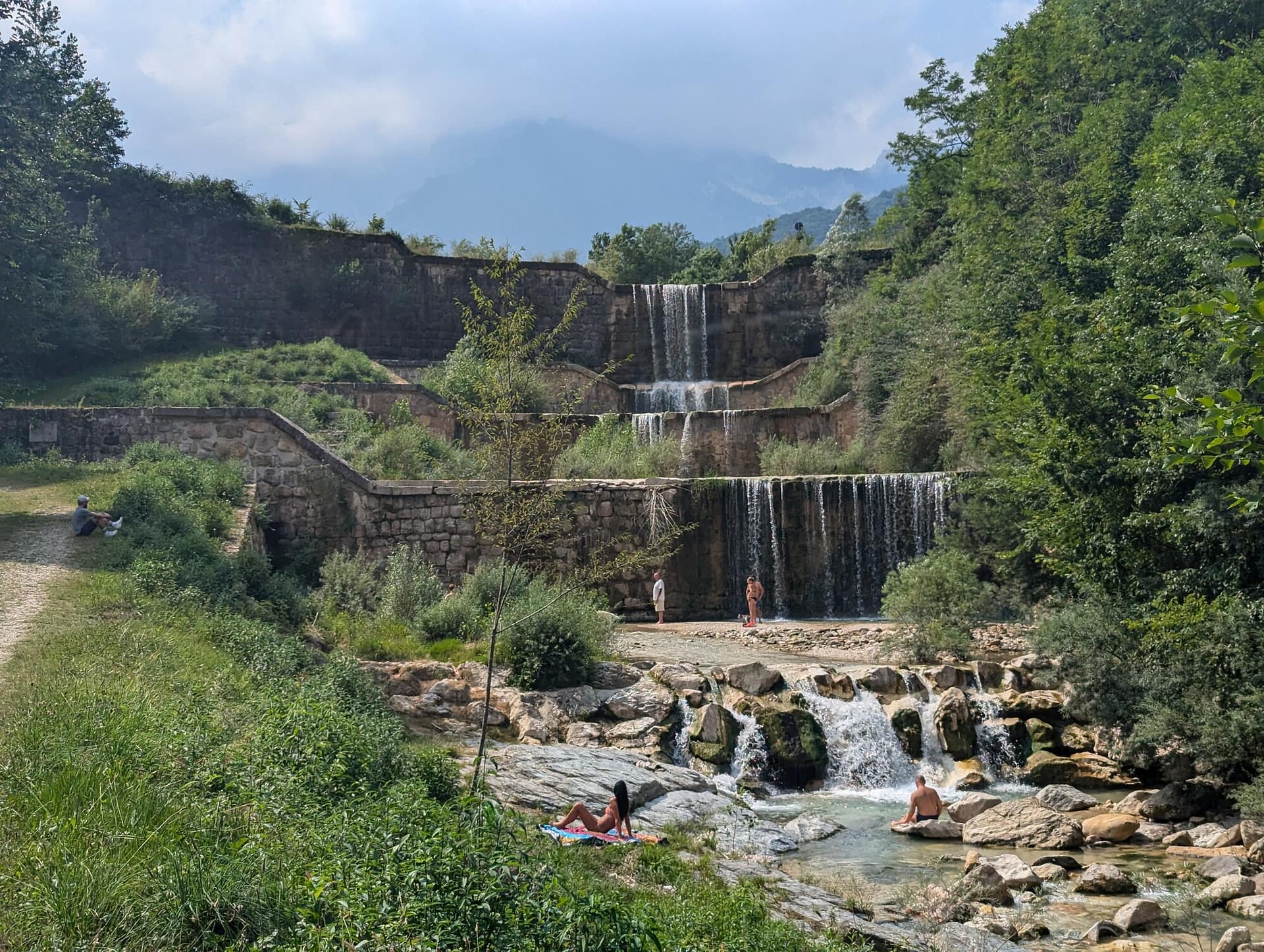
With a budget of €40,000–€50,000 on the open market, you can search across dozens of towns in regions that actually suit your life – not just central or southern Italy, but parts of the north too. Towns with train connections, hospitals nearby, an existing expat community. One of our favorites, that we’ve featured quite a bit on Instagram, è Recoaro Terme – a town in the Veneto, of around 5700 inhabitants surrounded by nature.
If you want to figure out where in Italy actually suits you before committing to anything, our Esploratore della città lets you filter across 1,500+ towns by the things that matter for real life – healthcare, internet speeds, airport access, climate, seismic risk, property prices, and more. Find your town first. The right house will follow.
€1 Home vs Open Market
Il €1 scheme has genuinely worked for a lot of people. In Mussomeli, Gangi, Sambuca di Sicilia and beyond, towns that were quietly fading have found a second wind – restored medieval buildings, new faces, local construction businesses with steady work. Some buyers are very happy with what they ended up with.
Ma the profile of the person who actually succeeds is fairly specific. They’re not in a hurry. They have experience managing construction projects, or are prepared to spend extended periods in Italy overseeing the work. They’re genuinely drawn to the specific town, not just the price. And they have a meaningful renovation budget behind them – unless, again, they’re doing the work themselves.
For everyone else – families, remote workers who need stability, retirees looking for the most stress-free path into Italian property – the open market is almost always the better starting point. With €40,000–€50,000, you get a property with walls that don’t leak, a working bathroom, electricity on the grid, and a straightforward legal status. No renovation clock. No fixed location.
The €1 home gives you a symbolic entry price and takes away your flexibility in return. You’re buying a project, a contract, and a location – all three bundled together, non-negotiable. The under-€50k house gives you a real (if imperfect) property, in a place you chose, with no external obligations about how or when or how much you renovate.
These are the maths you have to do: is it worth buying for €1, then spending €100,000–€150,000 on top, managing workers and waiting years to move in – or does it make more sense to spend €50,000 on something you can walk into tomorrow?







 English
 French
 German
 Italian
 Danish