

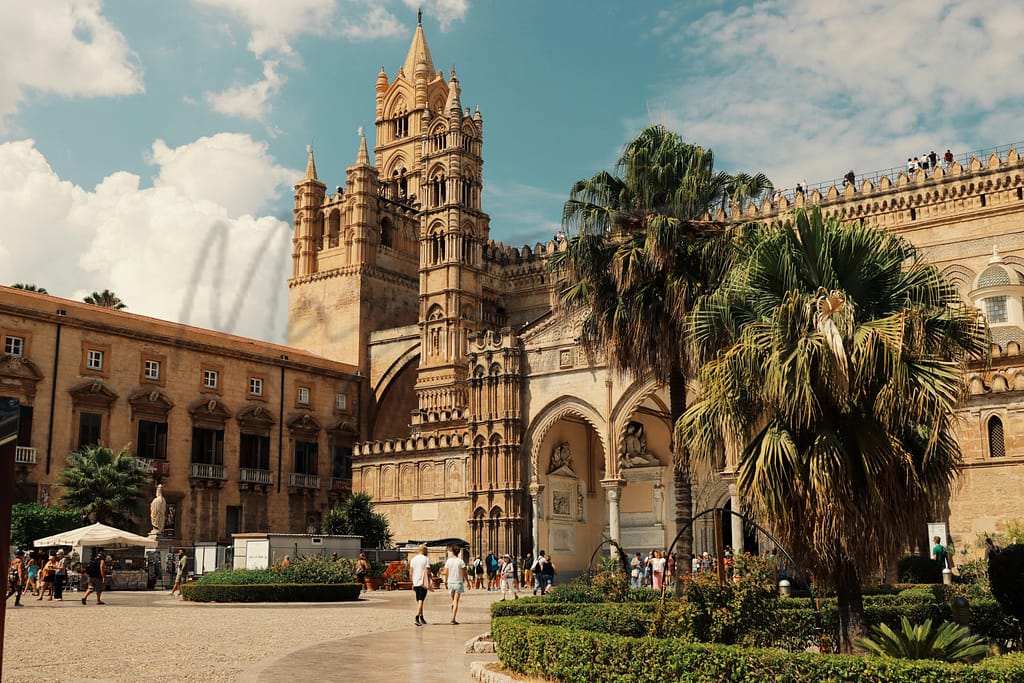
Palermo
628,700 residents · 857,500 within 5 km · 17 m above sea level
What Palermo is actually like
Palermo, the capital of Sicily, is a vibrant city defined by its rich history, culture, and inviting local lifestyle. Nestled along the coast, it offers picturesque views and a strong cultural heritage, visible in attractions like the Teatro Massimo, Palatine Chapel, and the Capuchin Catacombs. The city’s diverse character is complemented by its lively markets, traditional cuisine, and a community known for its hospitality. For expats, Palermo presents an affordable cost of living and practical amenities, including fast internet and supportive expat networks that enrich the experience. However, adapting to the Sicilian way of life can be challenging due to its slower pace and direct communication style. Understanding local customs is crucial for social integration, and although job opportunities exist, the market can be informal and competitive. While the city has much to offer, expats should approach these nuances with patience and engagement to fully embrace life in Palermo.
How Palermo is built
Post-war expanded comune
A whole-city district map is coming for larger comuni.
Building age, condition and occupancy from the ISTAT census (2011), by census section. Occupancy is shown as one honest split — the 2011 census does not reliably separate holiday homes from vacant ones.
Towns like Palermo
Closest matches in Sicilia on quality of life, infrastructure and economy.
- Siracusa — Siracusa · 115,800 residents
- Catania — Catania · 298,100 residents
- Cinisi — Palermo · 12,200 residents
- Taormina — Messina · 10,500 residents
- Carlentini — Siracusa · 17,000 residents
- Barcellona Pozzo di Gotto — Messina · 39,800 residents
The rest of the Palermo profile — cost of living, healthcare, climate, broadband, schools and the full pros & cons — is behind a free account.
 English
 French
 German
 Italian
 Danish