


One of the first questions I hear from expats planning a move to Italy is some version of: can I actually live in Italy without a car? And honestly, I get why. Between the stress of navigating Italian bureaucracy and the very real fear surrounding the Italiensk kørekort – the exam, the rules, the fact that after a year of residency you have to convert your foreign licence to an Italian one – a lot of people arrive here quietly hoping they can just… not deal with any of it.
At the moment I’m in Malta, specifically Gozo, and I was surprised to see how easy it is to get around and reach places. The buses are punctual and well-connected around the island, and if you don’t want to use them, you can call a Bolt and go wherever you like at a pretty cheap rate (unlike ours… no comment).
However, going back to Italy. It all depends on where you live, your priorities, and also whether you have a family and different schedules to align. But in most cases, yes, you’re going to want a car. Let me explain why.
The Licence Question
As many of you may already know, if you move to Italy and become a resident, you can use your foreign licence for the first year. After that, depending on your nationality, you’ll need to either convert it to an Italian one or retake the test. For many non-EU citizens, that means sitting both the theory and practical exams in Italian. And this is not always easy, especially considering that many of you often move here without speaking the language. We’ve covered this in detail in a separate article, so I won’t go deep here.
However, when we talk with you during our interviews or consultations, we always tell you the same thing: it’s not as impossible as it might seem. Yes, the idea of redoing everything from scratch when you know that you’re able to drive, and you’ve been doing it until recently, is frustrating. But try to see it as a way to improve your Italian as well.
I didn’t convince you? Alright, so let me explain the “car situation” all over Italy.
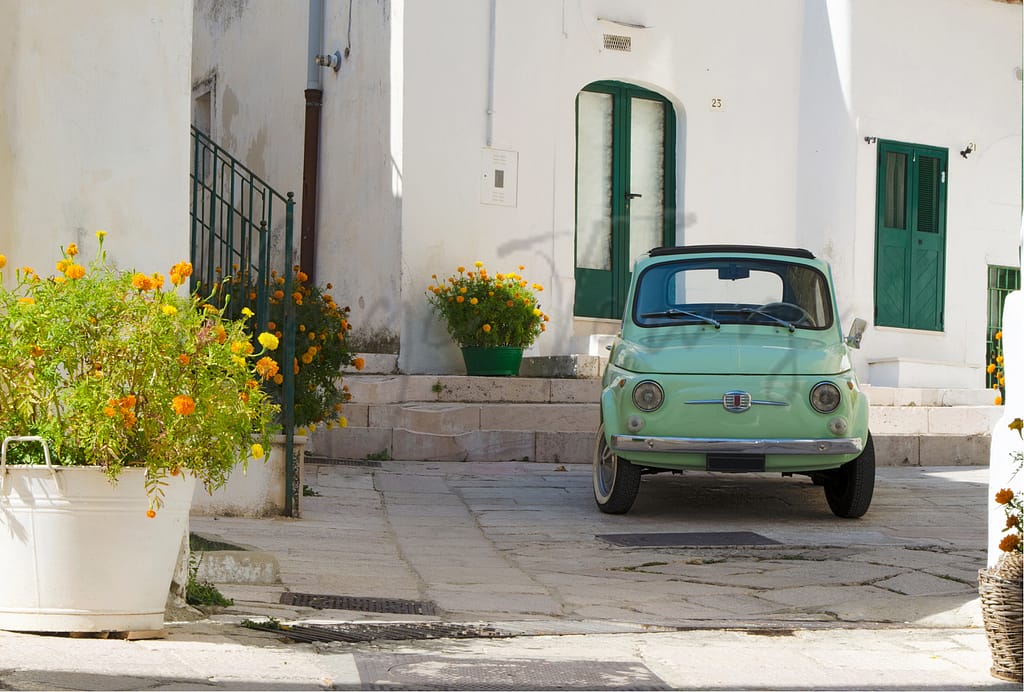
Cities Are a Different Story
Like many other cities in Europe, in Italy too it’s possible to live without a car. In some cases, it’s actually the smarter choice, because Italian city centres are a maze of ZTL-zoner (limited traffic areas) where you can be fined just for passing through, and parking is both expensive and endlessly frustrating.
Rom is the obvious example. If you’re in the right area, the metro does a lot of the heavy lifting. Line A in particular – stops like San Giovanni, Re di Roma, Ponte Lungo, Furio Camillo – puts you within walking distance of a large part of the city. Line B covers other parts. Between the metro, trams, and buses, central Rome is navigable without a car. That said, Rome is enormous, and if you end up living in a more peripheral neighbourhood, or somewhere the buses run every 40 minutes and stop at 9pm, a scooter becomes very useful very quickly. Rome without a car can work; Rome without any vehicle at all is a gamble depending on where exactly you land.
Bologna is, in my opinion, one of the best cities in Italy to live car-free. It’s compact, the historic centre is almost entirely walkable, there’s a decent bus network, and the city is genuinely flat – which matters more than people realise when you’re deciding whether to cycle. The Marconi Express even connects the train station to the airport in about 10 minutes now, so you don’t have any problem on that front either.
Same for Milano. The metro network is extensive, there are trams, buses, and a solid bike-share system. If you’re based centrally, you honestly don’t need a car.
However, there are also some cheaper, medium-sized cities where en bil is not necessary. A good example is Padova, in the Veneto – it has a tram line, reasonable buses, and the university presence means the city has invested in cycling infrastructure over the years. It’s manageable. Another example is Brescia, which has a metro line (two stations, but they connect to buses well). Bergamo is trickier – the lower city (Bergamo Bassa) is fine on public transport, but the upper city (Città Alta) is where most people want to be, and getting up and down repeatedly without a car gets old. Mantova is a small, flat, walkable city where you can genuinely get by on foot and bike for most daily needs – though you’d still feel the limits the moment you wanted to leave.
So if you’re living in a central location in a medium-to-large city, you’re probably fine for daily life. But “fine for daily life” and “able to fully live Italy” are two different things, and that becomes more evident when you consider smaller towns.
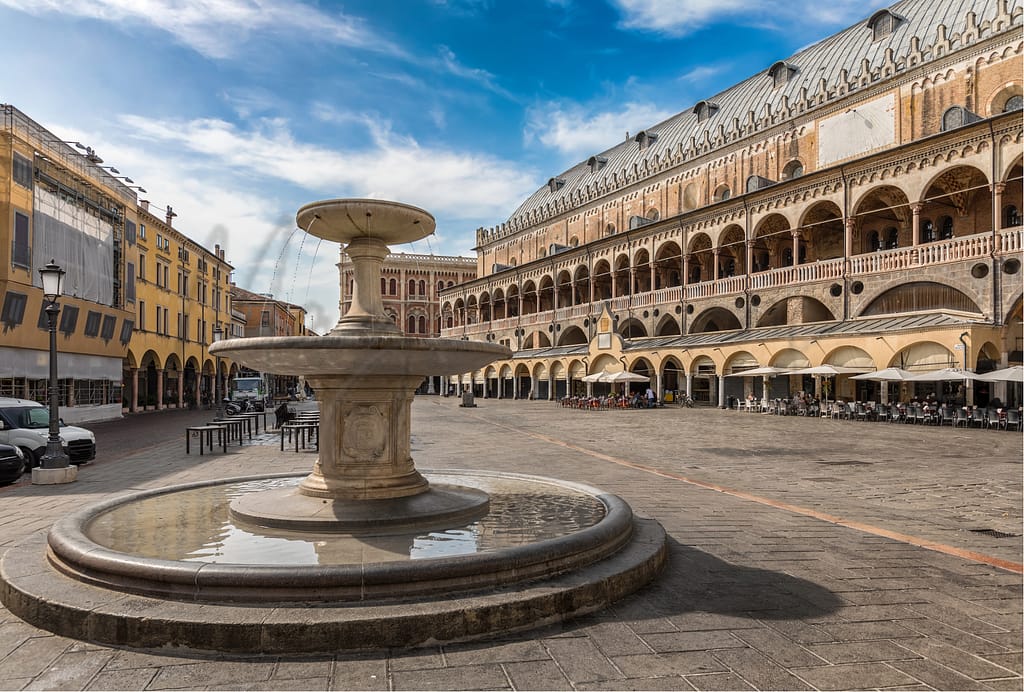
Smaller Towns and the South: A Different Reality
If you’re considering a move to a smaller Italian town, you definitely need to go in with realistic expectations about transport. Buses exist in most places, but they often run on limited, often school-day schedules: a handful of departures in the morning, a couple in the afternoon, and maybe something in the evening, but not beyond a certain time. They exist to get students and elderly residents to the nearest big town and back. They’re not designed for someone who wants to, say, go out for dinner in the neighbouring village on a Saturday night.
Togforbindelser vary enormously by region. Northern Italy is generally much better served – the network is denser, the trains run more frequently, and regional connections tend to be reliable. As you move south, this becomes less consistent. Southern Italy has beautiful, well-functioning main lines (Bari, for instance, is a solid transport hub), but if you want to get between smaller towns in the interior, you’re often looking at infrequent regional trains, buses that don’t connect well, or long journeys that simply don’t make sense unless you have a lot of time.
The majority of expats, for example, are now considering Toscana. This region is beautiful, but outside Florence, Pisa, and a few other places, living without a car is almost impossible. Especially if you consider that reaching the nearest major airport often takes a few hours. Same for Puglia, another expat favourite. Bari, Monopoli, Brindisi, and Lecce are all on the main Trenitalia line and easy to reach by train. But the trulli country, the inland towns, the masserie and countryside properties that are so popular with buyers? Practically inaccessible without your own vehicle.
Den road infrastructure is also worth mentioning: much of southern Italy is not on the motorway netværk the way the north is. Getting from A to B often means winding regional roads rather than motorways. So be sure to visit the area properly before committing.
In the meantime, if you want to explore which towns you can get by without a car, you can try our Byopdagere. It lets you filter towns by transport connections, proximity to airports, and services.
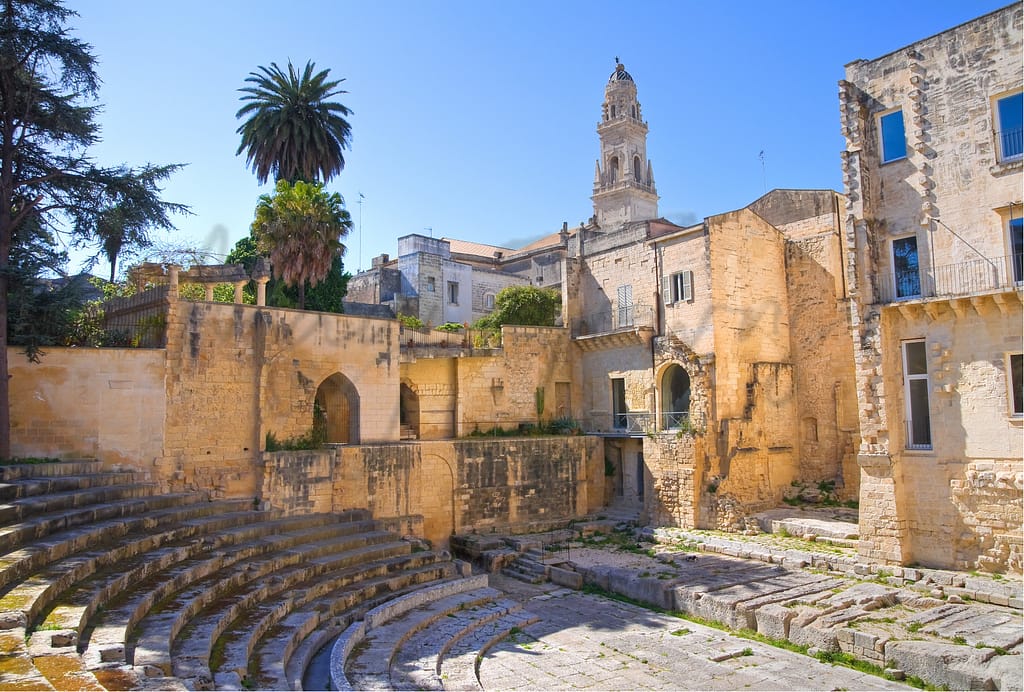
The Question You Should Actually Be Asking
I grew up in a town i Veneto. I have friends who, by choice, have never had a licence. And I can tell you: it’s a limited life, even in a well-served small town.
Yes, you might have a Supermarked within walking distance. A pharmacy, a bar, a post office. The basics are covered. But the moment you want to do something spontaneous – drive to the lake on a Sunday afternoon, hike a trail in the hills, go to a sagra in the next village, explore your region properly – you’re dependent on other people or on very limited timetables.
The best of Italy – the coastline, the mountains, the medieval towns off the tourist trail, the vineyards, the national parks – is spread across a landscape that assumes you can drive. There’s no practical way to discover the real Italy, the Italy that exists beyond the historic centres and the main piazzas, without the freedom to go where you want when you want.
And there’s a social cost too. Italians are spontaneous. “Andiamo?” – let’s go – is not a phrase that works well when you’re waiting for the last bus home at 8pm. If your social life depends entirely on being somewhere you can reach on foot, it gets small very quickly.
If You’re Not Ready for a Car Yet: Some Options
If you’re in the early stages of your move and need to sort transport before you’ve sorted the licence situation, there are a few options worth knowing about.
Long-term car rental has grown significantly as an option in Italy. Companies like SIXT offer extended rental periods that can work for a few months while you settle in. For expats who aren’t yet residents – or who want a hassle-free arrangement without dealing with Italian insurance, bollo (road tax), and maintenance – noleggio a lungo termine (long-term rental, often called NLT) is worth exploring. The biggest player in Italy is Leasys (part of the Stellantis group), which offers contracts typically from 24 to 60 months that bundle insurance, maintenance, and roadside assistance into a single monthly fee. Hertz, Avis, og Europcar all operate in Italy and offer extended rental options too. For non-EU residents who haven’t yet established residency, European lease programmes through Auto Europe eller Motorvana can offer a tax-efficient way to have a vehicle for a medium-term stay. Worth getting a few quotes and comparing, as the options and costs vary considerably depending on your situation.
The Bottom Line
Living in Italy without a car is muligt. In the right city, in a central location, for a certain kind of daily life, it can even be comfortable. But it comes with real constraints, and most of the expats I’ve spoken to who tried it eventually got a car anyway.
Italy is not a country that has invested uniformly in offentlig transport, and outside the major cities, the network reflects that. Buses stop early. Trains skip small towns. The countryside – which is half the reason people move here – is almost entirely car country.
If the driving licence process feels daunting, we’ve got a Fuld guide on what it actually involves. But my honest advice? Factor it in from the start. Deal with the licence, sort a car, and give yourself the full Italy – not just the version you can reach on foot.







 English
  French
  German
  Italian
  Danish