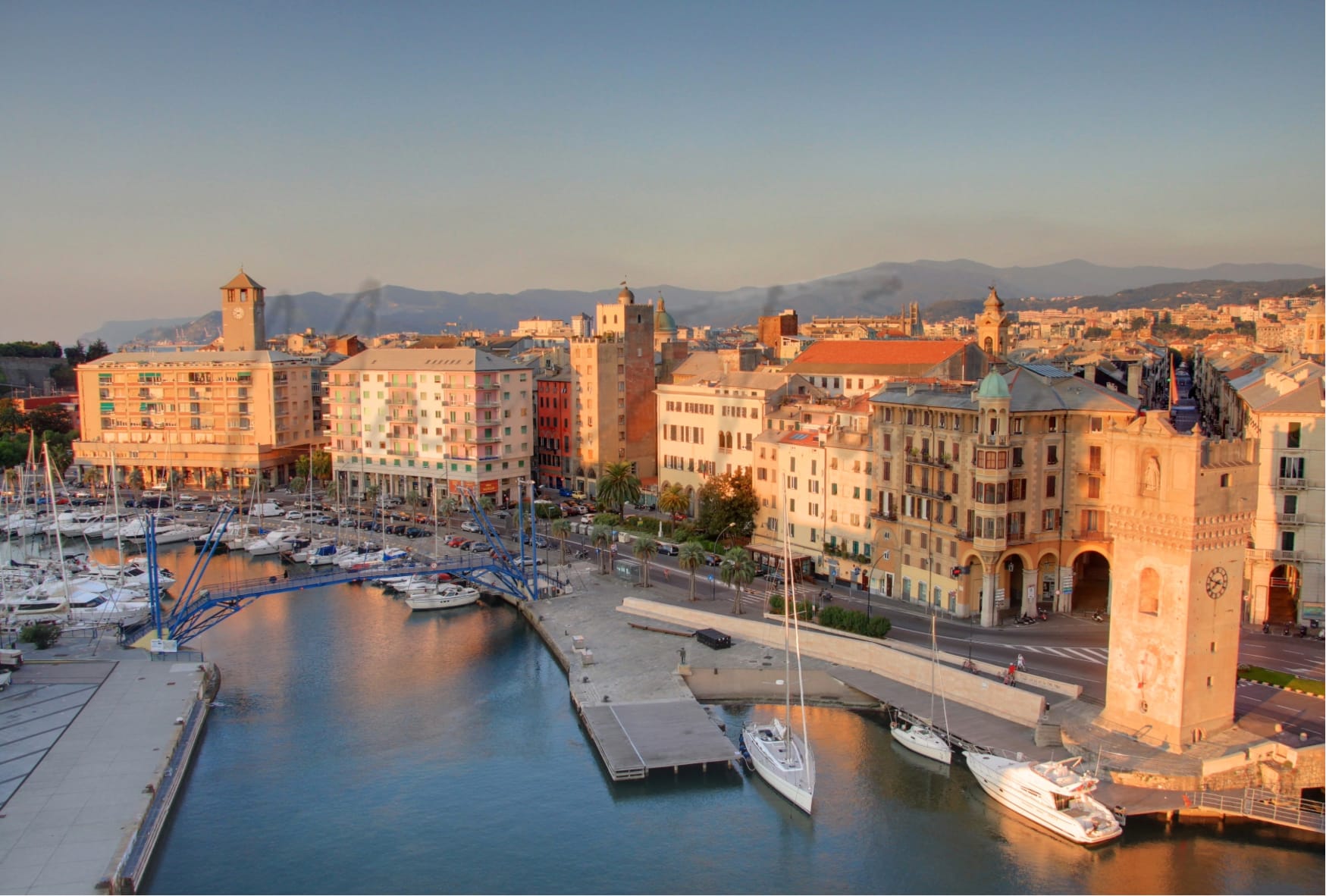
Everyone assumes that to live in the Italian Riviera you need a lot of money. And for places like Portofino or Santa Margherita Ligure, that’s absolutely true. However, between Genoa and the French border sits Savona, a working port city of about 58,700 people where you can actually afford to live on the Ligurian coast.
Clearly, we’re not talking about a glamorous and super popular option, but it’s really livable, and most of all a great base if you want to be close to pretty much everything. It’s a place where in 5 minutes you’re at the beach, in 10 minutes you’re in the mountains, and in 30 minutes you’re in Genoa by train. So for people looking for coastal living without the coastal price tag, Savona keeps coming up.
But what’s it actually like living in Savona year-round? In this article from our “What People Say About Living in…” series, we’ll break down Savona through the eyes of people who live there.
Life in Savona: What People Say
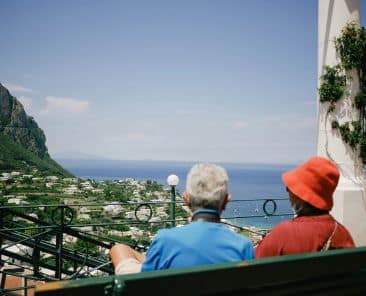
Although Savona is a pretty quiet town, according to residents it’s the perfect compromise if you’re looking for an affordable place surrounded by lots of things to see, from the beach to the mountains and beautiful cities. Plus, you’re less than 2 hours away from the popular French Riviera.
“In 5 minutes you’re at the beach and in 10 minutes you’re in the mountains in the middle of the woods. Maybe compared to bigger cities you’ll find it a bit boring – there’s no huge nightlife – but there’s enough to spend nice days and evenings out without spending crazy amounts.”
Many people say that compared to Genoa, Savona is more livable. Life costs slightly less, it’s all within reach, and generally things work pretty well, even though, as we’ll see later, it could definitely improve in terms of management, especially regarding cleanliness.
“Savona is much more livable than Genoa. I feel lucky to live here. A short walk and I find the sea, a short walk and I’m in the middle of greenery.. life costs slightly less, everything is within reach, and generally everything works pretty well in terms of infrastructure. I recently had to deal with healthcare facilities and was impressed by the excellent service, nothing to complain about.”

Transport and Connectivity in Savona
Savona is walkable day-to-day, and train connections are genuinely good. From Savona station you can reach Genoa in 28 minutes, Milan in 2 hours 30 minutes, and Monaco in 2 hours 45 minutes.
For flights, Genoa’s Cristoforo Colombo airport is the most convenient (about 40 minutes away) and covers most major European routes. If you need broader international connections, Turin and both Milan airports are all roughly an hour and a half by car. That said, owning a car is almost non-negotiable. Buses exist but locals are blunt about their reliability:
“Buses are terrible. Unreliable schedules, few routes actually served well. The timetables are purely indicative – don’t count on them.”
And driving itself comes with frustrations. The city is essentially crossed by just two main roads, creating predictable bottlenecks during rush hour. During summer, weekly cruise ship arrivals at the port add guaranteed chaos to central streets and public transport. Parking – especially near the center and in summer – is a persistent headache, and residents are unanimous: sort out a private garage before you commit to a home.
Where to Live in Savona: Housing & Cost of Living
Property prices in Savona sit at around €2,138/m² on average, putting a 100m² apartment at roughly €213,800. Housing availability is relatively high, which gives buyers and renters decent options.
| Area | Sale Price (€/m²) | Avg. 100 m² Home (€) | Rent Price (€/m²) | Avg. 100 m² Rent (€/month) |
|---|---|---|---|---|
| Villapiana, La Rusca, Via Mignone | €1,641 | ~€164,100 | €7.49 | ~€749 |
| Oltreletimbro, Santa Rita | €1,960 | ~€196,000 | €8.25 | ~€825 |
| Centro Storico | €2,369 | ~€236,900 | €10.40 | ~€1,040 |
| Legino, Zinola, Fornaci | €2,400 | ~€240,000 | €10.59 | ~€1,059 |
| Villetta, Valloria | €2,409 | ~€240,900 | €10.09 | ~€1,009 |
| Lavagnola, Santuario, Montemoro | €1,500 | ~€150,000 | €7.73 | ~€773 |
Data elaborated from Immobiliare.it
For students or young people looking for a single room, options are limited. Savona isn’t a university city, and few landlords rent individual rooms. Shared apartments start at around €500/month – manageable for two or three people, and considerably cheaper than Genoa, let alone Milan.
Where you choose to live, as always, matters a lot. Santa Rita, San Michele and Fornaci are widely considered the best areas. Close to the sea, walkable to the center, reasonably quiet, good schools nearby, and well-connected to the train station – ideal if you commute to Genoa. Prices are reasonable:
“The Santa Rita/San Michele/Fornaci neighborhoods are the best: the center is easily reachable on foot, you’re close to the sea, and they’re fairly quiet. Villapiana is cheaper, but parking is a nightmare. Villetta and Valloria are very peaceful, but being on top of a hill, they’re quite inconvenient on foot.”
Villapiana is more affordable, but only makes sense if you genuinely don’t need a car – parking is nearly impossible. Villetta and Valloria offer tranquility, but the hilltop location makes them impractical without wheels. The city center is lively and convenient for shops, but obviously expect higher prices, limited traffic zones, tourist foot traffic, and difficult parking.
Challenges of Living in Savona
First, cleanliness is something residents bring up often. Savona is beautiful and a rich history, but many locals feel the city could be better looked after. It’s not dramatic, but it’s noticeable day-to-day:
“Savona is beautiful, rich in history and culture.. the only downside is the management. The city feels a little neglected, especially when it comes to cleanliness.”
Second, healthcare is a mixed picture. The local San Paolo hospital handles many situations well, but for more complex or specialist needs, most residents head to Santa Corona in Pietra Ligure – about 30 minutes away and widely regarded as excellent. Private clinics in the city can also fill gaps with reasonably priced specialist appointments.
Third, getting around has its frustrations. The road network is limited, which means rush hour slowdowns are fairly predictable. Buses exist but aren’t always reliable, and parking near the center – particularly in summer when cruise ships arrive weekly – requires patience and planning.
Fourth, nightlife and events are limited. Savona is a quiet city in the evenings, with few festivals or clubs to speak of. If going out regularly matters to you, you’ll find yourself heading to Genoa or other nearby towns fairly often.
Finally, coastal property in Liguria doesn’t come cheap. Savona is more affordable than Genoa, but the wider region has high prices. Going inland opens up more budget-friendly options, though you do trade away easy sea access – so finding that balance takes a bit of research.

Savona by the Numbers: Key Data
- Quality of Life Score: Moderate (66/100)
- Air Quality: Good (80/100)
- Nearest Hospital: San Paolo-Pronto Soccorso (19 minutes)
- Safety: Moderate to low earthquake risk
- Internet Speed: Excellent (215 Mbps average, up to 290 Mbps)
- Transport: Savona is generally well-connected, but a car is recommended
- Airports: Genoa Cristoforo Colombo (41 min), Turin (89 min), Milan Linate (98 min)
- Railway Stations: Albisola (25 min), Stazione di Bragno (25 min), Stazione di Altare (26 min.)
For more detailed information about Savona and its services and infrastructure, visit the Magic Towns city profile.
Is Savona Right for You?
✅ Choose Savona if:
- You want to be near Genoa but in a more human-sized city – slightly cheaper, less chaotic, and genuinely walkable day-to-day
- You love having nature on your doorstep – 5 minutes to the beach, 10 minutes to wooded hills, an hour to ski slopes in winter
- You work remotely – internet averages 215 Mbps with fiber widely available
- You need good train connections – Genoa in 28 minutes, Milan in under 2.5 hours, with frequent services
- You want a quieter pace without full isolation – it’s not a party city, but there’s enough going on
❌ Think twice if:
- You need strong local healthcare – for anything serious, plan on traveling 30 minutes to Pietra Ligure’s Santa Corona hospital
- You need reliable public transport – buses are genuinely poor, with schedules that residents describe as “purely indicative”
- You’re bothered by traffic – the limited road network creates real bottlenecks at rush hour, and cruise ships bring weekly chaos to the center
- You expect well-maintained streets – cleanliness is the most consistent complaint from residents
- You want nightlife or events – there’s little here; you’ll be leaving town regularly for that

Final Thoughts
So is Savona right for you? If you want Ligurian coastal living with solid train connections, genuine walkability, and that rare combination of sea and mountains within minutes of your door, it could be a very good fit. As one resident put it: “I feel lucky to live in Savona. A short walk and I find the sea, a short walk and I’m in the middle of greenery.”
Just know what you’re getting into. Like many Italian cities of its size, Savona has its rough edges – public transport leaves something to be desired, rush hour can test your patience, and for more serious healthcare needs you’ll want to head 30 minutes down the coast to Pietra Ligure. Sorting out parking before you move will save you a lot of stress later.
But if those trade-offs feel manageable, you’re getting a walkable Italian Riviera city, 30 minutes from Genoa by train, with property around €2,138/m², excellent internet, and a daily life where the beach and the hills are both within easy reach.
It’s not a perfect city. But for people priced out of Genoa, or simply looking for something more human-scaled than a big Italian city, Savona hits a sweet spot that’s genuinely hard to find on this stretch of coastline.