In recent years, since Italy launched its famous €1 house initiative, countless hidden and authentic villages have been discovered by people from around the globe. While this incentive comes with strict requirements (more info here), it has proven to be an effective catalyst for revitalizing communities that had been dormant for decades – and, in many cases, creating vibrant new international populations in the process.
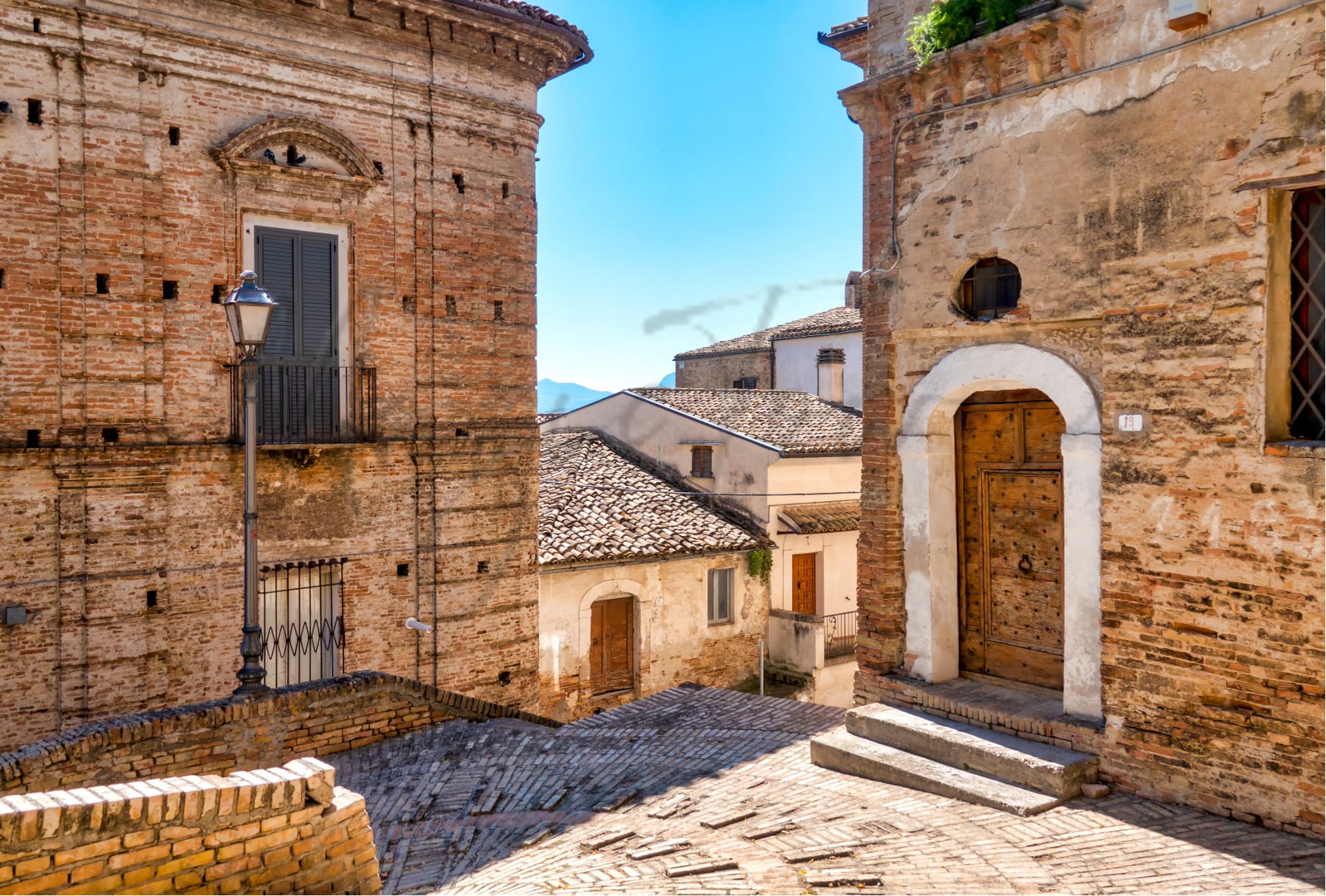
Tucked away in Abruzzo, about 30-40 minutes from both the Adriatic beaches and the Gran Sasso mountains, sits Penne – a historic hilltop town of around 11,000 residents. With its medieval architecture, cobblestone streets, and stunning views of the surrounding valleys, Penne has become home to a growing expat community – estimated at around 500 people from various countries who discovered that the real value here isn’t just in property prices, but in the quality of life itself.
But what’s living in Penne really like beyond the initial allure of affordable real estate? To answer that, we’ve combined our data with feedback from people who’ve made it their home.
Life in Penne: What People Say
What residents appreciate most about living here is the perfect balance between tranquility and convenience. They describe it as a place where life slows down in the best possible way – a town where you can truly disconnect from the chaos of modern life while still having access to everything you need for everyday living (from supermarkets to hospitals and beyond):
“We moved here at the start of the year and absolutely love it. The quality of life here has transformed us completely. We don’t feel like we’re missing anything…it’s peaceful but not lifeless. You still hear the local dialect being spoken. It feels authentically Italian.”
But most of all, Penne offers a genuinely low-cost lifestyle without sacrificing quality. Fresh, organic produce from local markets, excellent regional wines, and high-quality meats are all significantly more affordable than in larger or more famous Italian cities. And if you’re concerned about language barriers or integrating into the local community, here’s what an expat shares:
“The cost of living is incredibly reasonable. Eating out or buying local fruits, vegetables, wine, and meat – everything is more affordable and far superior in quality. And honestly, it’s not that difficult to find community here. From going to the market to getting your coffee at a local bar, you start recognizing faces, exchanging greetings with people on the street. Relationships develop naturally.”

Transport and Connectivity in Penne
One important consideration: Penne does not have a train station. However, the town is connected by several bus lines to nearby towns and Pescara (on the coast, one hour away, direct), where you can catch a train to reach major cities like Rome in 3h30 or Bari in 2h40. Connectivity could definitely improve, which is why many residents recommend having a car, or opting for nearby Atri, which has better transport links and medical services:
“There’s no railway station in Penne, but bus services to Pescara and the coast run regularly. The historic center itself is quite compact and walkable, though be prepared for plenty of steps throughout the old town. If you’re not physically fit or have mobility challenges, it might not be ideal“
The nearest airports are Abruzzo Airport (Pescara) and Raffaello Sanzio Airport (Ancona), both offering regional connections, though international travelers often route through Rome.
But one of the huge advantages of living here is that the surrounding area provides endless opportunities for outdoor activities – hiking, cycling, and exploring nature reserves are all easily accessible. From the Adriatic coast to the Gran Sasso and Maiella mountains, the area offers spectacular trails and natural beauty that remains largely undiscovered by mass tourism.
“The beauty of Abruzzo is obviously a major draw. It’s a place to reconnect with nature…you have breathtaking landscapes – beaches, mountains, lakes – all relatively untouched and not overrun with tourists. There are also unique local festivals and traditions throughout the region to experience.”
Where to Live in Penne: Housing & Cost of Living
Beyond the €1 initiative, Penne‘s overall housing market remains remarkably affordable. Unlike tourist-heavy areas or major cities, property prices here are accessible, and there are even several turnkey apartments and homes available for those who want to move in without major renovations. Plus, some residents say that given the influx of international people, it’s not difficult at all to find a real estate agent who speaks English.
“There are around 500 expats in Penne and the surrounding area. We’ve been here since New Year’s and really enjoy it. You can also find several move-in-ready properties on the market, depending on what you’re looking for.”
Prices average around €690/m² for sale (so around €69,000 for a 100m² house), and €4.26/m² for rent (around €426 per month for a 100m² house), in case you want to live there for a while before considering an investment.
Penne isn’t just affordable – it’s also livable year-round. The town has everything you need for daily life, from multiple supermarkets and specialty food shops to a weekly market and hospital. And despite being a quiet town, throughout the year, traditional festivals like the Palio de Sei Rioni bring the streets alive with races, food stalls, and artisan crafts.
✨ Read our article: “From the UK to Abruzzo: Wendy Ridolini’s Story”

Challenges of Living in Penne
First things first: Abruzzo has experienced earthquakes in the past. Penne itself sits in a moderate-risk zone, but if you’re considering other towns in the region, the risk level might be different. Make sure to do your research – you can use our ‘town explorer’ to filter out areas with high seismic risk.
As for daily life, according to residents, the climate is worth considering. Winters can feel quite cold, and the higher mountain communities around Penne can see icy roads during the coldest months. For those accustomed to comprehensive public services, Penne presents some limitations:
“Winters can be cold here. Roads get icy, especially in the higher mountain communities. If you’re relying on trains and buses without a car, I’d suggest staying closer to the coast – places like Atri, Silvi, Chieti, or Pescara.
Another important consideration is healthcare. According to our data, local hospital care ranks low nationally, and facilities are limited, which can mean longer wait times for certain services. However, it performs well in specific areas, specifically breast cancer surgeries and cardiology.
The town also has limited educational facilities, which could be challenging for families with school-age children. The job market is another consideration, as opportunities are limited. Most expats either work remotely or are retired. But even if you’re working remotely, don’t expect super-high internet connectivity (the average download speed is 49 Mbps).
“If you’re thinking of moving here and need to find local employment rather than working remotely, you should probably consider regions in northern Italy. But if you value peace and a slower pace, Abruzzo is excellent…Umbria too.”

Penne by the Numbers: Key Data
- Quality of Life: Good (76/100) – based on air quality, amenities, walkability, population, and environmental factors
- Air Quality: Excellent (90/100) – among the best in Italy
- Safety: Moderate Earthquake Risk
- Healthcare: San Massimo Hospital (5 min)
- Internet Speed: Moderate (may frustrate heavy users)
- Rent: ~€425 (100 m²)
- Transport: No train station; bus connections to Pescara and Rome available
- Airport: Abruzzo Airport, Pescara (36 min), Raffaello Sanzio Airport, Ancona (90 min), Ciampino, Rome (around 2 hours)
- Train Station: Stazione di Montesilvano (32 min), Stazione di Silvi (34 min), Stazione di Chieti Madonna delle Piane (40 min)
For more detailed information about Penne and its services and infrastructure, visit the Magic Towns city profile.
Is Penne Right for You?
✅ Choose Penne if:
- You are looking for a quiet and authentic place in Italy, without being too isolated (although depending only on public transportation can be difficult)
- You’re seeking an extremely affordable cost of living without sacrificing quality of life
- You love nature and want it all nearby – mountains, beaches, lakes, all just 30-40 minutes away
- You’re looking for excellent air quality
- You’re retired or work remotely and don’t need local employment
❌ Think twice if:
- You need reliable public transportation – in Penne there’s no train station and bus services are limited
- You’re not mobile or have difficulty with stairs – the historic center involves many steps and hills
- You have school-age children – educational facilities are limited
- You expect comprehensive healthcare facilities without wait times

Final Thoughts
In essence, Penne is ideal for those seeking authentic Italian living at a fraction of typical costs. With excellent air quality, affordable housing (from €1 renovation projects to turnkey homes around €690/m²), and a supportive expat community, it offers a good quality of life in a medieval setting.
That said, it isn’t for everyone. It’s probably not ideal for families, given the limited amenities (schools, etc.) and job market. And it’s not suitable for those who depend solely on public transport, because there’s no train station within the city and bus lines are limited. But, it’s definitely a good fit for retirees and remote workers who value tranquility, affordability, and proximity to nature.
If you’re experiencing difficulties with your relocation process, become a member and get a one-hour free private consultation to help you navigate it smoothly.
Want to Explore More Options?
If Penne hasn’t fully convinced you and you’d like to explore other options, use our search tools to explore over 1,500 towns and cities in Italy. You can filter by cost of living, transport, healthcare, and other lifestyle factors — making it easy to find the perfect place for you.
Discover our article on the 7% tax town benefit, and sign up for our newsletter to get our guide to every town covered by this incentive.