
Skip to main content Scroll Top
  • Home
  • Culture
  • Italy’s Mountain Towns: Staying Safe and Living Well

Italy’s Mountain Towns: Staying Safe and Living Well

Discover the allure Italy’s majestic Alps and its mountain towns. Explore beyond the tourist trails and prepare with essential tips for expats looking for high living.

Over 80 people lost their lives in Italy’s mountains in a single month in the summer of 2025 – at least 83 fatalities (with 5 missing) between 21 June and 23 July 2025. This shocking statistic, shared by Maurizio Dellantonio (head of the national alpine rescue corps, CNSAS) in Corriere della Sera, is a wake-up call. “I’ve never seen a summer with so many mountain deaths… we are beyond any limit,” Dellantonio lamented.

The Italian Alps undeniably captivate us with their Instagram-famous peaks and lakes, and the buzz will only grow as the Milano–Cortina 2026 Winter Olympics approaches. But behind the picture-perfect scenes lies alpine reality: even if you survive a mishap, a mountain rescue can leave you with hefty bills – in some regions like Trentino and Veneto, an uninjured helicopter evacuation can cost €750–1,000 per person if you’re not insured. In short, Italy’s Alps remain as alluring as ever, but they demand respect and preparation.

In today’s article, we will cover some tips to enjoy Italy’s mountains to the fullest, as well as recommend ideal mountain towns for a second home or full-time living if you’re an expat or retiree moving to Italy.

The Italian Alps Beyond the Selfie Spots

There’s far more to Italy’s mountains than the crowded postcard hotspots. Beyond the Dolomites’ Instagram queues and well-trodden ferrate, a vast network of marked “sentieri” (trails) criss-crosses the Alps and Apennines.

A coin-operated turnstile set up to keep out hordes of tourists on the Dolomites.

The Club Alpino Italiano (CAI) – Italy’s national alpine club – has been charting these paths for over 150 years. Hikers soon learn to follow the CAI’s signature red-and-white trail blazes painted on rocks and trees. The CAI and its local sections maintain thousands of kilometers of trails and over 700 mountain refuges (rifugi) for hikers, ranging from simple high bivouacs to cozy lodges serving polenta and wine.

These rifugi, often spaced a day’s walk apart, make it possible to trek hut-to-hut across regions. CAI members enjoy perks too, like discounted hut stays and even mountaineering rescue insurance. The club also organises guided outings and courses to help newcomers learn the ropes. In short, if you step off the beaten path, Italy’s mountains offer infinite trails to explore – and with CAI’s markers, you don’t need to be an expert to find your way.

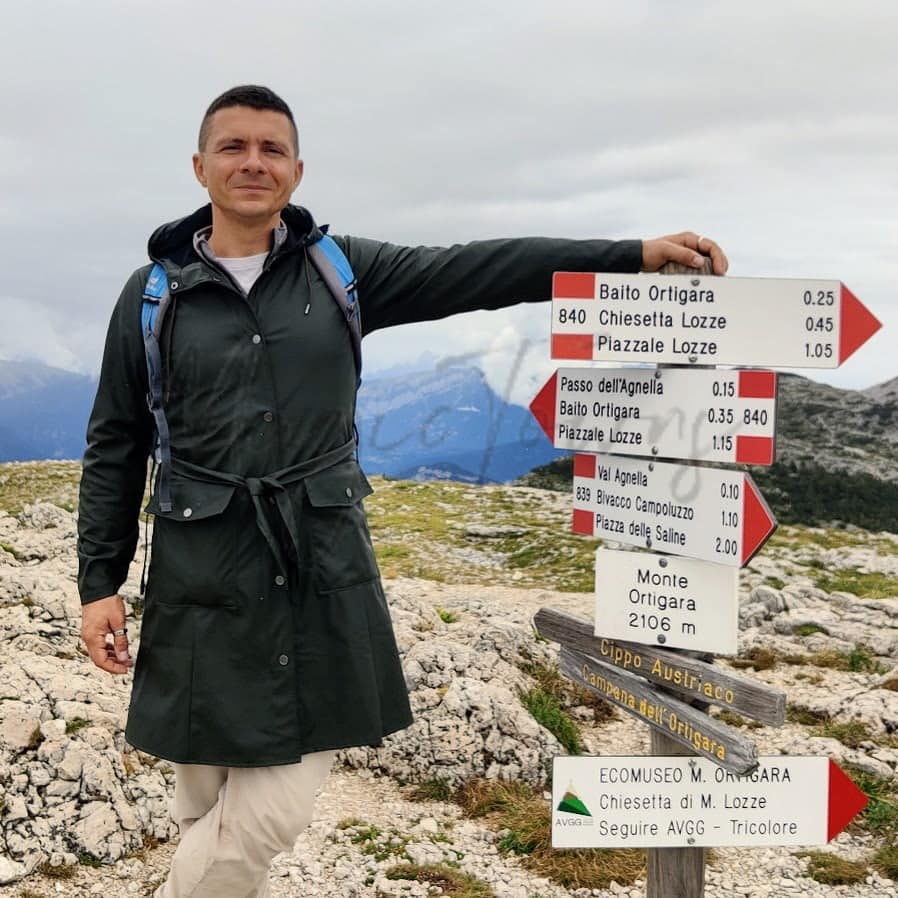
One of the ubiquitous red-and-white trail markers.

Smart Safety in the Alps

While news of several dozen hikers dying over the course of weeks may put you off your mountain experience, the sad reality is that the majority of accidents involve unprepared, underdressed tourists.

Each year too many hikers set off unprepared, sometimes inspired by social media without grasping the risks. Maurizio Dellantonio warns that spectacular Instagram shots can spur novice hikers into danger – the “I want to do it too” effect. Don’t be that person. Plan and pack for the mountains’ reality, not just the photo-op. At a minimum, bring:

  • Proper clothing & gear: Sturdy footwear, weatherproof layers (only about half of hikers even carry a rain jacket, Dellantonio notes), sun protection, and any technical equipment required. Always pack something warm and waterproof – mountain weather can turn fast.
  • Navigation tools: Don’t rely on mobile signal. Download offline maps or GPX tracks to your phone (apps like Komoot or Maps.me let you save detailed trail maps). A paper map and compass don’t hurt either. And carry a power bank. Italy’s CAI even offers an emergency app, GeoResQ, which can send your exact location to rescuers.
  • Food & water: Mountain refuges and streams aren’t always where you need them. Carry more water than you think you’ll drink, and some high-energy snacks.
  • Check conditions: Afternoon thunderstorms are common in summer, and snowfields can linger into July. In winter and spring, avalanches are a real risk. Turn back if conditions look sketchy; the mountain will still be there tomorrow.
  • Know your limits & seek local help: Don’t be ashamed to consult locals or hire a licensed alpine guide. As Dellantonio observes, some people today find it “humiliating” to ask for information – but a quick chat with a park office or guide can save your life.

Remember that rescue policies vary by region. In most of Italy, mountain rescue is free if you need medical treatment, but several Alpine provinces will charge you a “ticket” for non-injury rescues. For example, Trentino-Alto Adige and the Veneto levy fees for helicopter call-outs when hikers are unhurt – roughly €750–€1,000 per person. Having travel insurance or CAI membership covers these costs and is highly recommended. The case of an English tourist who received a €14,000 bill after ignoring do not enter signs and being airlifted is a cautionary tale to all.

Living the Life in Italy’s Mountain Towns

It’s easy to think of places like Cortina d’Ampezzo or Courmayeur as playgrounds rather than real towns. But Italy’s mountain comuni are lived in year-round. Many have their own schools, hospitals, weekly markets, and centuries-old traditions. Living in a mountain town means joining a close-knit community that has learned to thrive amid relative isolation, long winters, and natural challenges. The rhythms differ from a big city – don’t expect late-night supermarkets – but the trade-offs are fresh air, outdoor recreation on your doorstep, and tight community bonds.

Magic Towns Italy’s Town Explorer lets you filter towns by elevation, proximity to ski slopes, and even natural hazard risk (earthquakes, landslides). With a few clicks, you can discover towns that match your lifestyle in all seasons.

List of Mountain Towns For Expats and Retirees

If the call of the peaks has you dreaming of a move, consider these towns that offer a great balance of scenery, community, and livability:

  • Cuneo (Piemonte) – A midsize city perched at 534 m on a plateau at the foot of the Maritime Alps. Affordable property, a lively piazza, and quick access to France.
  • Borgo San Dalmazzo (Piemonte) – A gateway to the Alpi Marittime Natural Park, with authentic charm and a true mountain lifestyle.
  • Biella (Piemonte) – Historic textile town with elegant architecture, great air quality, and the Santuario di Oropa above.
  • Avigliana (Piemonte) – Medieval charm, two lakes, and the monumental Sacra di San Michele above the town.
  • Asiago (Veneto) – Known worldwide for its cheese, Asiago sits at 1,000 m on the Altopiano dei Sette Comuni. A lively centre, WWI memorial, and both summer pastures and winter skiing make it a standout. Crucially, it’s under an hour from Vicenza and about 90 minutes from Venice.
  • Lecco (Lombardia) – Lake Como meets alpine peaks. A vibrant city where you can hike, climb, or commute to Milan in 40 minutes.
  • Nembro (Lombardia) – A Val Seriana town with access to the Orobie Alps, cycling paths, and Bergamo’s amenities nearby.
  • Teramo (Abruzzo) – Between the Adriatic and the Gran Sasso massif, combining seaside and alpine lifestyles.
  • Alzano Lombardo (Lombardia) – Gateway to the Orobie Alps, with strong services and trailheads into the hills above town.

Olympics 2026: What It Means for Residents

The upcoming Milano–Cortina 2026 Winter Olympics is spurring major investments in Alpine infrastructure: roads, tunnels, and public transport upgrades. This could benefit residents well beyond the host towns. But crowds and property prices are already surging in marquee resorts like Cortina d’Ampezzo, where average property values rival Paris. Savvy movers might look just outside the Olympic spotlight – in valleys adjacent to Cortina or in Trentino towns – to enjoy the benefits without the frenzy.

Conclusions

Italy’s mountain towns offer an incredible lifestyle: fresh air, natural beauty, outdoor adventure, and a strong sense of community. From the Maritime Alps to the Apennines, these are places where you can genuinely live well – as long as you come with respect for the environment and local way of life. Whether you’re hiking for the day or buying a home in a mountain valley, remember the golden rule: “La montagna si vive, non si conquista” – you experience the mountain, you don’t conquer it. With the right mindset, Italy’s Magic Towns of the Alps can indeed be a dream come true.

Was this helpful?

✅ Yes

❌ No


Thanks for your feedback!

Comments? Questions? Join the discussion with our authors on our Facebook page.

subscribe to our newsletter

Discovering Italy? Ask Magic AI.

Embark on your Italian adventure with Magic AI, the innovative heart of Magic Towns Italy. Our AI technology, integrated with a comprehensive database, provides answers to your queries about life, legalities, and the hidden treasures of Italy.

Powered by a database curated by travel, relocation and legal pros, Magic AI gives you expert advice without the premium price tag.

Recent Posts
Clear Filters
Most Popular Posts