
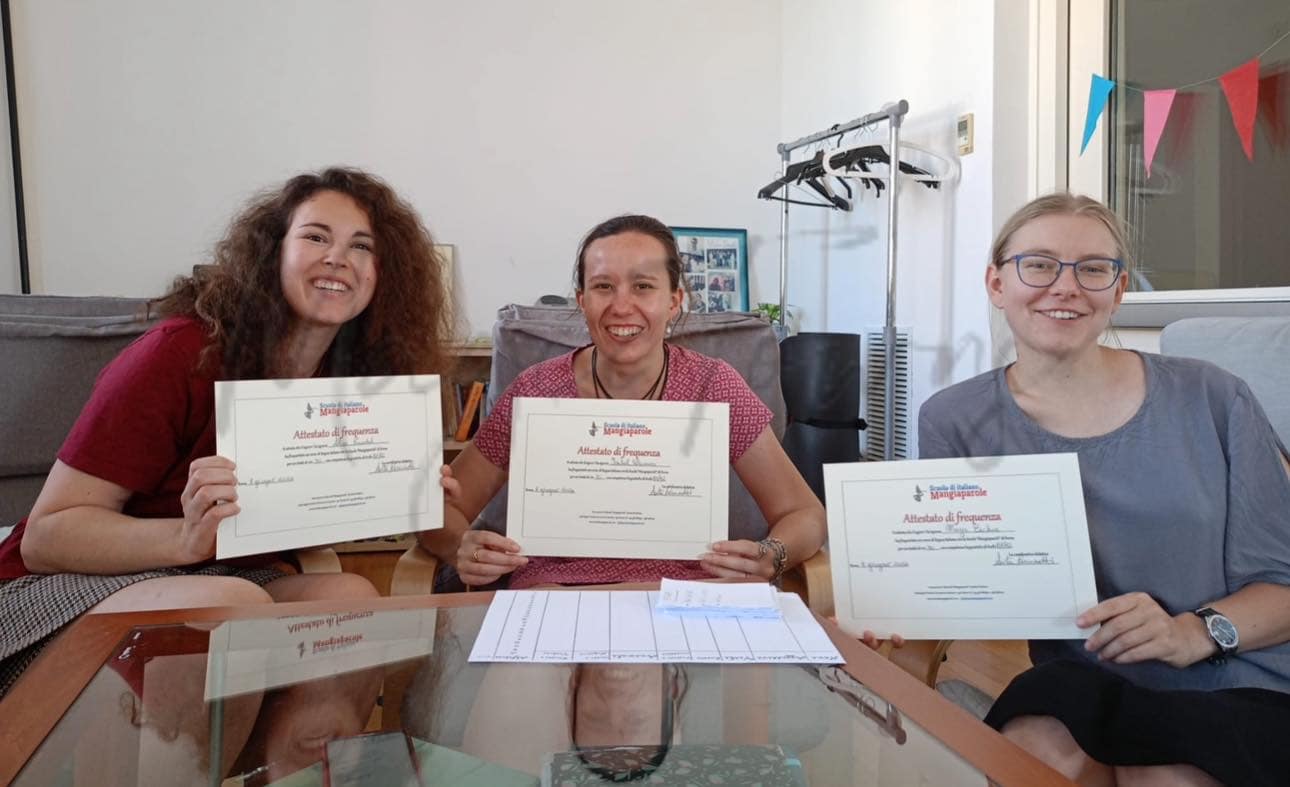
For many expats in Italy, the challenges of adapting to a new life go beyond just finding a place to live or securing a job. Learning the language, understanding local customs, and even obtaining a driver’s license can feel like overwhelming tasks. By far, according to our data, the most overwhelming hurdle for American and other expats coming to live in Italy is the necessity to get an Italian driver’s license within 12 months from when they take up residence. Learning Italian and passing written and practice tests within a year is no easy feat for anyone.
In a conversation with Francesca Ruberti, head of student services at Mangiaparole Language School, we discussed how their specialized courses, particularly the one focused on the Italian driving exam, support expats in navigating this crucial step.
Context: Who Needs To Study To Get An Italian Driver’s License?
The good news for most European expats is that they can simply exchange their driver’s licenses for an Italian one when they move to the country. Holders of Maltese, Bulgarian, German, even Albanian or Japanese licenses can merely hand in their existing plastic card and get an Italian replacement against a small fee. EU and EEA licenses don’t even need to be swapped until they actually expire. A full list of the countries whose driver’s licenses can be exchanged for an Italian one is maintained by the Transport Ministry.
Sadly, matters are different for holders of American, Canadian, Australian and other licenses. As mentioned, residents holding any non-convertible licenses can drive for one year (yes, it sounds arbitrary and it is) on their existing papers before losing the ability to legally drive in Italy. To avoid this, they must pass practice and theory in Italian and get a license from scratch. While many – including us – have been flagging this hurdle to Italian authorities to no avail, a group of Italian teachers has stood up to the challenge of teaching Italian to expats so they are able to get behind the wheel again.
An Introduction to Mangiaparole Language School
Mangiaparole Language School was founded by Benedetta Triulzi and Anita Lorenzotti with the mission to provide expats high-quality Italian language courses tailored to their specific needs.
Many older expats, particularly retirees in Italy, often face challenges with traditional language learning methods. “Our goal is to make learning Italian enjoyable, practical, and accessible, even for those starting from scratch”, says Francesca. “We focus on real-life situations, especially for those who need Italian for daily interactions, whether it’s chatting with locals, handling everyday tasks, or even preparing for the driving test”.

One of their most popular courses is Italiano Espresso, which is designed to help expats gain fluency without getting lost in overly technical grammar rules. The school uses a communicative method, which emphasizes conversation from the very first lesson, making the learning process both engaging and practical.
Inside the Classroom Helping Expats Drive Legally
One of Mangiaparole’s standout offerings is their driver’s license course, designed to help expats pass the theory portion of the exam.
The driving test in Italy is often a significant hurdle for expats. While they may already know how to drive, the technical language of the exam can be a barrier. That’s why they developed a specialized manual that simplifies the language and helps students understand the specific vocabulary needed.
“Many of our students are native English speakers, so we make sure to offer some basic explanations in English when necessary, but we always emphasize that a solid understanding of Italian is crucial for passing the exam”, Francesca explains. For this reason, candidates must have an A2 level of Italian, which is verified through a placement test available on the website, followed by a brief video call if the results are positive.
All lessons are virtual, and students can choose between one-on-one lessons or group sessions. The Intensive Group Course is available on both weekday (€320) and weekend (€345) schedules, consisting of 24 hours with two lessons per week. For those seeking more personalized attention, the One-on-One Course offers individual instruction with options for a 6-hour package (€215) or a 12-hour package (€420).
Their Students: Many Americans, Many Retirees
The majority of students in the Driver’s license course come from English-speaking countries, particularly the United States, Canada, South Africa and New Zealand. These students typically range in age from 50 to 70, many of whom have retired to Italy or are planning to do so.
“Learning Italian can be challenging, especially for older expats who may not have studied a foreign language in decades,” Francesca acknowledges. “But our course provides the support and structure they need to succeed”.
“Also, with this course, not only will you pass the exam, but you’ll also give yourself the chance to improve your Italian.”

Flexibility and Personalization: Key Factors for Success
What sets Mangiaparole apart from other language schools is their personalized approach. Whether students prefer group lessons or one-on-one tutoring, the school tailors its offerings to meet the specific needs of each individual. In fact, all the teachers, both Italian and foreign, are highly qualified professionals with over ten years of teaching experience.
However, even though attending lessons is the most important part, it isn’t enough. In addition to the lessons, students are encouraged to complete extra quizzes and practice tests on their own, as active participation outside of class is key to success.
“We understand that every expat’s situation is different,” says Francesca. “Some people are already immersed in Italian culture and need only a little guidance to pass the driving test, while others may need more comprehensive language instruction”. For students who need extra help, Mangiaparole also offers the option to purchase additional individual lessons, focusing on specific topics such as driving rules, insurance, or more complex aspects of the exam.
Success Stories and the Community Spirit
Mangiaparole’s impact goes far beyond the classroom. The school has evolved into a true community, thanks in part to a dedicated WhatsApp support group. Here, students can connect with others going through similar experiences and continue to offer advice and support to newcomers.
“Many students find themselves overwhelmed by suddenly being without a driver’s license, but we always remind them not to get discouraged”. In fact, expats often approach the exam with a level of determination that gives them an advantage over native speakers. While many Italians underestimate the test and fail due to a lack of preparation, expats tend to be more thorough, asking detailed questions about the format, duration, and content. This focused mindset plays a crucial role in their success.
One such success story involves a Serbian single mother who, with the help of Mangiaparole’s individual lessons, passed the driving test and was able to drive her children to school and her workplace with greater independence. “She was so grateful to have passed the exam because it gave her the freedom she needed in her daily life”, Francesca recalls.
Conclusion
Enrolling in this type of course is definitely a smart choice if you’re planning to move to Italy and are worried about obtaining your driver’s license. However, being in the same room (albeit a virtual one!) can go a long way towards building a sense of community and support. Knowing that you’re not alone in this process, but surrounded by others on the same journey, can be not only inspiring but also incredibly motivating.
Learn more about Mangiaparole’s offerings and register for courses on their official website.
Visit Our Town Explorer and Find Your Magic Town!
Use the filters and search bar to explore over 1,500 towns and cities across Italy. Refine your search by amenities, infrastructure, and lifestyle factors.
Magic Towns was not compensated for this article.








 English
 French
 German
 Italian
 Danish